
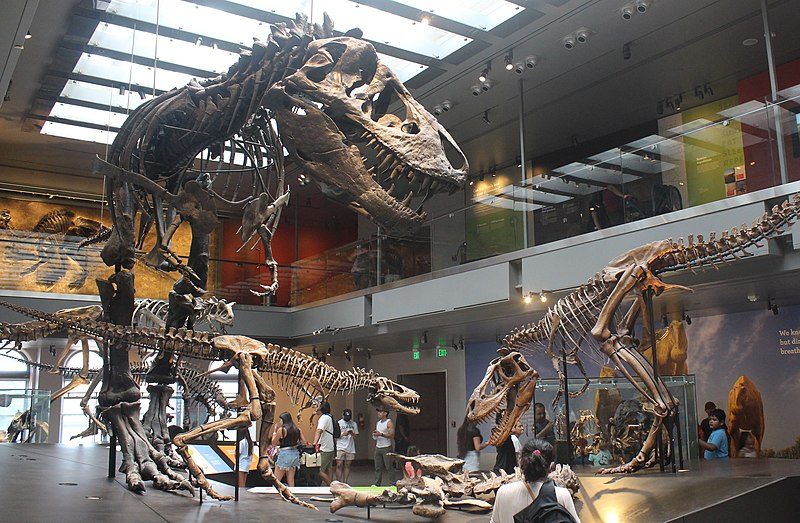
Before delving deeper into our discussion about dinosaurs, it’s crucial to define what a dinosaur is. Dinosaurs are distinct creatures that emerged after the Permian Extinction. To thoroughly address this topic, we need to explore their origins. Contrary to the common perception of dinosaurs as colossal beings, they actually evolved from ancestors smaller than a house cat (Thomas R. Holtz, 2007). Initially, dinosaurs were diminutive, bipedal, and lizard-like. Coelophysis represents one of the earliest and most primitive theropod dinosaurs. However, preceding Coelophysis, the earth was home to another group known as archosaurs.

Archosaurs, the predators to dinosaurs, were small creatures with a crucial adaptation: open hip sockets and hind limbs that were positioned directly beneath their bodies. This adaptation became essential during the Jurassic period, when Titanosaurs roamed the Earth. Without this primitive yet fundamental anatomical feature, dinosaurs would not have been able to grow to the colossal sizes that fascinate us today. The open hip joints and vertically aligned legs enabled dinosaurs, including the massive Sauropods and the towering Tyrant dinosaurs, to maintain an upright stance.
An open hip joint, hind legs positioned directly beneath the body, and three or more sacral vertebrae fused to the pelvis are the primary criteria for classifying an animal as a dinosaur.
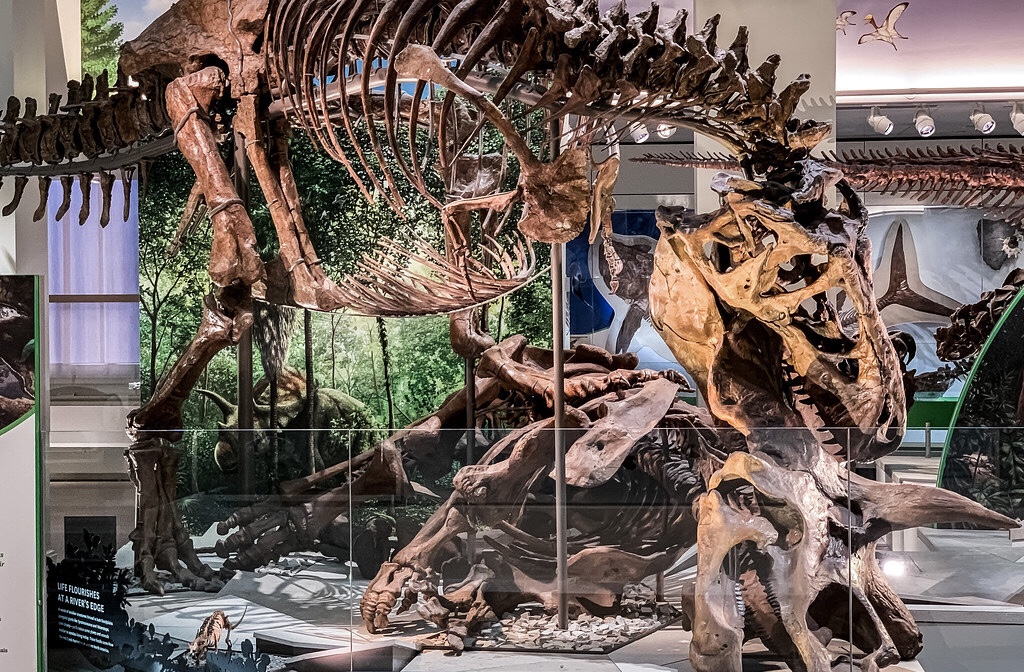
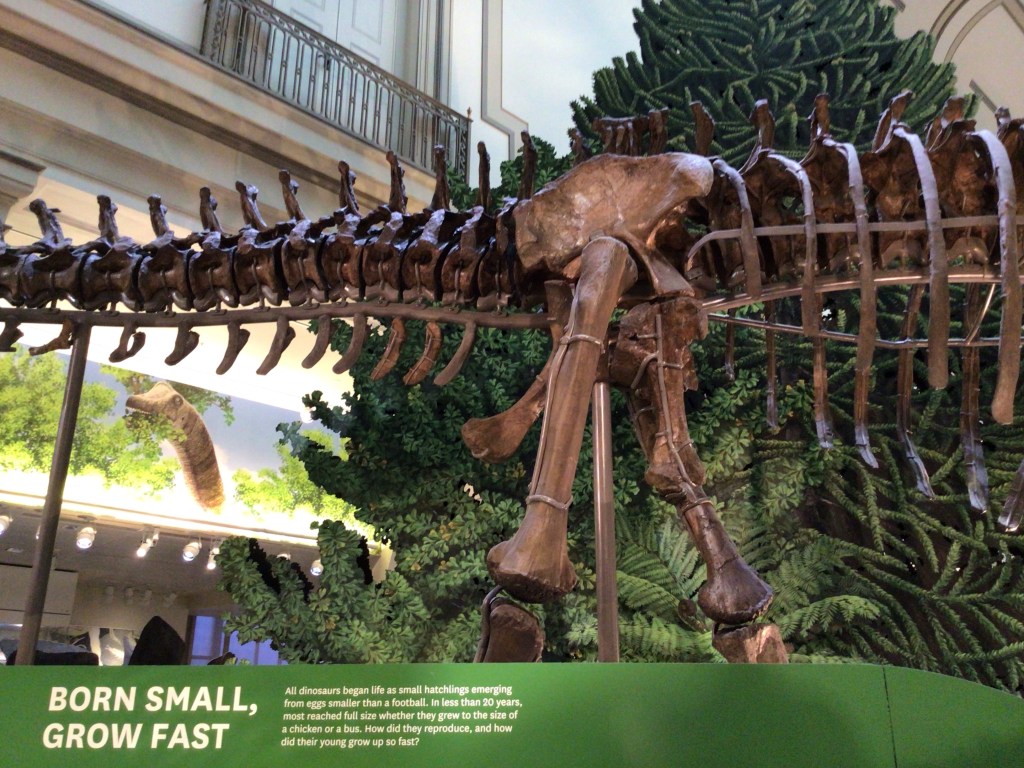
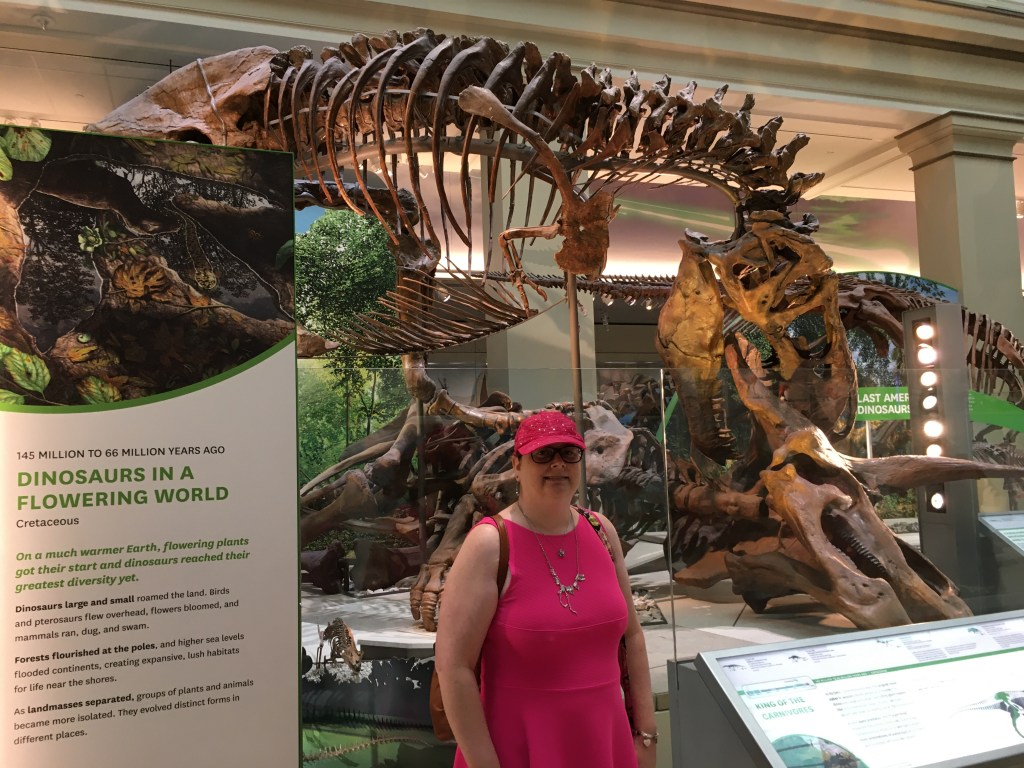
Displayed above are images of MOR 555, the Tyrannosaurus Rex housed at the National Museum of Natural History in Washington, D.C. Observing his skeleton, one can notice the open hip joint of this sizable theropod. Lacking a specialized hip joint to position the hind legs directly beneath his body, MOR 555 would be unable to support his immense 6 ton weight.
Furthermore, the presence of open hip joints was another crucial adaptation that facilitated dinosaurs’ smooth locomotion and running. As organisms that also utilize bipedal locomotion, we can appreciate this efficient form of movement. Without the open hip joints that connect our legs to our pelvis, we would be incapable of performing many activities that are fundamental to humans. We would be unable to engage in sports that involve running, jumping, or aerial maneuvers without this critical anatomical feature.
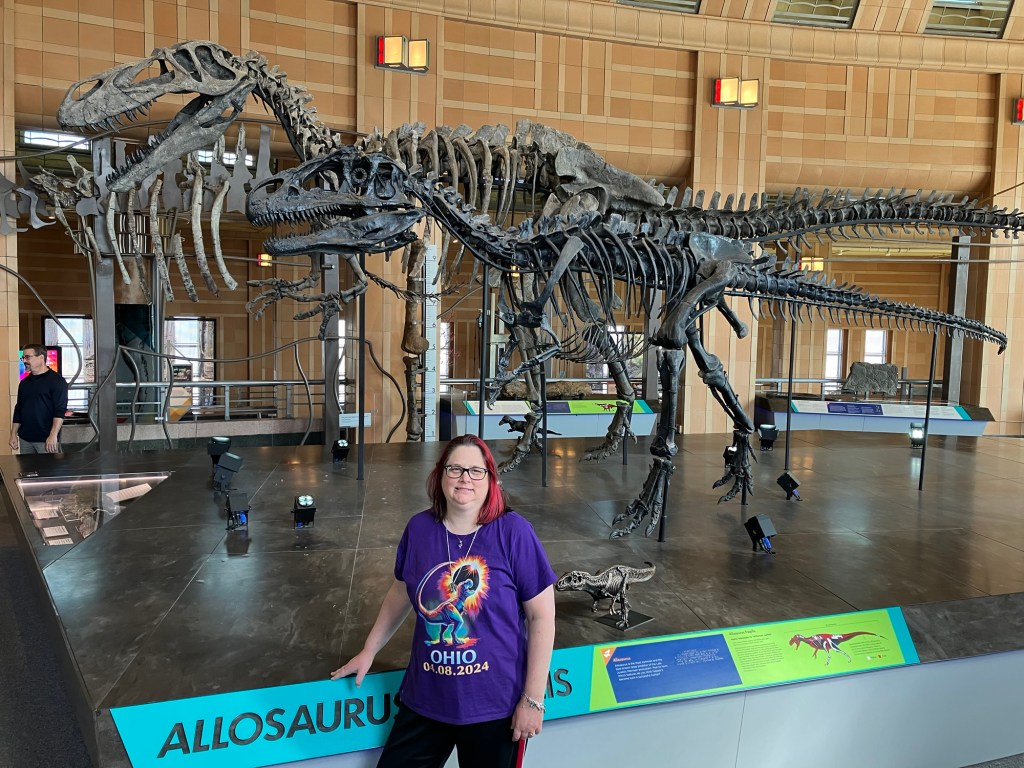
Dinosaurs exhibit various anatomical adaptations, one of which is evident in the Theropod group, such as the Allosaurus, known for “Big Al’s” hands. These anatomical features played a significant role in dinosaurian success. The presence of digits on the manus (hand) and pes (foot) enabled dinosaurs to grasp and manipulate objects. Bipedalism allowed the forelimbs to evolve for other survival-enhancing functions. The disproportionately small arms of the Tyrannosaurus Rex, often mocked in popular culture, were actually functional; despite their size relative to its massive body, it is theorized that T-Rex could lift approximately 100 pounds with its forelimbs. Significantly, having forelimbs not required for walking was a considerable advantage for dinosaurian success.
As creatures habituated to bipedal locomotion, we value the freedom to use our hands for tasks other than moving from one location to another. Similar to dinosaurs, the adaptation to walking on two legs has been crucial to our evolution and success as Homo sapiens.
The second requirement to classify an animal as a Dinosaur is hands complete with digits, both manus (hand) and pes (feet).

Contrary to common belief, dinosaurs are not entirely extinct. They soar above us daily as avialians, commonly known as birds. Birds are not merely related to dinosaurs; they are modern-day dinosaurs, specifically Coelurosaurs from the theropod dinosaur lineage. I’ll expand on this in a future post. For now, it’s important to recognize that birds are considered dinosaurs because they share a crucial anatomical adaptation common to all dinosaurs.
An animal’s skull consists of numerous bones, often mistakenly thought of as a single entity, the cranium. In reality, the skull is an assembly of several smaller bones that join together to form the cranium. Dinosaurs are characterized by the absence of one particular skull bone, the postfrontal bone. In the diagram below, the bones of a dinosaur’s skull are labeled. You can observe that the frontal bone (colored pink) is there, but the postfrontal bone is not.

Anapsids, the reptilian lineage, and synapsids, the mammalian lineage including humans, have postfrontal cranial bones. Diapsids, the lineage that encompasses dinosaurs, do not possess these bones. However, dinosaur ancestors, such as the Archosaurs, retained the postfrontal bone. The absence of this cranial bone in all dinosaurs, which is present in their ancestors, aids in defining them (Martin 2006).
All birds, descendants of dinosaurs, lack postfrontal cranial bones. These bones merge with the frontal bone in the later stages of embryonic development.
The third requirement needed to classify an animal as a dinosaur; is the absence of a postfrontal cranial bone.

The limb bones of dinosaurs, particularly those associated with the appendicular skeleton (bones connected to the axial skeleton), are crucial as they offer insights into the dinosaur’s locomotion. In the rear part of a dinosaur, the hind limbs are connected to the body through the pelvic girdle (hip socket) situated beneath the sacral vertebrae (vertebrae fused to link the open hip joint with the spine).
The evolutionary adaptation of an open hip socket allowed dinosaurs to support their weight directly above the hip joint. This posture necessitated adaptations for such a mode of locomotion. The femur, or thigh bone, connects to the hip joint via the acetabulum and extends to the cnemial crest and the tibia. The cnemial crest can be seen in the image above on MOR 555 skeleton.
The tibia is crucial for two additional dinosaur traits: the cnemial crest and the ascending process into the astragalus, or anklebone (Martin 2006). The astragalus, along with other small bones, forms a dinosaur’s tarsals, which include the feet and toes. Dinosaurs walked with their metatarsals touching the ground, essentially walking on their toes. This type of movement, known as digitigrade locomotion, is evident in the image above. Tyrannosaurus Rex MOR 555, for instance, walks on his toes, with his heels never touching the ground. This digitigrade locomotion is also observed in other animals such as dogs.
Contrast this with human locomotion. Humans walk with a relaxing stance in which most of the body weight in on the heels in a plantigrade stance. Human can only achieve a digitigrade when wearing high-heeles shoes or tiptoe.
These adaptations relate directly to the evolution of dinosaurs from reptiles and archosaurs. Unlike reptiles which move with legs sprawled out to the side of the body like large lizards, dinosaurs walk upright with their legs directly underneath their bodies with digitigrade motion.
In addition to open hip joints and fused sacral vertebra, dinosuar locomotion requires the adaption of the cnemial crest, tibia, and astragalus to facilitate this upright smooth motion.
Finally, we come to the last requirement to classify an animal as a dinosaur; the femur that terminates into the cnemial crest, a tibia that ascends to the astragalus, and the astragalus which forms the metatarsals for digitigrade locomotion. Without these evolutionary adaptions, dinosaurs would not be able to support weight in an upward stance; dinosaurs would crawl in a sprawling posture like the reptiles that preceded them.
If you like this post, please chomp the subscribe button.
I am a multi-disciplinary writer, published author, and web content creator. If you like this blog, please visit my writing portfolio. The Works of Noelle Moser.

Resources:
Brusatte, Steve. The Rise and Fall of the Dinosaurs: A History of Their Lost World. William Marrow of Harper Collins Publishers. New York, NY. 2018. Pgs. 282, 298, 299.
Horner, Jack. How to Build a Dinosaur. Plume, Published by Penguin Group. London, England. 2009. Pgs. 8,9,57, 58, 60.
Martin, J. Anthony. Introduction to the Study of Dinosaurs. Blackwell Publishing. Malden, MA. 2006. Pgs. 163, 164, 165, 166).


Great informative post about the definition of dinosaurs! Would like to know more about the significance of the missing post frontal cranial bone. Great work!
LikeLike