The Tyrannosaur Before the Tyrant Lizard King: A Visit to Asheville Museum of Science
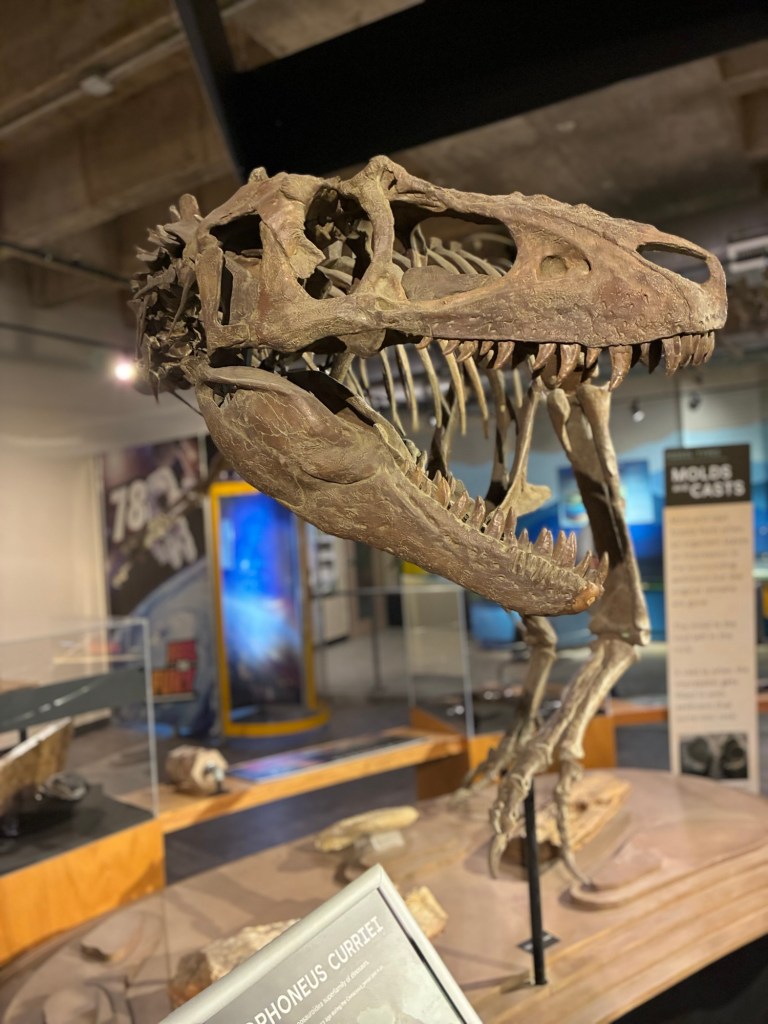
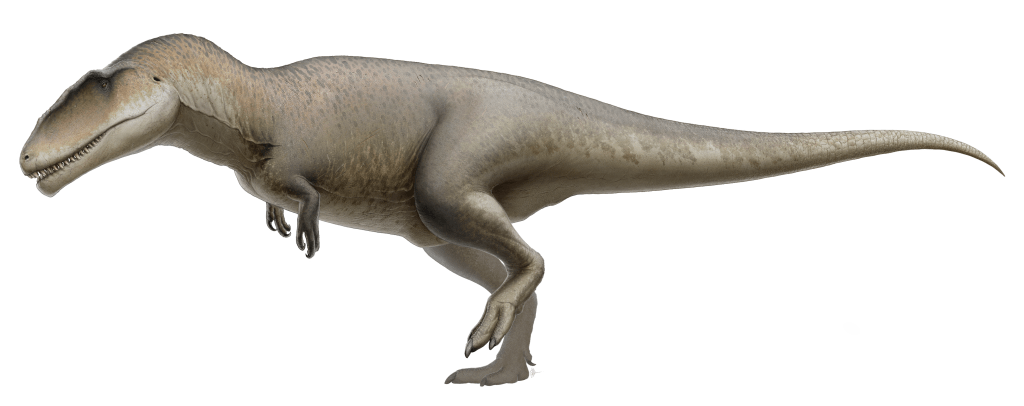
Teratophoneus Curriei: Asheville Museum of Science. Asheville’s, NC.

There is something special about standing beside a dinosaur that lived approximately 76 million years ago, studying the details of its skull and imagining the world it once inhabited. Museums give us the opportunity to slow down, look closely, and appreciate the fossils that connect us to deep time.

I recently visited the Asheville Museum of Scinece in downtown Asheville, North Carolina, to study its Teratophoneus curriei specimen-a fascinating early tyrannosaur that offers a glimpse into the evolutionary history of the lineage that would eventually give rise to the legendary Tyrannosaurus rex.

AMOS; Asheville Museum of Scinece. Asheville, NC

Standing before Teratophoneus curriei, I was struck by the opportunity to examine a tyrannosaur whose anatomy offers valuable insight into the evolutionary history of T. rex. Yet beyond the scientific significance of this specimen, I discovered a museum deserving of recognition-not only for the fossils it preserves and displays-but for the curiosity, dedication, and enthusiasm driving its growing paleontological collection.
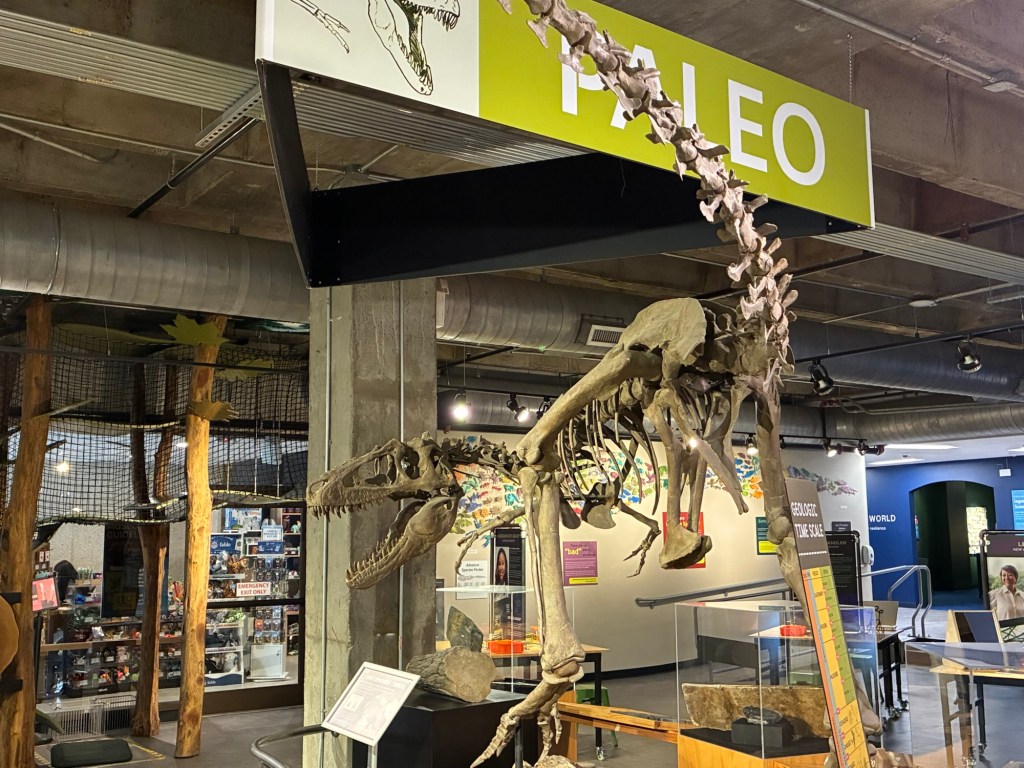
Image Credit: Noelle K. Moser. Teratophoneus Curriei. Mounted in a dynamic, forward-leading bipedal stance, designed to communicate the anatomy and presence of a theropod caught in the act of hunting. Asheville Museum of Science. Asheville, NC.

Meet Teratophoneus curriei

Upon entering the museum, visitors are greeted by the predatory skeleton of Teratophoneus curriei, poised in a hunting stance. Mounted with a relatively horizontal torso, elevated hips, and skull extending forward, presenting a powerful, balanced theropod profile.
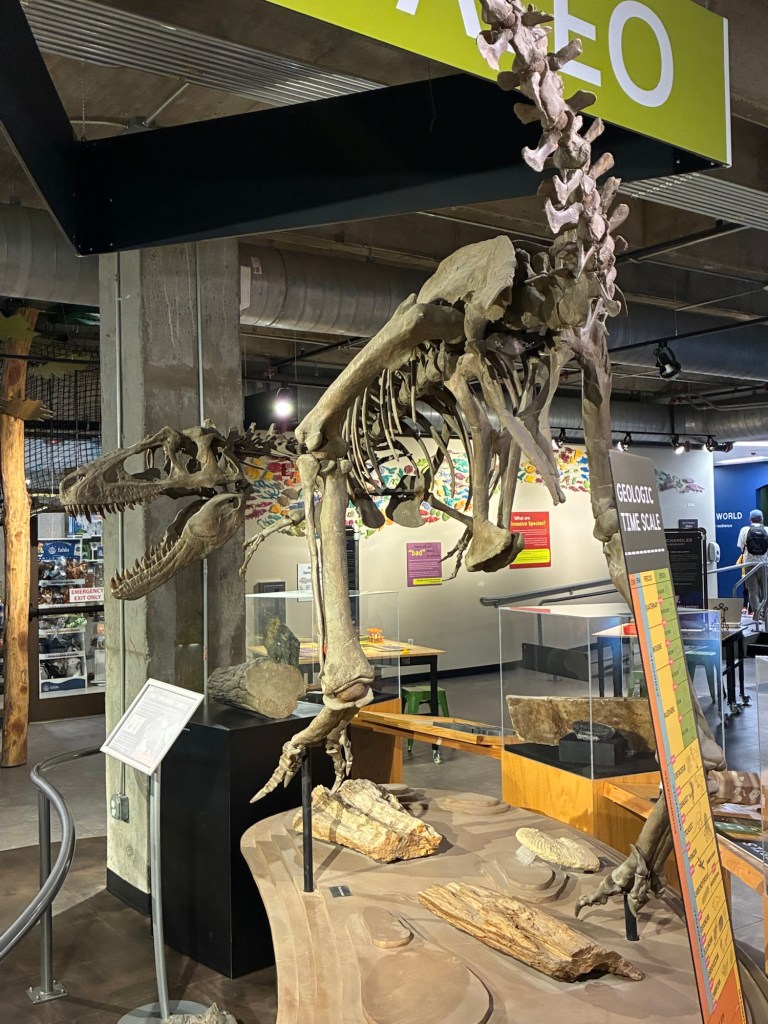
Image Credit: Noelle K. Moser. Predatory skeleton of Teratophoneus curriei, poised in a hunting stance. Asheville Museum of Science. Asheville, NC.

The long, elevated tail, curving upward from the pelvis, creates a sweeping counterbalance to the forward-projecting skull and torso. Below, the robust hind limbs support the body in a grounded, weight-bearing stance. The agape jaws, three-pronged pelvic structure reflect characteristic saurschian, or “lizard-hipped,” arrangement of the pelvis, a defining feature of the dinosaur lineage to which this theropod belongs.
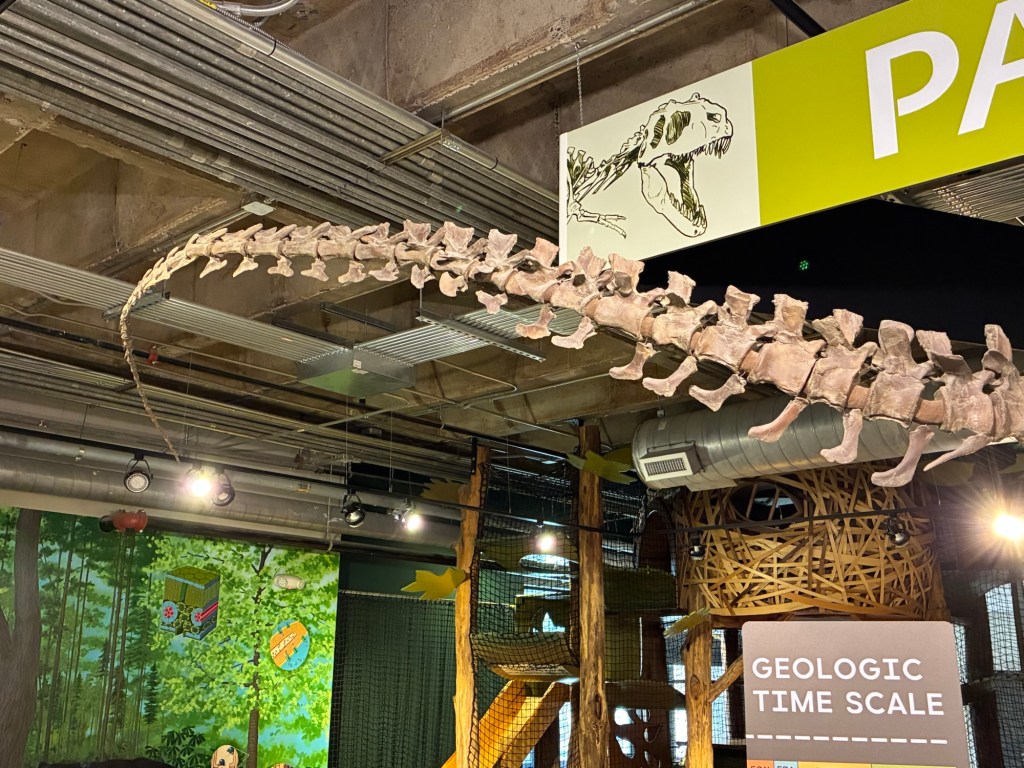
Image Credit: Noelle K. Moser. Elevated tail curving upward acts as a counterbalance to the large boxy skull. Asheville Museum of Science. Asheville, NC.

In true Tyrannosaurus rex fashion, the small, flexed forelimbs, held close to the chest with elbows slightly bent, draws attention to the two-fingered hand of Teratophoneus curriei. These reduced forelimbs and distinctive two-digit hands reflect the evolutionary adaptions of tyrannosaurines, the group of large, predatory theropods that includes Tyrannosaurus rex. Although Teratophoneus lived millions of years before that iconic tyrant lizard king, its anatomy offers a glimpse into the evolutionary history of the lineage that would eventually produce one of the most formidable predators to walk the Earth.
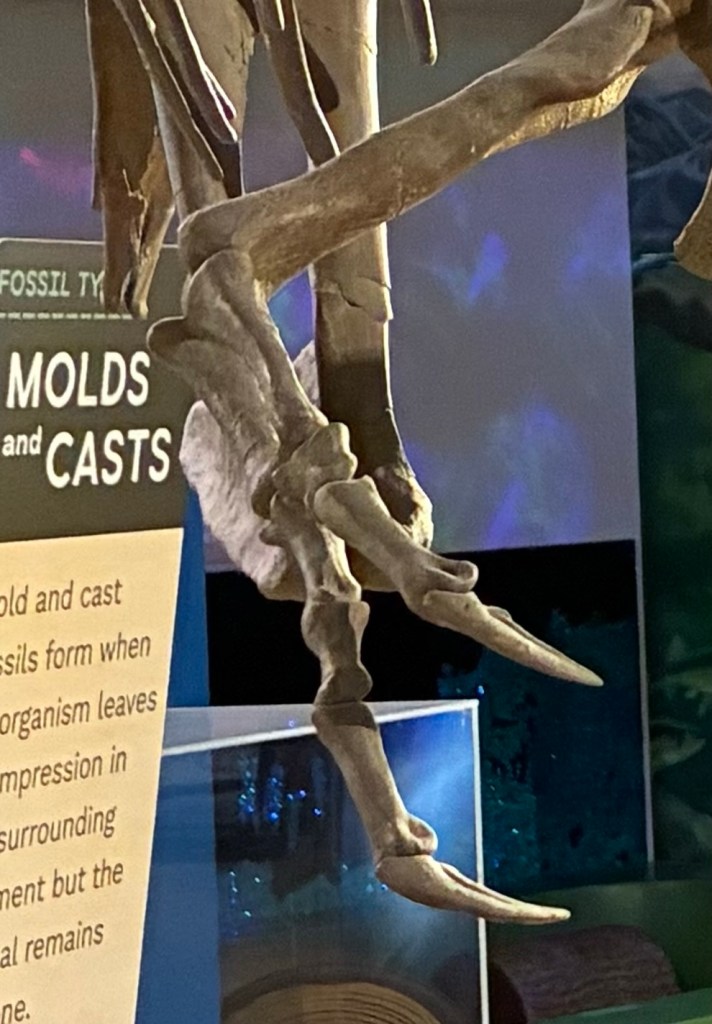
Image Credit: Noelle K. Moser. Two-fingered hands of Teratophoneus Curriei reflect a distinctive evolutionary trait of larger tyrannosaurs notably Tyrannosaurus rex. Asheville Museum of Science. Asheville, NC.

The name Teratophoneus means “monstrous murderer,” a fitting name for a tyrannosaur that lived during the Late Cretaceous, roughly 76-75 million years ago. The holotype specimen was discovered in 1981 within the Grand Staircase-Escalante National Monument of the Kaiparowits Formation in Utah, and named in honor of paleontologist Philip J. Curriei.

This was a predator from a world very different from our own. The landscape of southern Utah was once part of Laramidia. A dynamic ecosystem thriving amongst rivers, floodplains, forests, and seasonal environments that have since disappeared beneath the modern American West.

Image Credit: Kaiparowits Formation.

Along the western margin of the Western Interior Seaway, rivers flowed through a coastal environment that existed when an enoroums inland sea divided North America into eastern and western landmasses.

The Upper Cretaceous Kaiparwits Formaiton preserves the sediments of this ancient landscape shaped by broad alluvial floodplains and extensive river systems.

It was within this dynamic Late Cretaceous ecosystem that Teratophoneus curriei lived, leaving behind the fossils that allow us to reconstruct its world that existed roughly 76 million years ago.
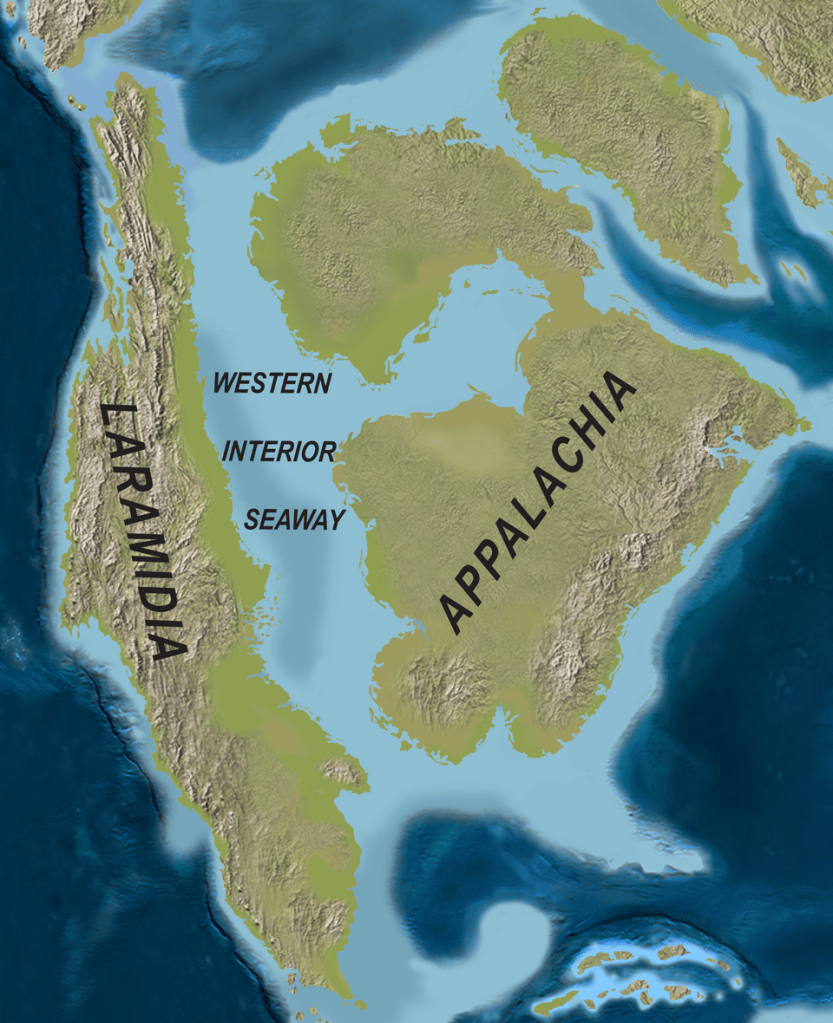
Image Credit: Map of North America with the Western Interior Seaway during the Campanian (Upper Cretaceous) of the Mesozoic era.

Teratophoneus curriei was not Tyrannosaurus rex. It lived millions of years before the famous “tyrant lizard king,” making it a close relative rather than a confirmed direct ancestor. Yet it belonged to the same tyrannosaurine lineage-the evolutionary branch that would eventually include T. Rex.

That distinction is precisely what makes this specimen compelling to me thus, prompting my visit to AMOS. When I look at this skeleton, I am not simply looking at another carnivorous dinosaur. I am looking at an earlier chapter in a much longer evolutionary story: one that reveals how the distinctive anatomy of later tyrannosaurines emerged over time. In its bones, can be seen part of the deep history that ultimately led to one of the most formidable and recognizable predators ever to walk the Earth.

A skull that tells a story

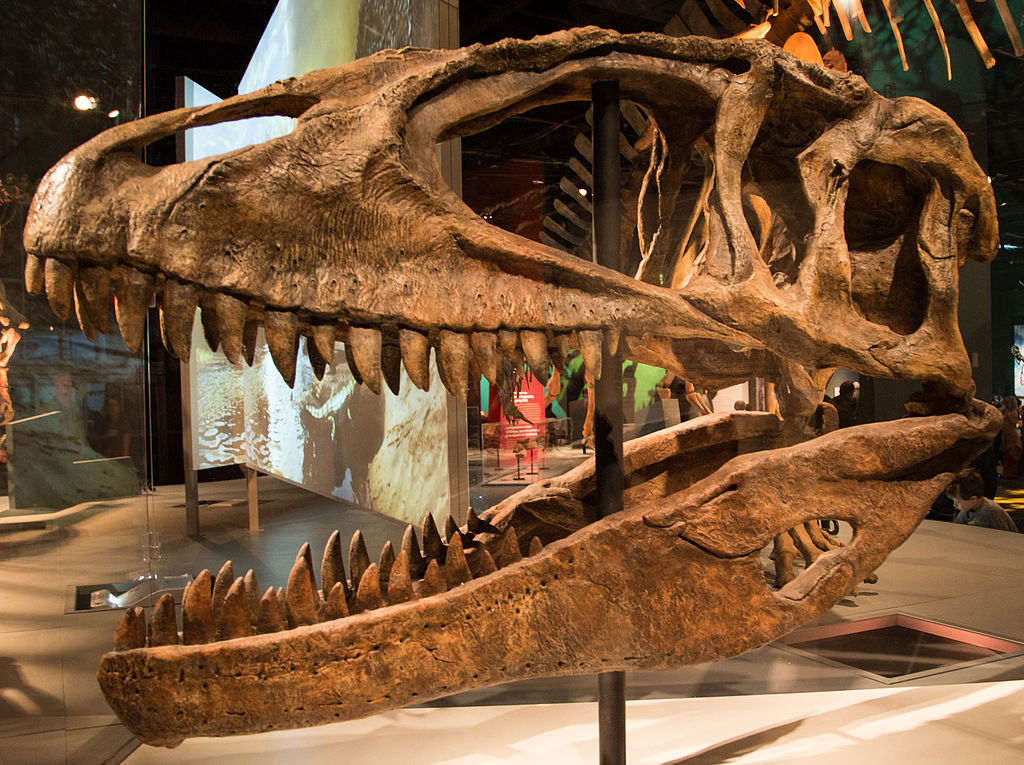
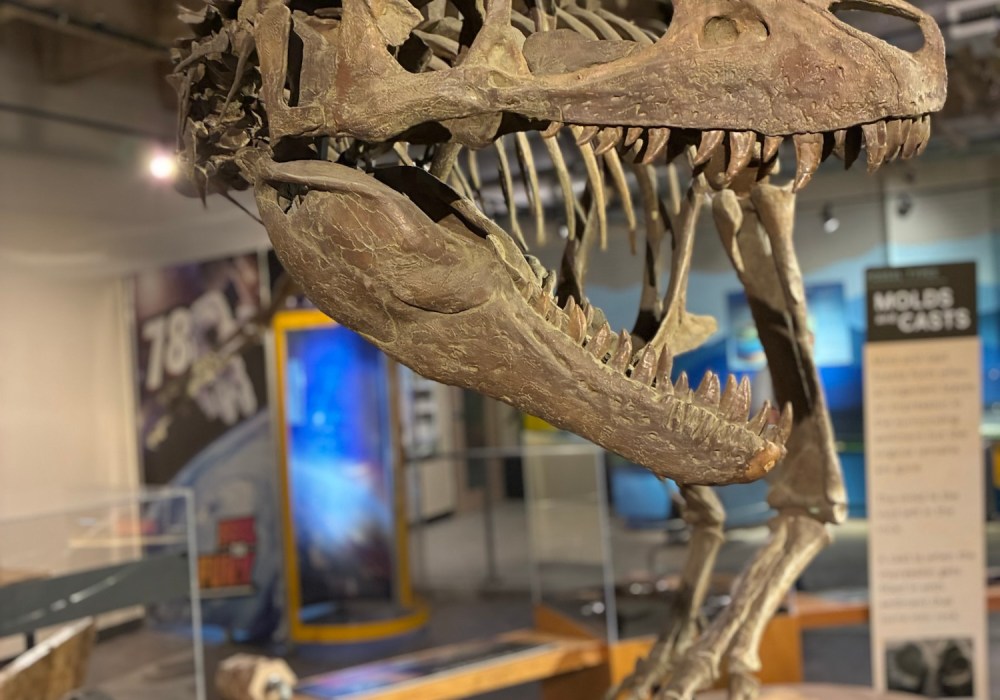
The skulls of tyrannosaurs possess a distinctive combination of anatomical features that make them recognizable within the broader theropod lineage. Characteristic boxy shape, robust construction, conical teeth, and diminished front scraper teeth-adapted for gripping and slicing flesh- reflect the specialized feeding anatomy of these formidable predators.
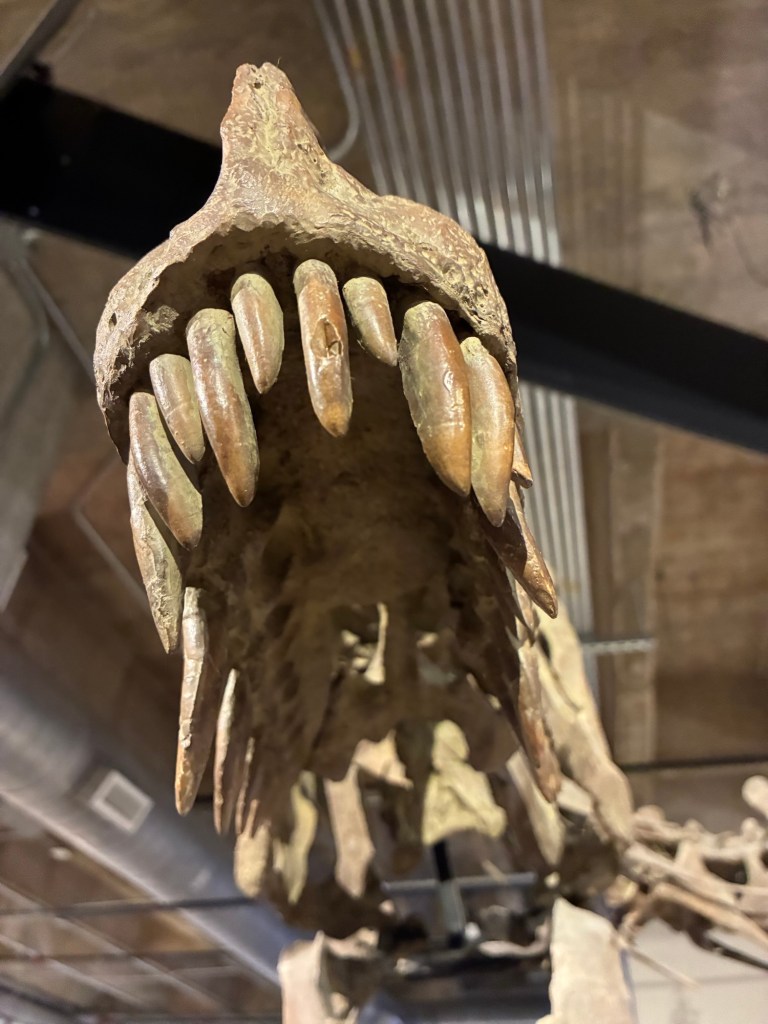
Image Credit: Noelle K. Moser. Front scraper teeth combined with conical serrated teeth are distinguishing tyrannosaur dentition attributes. Asheville Museum of Science. Asheville, NC.

Examining the skull of Teratophoneus curriei alongside the Tyrannosaurus rex specimines MOR555 and BHI3033 reveals both the shared structural features that unite these animals and the anatomical variations that distinguish them. Although separated by millions of years, these skulls offer a glimpse into the evolutionary history of a lineage that ultimately produced Tyrannosaurus rex.
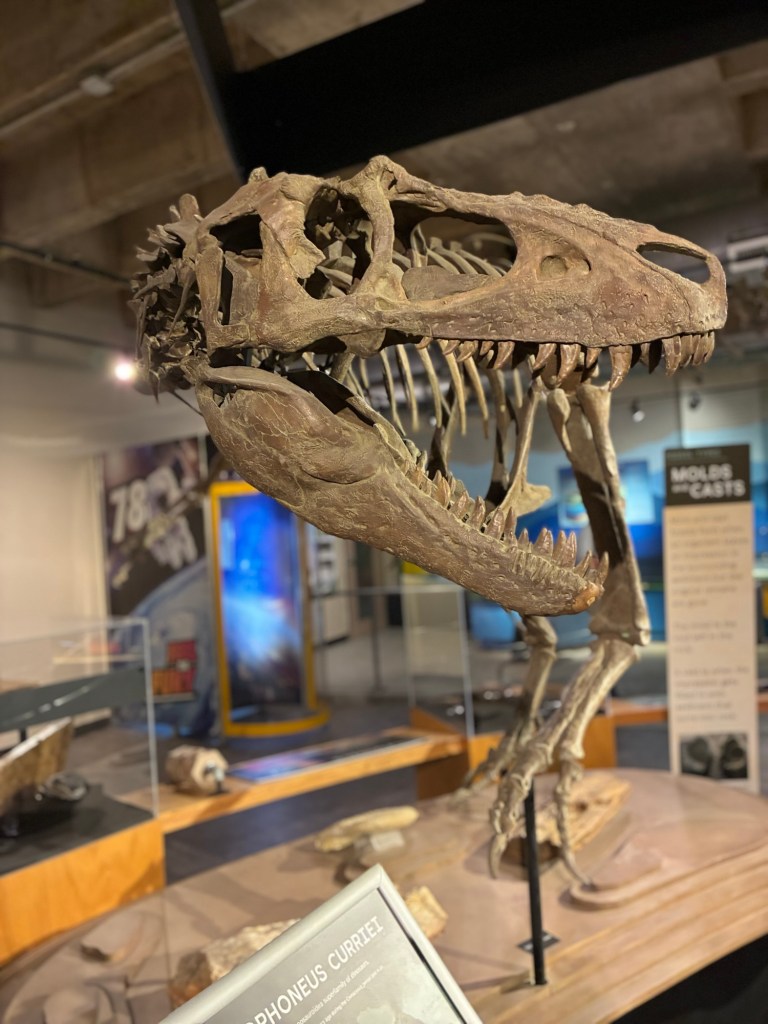
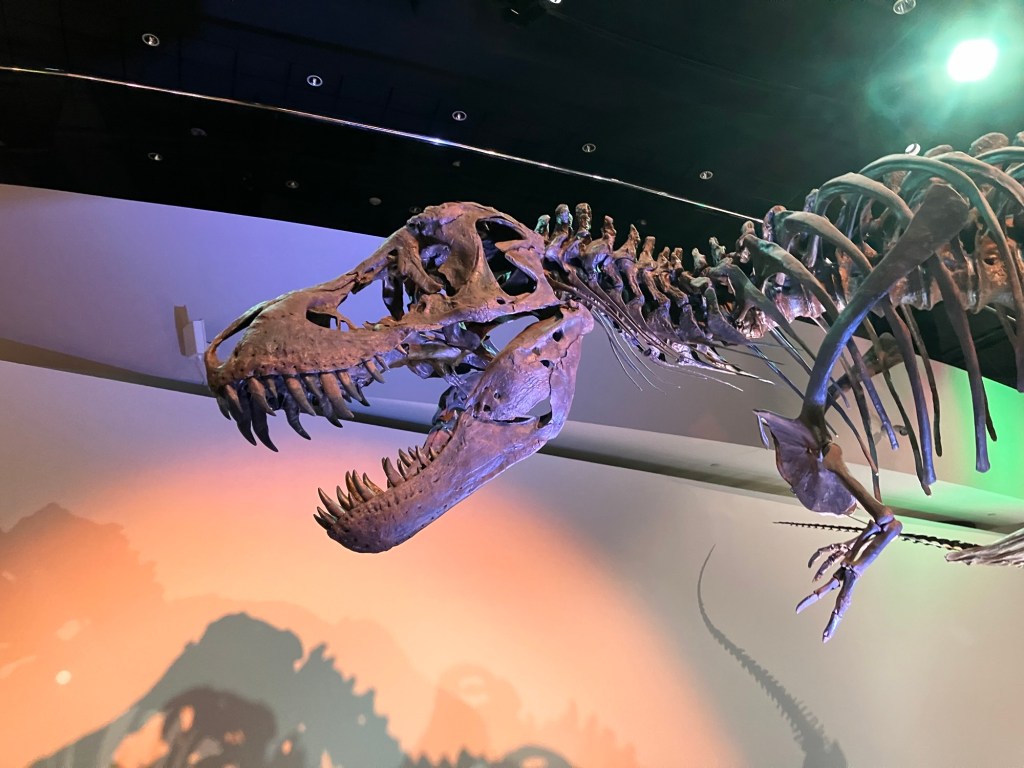
A tyrannosaurus skull is more than a frightening set of teeth. It is a record of anatomy, growth, and evolutionary change. By comparing skulls and skeletons from different tyrannosaurs, we can investigate how these animals were related, how their bodies changed over time, and how the familiar features of Tyrannosaurus rex developed within its clade.

A small museum with a big story
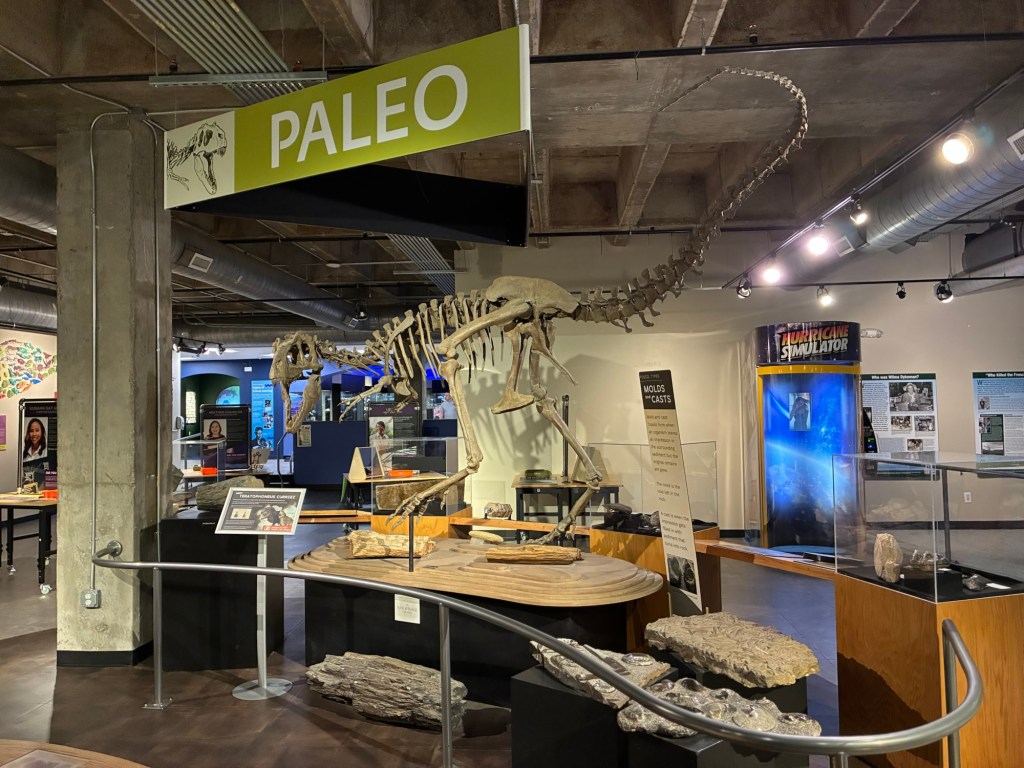
Image Credit: Noelle K. Moser. Predatory mount of Teratophoneus curriei. Asheville Museum of Science. Asheville, NC.

The Asheville Museum of Science is a growing science museum with a mission centered on experimental learning, discovery, and curiosity. It offeres visitors an intimate experience, with hands-on exhibits and opportunities to get close to fossils and engage with science.

During my visit, I had the opportunity to share my work with the members of the museum staff. Their enthusiasm for research and specimen collections made this experience especially meaningful. Their collective curiosity about deep time reflects the same sense of wonder that continues to draw me to museums across the nation and around the world. Meeting people who are equally committed to understanding and preserving Earth’s history reinforces my dedication to understand deep time and the creatures that emerged throughout the eons.

The Asheville Museum of Science Teratophoneus exhibit is a good example of what growing institutions can offer. A visitor does not need to travel to a major dinosaur halls to encounter a tyrannosaur. The specimen is right there in Asheville, waiting for someone to stop, look closely, and ask questions.

Beyond the Mesozoic
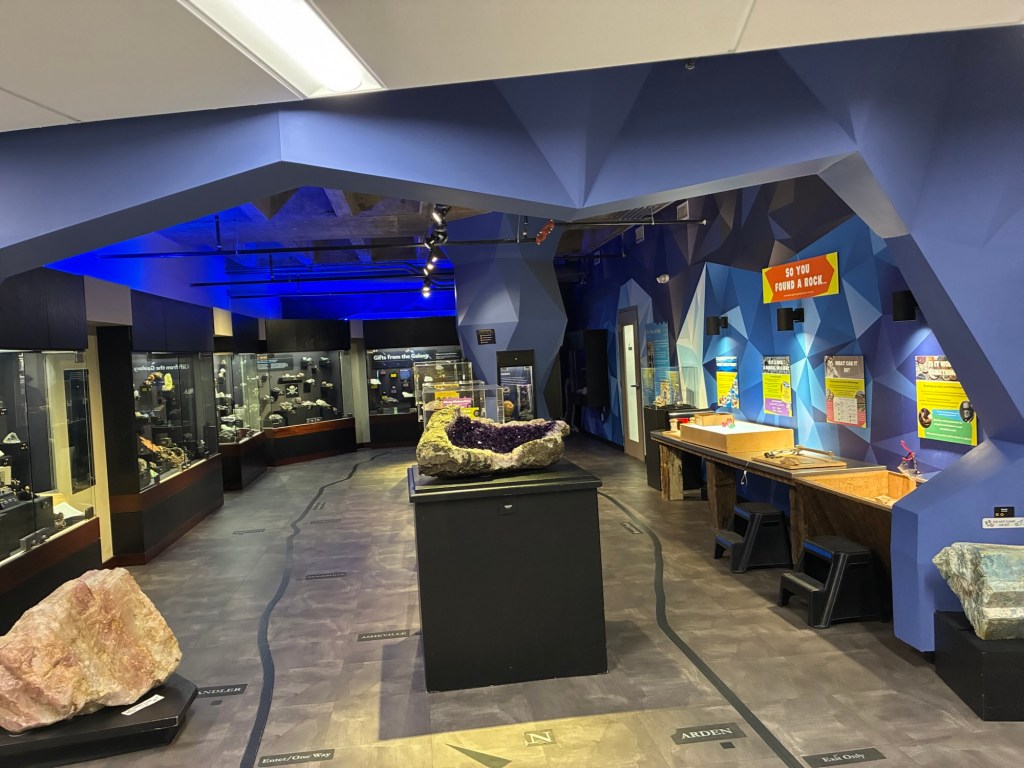
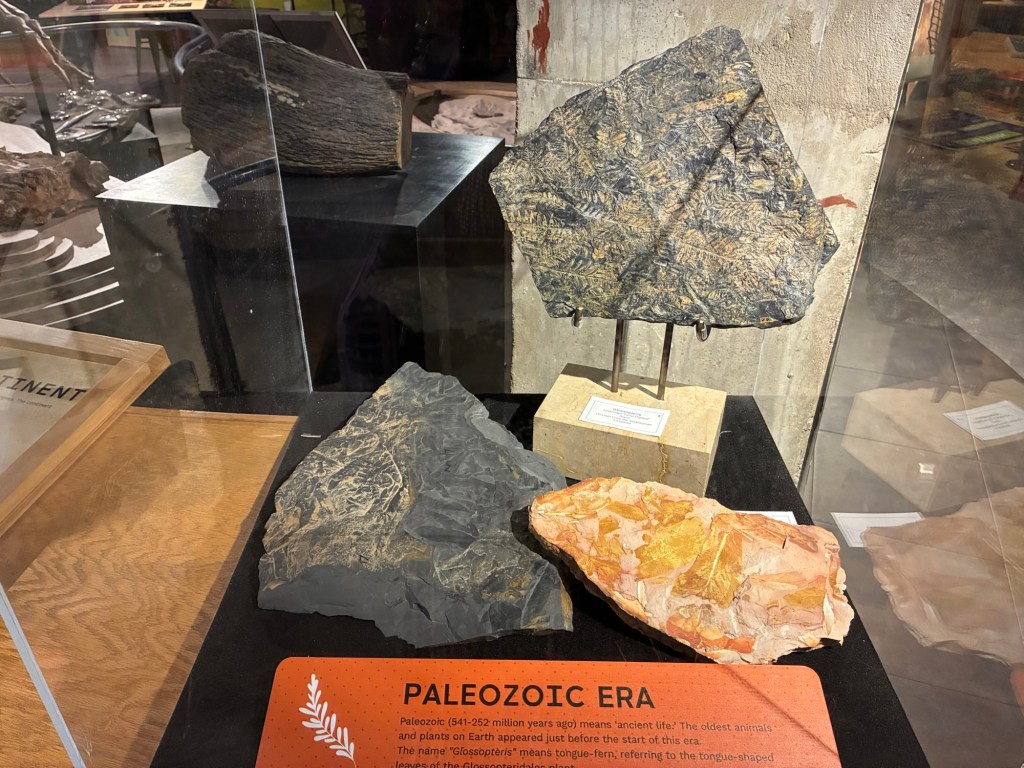
Beyond the imposing Teratophoneus curriei, the Asheville Museum of Science offers an impressing glimpse into the broader history of Earth, life, and the ancient past.

Its collections extend across vast intervals of deep time, bringing together minerals, fossils, and geological specimens that illustrate how dramatically our planet-and the organisms that live on it-have changed through the eons.
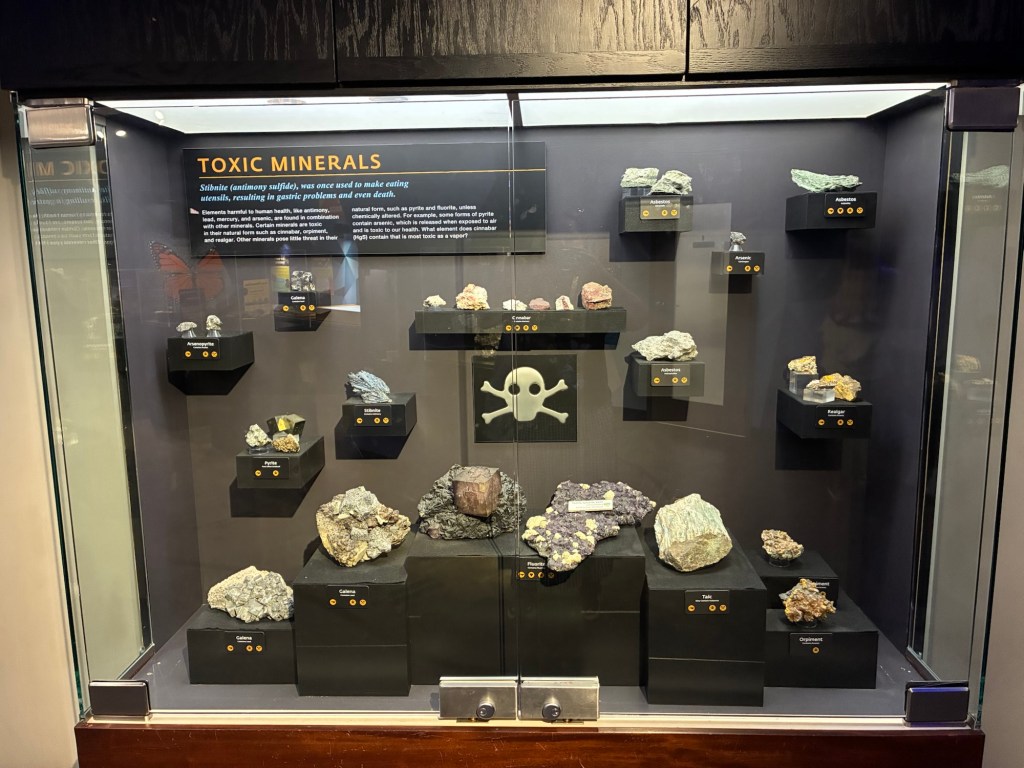
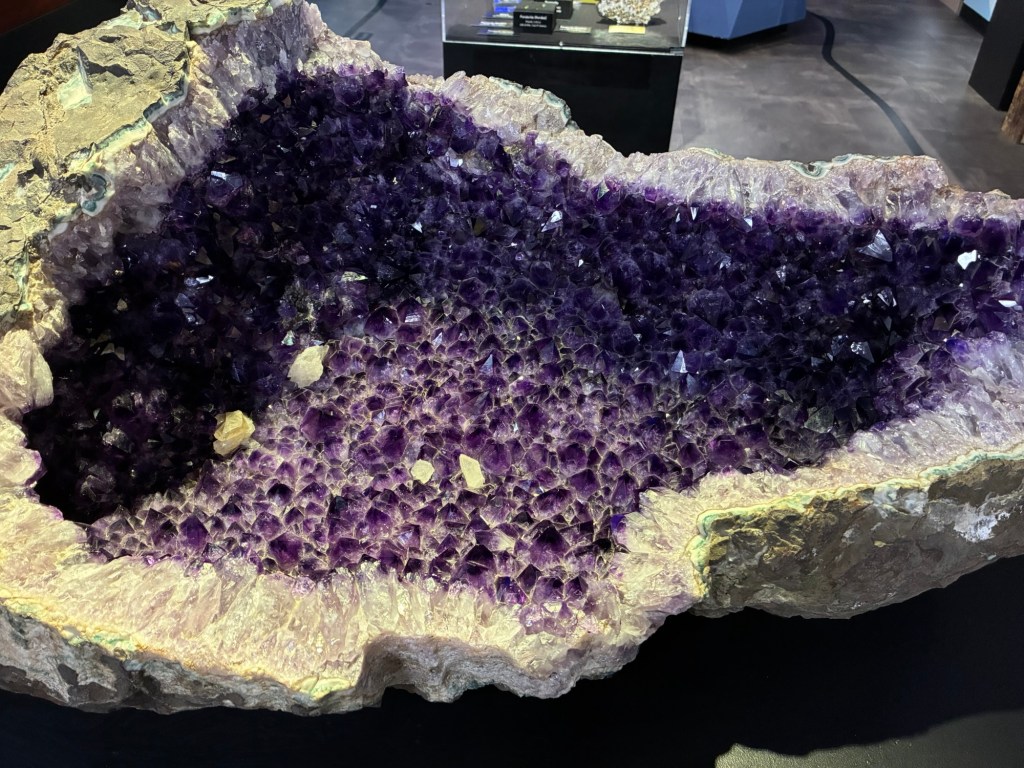
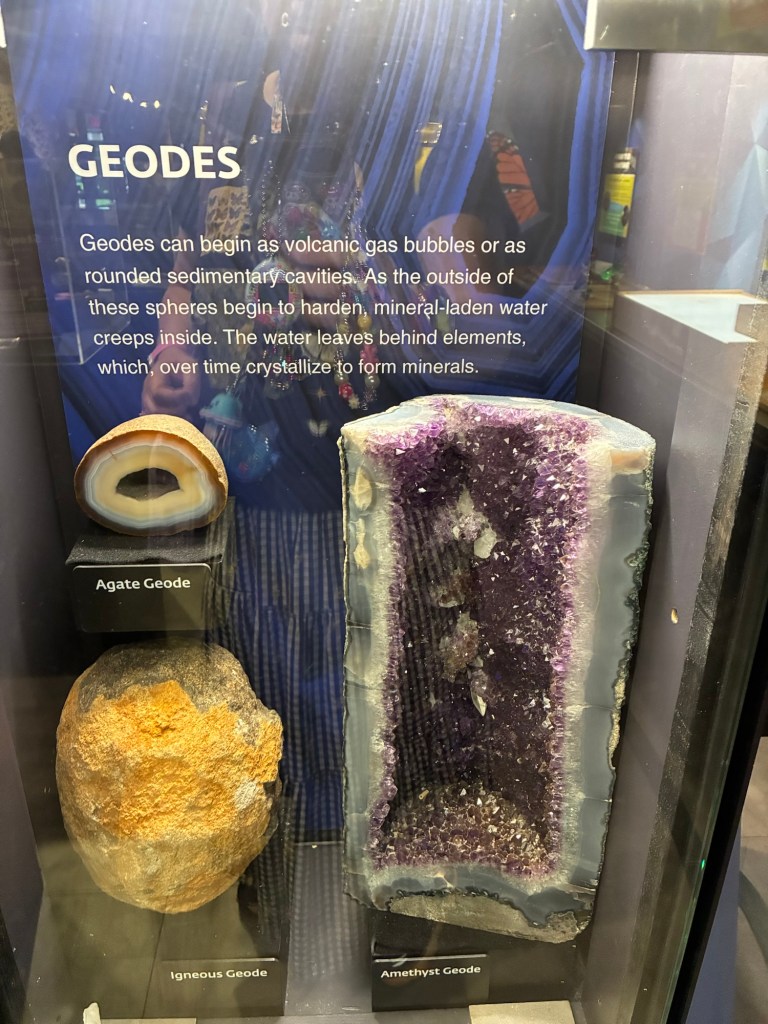
Image Credit. Noelle K. Moser. Toxic Minerals collection. Asheville Museum of Science

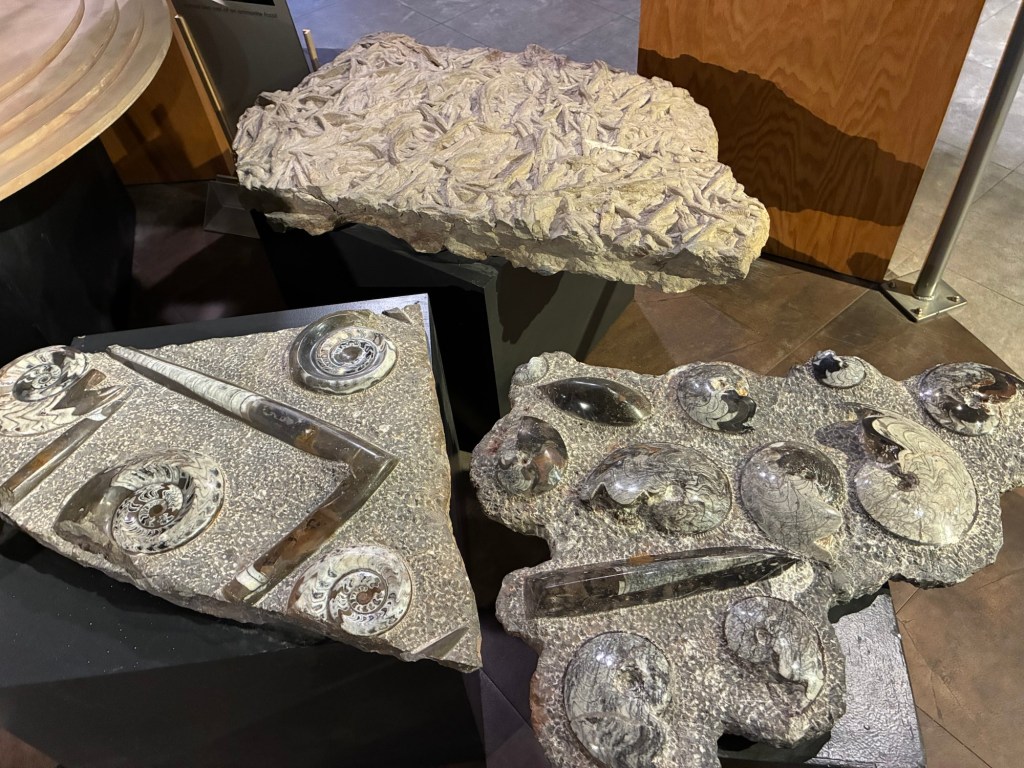
The mineral displays are especially striking, with specimens ranging from colorful crystalline formations to massive geodes and unusual geological structures.

These pieces provide a reminder that the story of Earth is not limited to its living inhabitants. Long before the appearance of dinosaurs, and continuing long after their extinction, geological processes are shaping the landscape, environments, and mineral recourses that define our world today.

Why I recommend visiting
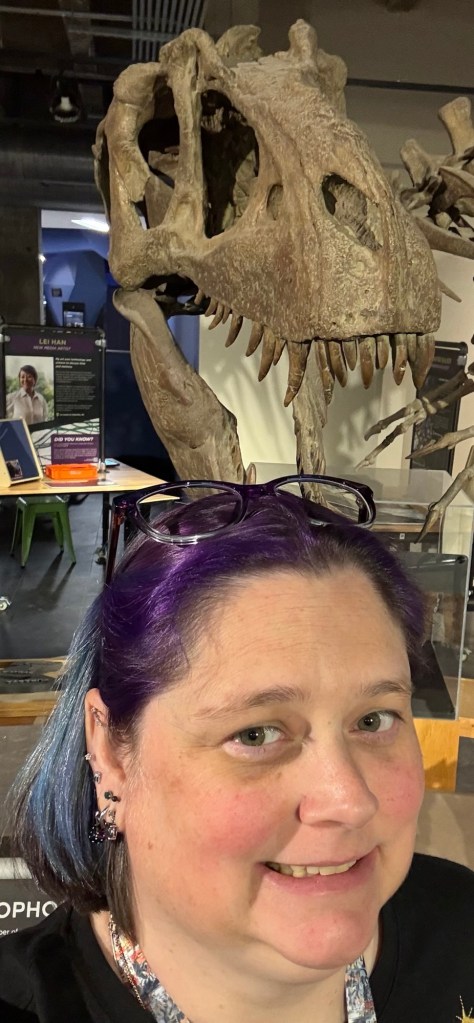
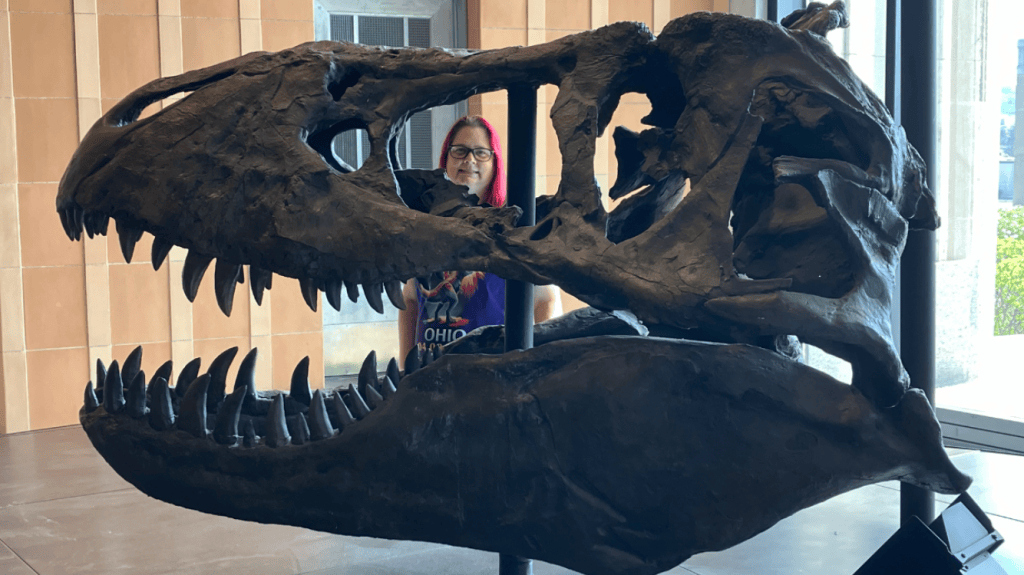
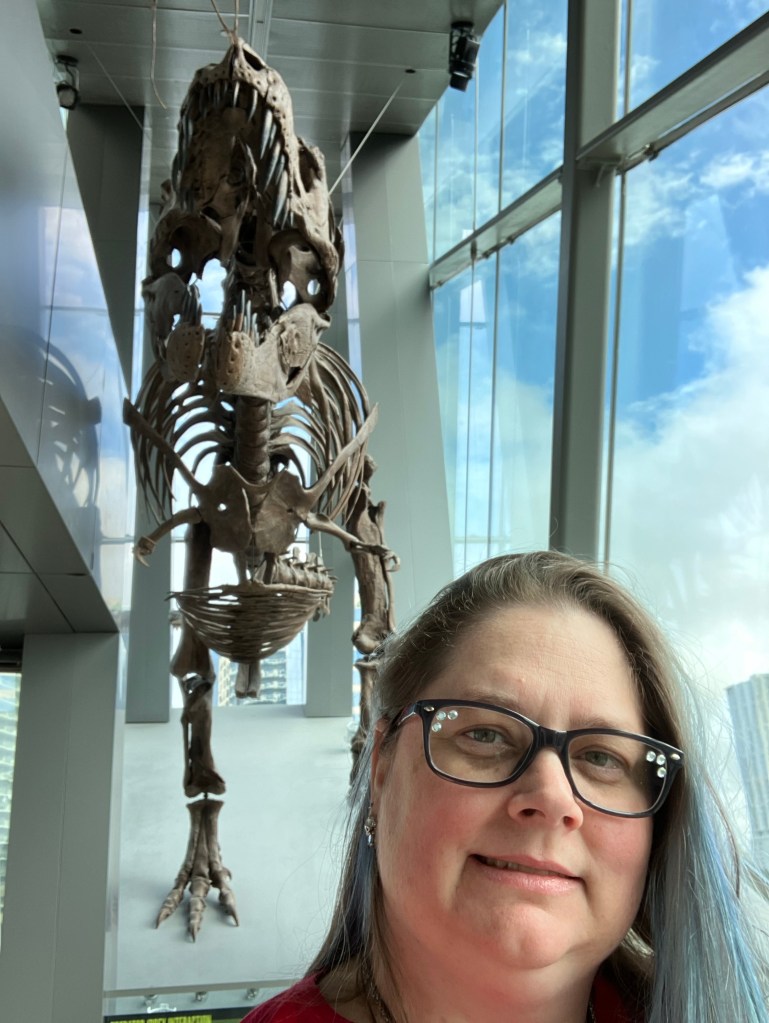
Image Credit: Noelle K. Moser. Teratophoneus curriei and I. Asheville Museum of Science. Asheville, NC.

When we think about large theropods like Tyrannosaurus rex, it is easy to imagine it as the end point of dinosaur evolution. But evolution does not work like a straight staircase leading to a final destination. It is a branching history, filled with relatives, adaptions, and animals that lived long before the species we know best.

Teratophoneus curriei is one of those relatives.

It’s extience help us understand that the tyrannosaurs were not a single species that suddenly appeared in the Late Cretaceous. They were a diverse group of animals with a long evolutionary history. By studying earlier tyrannosaurs, we can better understand the changes that took place before Tyrannosaurus rex appeared.

The Asheville Museum of Science is more than its dinosaur. It is a place where people can explore science, ask questions, and become interested in the natural world.

I left AMOS with photographs, a deeper appreciation for Teratophoneus curriei, and a renewed enthusiasm for the story of tyrannosaurs. Standing with Teratophoneus curriei, I am reminded that paleontology is not confined to the great halls of the world’s largest museums. Sometimes it begins with a remarkable fossil, enthusiastic staff, with a willingness to share the prehistoric past with its community.
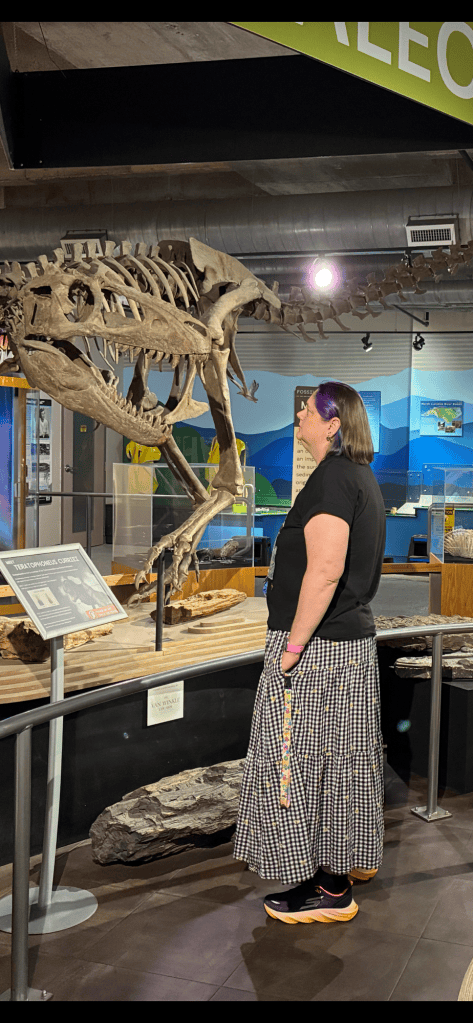
Image Credit: Noelle K. Moser. Teratophoneus curriei and I poised at the intersection of popular culture and science. Asheville Museum of Science. Asheville, NC.

I write at the confluence of deep time and modern thought – a paleontology blogger and essayist devoted to translating ancient worlds for contemporary readers.

There is a truth I carry away from writing in these limited spaces, it is this: that the past is never truly gone, it breaths through my curiosity, words, and need to remember. And in giving voice to worlds that no longer exist, I have found a clearer voice of my own.

Through Coffee and Coelophysis, I explore the lives, mysteries, and afterlives of prehistoric dinosaurs, blending scientific curiosity with reflecting story telling. I bring ancient fossils to life; across my other writings spaces, I explore literature, creative reflections, homesteading, backyard chicken keeping, and the lessons of observation.
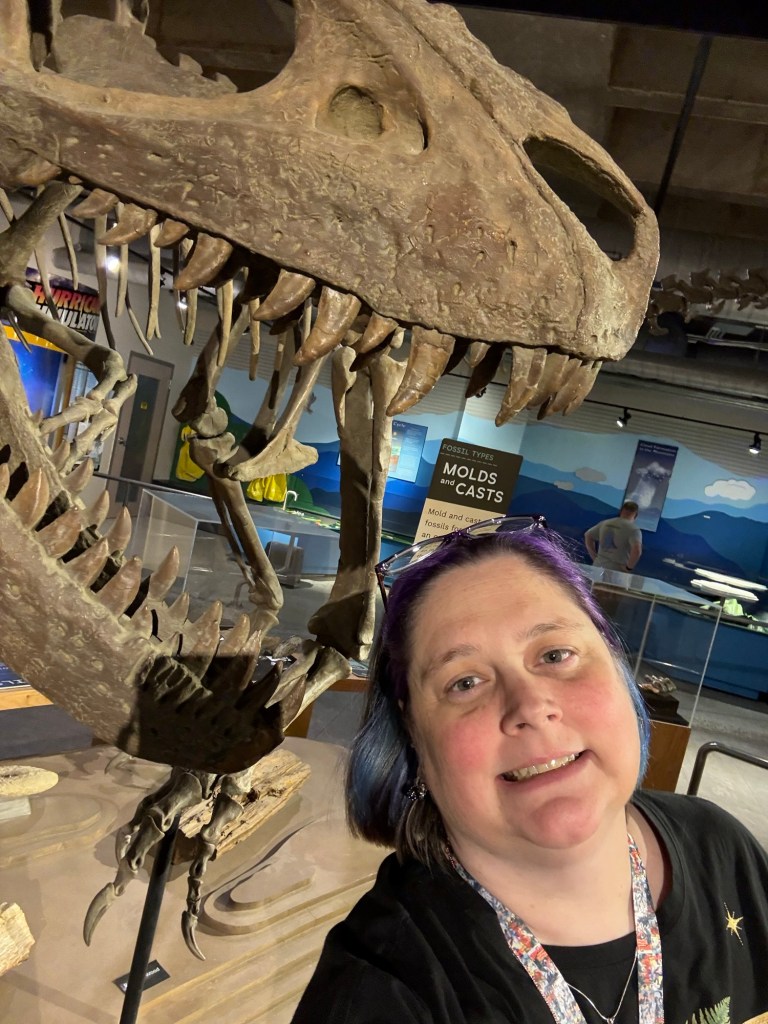
Image Credit: Noelle K. Moser. Separated by millions of years, Teratophoneus curriei and I meet in a living moment framed by the deep past preserved in bone. Asheville Museum of Science. Asheville, NC.

Carcharodontosaurus Saharicus: Shark-Like Teeth and Massive Size

email: noellemoser@charter.net

Image Credit: Carchrodontosaurus Skull.

Millions of years before Tyrannosaurus Rex roamed the earth, another group of gigantic meat-eaters ruled the land. This group of dinosaurs produced some of the largest carnivores, Giganotosaurus, Mapusaurus, Acrocanthrosaurus, and Tyrannotitan.

Roaming North Africa 99 to 94 million years ago, Carchrodontosaurus (CAR-car-oh-DONT-oh-SORE-us) reached massive sizes, some outweighing Tyrannosaurus Rex by a ton. While size alone places this theropod in the Dinosaur Hall of Fame, the most remarkable characteristic of this massive meat-eating machine is the teeth of this carnivore.

Image Credit: Chacharodontosaurus Life Restoration.

Shark-Like Teeth of Charcharodontosaurus.

Image Credit: Carcharodontosaurus Blade-Like Tooth.

Weighing seven metric tons, Carcharodontosaurus had a ferocious apatite, armed with 60 sharp recurved, serrated teeth that bear a striking resemblance to that of a great white shark – and inspiration for the name – this massive meat-eater effortlessly sliced and diced large titanosaurs which it hunted in family groups. Even more captivating was the discovery of Carcharodontosaurus.

Discovery of Carchrodontosaurus:

In 1699, Edward Lhuyd found a tooth thought to have belonged to a large extinct carnivorous fish. Subsequent studies showed that the tooth belonged to an unknown species of Megalosaurus. In 1824, William Buckland, an English Theologian, geologist, and paleontologist, discovered the first dinosaur fossil, Megalosaurus (meaning “great lizard”). The fossil recovered contained the lower mandible (jawbone) and teeth of a large theropod from the Middle Jurassic about 166 million years ago. William Buckland described the teeth as sharp, serrated, and jagged, similar to the shark tooth found by Edward Lhuyd nearly 100 years earli

Tracking across Egypt in 1914, German paleontologist Ernest Stromer and his expedition team excavated a partial skeleton of a large theropod with shark-like serrated jagged teeth described as Megalosaurus saharicus, belonging to a group of theropods called Megalosauridae.

Image Credit: Jawbone of Megalosaurus described and illustrated by William Buckland in 1824.

After careful study, in 1931, Stromer announced that the tooth belonged to a new species of carnivorous theropod dinosaur he called C. saharicus (Carcharodontosaurus Saharicus). Unfortunately, the skeleton was destroyed by Allied bombing raids during the Second World War. C. saharicus was lost to science until 1995 when a complete skull was excavated from the Kem Kem Beds in Morocco.

Size:

Stromer hypothesized that C. saharicus was around the same size as the tyrannosaurid Gorgosaurus, which was 26–30 ft long, 39–41 ft head to tail, and weighed approximately 5–7 metric tons. Carcharodontosaurus saharicus is one of the largest known theropod dinosaurs and terrestrial carnivores.

Image Credit: Graphic showing comparative sizes of the largest theropods known. Carcharodontosaurus Saharicus in amongst the largest carnivores to walk the earth.

Feeding and Diet:

Bite forces of Carcharodontosaurus and other giant theropods Acrocanthosaurus and Tyrannosaurus were analyzed showing that carcharodontosaurids had much lower bite forces than Tyrannosaurus despite being similar in size. A 2022 study estimated that the anterior (front teeth) bite force of Carcharodontosaurus was 11,312 newtons while the posterior (back teeth) bite force was 25,449 newtons, suggesting that it did not eat bones.

The shark-like teeth of Carcharodontosaurus acted like a meat slicer, while the conical-shaped teeth of Tyrannosaurus Rex crushed bone. Acrocanthosaurus (another carcharodontosaurid) relied on pack cooperation with a slice-and-dice approach to hunting. The theropods trailing behind a large herd of sauropods would take turns biting and slashing at the target; the objective was to keep the prey moving and bleeding. The lumbering prey, weakened through blood loss, exhaustion, and infections, would collapse under its weight. Like Acrocanthosaurus, this suggests that Carcharodontosaurus used this same hunting method.

Paleoenvironment:

Image Credit: The Tethys Ocean during the Mesozoic when the super content of Pangea began to break apart.

Carcharodontosaurus fossils reside in Cretaceous-age formations across North Africa. During the Cretaceous, North Africa, bordered by the Tethys Ocean, occasionally flooded and created an environment of tidal flats and lush waterways. The seasonal monsoons created sub-tropical environments supporting diverse fauna. Unlike other regions, Cretaceous North Africa is an anomaly as several groups of meat-eating dinosaurs lived nearby. Fossil records show that niche diets allowed the habitat to support fewer herbivores per carnivore ratio. Fish-eating dinosaurs such as Spinosaurus hunted in the water while land-dwelling theropods hunted on land. Simply put, the carnivorous dinosaurs did to compete for food.

Image Credit: Life restoration of life during the Cretaceous. Carcharodontosaurus Saharicus at the center right.

Extinction:

For unknown reasons, the tyrannosaurs (Abelisaurs in the Northern Hemisphere, Tyrannosaurs Rex in the Southern Hemisphere) replaced Carcharodontosaurus and the other predatory theropods Giganotosaurus, Mapusaurus, and Acrocanthosaurus. The remaining tyrannosaurs ruled the land for 3.6 million years until that fateful day 66 million years ago.

I am a multi-disciplinary writer, blogger and web content creator. If you liked this post, please visit my online writing portfolio and other sites.

The Kuntry Klucker – A blog about raising backyard chickens

The Introvert Cafe – A Mental Health Blog

~ Noelle K. Moser ~

Image Credit: Noelle K. Moser. Tyrannosaurus Rex Stan and I. Perot Natural History Museum. Dallas Texas.

Resources:

Natural History Museum Carcharodontosaurus

Ransom-Johnson, Evan & Csotonyi, Julius. Dinosaur World. Kennebunkport, Maine, Applesauce Press, 2023.

Wikipedia: Charcharodontosaurus

My visits to Natural History Museums across the country.

Daspletosaurus: The Proto-Tyrant of Late Cretaceous

email: noellemoser@charter.net

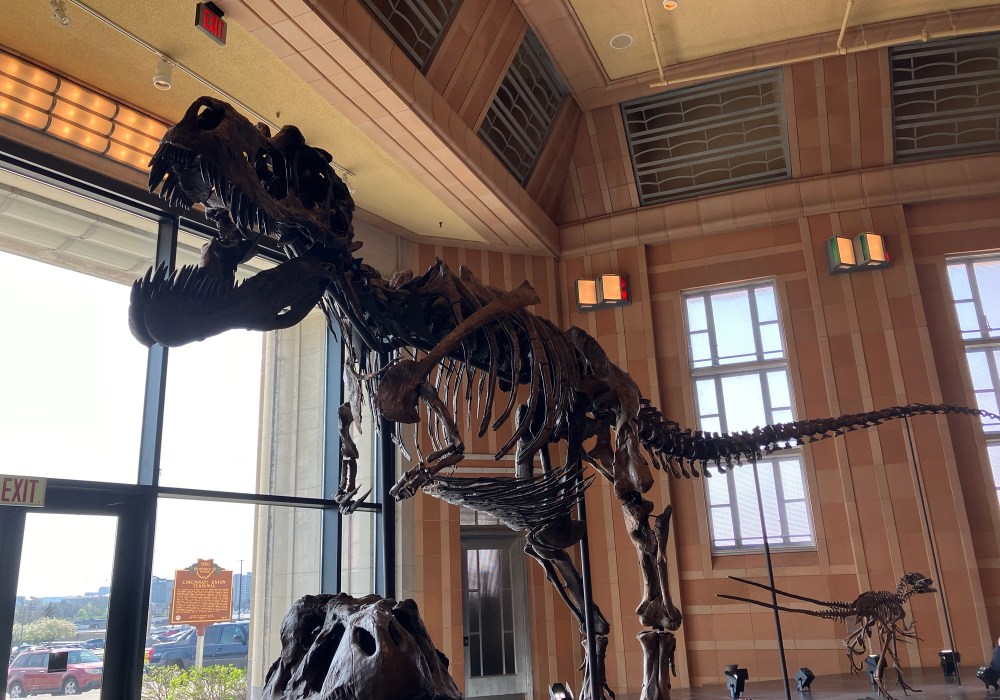
Image Credit: Noelle K. Moser. Silhouette of Daspletosaurus and skull of Tyrannosaurus Rex specimen MOR555 overlooking downtown Cincinnati. Cincinnati Museum Center. Cincinnati, Ohio.

During the Cretaceous Tyrannosaurs were the dominant force, the largest among them the mighty T-rex. Tyrannosaurus Rex was the largest, and heaviest terrestrial carnivore ever walking the earth. Millions of years before Tyrannosaurus Rex reigned as the king of the dinosaurs, another monster tyrant ruled the world. His name was Daspletosaurus (das-PLEE-toh-SORE-us). Dwarfed by Tyrannosaurus Rex, Daspletosaurus was the dominant predator of its time. What was this proto-t-rex, how did it become the tyrant of the late Cretaceous, and why did it become extinct? In the article, we will look at Daspletosaurus, the fierce lizard from the Cretaceous.

Image Credit: Noelle K. Moser. Daspletosaurus towering over Tyrannosaurus Rex (MOR555) skull. Notice the similarity and dental arrangement in the skulls. Boxy skulls with conical teeth are traits of tyrannosauroids. It is clear that these individuals are related on the same branch of the theropod family tree. Cincinnati Museum Center. Cincinnati, Ohio.

Daspletosaurs’s story begins in 1921 when paleontologist Charles M. Sternberg discovered the fossil of what was thought to be Gorgosaurus, another theropod on the tyrannosaur family tree. However, in 1970, it was determined this dinosaur was different and assigned to its genus. Daspletosaurus Torsus, “strong frightful reptile”, was assigned to this new tyrannosaur.

The disarticulated skeleton consisted of a complete skull, a forearm, two femurs, and a pelvis. It also included all of the neck, back, and tail vertebrae. Since its original discovery, only one other Daspletosaurus is known.

Daspletosaurus Torsus and its relative Daspletosaurus Horneri are similar in size. 30 feet from head to tail, 82 feet tall, and weighed about 3 tonnes. Compared to humans, Daspletosaurus is large but dwarfed by its predecessor, Tyrannosaurus Rex. T-rex was about 42 feet long, 12 feet tall at the hip, and tipped the scales at 8 tonnes.

Image Credit: Daspletosaurus size comparison.

A genus of tyrannosaurid dinosaurs Daspletosaurus is closely related to Tyrannosaurus rex, from which the clade name originates. This group includes small to massive coelurosaurian dinosaurs that evolved into Tyrannosaurus Rex.

Daspletosaurus Habitat:

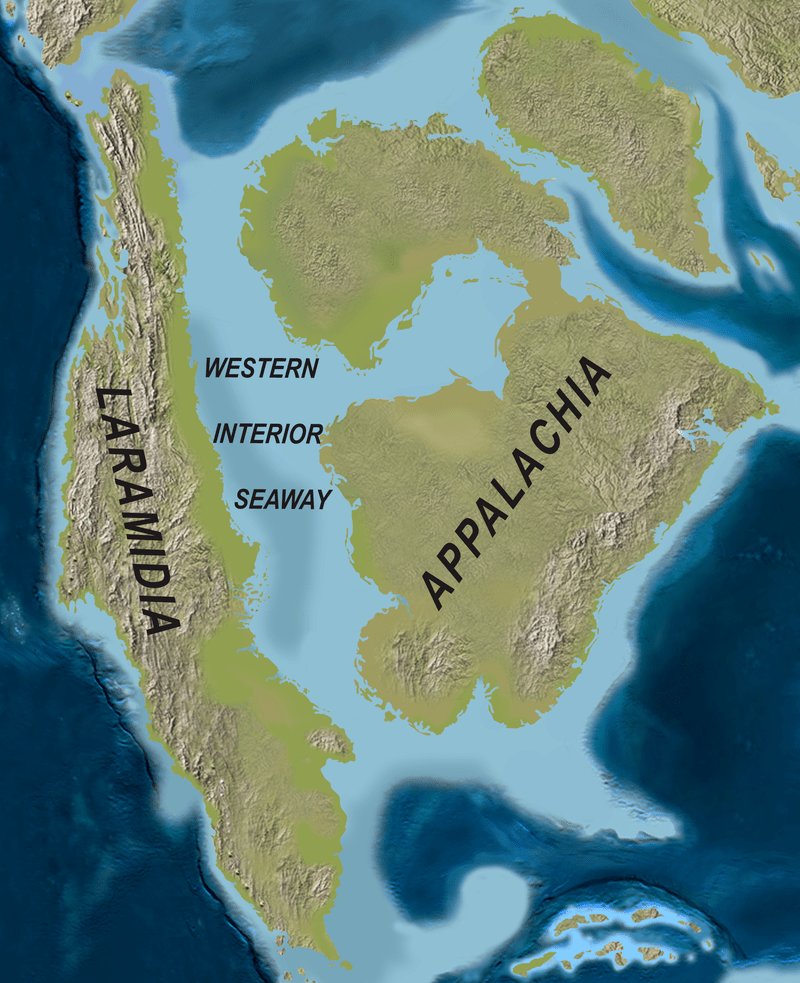
Image Credit: Laramidia and Appalachia, two landmasses that eventually made-up North America.

Home to daspletosaurus during the Late Cretaceous was a vast floodplain of the eastern coast of Laramidia. Laramidia and Appalachia are the two continents that would eventually become North America. During the Jurassic, these drifting continents were split by a vast ocean, the Interior Seaway. Along the Interior Seaway are five distinct and important formations encapsulating Daspletosaurus fossils. The Old Man Formation, Judith River Formation, Bear Paw Formation, and Dinosaur Park Formation. Situated in the Bad Lands of the western United States, these formations are present-day Montana and Lower Alberta, Canada.

Ceratopsians, hadrosaurs, Ornithosaurs, and other tyrannosaurs are entombed in the rocks near Daspletosaurus fossils. This suggests that these dinosaurs were contemporaries of Daspletosaurus and served as food for the dominant theropods at that time.

Why Did Daspletosaurus Go Extinct?

Daspletosaurus is known from 75 million years ago in the Campanian Late Cretaceous. The species suddenly disappeared 74 million years ago. After 5 million years of existence, it is unknown why Daspletosaurus went extinct. Competition with Tyrannosaurus Rex is one possibility climate change from volcanic activity is another. Whatever the reason, fossil evidence shows that Daspletosaurus disappeared, leaving Tyrannosaurus Rex to rule the land.

Daspletosurus was a fascinating theropod and an incredible link in the tyrannosaurus family as the tyrant before T-Rex.

Image Credit: Noelle K. Moser. Me standing next to Daspletosaurus Torsus and Tyrannosaurus Rex skull of specimen MOR555. Cincinnati Museum Center. Cincinnati, Ohio.

I am a multi-disciplinary writer, blogger, and web content creator. If you like this post, please visit some of my other sites or Online Writing Portfolio.

The Kuntry Klucker – A blog About Backyard Chickens

The Introvert Cafe – A Mental Health Blog.

Resources:

My Visit to Cincinnati Museum Center to study Daspletosaurus.

Holtz, Thomas R. Dr. Dinosaurs: The Most Complete, Up-To-Date Encyclopedia for Dinosaurs Lovers of all Ages. Random House. New York, NY. 2007. (pgs. 117, 124, 125, 126).

Pim, Keiron. Dinosaurs: The Grand Tour. Everything Worth Knowing About Dinosaurs from Aardonyx to Zuniceratops. The Experiment. New York, NY. 2019. (pgs. 302, 341).

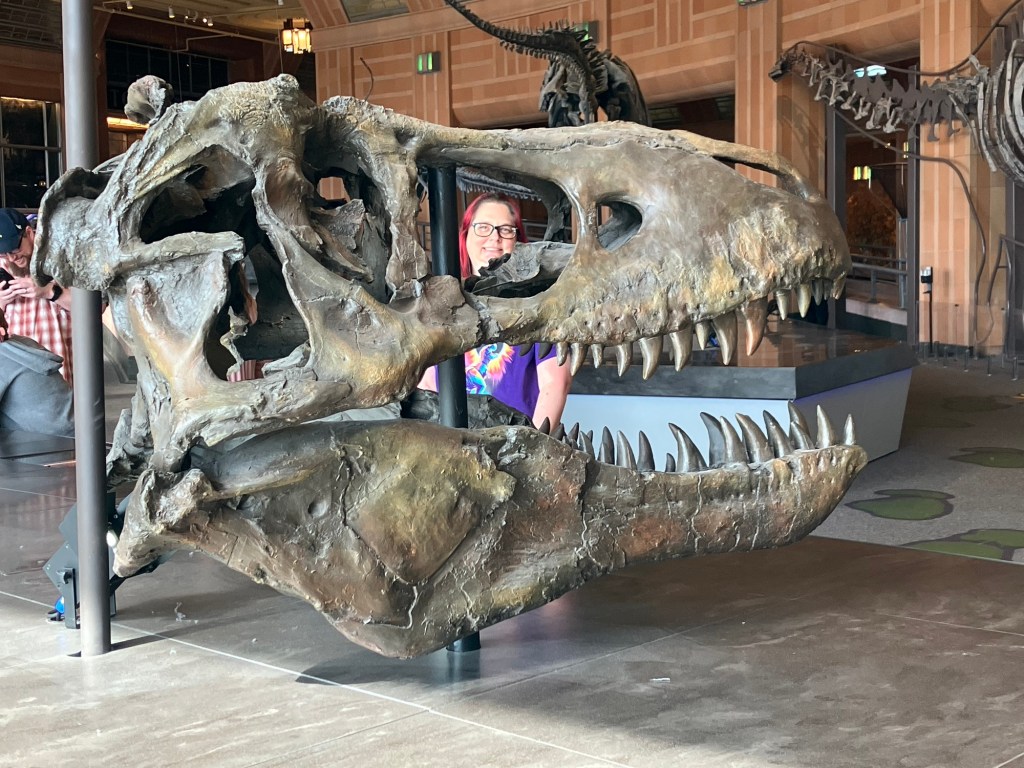
Image Credit: Noelle K. Moser. Me peering through the fenestrae of Tyrannosaurus Rex specimen MOR555. Cincinnati Museum Center. Cincinnati, Ohio.