Stan the T-Rex: History and Mystery of a Fossil Star
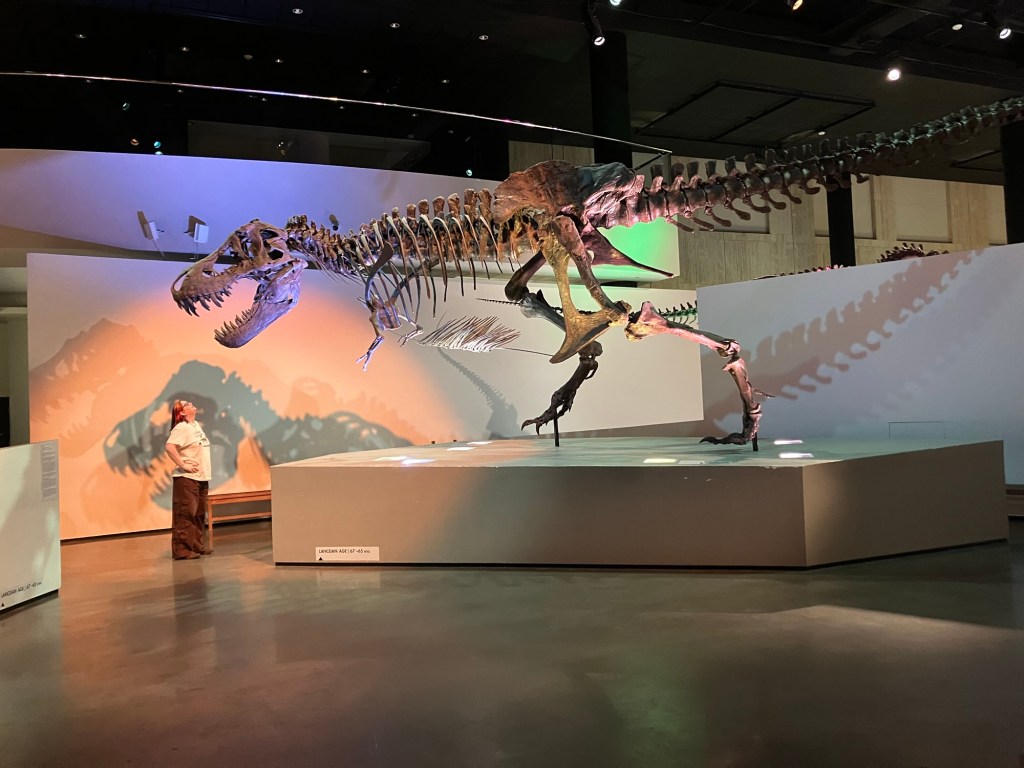
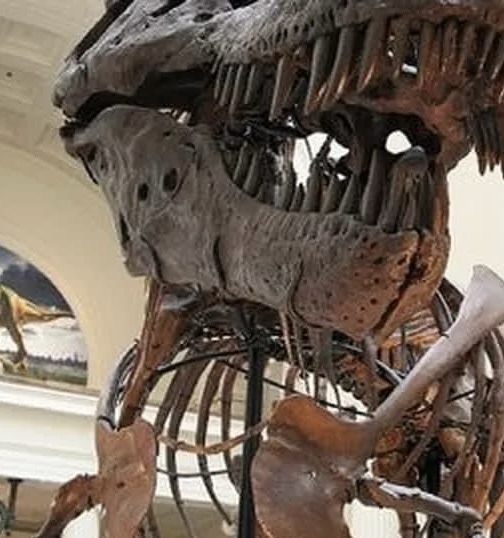
Image credit: Mary Haggard. BHI 3033 “Stan” and I in a quiet reverent exchange separated by millions of years but connected by curiosity. Houston Museum of Natural Science

Since the first Tyrannosaurus Rex specimen was discovered in 1902, this theropod has captured the human imagination worldwide. Despite the popular belief that Tyrannosaurus Rex is a homogenous species, each of the 50 Tyrannosaurus Rex specimens displayed in museums worldwide represents unique individuals.

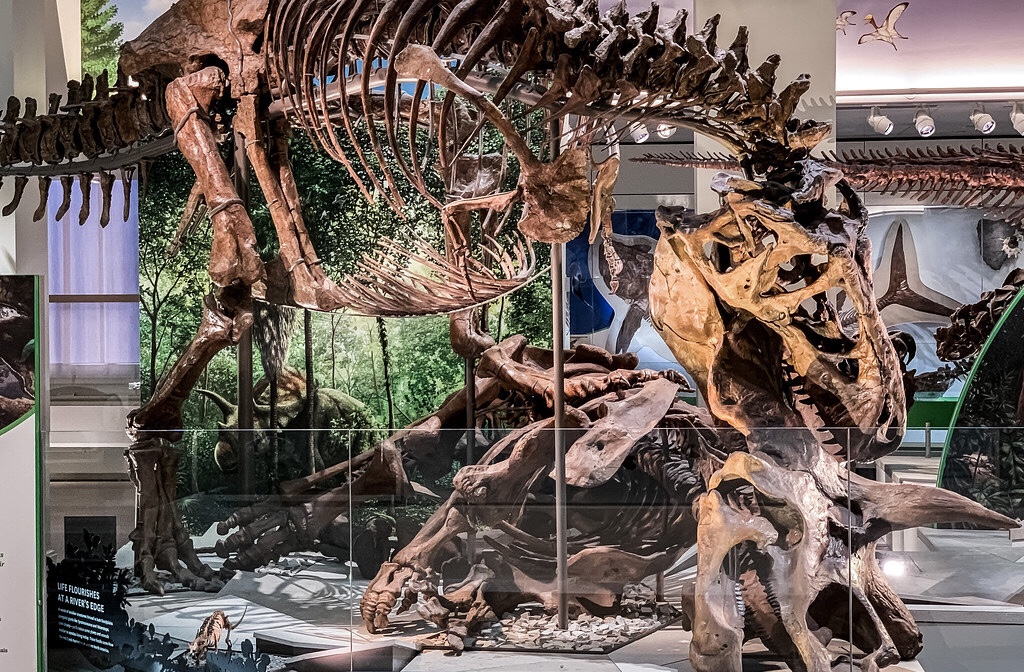
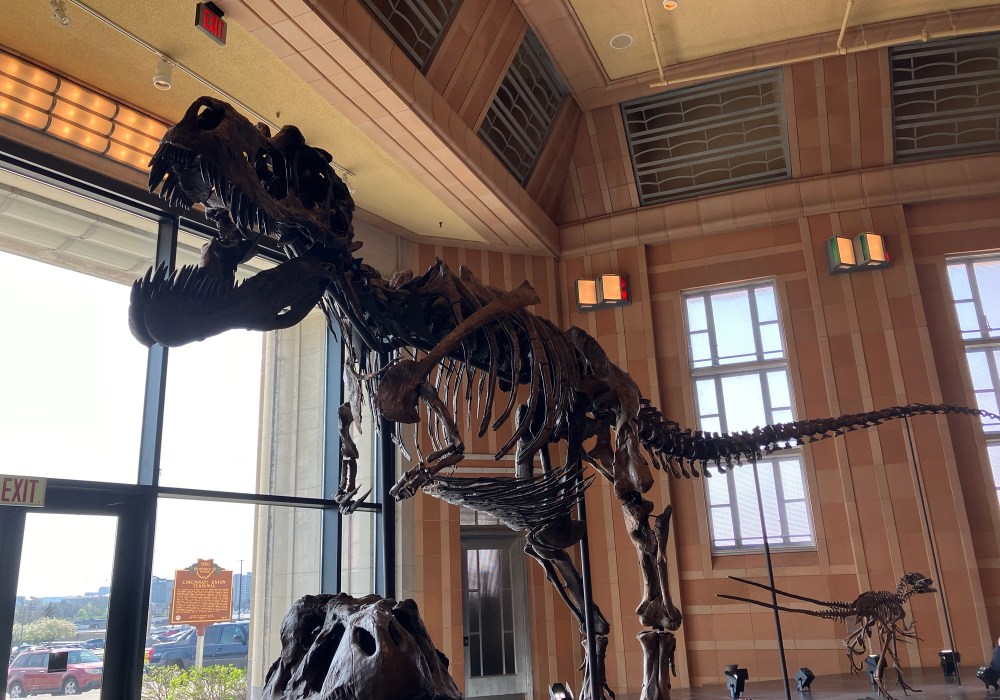
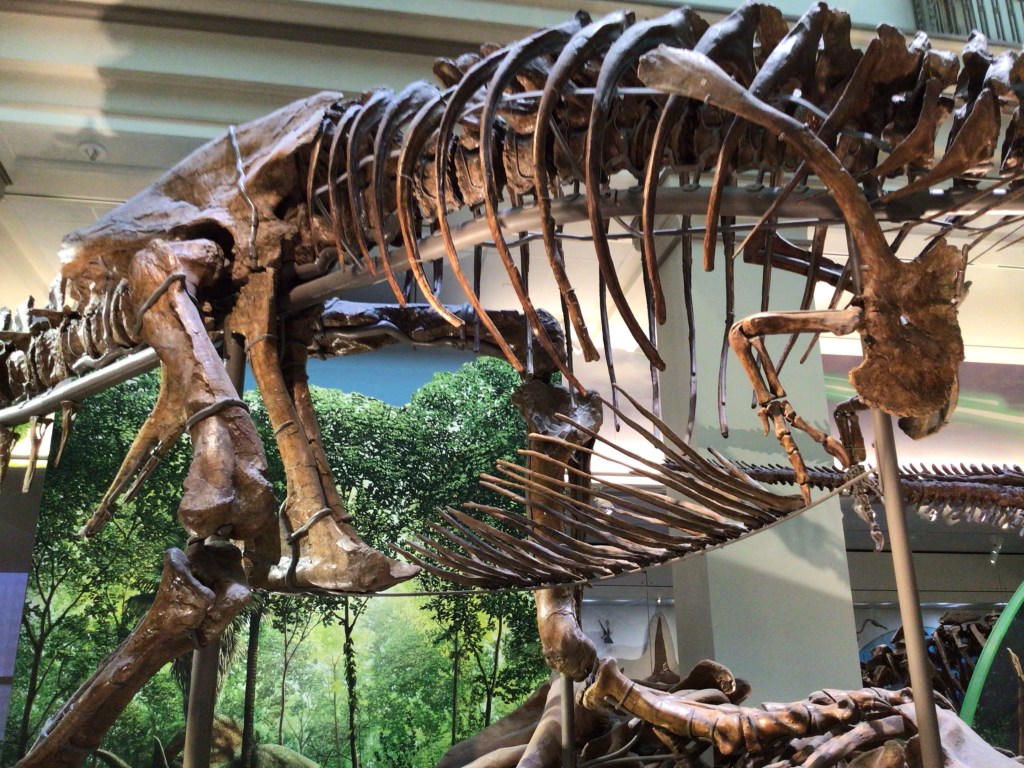
Image Credit: Noelle K. Moser. Tyrannosaurus Rex MOR 555 (Walter) and Triceratops. National Natural History Museum. Washington, D.C.

Tyrannosaurus Rex is the most popular but least understood dinosaur of the Mesozoic. The war still rages on whether T-rex was an opportunistic scavenger or the cold blooded butcher of the Cretaceous. While no carnivore would pass up a free meal, the teeth suggest that the T-rex could kill and consume meals whole with bone-crunching force. Mischaracterized as a mindless brute solely focus on killing, this intelligent animal was social and possessed the complex capability to live in social groups.

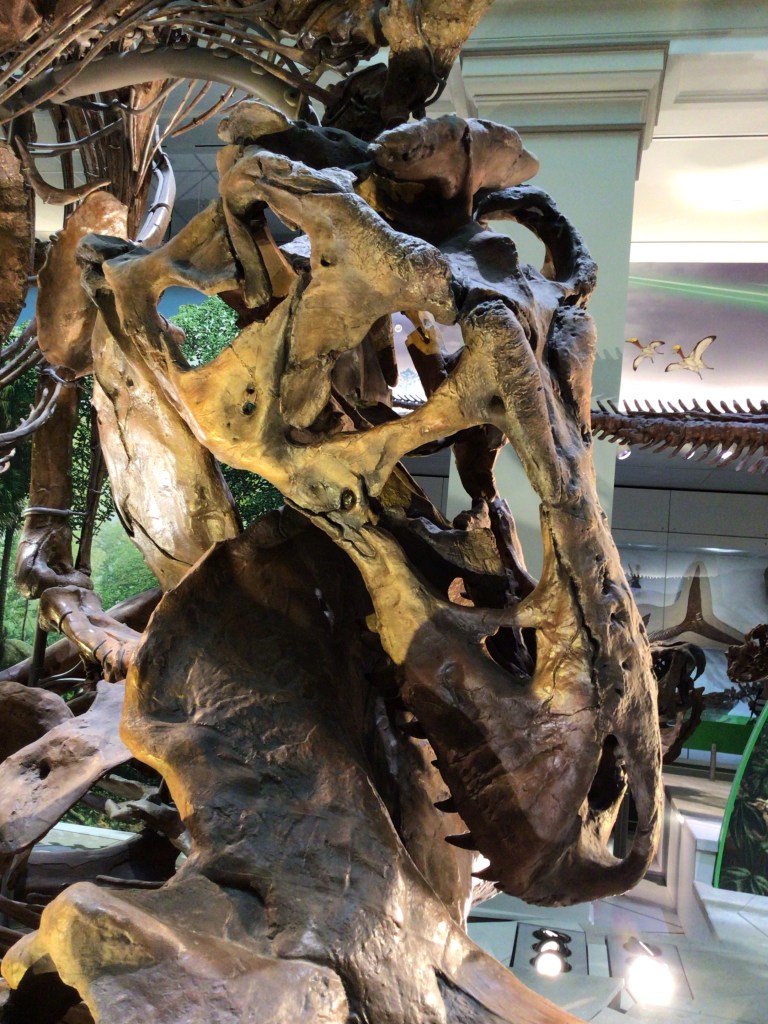
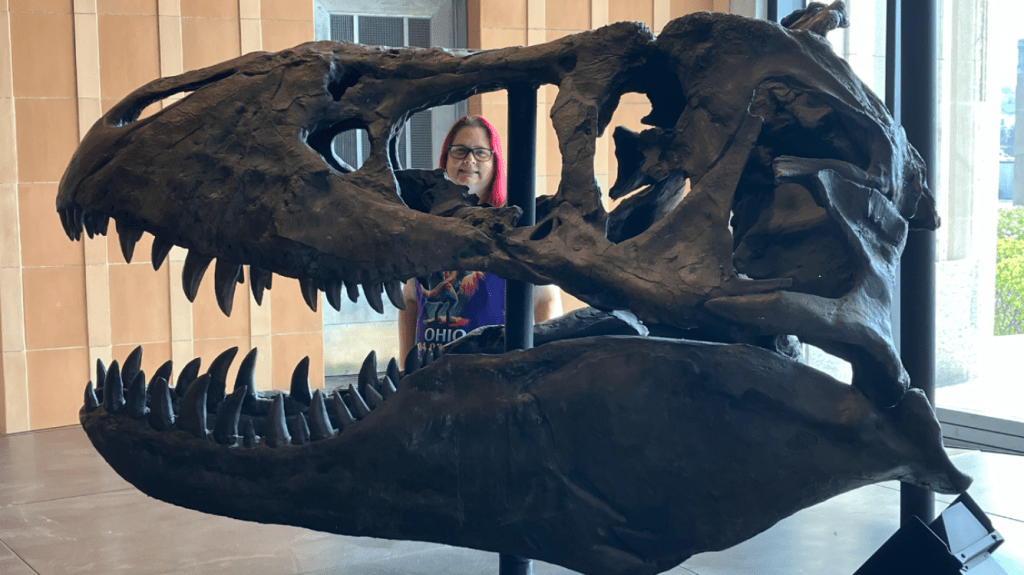
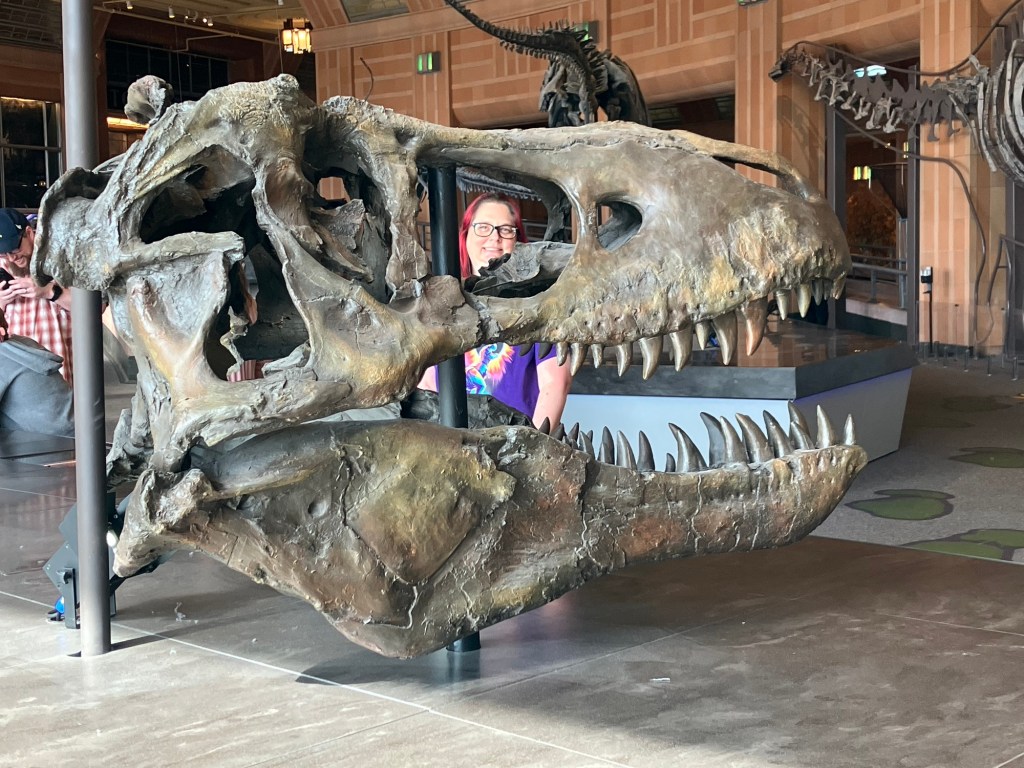
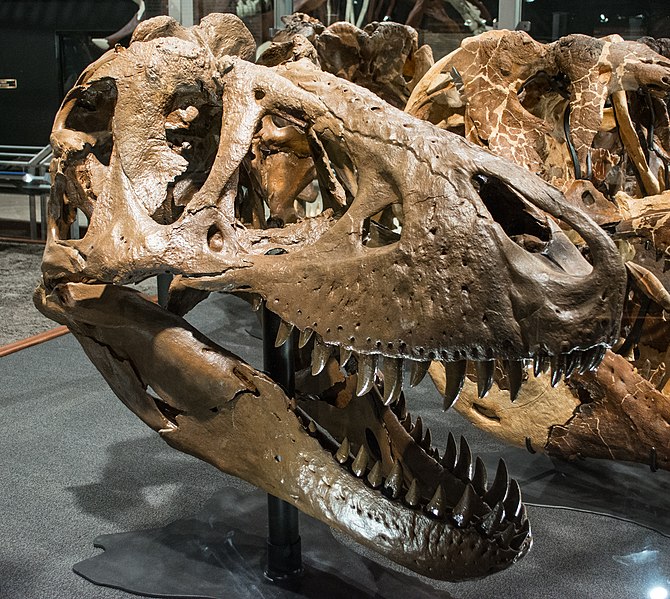
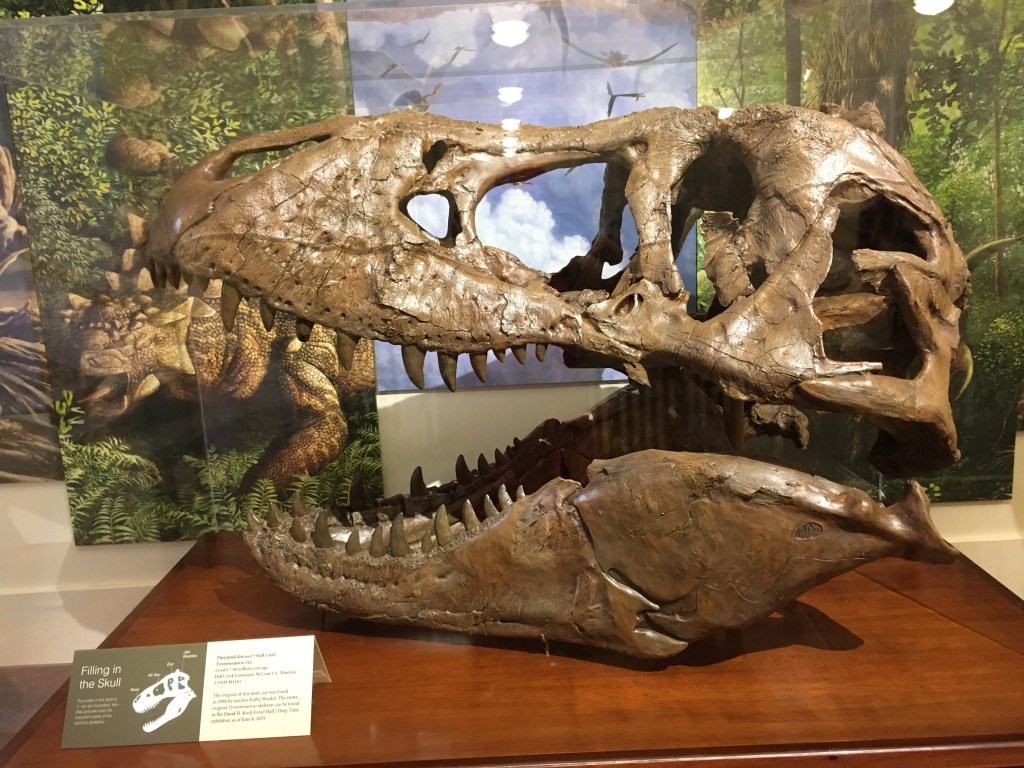
Image Credit: Noelle K. Moser. Me peering through the fenestrae of Tyrannosaurus Rex MOR 555. The serrated conical teeth of Tyrannosaurus Rex were the most extreme anti-tank weapon nature produced. Capable of piercing the armor of any horned or armored dinosaurs during that Cretaceous. Cincinnati Museum Center. Cincinnati, OH.

Furthermore, some studies suggest that Tyrannosaurus rex may have been more than just a fearsome predator—it could have also been a devoted partner. Take Sue, one of the most iconic T. rex specimens: her skeleton is marked with numerous injuries, some quite severe, yet evidence of calcium deposits indicates significant healing. While Sue’s survival likely speaks to her own resilience, comparisons with modern birds—T. rex’s closest living relatives—raise the possibility that she may have been tended to by a loyal companion during recovery.
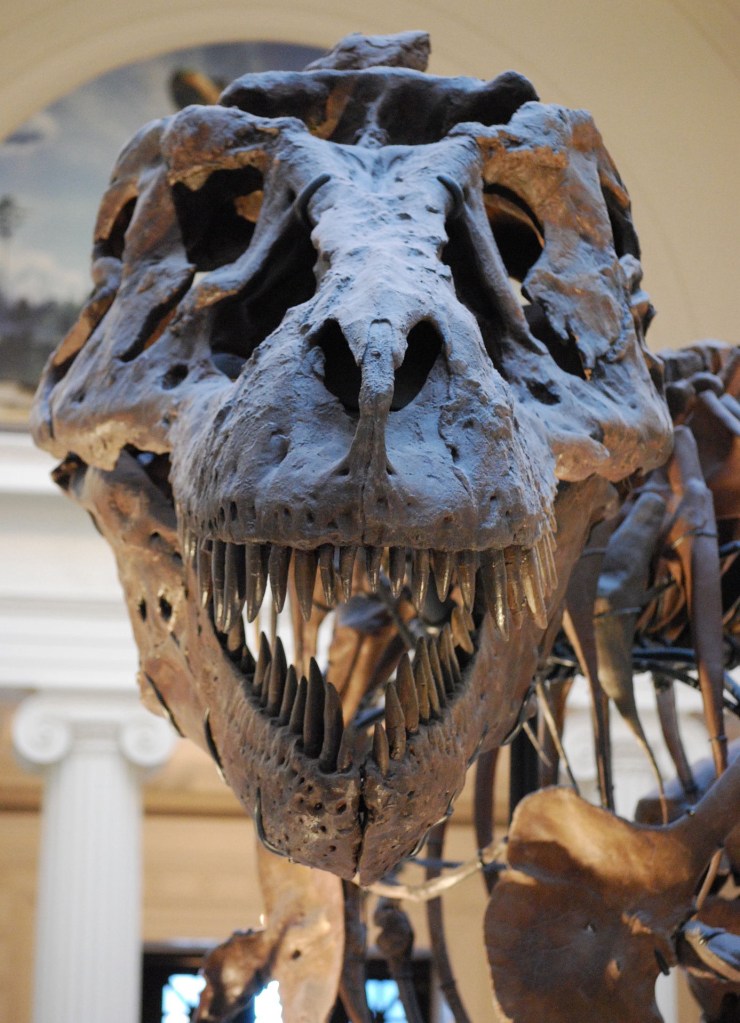
Tyrannosaurus Rex, Sue. Noelle K. Moser. Chicago Field Museum.

Despite all we’ve uncovered about the iconic Tyrannosaurus rex, much about this formidable predator remains shrouded in mystery. With each new discovery, we gain deeper insight into its biology and behavior. Stan, in particular, gave us an unprecedented look at what may be evolution’s most advanced anti-tank weapon—a predator equipped with bone-crushing strength and armor-piercing teeth capable of breaching even the most well-defended dinosaurs.

Image Credit: Noelle K. Moser. A cast of BHI 3033 (Stan) and I. The largest T-rex fossil discovered with a nearly complete skull, offering an unparalleled glimpse into the brain structure of the Tyrannosaurus Rex. Perot Natural History Museum. Dallas, Texas.

Contrary to the long-held image of Tyrannosaurus rex as a solitary predator that only sought out others to mate, recent research paints a far more social picture. Rather than roaming alone through the Late Cretaceous landscape, T. rex may have hunted in coordinated groups. If a single T. rex lurking in the underbrush is terrifying, imagine a pack working together to ambush their prey. The idea of these apex predators operating as a unit is enough to send shivers down the spine of anything unfortunate enough to cross their path.

Studies on Stan and other robust Tyrannosaurus Rex fossils, suggest that the T-rex’s intelligence was among the highest, akin to that of Deinonychus (Velociraptor) in terms of social intelligence, enabling them to cooperate in packs for hunting and nurturing their young.

This massive and intimidating theropod, renowned for its bone-shattering bite, was both highly social and remarkably intelligent. Today, the mighty Tyrannosaurus Rex is recognized as a cunning and formidable predator, rightfully earning its crown as the undisputed King of the Dinosaurs.

Each Tyrannosaurus Rex tells a unique story captured in stone. Their bones whisper tales of thrilling lives, injuries, illness, dramatic and sometimes violent deaths, each different from the next. This article embarks on an exciting journey into the world of the Tyrannosaurus Rex, featuring the fascinating story of one of its most famous fossils, BHI 3033, also known as Stan.

The Story of Stan:
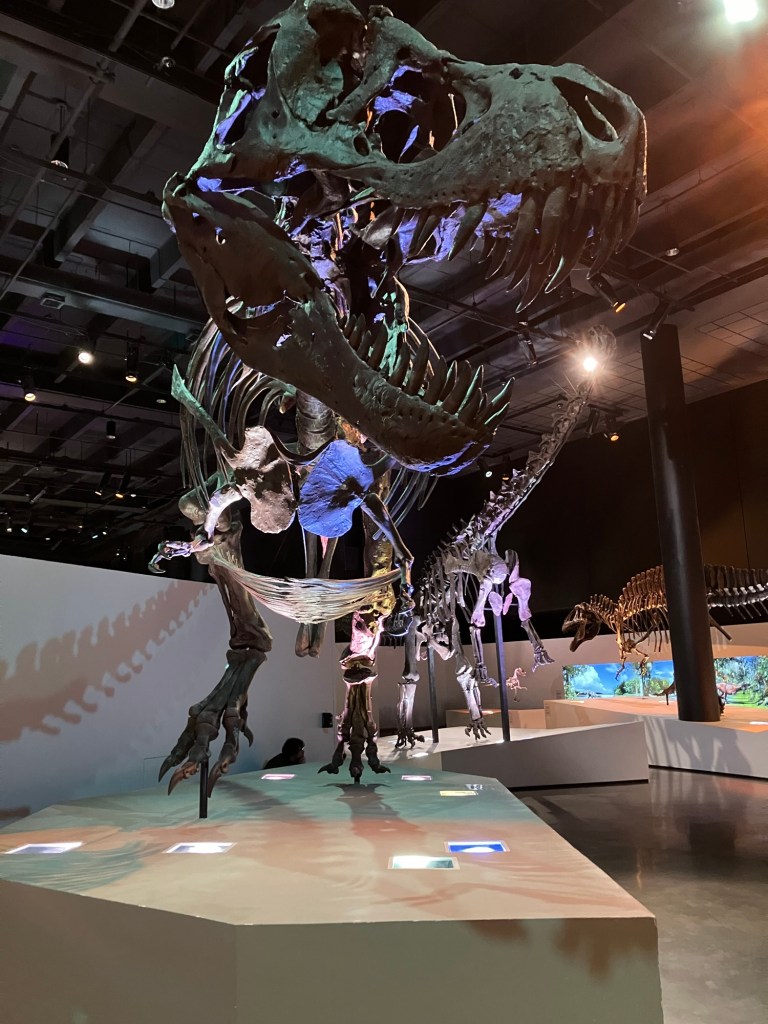
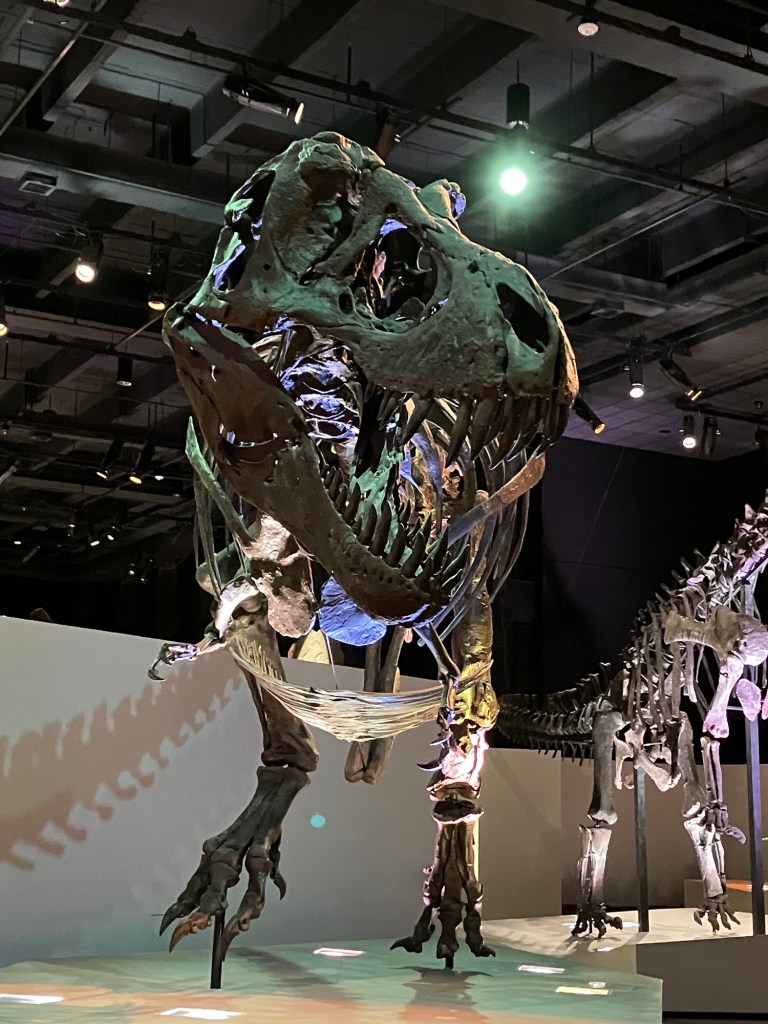
Image Credit: Noelle K. Moser. Stan, standing at the intercetion of science and popular culture. Houston Museum of Natural Science.

In 1987, deep beneath the K–T boundary in the Hell Creek Formation near Buffalo, Harding County, South Dakota, a remarkable discovery waited in silence—16 meters underground, laid Stan, entombed for 66 million years. Excavation of his fossil began on April 14, 1992, led by the Black Hills Institute, and was completed by May 7 of the same year. Cataloged as BHI 3033, the specimen was named “Stan” in honor of its discoverer.

After more than 30,000 hours of detailed preparation, Stan made his public debut in June 1996. His first appearance was on an international tour in Japan, captivating audiences across the globe. Today, Stan remains one of the most complete Tyrannosaurus rex skeletons ever unearthed, providing an extraordinary window into the anatomy and behavior of this iconic predator.

Image Credit: Hell Creek Formation.

Life in Hell Creek During Stan’s Life:

AI image of representing Stan in Late Cretaceous Hell Creek. Powered by Open AI.

Life in the Hell Creek Formation during the Late Cretaceous—around 66 million years ago—was vibrant, dynamic, and full of drama. It was a lush, subtropical environment with a warm, humid climate, lots of rainfall, and diverse ecosystems including coastal plains, swamps, rivers, and forests. Very silmilar to the bayous of Louisiana and the Pacific Northwest today.
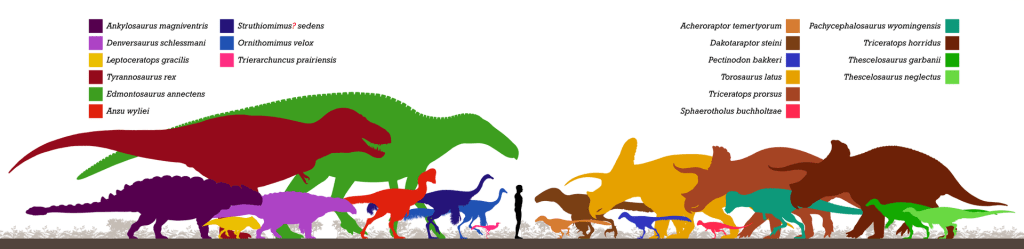
Image Credit: Paleofauna of Hell Creek

Living along side Stan were a variety of paleoflora and paleofauna. Some of the most recognizable dinosaurs shared this ecosystem.

Triceratops – Herd-dwelling horned dinosaurs, likely locking horns over mates or territory.

Edmontosaurus – Large, duck-billed hadrosaurs, probably migrating in herds and grazing like prehistoric cattle.

Ankylosaurs and pachycephalosaurs – Armored tanks and dome-headed headbutters roaming under the cover of trees.

Small theropods like Troodon and Dromaeosaurus – Agile predators or opportunistic omnivores.
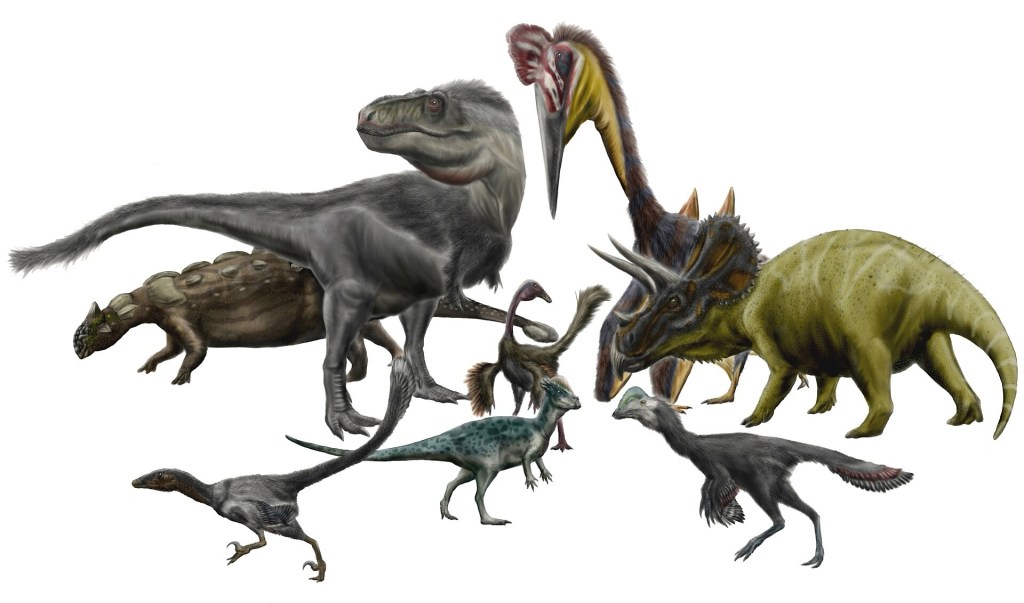
Image Credit: Dinosaurs of Hell Creek

Other Life Living In Hell Creek with Stan:

Crocodilians like Borealosuchus – Lurking in the water, ambushing anything that got too close.

Turtles, amphibians, and early mammals – Filling ecological niches on the ground, in trees, and even underground.

Pterosaurs – Soaring above the forests, especially near waterways.

Birds – Already fairly modern in form, flitting through the canopy or diving for fish.

Paleofauna of Hell Creek:

Image Credit: Noelle K. Moser. Paleofauna of the Cretacious were ferns and flowering plants. National Botanical Gardens. Washington, D.C.

The paleoflora of the Hell Creek Formation during the Late Cretaceous was incredibly rich and diverse. It reflected a humid, subtropical to warm temperate climate, with a strong influence from nearby coastlines and river systems. The vegetation was a mix of ancient holdovers and newer, flowering plants, painting a picture of a world in ecological transition.

Recognizable and common plants thriving in Late Cretaceous Hell Creek.

Angiosperms (Flowering Plants)

Platanaceae (sycamore relatives)

Magnoliaceae (magnolia-like plants)

Lauraceae (laurel family)

Fagaceae (beech/oak relatives)

Conifers (relatives of evergreen trees)

Ferns and Tree Ferns

Mosses and Liverworts

The vegetation of Hell Creek supported a complex web. These plants also helped form the distinctive layered stratigraphy of Hell Creek, especially with leaf litter, root systems, and decaying wood contributing to the fossil record.

AI generated Image. Paleoflora of Hell Creek during the Cretaceous. Powered by Open AI.

The audio landscape of Hell Creek was vibrant and diverse. The buzz of large insects, chirps, and dinosaur calls echoing across the floodplains, and maybe the distant rumble of a thunderstorm rolling in from the coast. Life was beautiful and brutal.

Daily Life In Late Cretaceous Hell Creek:

Using our minds eye and evidence from the fossil record, we can construct a plausable scenario from Stan’s perspective in Late Cretaceous Hell Creek.

Let’s drop into a moment in Hell Creek—quiet, moody, and full of tension just under the surface.
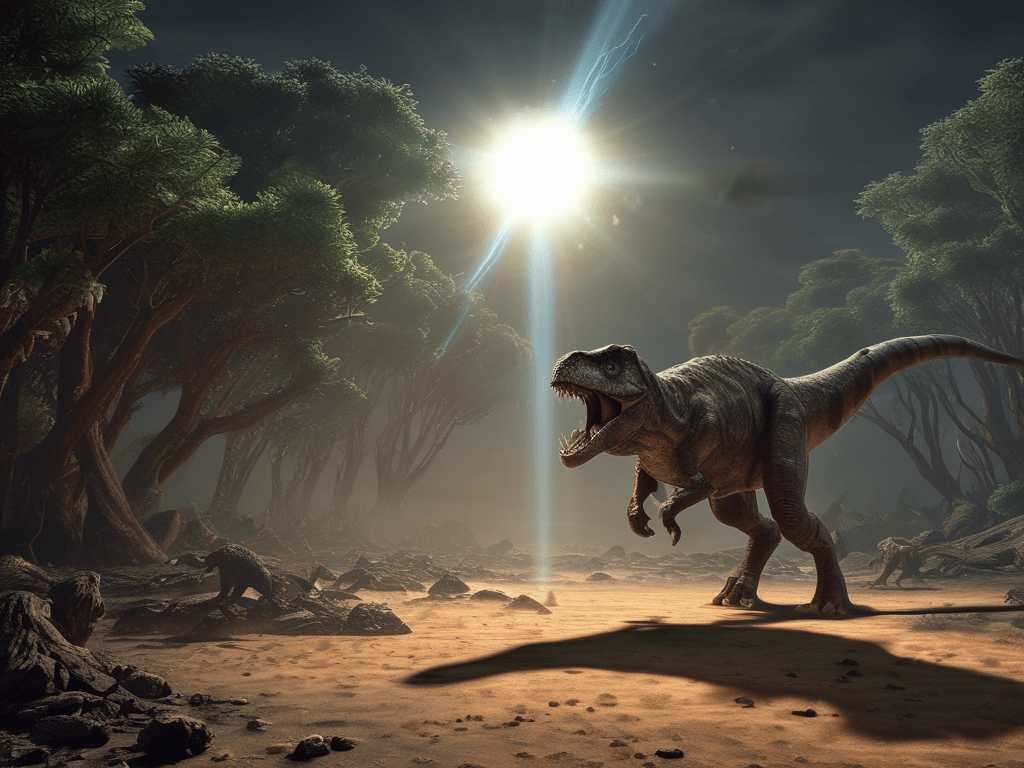
AI image of Stan, Late Cretaceous Hell Creek. Powered by Open AI.

It’s early morning. A pale sun pushes through low clouds, casting a gauzy light across the misty floodplain. The air is heavy with moisture, thick with the scent of wet ferns, rich soil, and the musk of animals you can’t yet see. Somewhere in the distance, a chorus of frogs sings its final notes before the heat rises. A breeze rustles the leaves of broad-leaved magnolias and ginkgoes, sending tiny droplets scattering from the canopy like diamonds.

You’re standing at the edge of a slow-moving river, its banks muddied by last night’s rainfall. A snapping turtle eyes you warily before vanishing beneath the surface with barely a ripple. Dragonflies hover above the reeds like flickering ghosts, their wings catching light that breaks through the trees.

Suddenly, the brush on the other side of the water shifts. A young Edmontosaurus steps out, its nostrils flaring, scenting the air. Its massive, pebbly hide is dappled with dew and the shadow of leaves. It cranes its neck, listening, before lowering its head to drink.

Then—a silence. Not peaceful, but alert. A flock of early birds bursts from the trees with a shriek. The Edmontosaurus jerks upright, trembling. Across the clearing, between two tree trunks as wide as a truck, a shape stirs.

Out steps Stan. Not charging. Just there. Quiet. Intent. His skin is mottled, mud-streaked, speckled with insects and scars from battles with other tyrannosaurs in the area. Each footfall is heavy but controlled, barely making a sound on the damp earth. His eyes are fixed on the hadrosaur—not wild with hunger, but cold and assessing.

The Edmontosaurus bolts.

In a flash of spray and crashing reeds, Stan lunges after it, jaws parted just enough to reveal evolution’s most advanced anti-tank weapon—a predator equipped with bone-crushing strength and armor-piercing teeth capable of breaching even the most well-defended dinosaurs. The trees shudder with the pursuit. A burst of birds takes flight, and somewhere in the distance, an unseen Triceratops bellows like thunder.

Then, silence again. The floodplain breathes.

Hell Creek wasn’t just a jungle full of dinosaurs—it was also the scene of an impending catastrophe. The ecosystem was thriving but balanced on a knife’s edge, and just before the asteroid impact, you’d never know extinction was looming.
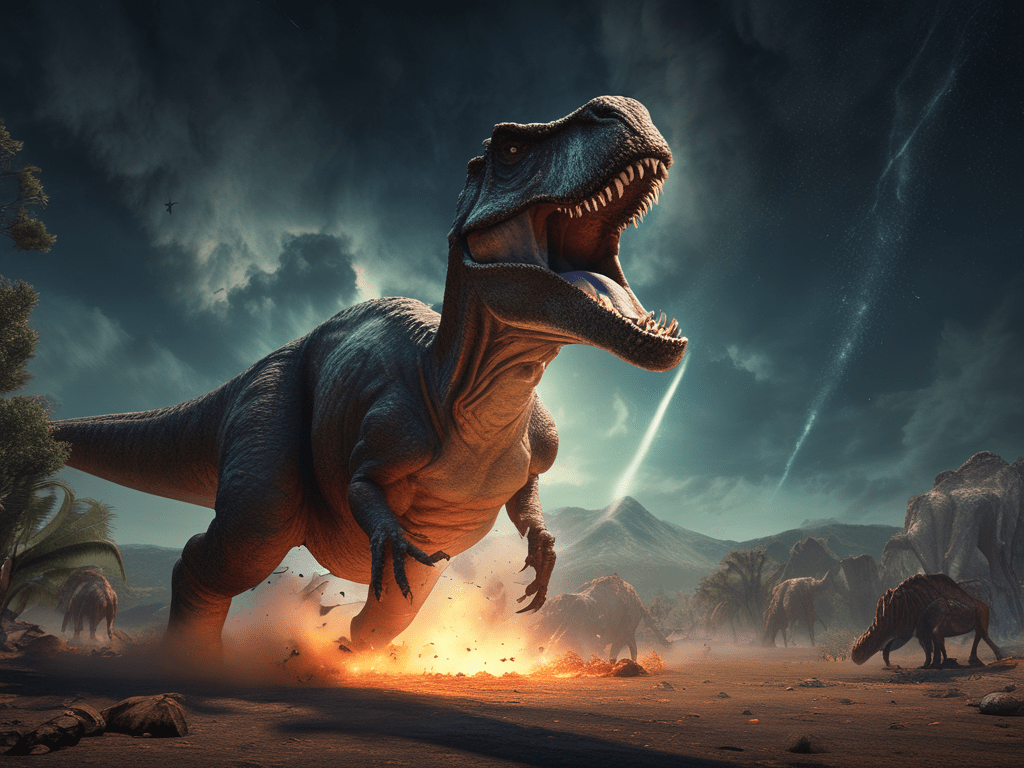
AI generated image: While the conditions of Stan’s death are unclear, life in Hell Creek came to an abrupt end when with Chicxulub impact. Powered by Open AI.

What Remained of a Fossil Star?

It is unclear how Stan died. Based on the preservation of his skeleton, Stan died near a water source as his body was fossilized relatively quickly with minimal signs of scavenging by ofher animals living in Hell Creek at his death.

“The Hell Creek Formation during the Late Cretaceous represented a fluvially dominated floodplain system. The high water table and frequent sedimentation events within this environment facilitated exceptional fossil preservation, as evidenced by specimens such as Tyrannosaurus rex individuals Stan and Sue.” (Johnson, Nichols, Hartman. 2002).
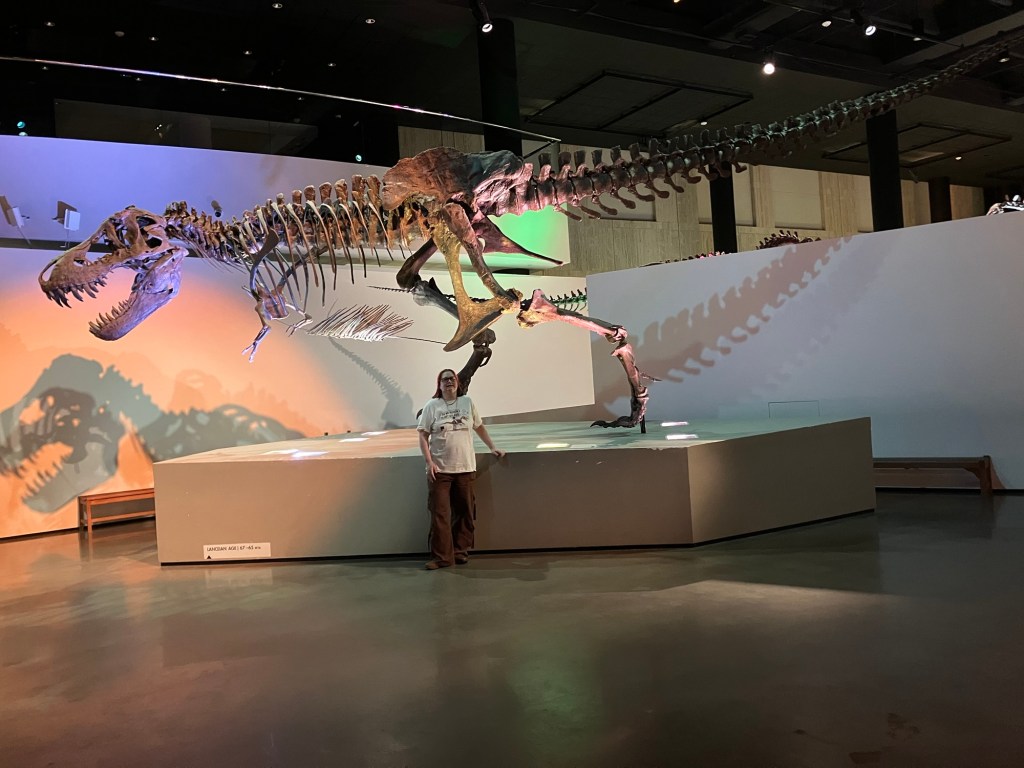
Image Credit: Mary Haggard. Stan and I. The remains of a fossil star. Houston Museum of Natural Science.

The cometeness of Stan’s skeleton totalled 190 bones, or 63% of the skeleton by bone. (Larson, 2008).

Preserved skeletal elements of Stan include:

A nearly complete skull,

59 vertebrae (9 cervical, 14 dorsal, 5 sacral, 31 caudal);

24 cheverons;

14 cervical ribs;

12 dorsal ribs;

Anearly complete pelvis;

Left femora (femor or thigh bone);

Both tibiae;

Both calcanea;

Astragali;

Left metatarsals; and

11 pes phalanges.
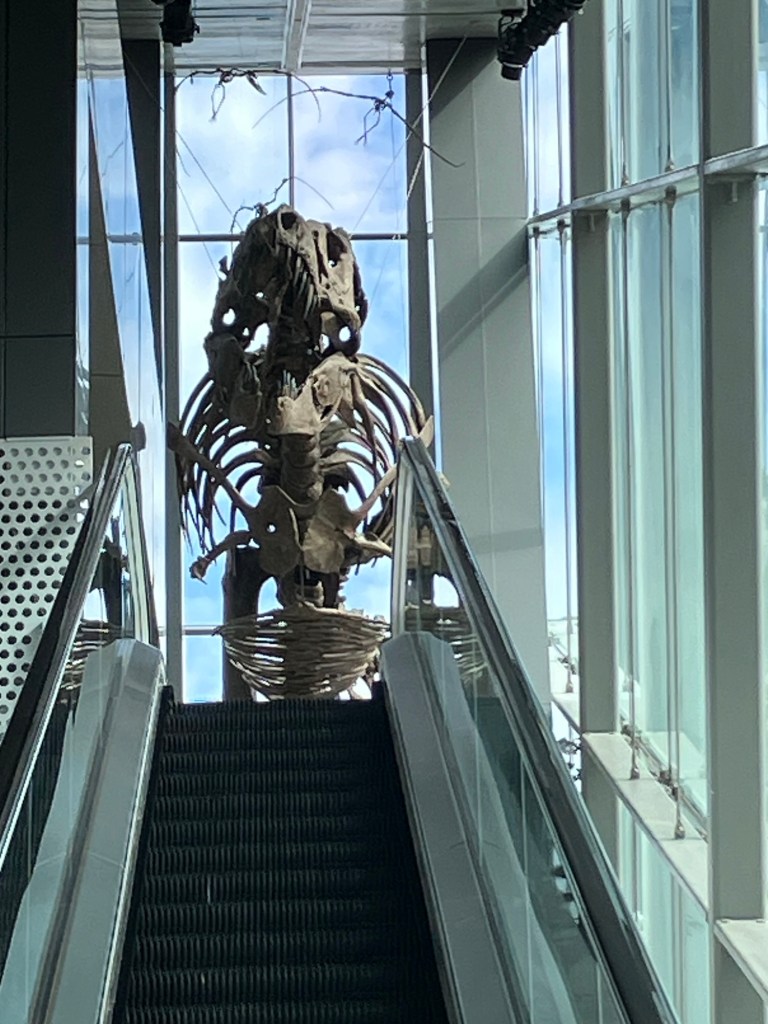
Image Credit: Noelle K. Moser. Cast of Stan. Peroit Natural History Museum. Dallas, TX.

The prehistoric story preserved in Stan’s bones:
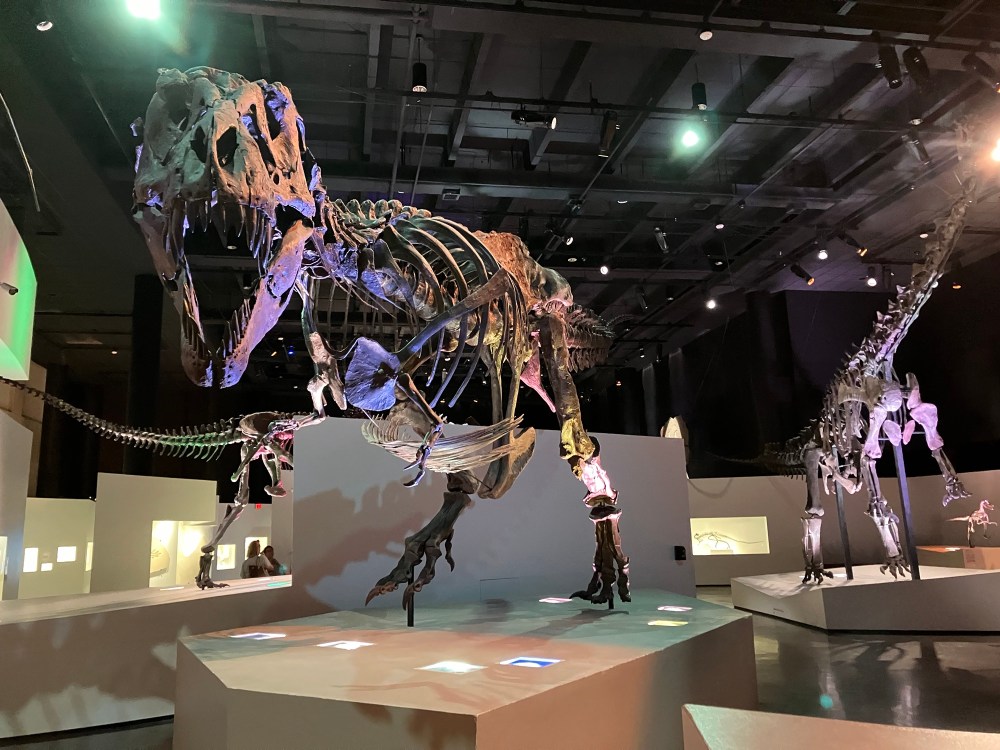
Image Credit: Noelle K. Moser. BHI 3033, Stan, large jaws slightly agape, Stan embodies the powerful presence one of the most iconic creatures that evolution ever produced. Houston Museum of Natural Science.

Stan’s fossil tells a compelling story of adversity, injury, determination, and survival. Among the most striking findings is the presence of fused cervical vertebrae, which clearly indicates that at some point in his life, he was bitten by another T-rex.

The fossil record demonstrates that tyrannosaurs engaged in face biting, a well-documented ritualistic behavior in the fierce competition for mating rights. The calcium deposits found in Stan’s bones confirm that he not only survived this injury but healed from it. However, the fused vertebrae likely caused him discomfort for the rest of his life, underscoring his resilience and tenacity in the face of challenges.
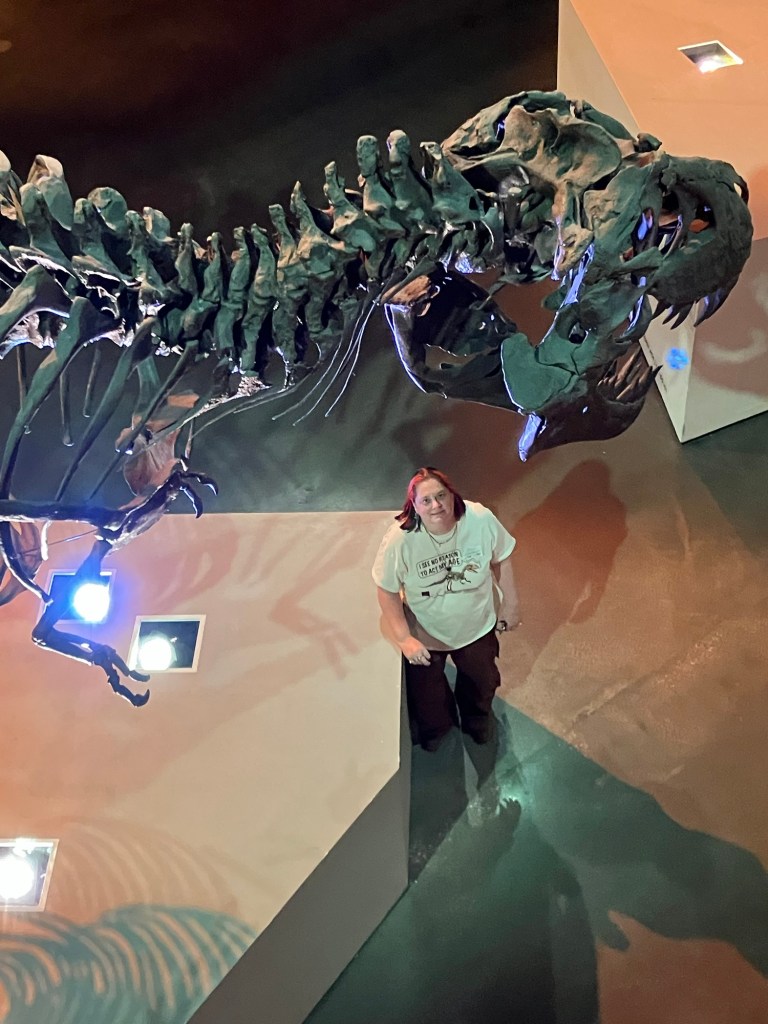
Image Credit: Mary K. Haggard. The fusing of Stans 5-6 Cervical Vertebrae indicates that at one point in his life he was bitten by another Tyrannosaurus Rex. Houston Museum of Natural Science.

The Cretaceous period posed significant challenges for the Tyrannosaurus Rex. As the undisputed King of the Dinosaurs, T-rex had its advantages, but it was not immune to the hidden dangers of Mesozoic life. Just like today, parasites were a prevalent issue for dinosaurs, and Stan was no exception. Bone infections caused by Trichomonas protozoan—common parasites found in both birds and dinosaurs—were evident, marked by distinct round holes on the jaws of several T-rex specimens. These infections led to inflammation and pain, which undoubtedly affected their hunting and feeding efficiency.
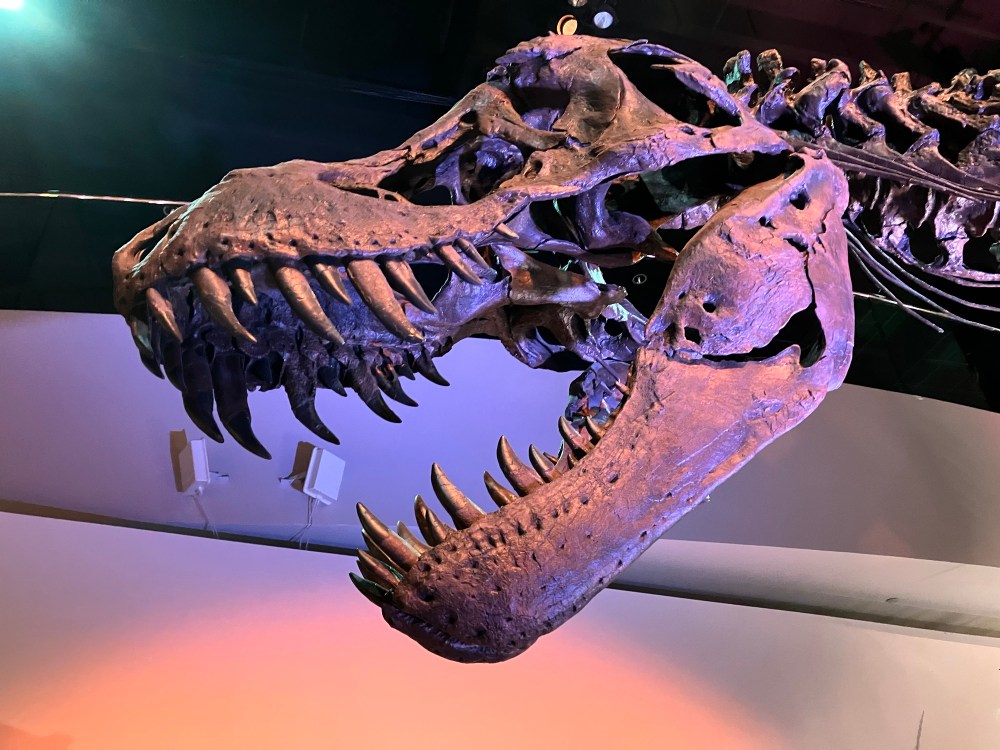
Image Credit. Noelle K. Moser. Round holes on the side of Stan’s lower jaw show indications of bone infection caused by bone eating parasites. Houston Museum of Natural Science.

Most Complete Tyrannosaurus Rex Skull

Stan’s fossil has yielded valuable insights into the intricate structure of a Tyrannosaurus rex skull. Exceptionally well-preserved, it has enabled scientists to create a brain cast from the brain case associated with this specimen. Much like in humans, the brain leaves distinct impressions on the interior of the skull, allowing for a detailed examination of its anatomy.

Studies of these brain casts indicate that the T. rex possessed a notably large auditory lobe, particularly attuned to low-frequency sounds below 40 Hz. This finding not only suggests that Tyrannosaurus rex could hear such low sounds but also raises the possibility that it could produce them. While humans are unable to perceive sounds below 20 Hz, one would likely be able to sense the vibrations from a T. rex’s vocalizations if encountered in its natural environment.
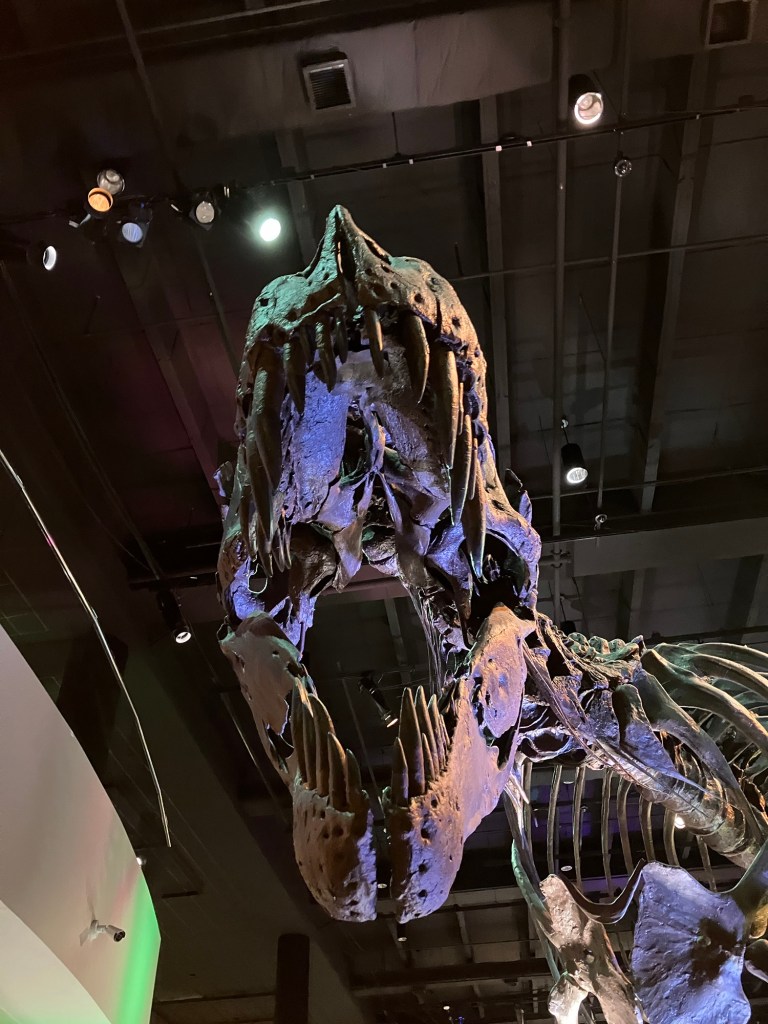
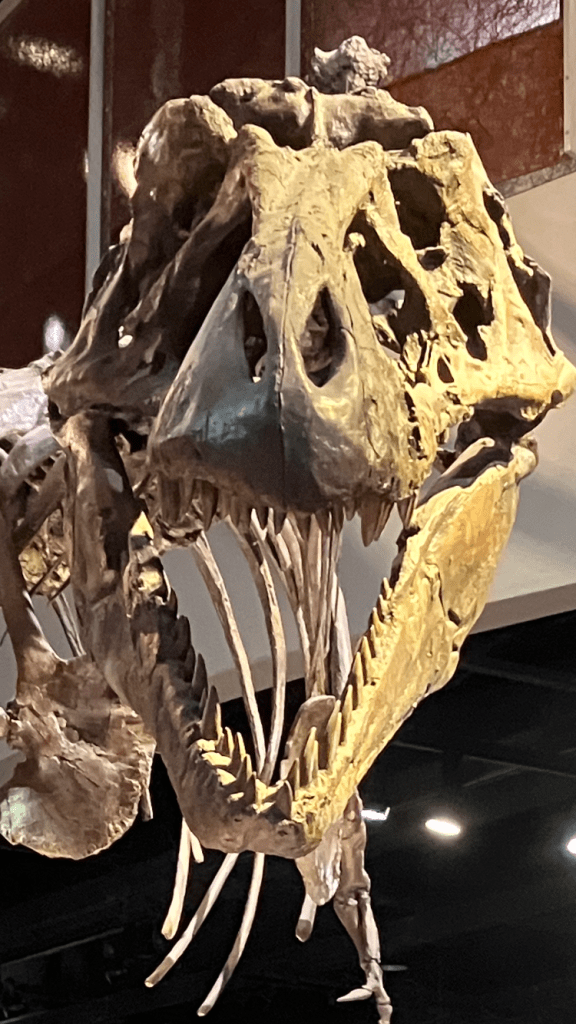
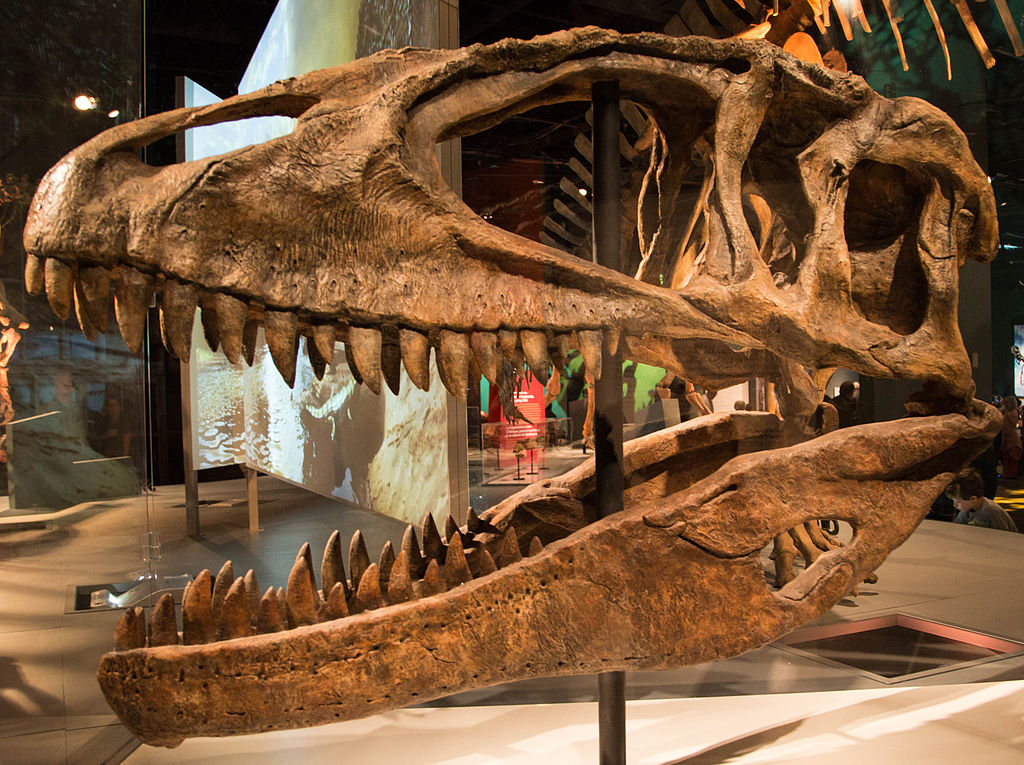
Image Credit. Noelle K. Moser. Stan’s jaws gracefully agape showing his massive conical bone-crushing teeth. Houston Museum of Natural Science.

Stan provides an extraordinary insight into what could be considered one of evolution’s most advanced anti-tank weapons—a formidable predator characterized by its bone-crushing strength and armor-piercing teeth, which were capable of penetrating even the most well-defended dinosaurs. The ongoing debate about whether Tyrannosaurus rex was primarily a hunter or a scavenger continues to capture the interest of dinosaur enthusiasts. Dental adaptations clearly indicate that Stan was well-equipped to crush bones and consume prey whole with remarkable efficiency.

With conical, serrated, and recurved teeth resembling a set of razor-sharp steak knives, Tyrannosaurus rex was perfectly adapted to tear large chunks of flesh from its prey. Lacking molars and grinding teeth, it likely swallowed these meals whole while using its immense bite force to crush bone. The extraordinary fossil evidence from Stan has reshaped our understanding of T. rex, offering compelling insights that challenge the notion of this fearsome predator as merely an oversized scavenger.

I am a multi-disciplinary writer, paleontology blogger, and content creator. If you found this post engaging, be sure to check out my online writing portfolio to explore my extensive body of work.

References:

Kirk R. Johnson, Douglas J. Nichols, Joseph H. Hartman, 2002. “Hell Creek Formation: A 2001 synthesis”, The Hell Creek Formation and the Cretaceous-Tertiary boundary in the northern Great Plains: An Integrated continental record of the end of the Cretaceous, Joseph H. Hartman, Kirk R. Johnson, Douglas J. Nichols.

Larson, Peter and Carpenter, Kenneth. Tyrannosaurus Rex: The Tyrant King. Indiana University Press. Bloomington, Indiana. 2008.

Exploring the Houston Museum’s Dinosaur Treasures

Email: noellemoser@charter.net

Image Credit: Noelle K. Moser. Stan and I, positioned at the intersection of popular culture and science. Like Stan, Tyrannosaurus Rex is a silent witness to a world we can only experience through bone. Houston Museum of Natural Science.

Disclaimer: This article reflects my independent observations and insights gained during my research at the Houston Museum of Natural Science. I want to clarify that I am not affiliated with the HMNS in any capacity and have not received any compensation for writing this piece. The views and opinions expressed are solely my own. I am a professional writer and researcher specializing in dinosaurs. I travel to museums across the country to gather information and insights for my blog, where I explore the fascinating world of theropods and Mesozoic life.

The study of the Mesozoic era presents intriguing opportunities for exploration, particularly through its remarkable dinosaurs that once roamed the Earth. After thorough planning, which involved securing airline tickets and hotel accommodations, I recently visited the esteemed Houston Museum of Natural Science in Houston, Texas. This destination is celebrated for its exceptional paleontology exhibits, notably featuring three impressive specimens of Tyrannosaurus rex. The museum serves as a valuable resource for anyone interested in the fascinating history of dinosaurs and their environments during the Mesozoic era.

Image Credit: Mary Haggard. Houston Museum of Natural Science.

During my visit, I was truly moved by the incredible fossil collection on display. Multiple specimens of Tyrannosaurus rex, Acrocanthosaurus, Allosaurus, and Gorgosaurus brought a sense of excitement and connection to the past. As I explored the exhibits of herbivores—Diplodocus, Triceratops, Hadrosaurs, Ankylosaurus, and even a rare pair of Quetzalcoatlus—I couldn’t help but feel a deep sense of wonder. It reminded me of the rich history these magnificent creatures represent and the awe they evoke, connecting us to a world we can only experience through bone.

As someone profoundly captivated by Tyrannosaurus Rex, I dedicate my work to exploring its evolution, adaptations, and the mysteries of its lifestyle, making this visit truly meaningful. Houston is home to specimens of Stan, Bucky, and Wyrex—famous T-rex individuals that each tell a unique story about the life and evolution of this apex predator. Studying these fossils up close allowed me to dive deeper into their adaptations, pathologies, and mysteries.

Beginning with The Morian Hall of Paleontology, visitors are offered an engaging exploration of prehistoric life through a diverse collection of fossils and visual displays. This innovative exhibition presents the concept of deep time in a way that accommodates various learning styles, making it an informative experience for a wide range of audiences.

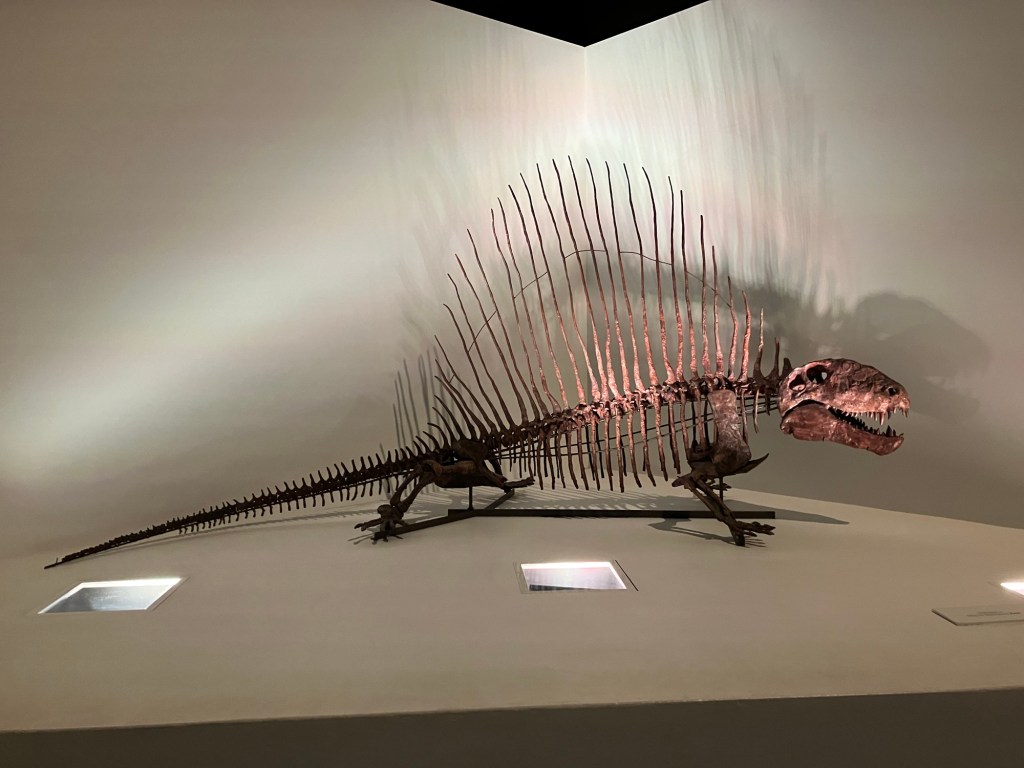
Immersed in a journey through deep time, visitors will encounter a variety of familiar prehistoric creatures. Notable among these are trilobites, which were marine arthropods, and ammonites, known for their coiled shells. The path also features early tetrapods, the four-legged ancestors of amphibians, reptiles, and mammals. Additionally, one might come across impressive Devonian giant fishes such as Dunkleosteus, as well as the Permian period’s Dimetrodon. Another significant creature to observe is the notable Triassic archosaur Postosuchus, an ancient reptilian predator.

Entering the dinosaur hall, visitors are welcomed by the impressive cast of “Big Al,” the renowned Allosaurus that represents the pinnacle of Jurassic predators. Discovered in 1991 at the Howe Quarry in the Morrison Formation of Wyoming, “Big Al” is not only the most complete and well-preserved specimen of its kind but also a symbol of resilience. The pathologies revealed in this remarkable skeleton tell a powerful story of survival, showcasing evidence of injuries, diseases, broken bones, and the remarkable bone growths that came in response to adversity. “Big Al” inspires us to appreciate the strength and tenacity found in nature’s history.

Image Credit: Noelle K. Moser. Cast of “big Al”. Houston Museum of Natural Science

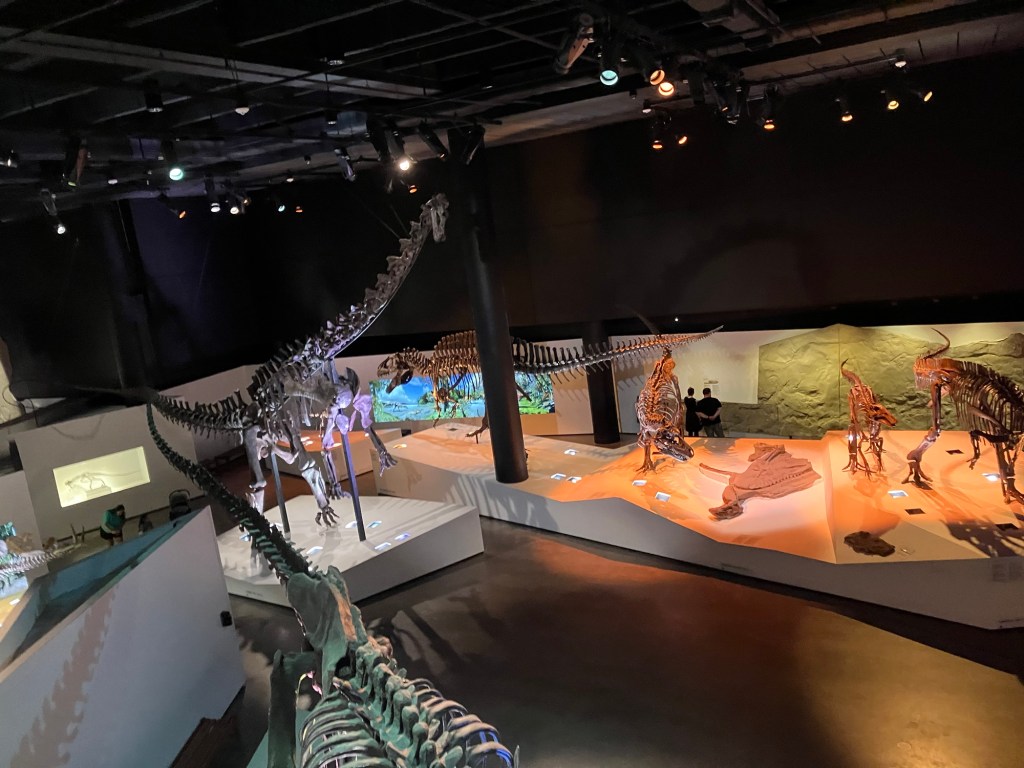
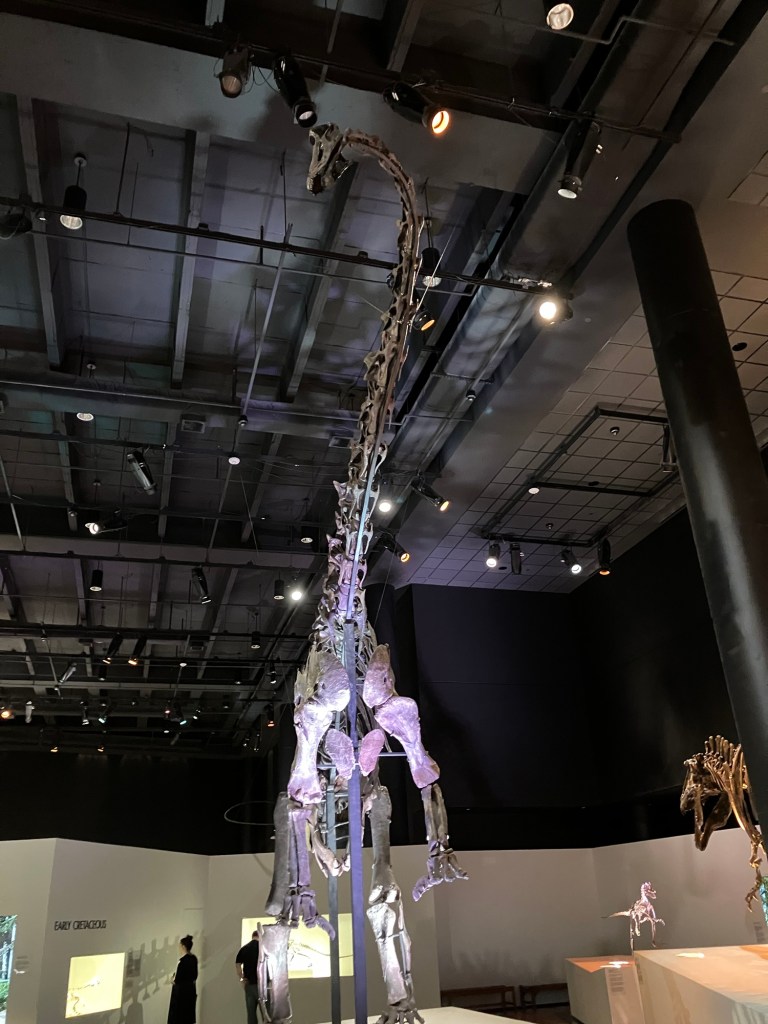
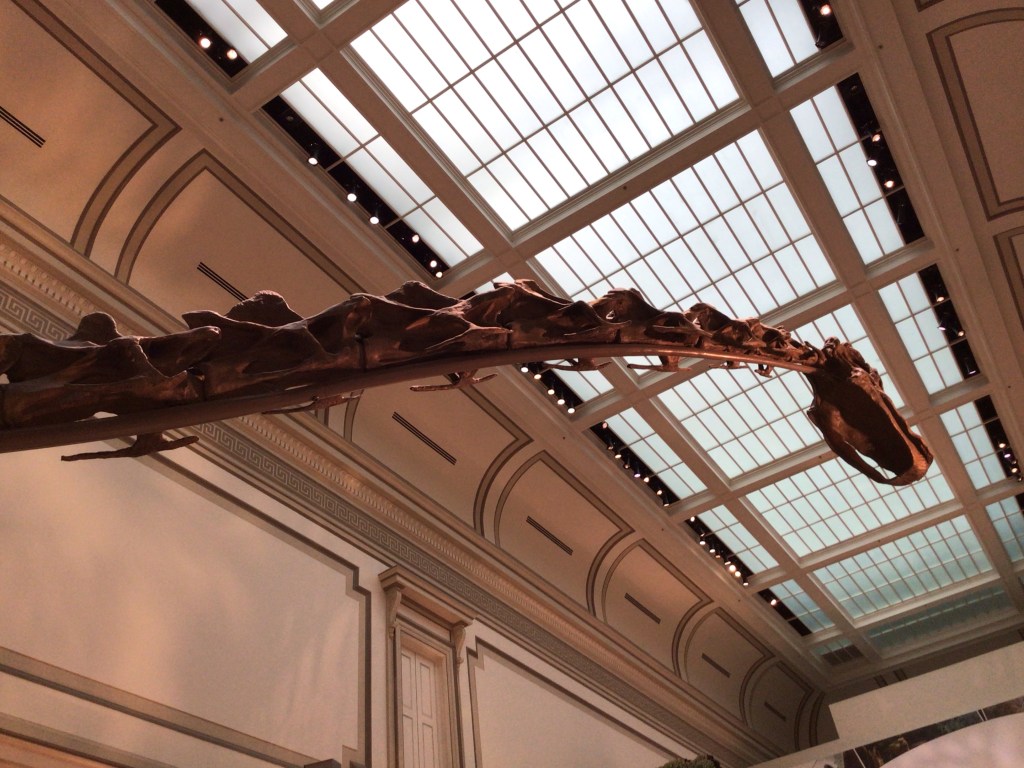
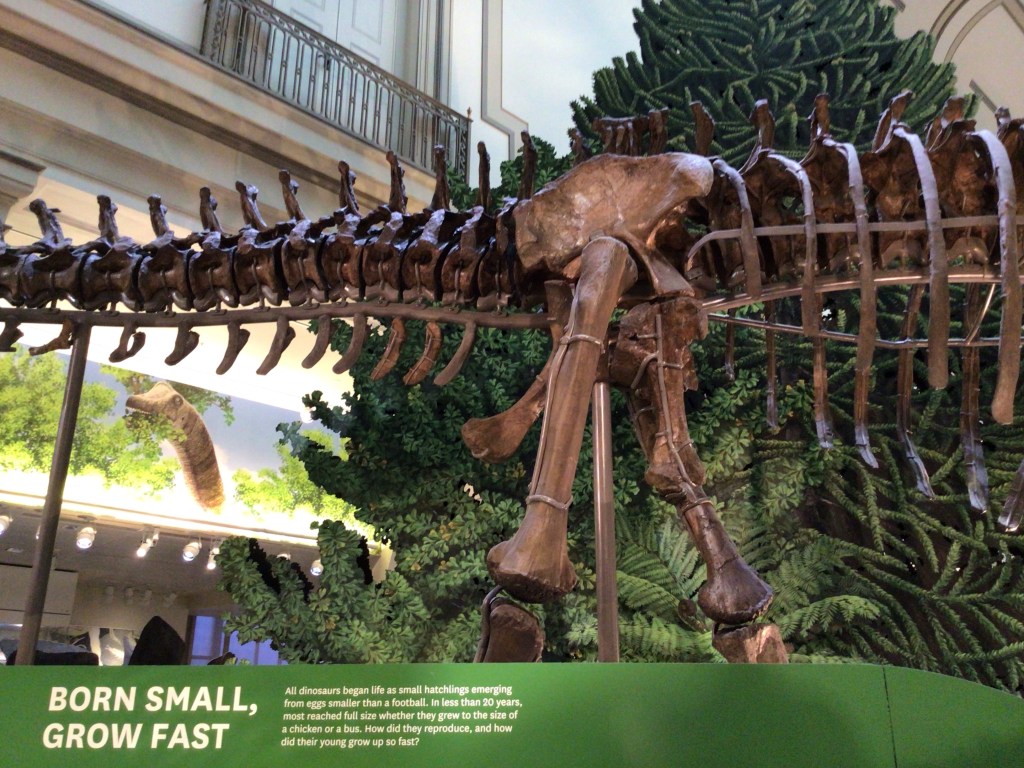
Stepping into the Paula and Rusty Walter Mesozoic Gallery, one is in awe of the vastness of space and the magnificent creatures that once roamed the Earth. Towering at the center is a Diplodocus rearing on its hind legs, long neck, and head stretching to the ceiling.

Image Credit: Noelle K. Moser. Diplodocus reared on its hind legs towering over theropods in various life-like poses. Houston Museum of Natural Science. Houston, Texas.

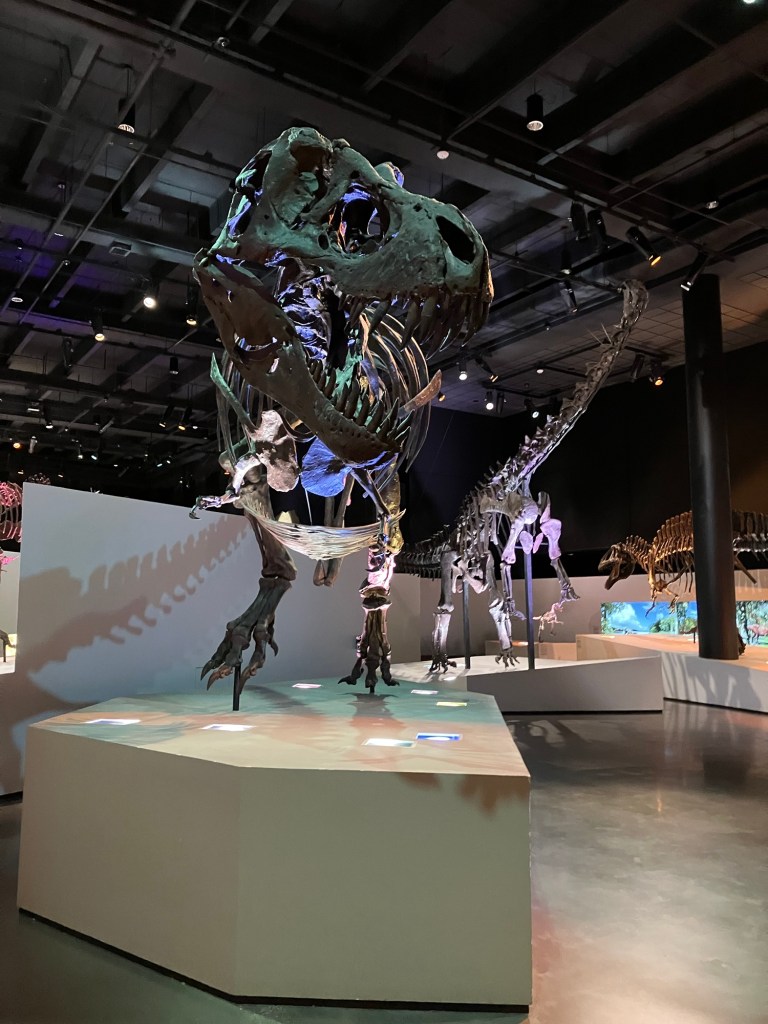
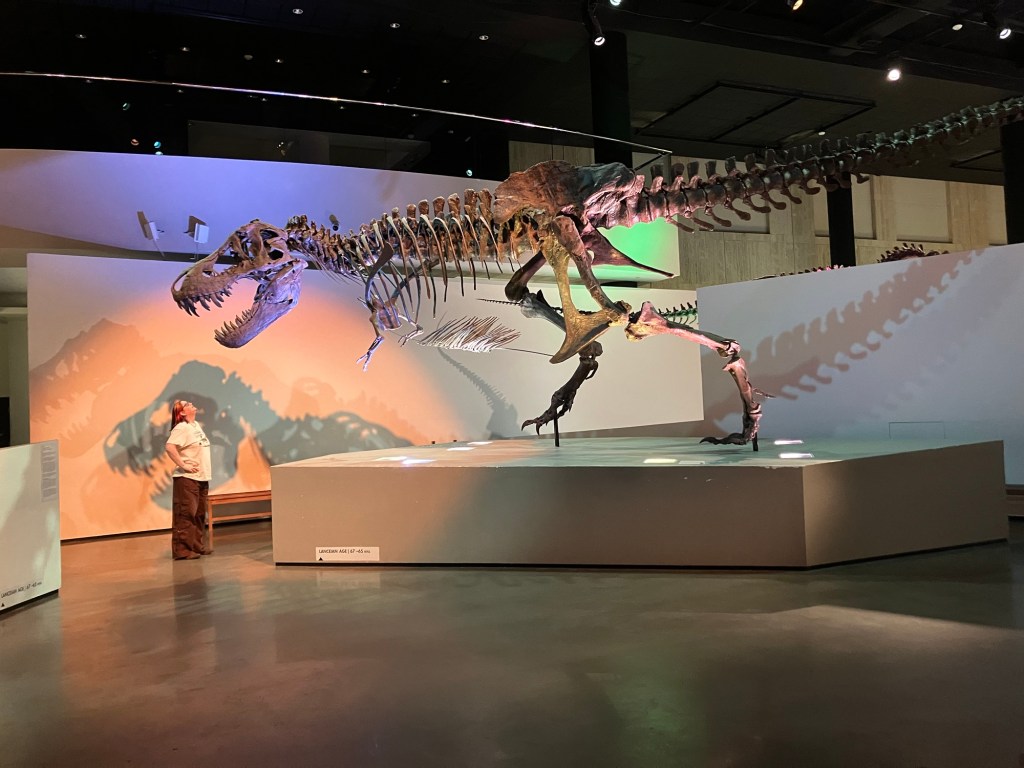
In various life-like poses stand a variety of large theropods and herbivores, each telling a story of the past. Most notable, and the reason for my venture to the Houston Museum of Natural Science, is BHI 3033, “Stan.”

Stan: The Tyrant Lizard King with Multiple Injuries

Image Credit: Mary Haggard. Stan and I, standing at the intersection of science and popular culture. Tyrannosaurus Rex is a silent witness to a world we can only experience through bone. Houston Museum of Natural Science. Houston, Texas.

Stan, a remarkable specimen found in 1987 in the Hell Creek Formation of Montana, serves as a beacon of discovery for paleontology and the biology of Tyrannosaurus rex. His fossil includes the most complete T. rex skull, a testament to the wonders of the natural world. Beyond the skull, Stan’s remains consist of 190 bones, representing about 63% of the entire skeleton, offering invaluable insights into the anatomy, lifestyle, and pathologies of one of the most intriguing Tyrannosaurus rex specimens in history. (Larson, 2008)

Image Credit: Noelle K. Moser. The impressive dental battery of Stan comprised of 60 conical serrated teeth. Houston Museum of Natural Science. Houston, Texas

An examination of Stan’s bones reveals multiple pathologies and healed injuries sustained throughout his life. Puncture wounds on the back of his skull and ribs suggest he was at one time bitten by another Tyrannosaurus Rex. Bite marks at the base of his skull indicate a significant neck injury, leading to the fusion of two vertebrae, likely causing him pain for the remainder of his life. Holes on the side of his skull suggest more healed wounds and possible infections from bone-eating parasites. Stan’s pathologies show that life in the Cretaceous was challenging, even for a Tyrannosaurus Rex.

Image Credit: Noelle K. Moser. Holes on the side of Stan’s skull show pathology of healed injuries and possibly bone-eating parasitic infections. Houston Museum of Natural Science. Houston, Texas.

In a poised stalking stance with jaws gracefully agape, Stan proudly displays his formidable set of 60 teeth. Like all Tyrannosaurus rex specimens, he embodies extraordinary evolutionary development in dentation, demonstrating the power to overcome even the most daunting challenges in his quest for survival.

Image Credit: Noelle K. Moser. Stan proudly displays his formidable set of 60 teeth. Houston Museum of Natural Science. Houston, Texas.

Examining Stan in such an accessible manner has given me a deeper insight into his life through his skeletal remains. Despite suffering severe injuries and pain, Stan’s capacity for healing and survival is a testament to the extraordinary resilience and robustness of this theropod. While the bone analysis of Stan shows healing, another T-Rex was not as lucky.

Wyrex: The Bob-tailed T-Rex.

Image Credit: Noelle K. Moser. Wyrex, the bobtail T-rex. Houston Museum of Natural Science.

Discovered in 2002 within the Hell Creek Formation of Montana and transferred to the Houston Museum of Natural Science (HMNS) in 2009, the fossil known as “Wyrex” is an extraordinary Tyrannosaurus rex specimen. This groundbreaking discovery unveils a remarkable partial braincase and two nearly complete legs and feet, providing exhilarating new insights into the foot anatomy of the legendary Tyrannosaurus rex! (Larson, 2008)

Image Credit: Noelle K. Moser. Complete foot preserved with Wyrex providing exhilarating new insights into the foot anatomy of the legendary Tyrannosaurus rex. Houston Museum of Natural Science.

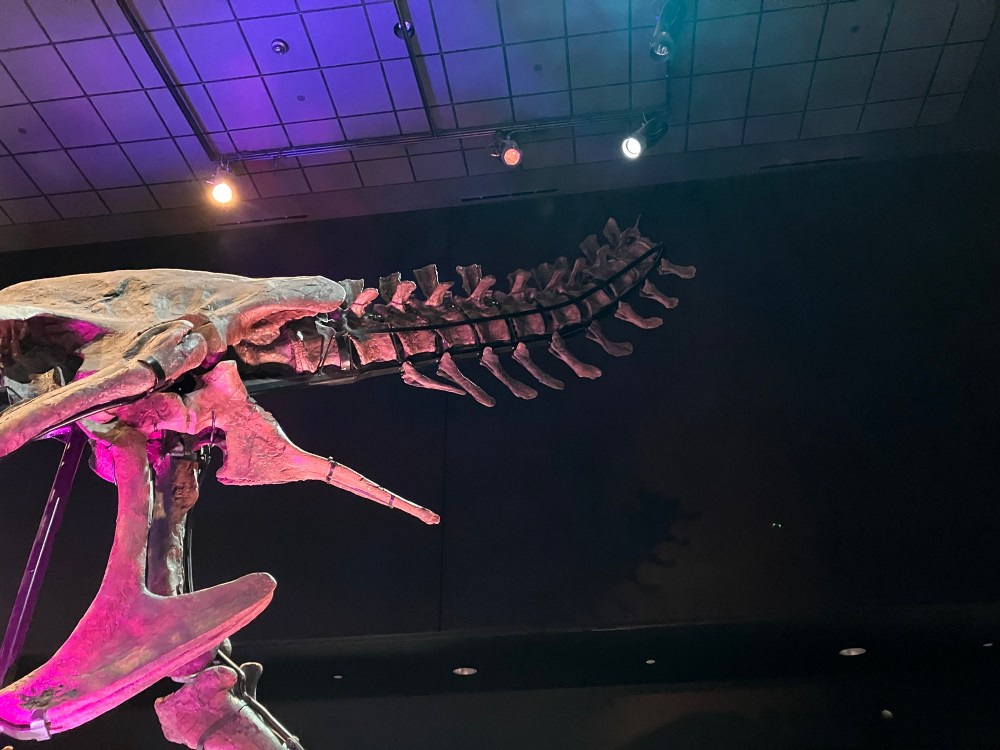
Mounted in an attack stance adjacent to an Ankylosaurus, it is readily apparent that one-third of the tail is absent. As a critical component of Tyrannosaurus rex anatomy, the tail serves as a counterbalance to the skull and accommodates powerful musculature necessary for locomotion.

Image Credit: Noelle K. Moser. The tail serves as a counterbalance to the skull and accommodates powerful musculature necessary for locomotion. Houston Museum of Natural Science. Houston, Texas.

Analysis of the bone indicates no evidence of healing, suggesting that the tail may have been severed post-mortem, or that this injury ultimately unalived Wyrex. Had Wyrex survived this injury, the T-rex would have required a significant period of rehabilitation to regain the ability to walk effectively.

Image Credit: Noelle K. Moser. Wyrex, positioned in an imposing attack pose, offers visitors the opportunity to examine the remarkable dentition and distinctive anatomical characteristics of the formidable Tyrannosaurus Rex. Houston Museum of Natural Science.

Presented in an assertive attack stance, Wyrex offers visitors an exceptional opportunity for a detailed examination of its distinctive conical, serrated teeth. This close-up perspective not only showcases the impressive anatomy of this prehistoric predator but also fosters a deeper appreciation for the evolutionary traits that contributed to its role in the prehistoric ecosystem.

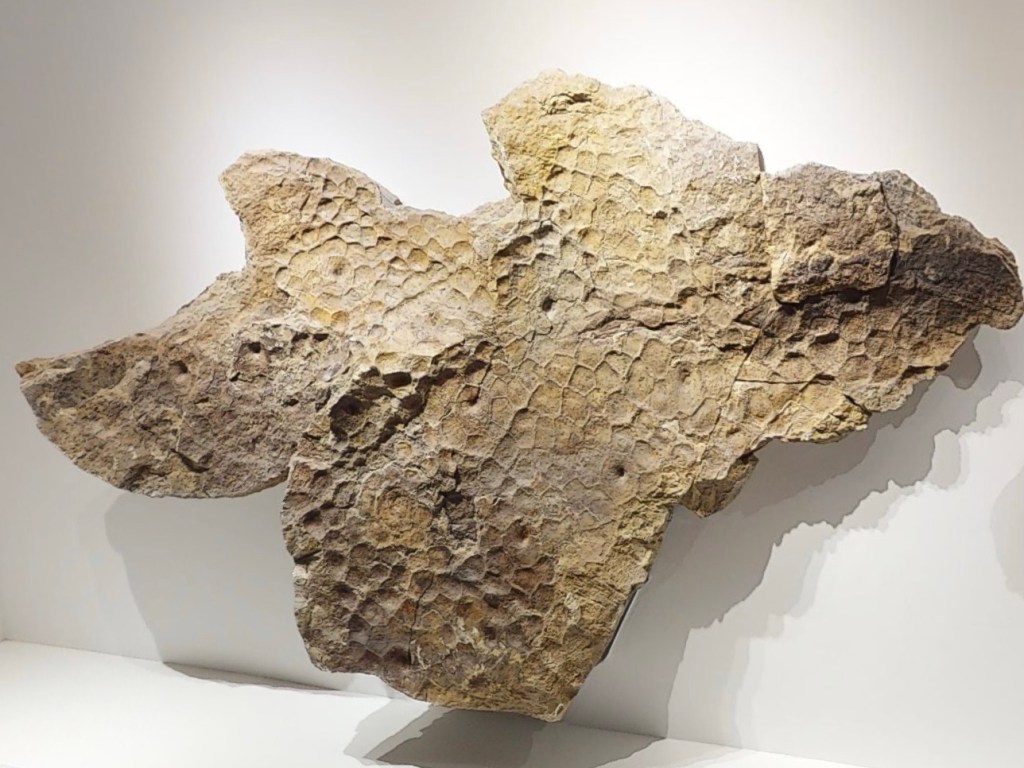
In addition to its other remarkable features, Wyrex has yielded another significant discovery: several patches of fossilized skin from the Tyrannosaurus rex. This finding marks the first time that such skin has been uncovered for this iconic dinosaur, providing new insights into its biology and appearance. (Larson, 2008).

Patch of fossilized skin associated with Wyrex. Houston Museum of Natural Science. Houston, Texas

Bucky: A Female Teenage T-Rex.

Image Credit: Mary Haggard. Bucky plays a significant role in our understanding of Tyrannosaurus rex, as this remarkable fossil includes one of the most complete T-rex tails to date. Houston Museum of Natural Science. Houston, Texas.

The final Tyrannosaurus Rex showcased in the Paula and Rusty Walter Mesozoic Gallery is a sub-adult female TCM 2001.90.1 “Bucky”. Discovered in 2001 in the Hell Creek Formation by a rancher who, while breaking in a young horse, spotted the bones that led to this remarkable find, just 8 miles from where another robust female T-rex, Sue, was unearthed. (Larson, 2008)

Image Credit: Noelle K. Moser. Tyrannosaurus Rex Bucky and Wyrex present complementary highlights, drawing attention to the devastating tail injury that Wyrex sustained. Houston Museum of Natural Science. Houston, Texas.

Bucky plays a significant role in our understanding of Tyrannosaurus rex, as this remarkable fossil includes one of three most complete T-rex tails. It serves as a poignant reminder of the devastating injury that Wyrex endured, allowing us to reflect on the challenges a Tyrannosaurus rex faced in their lifetime.

As a sub-adult, juvenile teenage T. rex, Bucky provides valuable insights into the growth rates and different stages of maturity in the morphology of this iconic theropod. Bucky’s development illustrates the physical changes that occur as T. rexes progress from juveniles to adults, helping us understand their life cycle better.

Acrocanthrosaurus:

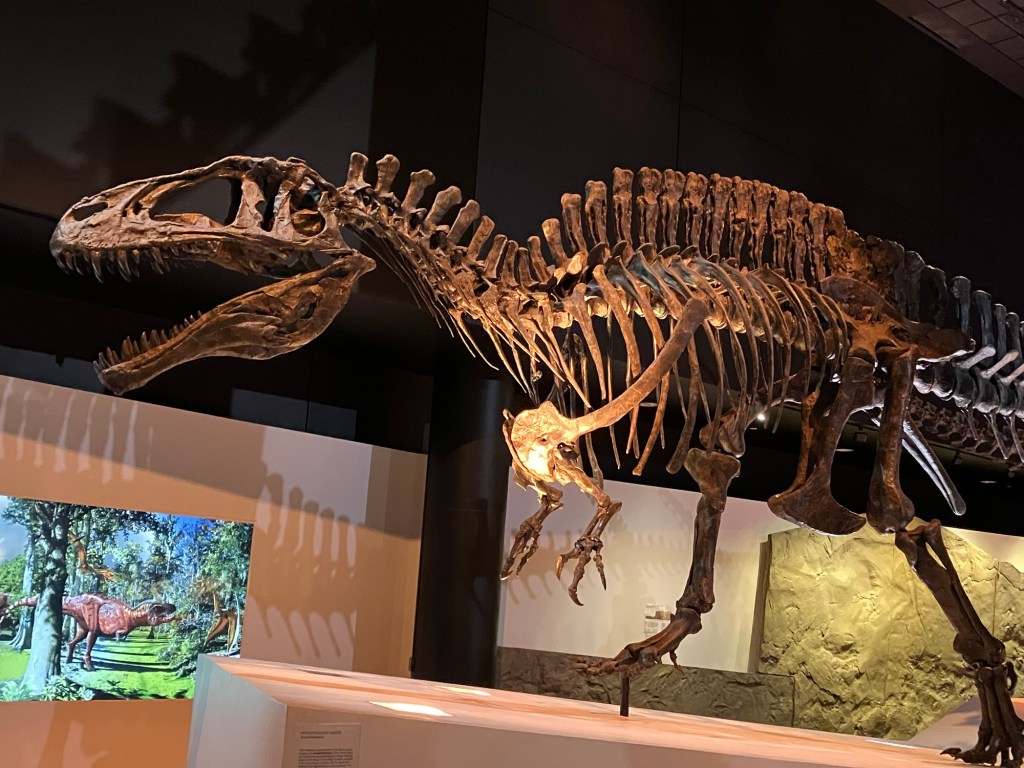
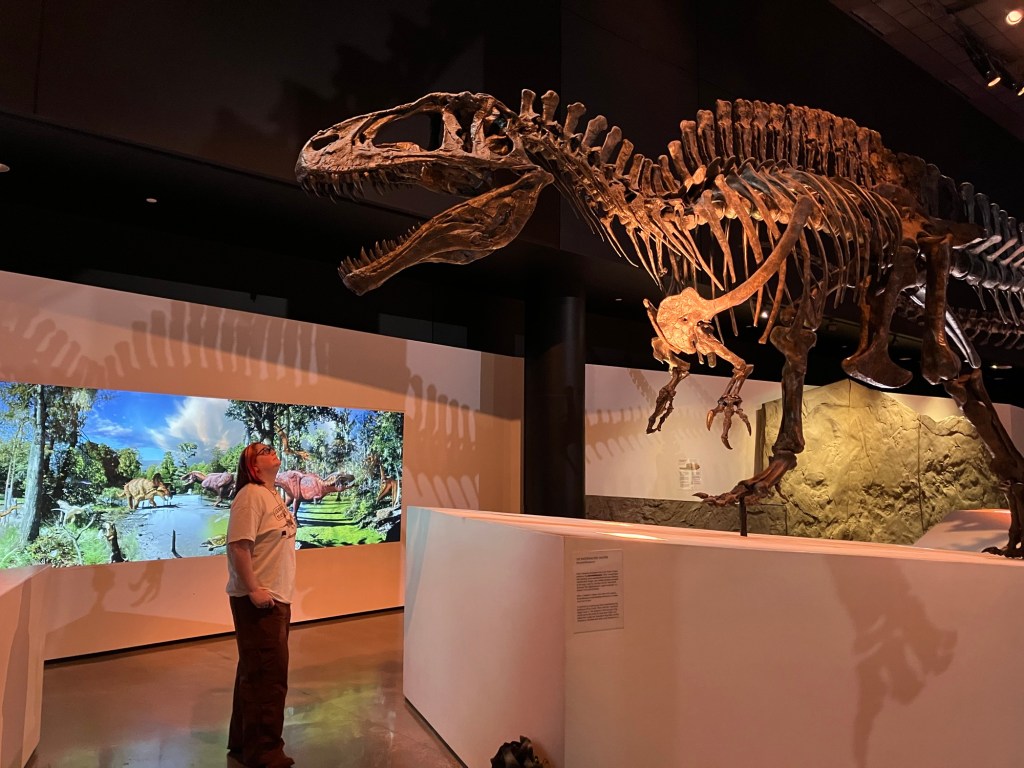
Image Credit: Noelle K. Moser. Acrocanthosaurus, the high-spined lizard of the Early Cretaceous. Houston Museum of Natural Science. Houston, Texas.

My journey to the Houston Museum of Natural Science would be incomplete without highlighting one last impressive theropod: Acrocanthosaurus. Most likely belonging to the Carcharodontosaur clade, a group of formidable predatory dinosaurs that thrived during the Aptian stage of the Early Cretaceous period.

Image Credit: Mary Haggard. Acrocanthosaurus. Houston Museum of Natural Science. Houston, Texas.

Acrocanthosaurus stands out for its remarkably high neural spines, believed to have formed a striking sail along its back during its time on Earth. This formidable theropod once roamed ancient landscapes alongside colossal titanosaurs, majestic giants among the largest creatures ever to grace the Earth. Imagining these giant beasts sharing the same world ignites a sense of wonder and inspiration!

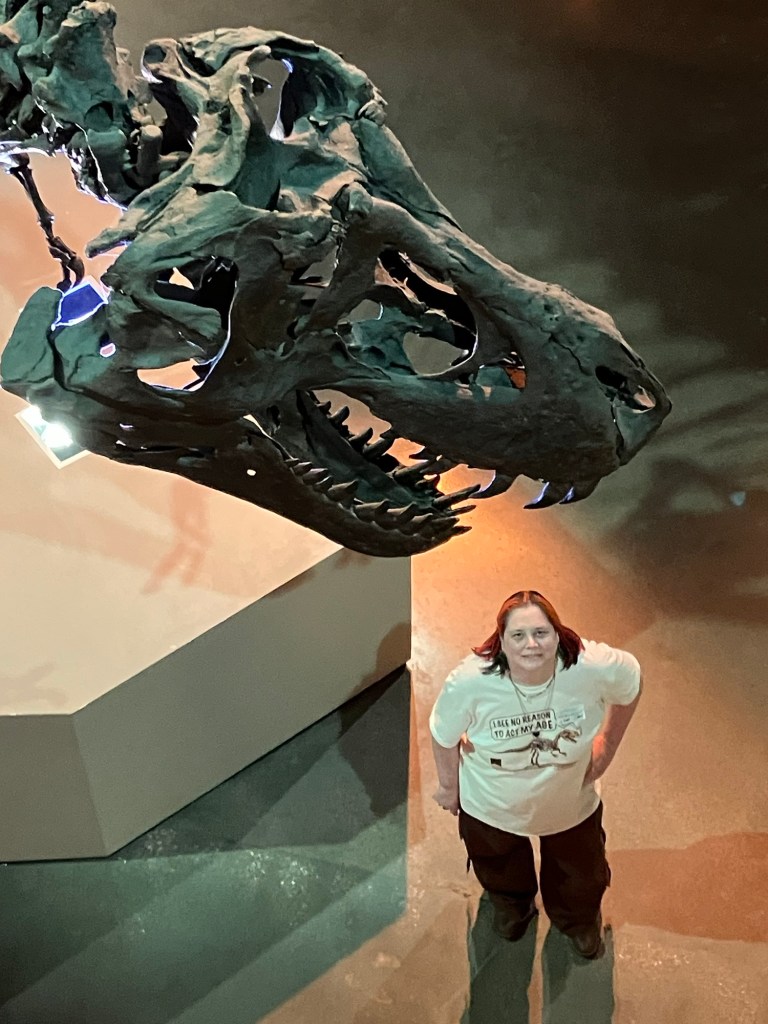
Image Credit: Noelle K. Moser. Stan viewed from the second-floor observation platform showcasing the immense size of this Cretaceous Apex Predator. Houston Museum of Natural Science.

Studying dinosaurs is not just a passion; it’s a profound calling to uncover the mysteries of their world and our planet. My research leads me to natural history museums across the nation, with each destination unveiling new insights into the fascinating realm of dinosaurs and deepening my admiration for these incredible creatures.

This visit highlighted the fascinating aspects of Tyrannosaurus Rex and reinforced the reasons behind their enduring appeal. It’s not merely their impressive size and strength; rather, the complex details of their existence contribute significantly to their allure. The experience provided an exceptional opportunity to observe a diverse array of theropod evolution and variety all in one location. Most importantly, the Houston Museum of Natural Science offers tangible access to the wonders of prehistoric Earth, connecting us to a lost world we can only experience through bone.

Image Credit: Mary Haggard. Studying dinosaurs connects us to a lost world we can only experience through bone. Houston Museum of Natural Science. Houston, Texas.

To watch a video of my trip to HMNS please visit my YouTube Channel.

I am a multi-disciplinary writer, paleontology blogger, and content creator. If you found this post engaging, be sure to check out my online writing portfolio to explore my extensive body of work.

Resources:

Larson, Peter and Carpenter, Kenneth. Tyrannosaurus Rex: The Tyrant King. Indiana University Press. Bloomington, Indiana. 2008.
Pim, Keiron. Dinosaurs the Grand Tour: Everything Worth Knowing About Dinosaurs from Aardonys to Zuniceratops. The Experiment. New York, NY. 2019.

My Visit to Houston Museum of Natural Science in Houston, Texas.

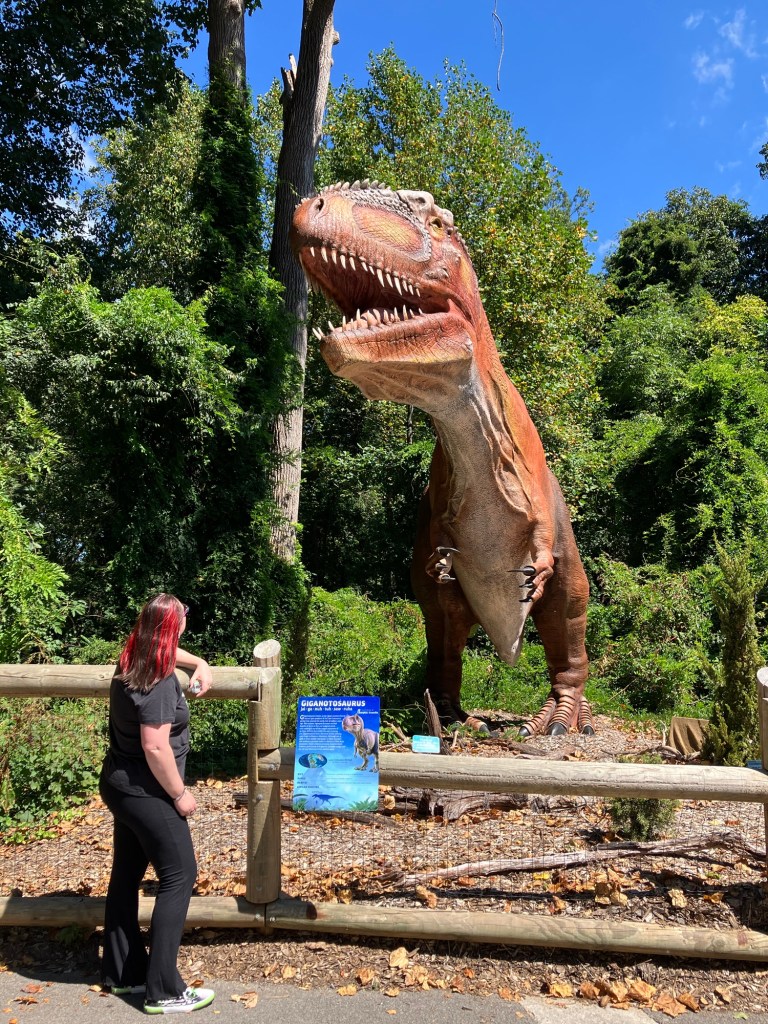
Unveiling Giganotosaurus: The Prehistoric Rival of Tyrannosaurus Rex

email: noellemoser@charter.net

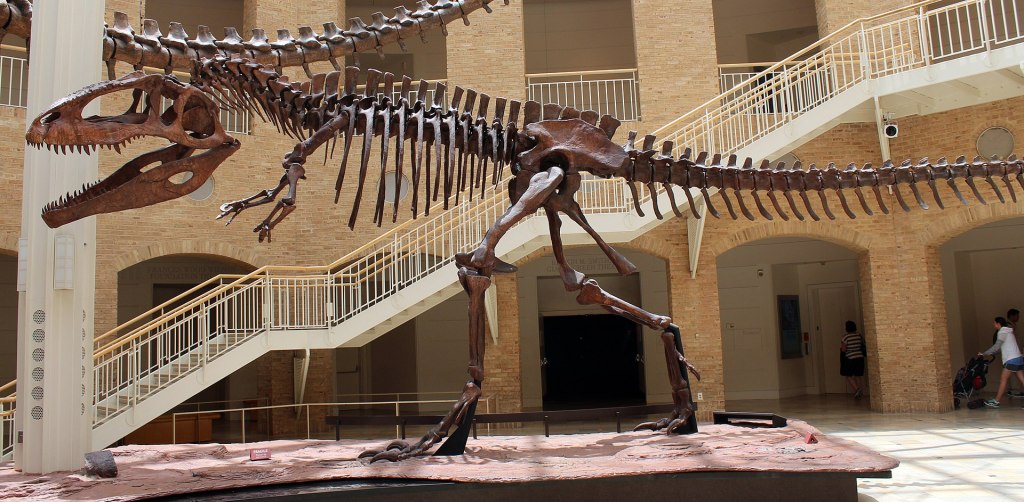
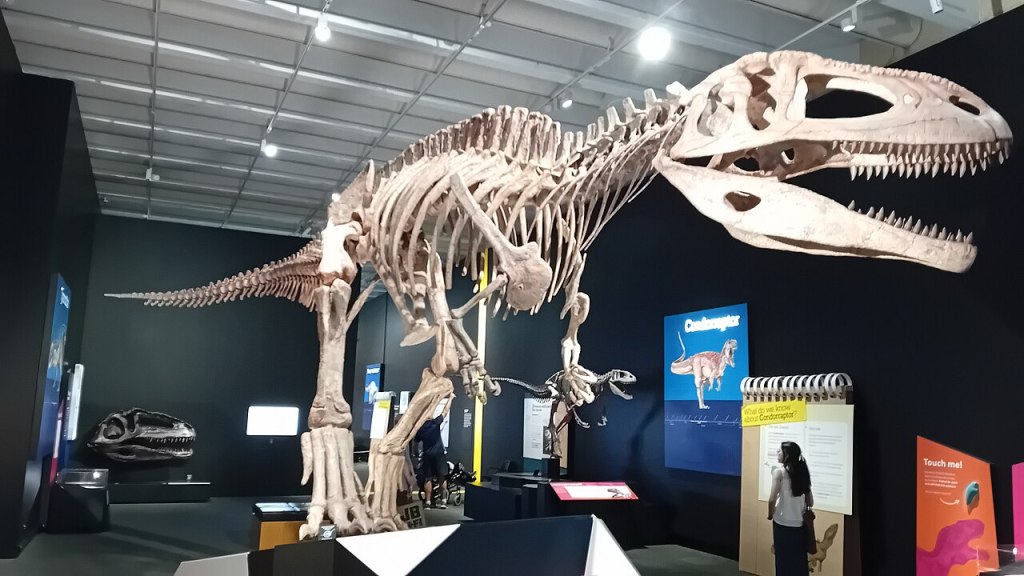
Image Credit: Giganotosaurus skeleton. Fernbank Museum of Natural History in Atlanta, Georgia.

Boasting a skull as long as a man and a body the length of a bus, Giganotosaurus is among the largest predatory theropods ever discovered. Before Tyrannosaurus Rex reigned as the King of the Dinosaurs, a larger theropods dominated the prehistoric landscape. His name Giganotosaurus Carolinii.

Known as the “Giant Southern Lizard”, Giganotosaurus was a formidable predator that dominated the Southern Hemisphere. This massive theropod, a member of the Carcharodontosauridae family, hunted titanosaurs and other herbivores, establishing itself as one of the largest carnivorous dinosaurs, surpassing the mighty T-rex by 2.2 tons.

Image Credit: Comparison of the largest theropods that walked the Earth. Giganotosaurus (Green), Tyrannosaurus Rex (Blue), and Spinosaurus (Red).

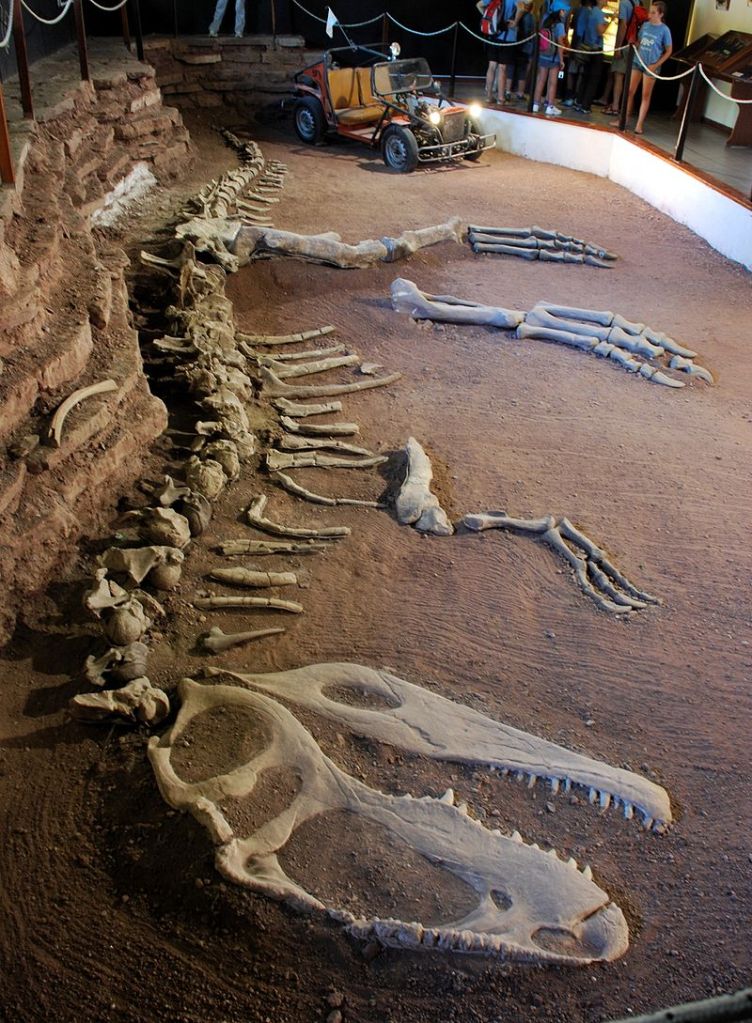
The tale of Giganotosaurus began in 1993 with the discovery of a tibia jutting from the earth in Patagonia. In 1994, paleontologists revealed the unearthing of a massive new theropod. The fossilized remains comprised a partial skull, a large portion of the vertebral column, elements of the pelvis, and fragments of limb bones.

Image Credit: Giganotosaurus holotype (first Giganotosaurus skeleton found) laid in the dirt. Natural Science Museum at El Chocón, in the northwestern Argentine Patagonia.

The discovery of Giganotosaurus is important because it deepened our understanding of the Carcharodontosaurid clade. Producing some of the largest theropods to ever live such as the newly discovered Meraxes Gigas, Acrocanthrosaurus, Carcharodontosaurus, and Giganotosaurus. This clade is of further interest to dinosaur enthusiasts because it allows us to explore the upper limit of theropod size.

Image Credit: Noelle K. Moser. Alamosaurus (Titanosaur) and Tyrannosaurus Rex. Giganotosaurus preyed upon Titanosaurs during the Cretaceous. Perot Natural History Museum. Dallas, Texas.

Nature maintains a delicate balance between predators and prey. Large herbivores require equally formidable carnivores to sustain this balance. Giganotosaurus, a giant theropod, played a crucial role in the ecosystem where it lived. The real question is not whether Giganotosaurus hunted these massive herbivores, but how it did so. This article will explore the origins of the Giganotosaurus, its hunting strategies, and ultimately why it faced extinction.

Origins of Giganotosaurus:

Image Credit: Noelle K. Moser. Giganotosaurus and I. Knoxville Zoo. Knoxville, TN.

During the Mesozoic, an evolutionary arms race between herbivores and carnivores ensued. As herbivores grew larger to gain a competitive advantage, the theropods also increased in size. The Jurassic period, marking the middle era of the age of dinosaurs, witnessed a remarkable diversification in dinosaur body plans. Herbivores grew larger, and thundering across the landscape were the sauropods, the giants of the Mesozoic era, including species such as Diplodocus and titanosaurs.

Giganotosaurus belongs to the Carcharodontosauridae family, a group of theropod dinosaurs known for producing some of the largest carnivores ever to walk the earth. Besides their massive size, a distinctive characteristic of this group is streamlined narrow skulls with shark-like teeth.

Image Credit: Carchardontosaurus skull. The Carcharodontosauridae family possessed shark-like serrated teeth perfect for tearing the flesh off bones.

Teeth reveal much about a creature. By examining dinosaur teeth, we can determine their diet, hunting methods, and how they consumed their prey.

During the Jurassic, the middle period of the Mesozoic Era, there was a significant increase in size among species as a result of an evolutionary arms race between predators and prey. As herbivores grew larger, carnivores also evolved to match their size.

The Jurassic saw some of the largest and most famous herbivores – the sauropods. Species such as Diplodocus, Brachiosaurus, Supersaurus, and Camarasaurus.

Image Credit: Comparison Graphic of some of the longest Sauropods that lived during the Jurassic.

Counterparts to these lumbering giants, were the carnivores of the Jurassic, relatives of Giganotosaurus such as Tyrannotitan, Lusovenator, Siamraptor, and Acrocanthrosaurus.

Image Credit: An overview of the paleofauna that inhabited the Southern Hemisphere during the Mesozoic era includes theropods such as Mapusaurus (red) and Meraxes gigas (dark blue), which are carcharodontosaurs and related to Giganotosaurus.

Inhabiting the Southern Hemisphere, the relatives of Giganotosaurus, known as primitive Carcharodontosaurs, evolved into increasingly larger theropods in response to the growing size of the herbivores they preyed upon. By the end of the Jurassic and into the Early Cretaceous, the Carcharodontosauridae family comprised some of the largest carnivorous dinosaurs to have ever walked the Earth.

Image Credit: Noelle K. Moser. Life-size reconstruction of Giganotosaurus. Knoxville Zoo. Knoxville, Tennessee.

Giganotosaurus represented the culmination of an evolutionary arms race, standing as the pinnacle of the Carcharodontosauria clade.

How Giganotosaurus Hunted and Killed Prey:

Analysis of the leg bones of Giganotosaurus shows that this theropod was not built for speed, but it didn’t need to be. Although it was slower than the swift herbivores, Giganotosaurus preyed on the more ponderous sauropods, known as titanosaurs.

The titanosaurs were the last surviving group of long-necked sauropods, thriving at the time of the Chicxulub Impact at the end of the Cretaceous that ended the age of the dinosaurs. This group includes some of the largest land animals known to have ever existed, such as Argentinosaurus.

Image Credit: Argentinasaurus and Giganotosaurus displayed together. Fernbank Museum of Natural History. Atlanta, Georgia.

Titanosaurs lived by one rule, get big and get big fast. From the moment of hatching, sauropods like Argentinasaurus were eating machines. Dining on leaves and hard fibrous vegetation, a herd of titanosaurs could defoliate an area in a few days.

Large guts and hard-to-digest food allowed for a slow release of energy over time. This superpower aided in the ability of these sauropods to reach full size in less than ten years. Once fully grown, an adult Argentinasaurus was 128 ft long, 65 ft tall, and weighed 65 to 82 tons. This sheer size alone was enough to detour many theropods from making a meal out of these massive herbivores. Traveling in herds combined with size officially removed them from the menu.

Hunting a herd of titanosaurs was perilous. A single misstep can result in one of these colossal herbivores crushing an overzealous theropod, leading to instant death. Considering this risk, the question is not whether Giganotosaurus hunted titanosaurs, but rather how they accomplished such a feat.

Much like the enigmas posed by extinct species, the most effective way to address these questions is by examining the present. Observing lions as they hunt a herd of wildebeests, we see the predators collaborate to disperse the group, targeting the smaller, ill, or weakest members for an easier kill. A lion understands that to attack the largest, strongest, or healthiest would be, at best, a perilous endeavor. This logic can be similarly applied to Giganotosaurus.

Traveling herds exhibit remarkable organization. The young and subadults are positioned centrally, while the robust and healthy adults encircle them, forming a protective barrier. Typically, the elderly or injured members trail behind, comprising the rear guard as the herd moves across the terrain.

Understanding herd dynamics, a hunting Giganotosaurus would likely approach the herd from behind, targeting the weaker Argentinasaurus individuals. Despite not being in their prime, these titanosaurs remained formidable, capable of inflicting fatal injuries. It is probable that for these reasons, Giganotosauruses would hunt in packs, coordinating their efforts to take down one of these colossal creatures.

Evidence from the teeth of Giganotosaurus suggests that, unlike the bone-crushing bite of Tyrannosaurus Rex, Giganotosaurus had teeth better suited for slicing off flesh from its prey. Packs of Giganotosaurus would alternate in biting and slashing their prey, aiming to keep it moving and bleeding. The hunting strategy was to exhaust the prey through blood loss, fatigue, and infections caused by the theropods attacks, leading to the titanosaur’s eventual collapse under its own weight.

Trace fossils provide definitive evidence of theropod hunting strategies located along the Paluxy River near Glen Rose, Texas, USA. Here, a dramatic narrative of a dinosaur hunt is etched into the stone.

Image Credit: Peluxe River in Glenn Rose, Texas. Footprints from a Cretaceous hunt involving Acrocanthrosaurus and Saurposeidon recorded in stone.

120 million years ago, on a muddy Cretaceous floodplain, the dynamics of dinosaur relationships were immortalized in stone. A herd of colossal sauropods lumbered along a waterway, stalked closely by a large carnivore. The pursuing theropod was focused, intent on the hunt.

Following behind the herd, slightly to the left, the theropod’s tracks indicate that the hunter rhythmically trailed the lumbering sauropods. Then the theropod’s footprints show that the hunter suddenly skipped a few steps, meaning only one thing, an attack.

Most of the trackway was removed. It is now preserved and displayed at The American Museum of Natural History in New York. Some of the trackway still remains submerged under the Paluxy River near Glen Rose, Texas.

Image Credit: Trackway from the Peluxy River on display at The American Museum of Natural History in New York.

Giganotosaurus Extinction:

Giganotosaurus lived during the Late Cretaceous period, specifically in the Cenomanian stage, approximately 99.6 to 97 million years ago. The reasons for its extinction are not definitive, but fossil records suggest several plausible scenarios. During the latter part of the Cretaceous, environmental changes due to plate tectonics posed survival challenges for Giganotosaurus and other Carcharodontosaurids.

Additionally, around 30 million years ago, Tyrannosaurs emerged as the dominant carnivores, with Abelisaurs prevailing in the Southern Hemisphere and Tyrannosaurus Rex in the northern. It is conceivable that Giganotosaurus was outcompeted by these more adaptable theropods, leading to a gradual decline and eventual extinction.

After the extinction of the last of the Carcharodontosaurs, Giganotosaurus lost its dominance, allowing the Tyrannosaurus and the formidable Tyrannosaurus Rex to rise as the King of the Dinosaurs until 66 million years ago when the age of the dinosaurs came to an end.

I am a multi-disciplinary writer, published author and web content creator. If you like this post, visit my other sites and online writing portfolio.

The Kuntry Klucker – A Blog about Backyard Chickens.

The Introvert Cafe – A Mental Health Blog.

Image Credit: Noelle K. Moser. Me peering through the fenestra of Tyrannosaurus Rex MOR 555. Cincinnati Natural History Museum. Cincinnati, Ohio.

Resources:

Johnson-Ransom, Evan. Dinosaur World: Over 1,200 Amazing Dinosaurs, Famous Fossils, and the Latest Discoveries from the Prehistoric Era. Applesauce Press. Kennebunkport, Maine. 2023.

Keiron, Pim. Dinosaurs The Grand Tour: Everything Worth Knowing About Dinosaurs from Aardonysx to Zuniceratops. The Experiment. New York, NY. 2019.

My visit to Natural History Museums across the nation.

Sue Tyrannosaurus Rex: Life, Pathologies, and Controversy

email: noellemoser@charter.net

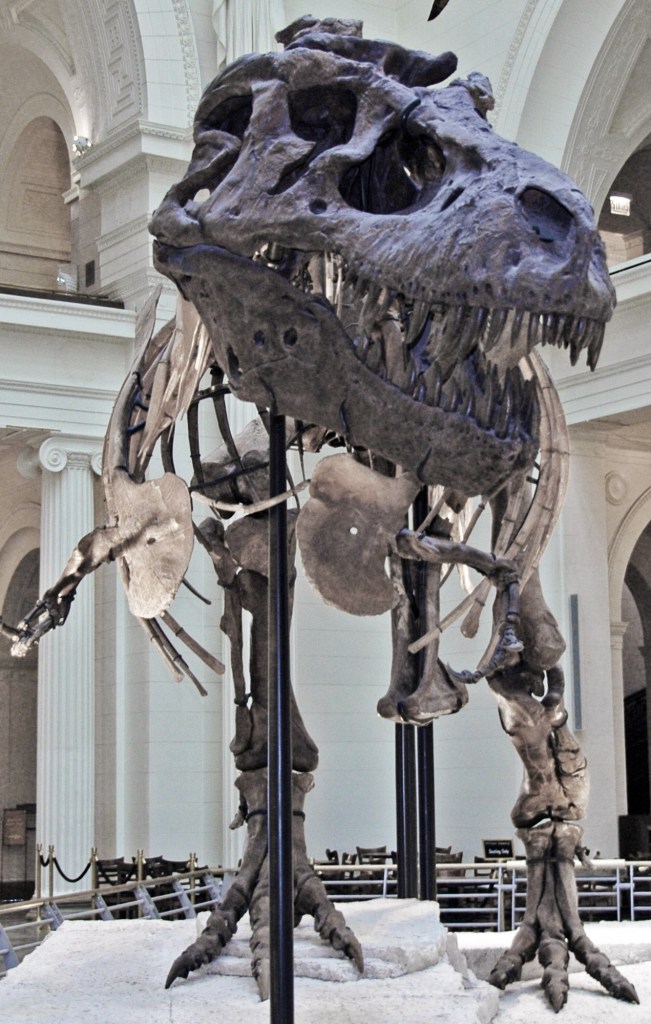
Image Credit: Sue Tyrannosaurus Rex (FMNH PR2081). Field Museum. Chicago, Illinois.

Everything about the Tyrannosaurus Rex overwhelms the human imagination. 50-60 bone-crushing teeth, a massive eight-ton weight, and formidable strength. Nothing can stop this terrestrial meat-eating machine, or so we think. Sue, the largest, most extensive, and best-preserved Tyrannosaurus Rex ever found, tells a different story. Sue had a hard life. Her remarkable skeleton tells of battle, disease, starvation, and the life lived by an old T-rex.

Discovery of Sue:

Image Credit: Noelle K. Moser. Sue-Tyrannosaurs Rex-close-up of the skull showing conical bone-crushing teeth used to kill and crush the bones of her prey. Field Museum. Chicago, Illinois.

Sue’s story began in 1990. Scientists spotted bones protruding from a cliff face in South Dakota. These bones belonged to an adult Tyrannosaurus Rex. Scientists determined that 90% of the skeleton was present. This made the specimen (FMNH PR 2081) the most intact T-rex ever discovered. Named Sue, this tryannosaur became the subject of a heated dispute over legal ownership. Sue’s final resting place was on land the Sioux Tribe claimed belonged to them. However, Sue’s bones were on land that was held in trust by the United States Department of the Interior.

In 1992, Sue’s bones were seized by the FBI. The government transferred the remains to the South Dakota School of Mines and Technology. The skeleton was stored until the penal and civil legal disputes were settled. In October 1997, several large corporations and individual donors purchased Sue for 7.6 million dollars and transferred her to her new resting place at the Field Museum in Chicago, Illinois.

Image Credit: AI-generated. Sue’s skeleton is 90% complete making her the most intact Tyrannosaurus Rex ever discovered.

Life of Sue and Pathologies visible in her bones:

Examination of the bones determined that Sue died at 28 years of age, one of the oldest Tyrannosaurus Rex known. During her life, Sue suffered many pathologies, including broken bones, torn tendons, broken ribs, bone infections, protozoan parasites, and arthritis.

Sue allows us to get a glimpse of the life of Tyrannosaurus Rex, the king of the dinosaurs. An injury to the right shoulder region, likely from struggling prey, damaged the shoulder blade. It also tore a ligament in the right arm. Damage to ribs that healed shows that Sue survived this encounter. One of her most severe injuries is to the left fibula. The diameter is twice the size of her right fibula. This indicates that Sue suffered a bone infection from a serious injury. The injury was most likely from a horned or armored dinosaur.

Holes on Sue’s lower jaw show parasitic infection.

The most fatal pathology seen in Sue’s skeleton is round holes in the lower jaw. The holes were from a trichomonas gallinae infection, a parasite that ate away at her bone. The infections cause swelling in the jaw and neck, resulting in death by starvation. It’s uncertain whether this was the fatal injury that ended Sue’s life. The agony from this pathology alone made it painful making ot hard for her to eat. Weighing 8 tons, Sue needed to consume an astounding number of calories to sustain her massive body. Unable to hunt or eat made it very difficult for her to survive. Tyrannosaurus Rex’s are social and hunt in groups. Given her advanced age at death, Sue was likely cared for by her social group.

Image Credit: Sue’s actual skull weighing 600 lbs. displayed at the Field Museum. Chicago, Illinois.

As she progressed in age, Sue suffered from arthritis showed by fused vertebrae in her tail. Some reports state that she had gout, but this is still debated.

Sue’s fossil shows that the life of a Tyrannosaurus Rex was difficult, painful, and complicated. The king of the dinosaurs did not have it easy. Hunting heavily armored prey was dangerous. Fighting other Tyrannosaurus over territory or mating rights was precarious. Injuries that became infected proved deadly. Sue forces us to rethink how dinosaurs relate to each other. The Cretaceous was dangerous even for a Tyrannosaurus Rex.

Death and Preservation of Sue’s Bones:

Profile of Sue Tyrannosaurus Rex (FMNH PR2081).

Sue died at 28 years of age. It is unknown how she died. But her skeleton poses likely scenarios. These include bone infections, starvation, or complications from parasitic disease. Preservation of her skeleton concludes that she died in a seasonal stream bed or flood. The flood washed away some of her bones. It jumbled the remaining skeletal parts together in a disarticulated manner. The sediment from the stream bed protected her body from scavengers preserving her skeleton quickly. This made her one of the most complete Tyrannosaurus Rex specimens ever discovered.

Image Credit: Sue standing proudly at her new home. Field Museum. Chicago, Illinois.

Sue is very important to paleontology and study of Tyrannosaurs Rex. Sue’s skeleton takes us back to a time when giants roamed the earth and allows us to see the life of T-rex. We can observe the injuries, diseases, and parasites that they encountered. Sue shows us that even the king of the dinosaurs had to scrape out life one day at a time. Life was challenging in the environment of the Cretaceous.

I am a multi-disciplinary writer, blogger, and web content creator. If you like this post, please visit some of my other blogs and online writing portfolio.

The Kuntry Klucker – A Blog About Keeping Backyard Chickens.

The Introvert Cafe – A Mental Health Blog

~ Noelle K. Moser ~

Me, peering through the fenestrae of Tyrannosaurus Rex specimen MOR 555. Cincinnati Museum Center. Cincinnati, Ohio.

Resources:

Larson, Peter. Tyrannosaurus Rex: The Tyrant King. Indiana University Press. Bloomington, Indiana. 2008.

Wikipedia Commons

My visit to The Field Museum. Chicago, Illinois.

Daspletosaurus: The Proto-Tyrant of Late Cretaceous

email: noellemoser@charter.net

Image Credit: Noelle K. Moser. Silhouette of Daspletosaurus and skull of Tyrannosaurus Rex specimen MOR555 overlooking downtown Cincinnati. Cincinnati Museum Center. Cincinnati, Ohio.

During the Cretaceous Tyrannosaurs were the dominant force, the largest among them the mighty T-rex. Tyrannosaurus Rex was the largest, and heaviest terrestrial carnivore ever walking the earth. Millions of years before Tyrannosaurus Rex reigned as the king of the dinosaurs, another monster tyrant ruled the world. His name was Daspletosaurus (das-PLEE-toh-SORE-us). Dwarfed by Tyrannosaurus Rex, Daspletosaurus was the dominant predator of its time. What was this proto-t-rex, how did it become the tyrant of the late Cretaceous, and why did it become extinct? In the article, we will look at Daspletosaurus, the fierce lizard from the Cretaceous.

Image Credit: Noelle K. Moser. Daspletosaurus towering over Tyrannosaurus Rex (MOR555) skull. Notice the similarity and dental arrangement in the skulls. Boxy skulls with conical teeth are traits of tyrannosauroids. It is clear that these individuals are related on the same branch of the theropod family tree. Cincinnati Museum Center. Cincinnati, Ohio.

Daspletosaurs’s story begins in 1921 when paleontologist Charles M. Sternberg discovered the fossil of what was thought to be Gorgosaurus, another theropod on the tyrannosaur family tree. However, in 1970, it was determined this dinosaur was different and assigned to its genus. Daspletosaurus Torsus, “strong frightful reptile”, was assigned to this new tyrannosaur.

The disarticulated skeleton consisted of a complete skull, a forearm, two femurs, and a pelvis. It also included all of the neck, back, and tail vertebrae. Since its original discovery, only one other Daspletosaurus is known.

Daspletosaurus Torsus and its relative Daspletosaurus Horneri are similar in size. 30 feet from head to tail, 82 feet tall, and weighed about 3 tonnes. Compared to humans, Daspletosaurus is large but dwarfed by its predecessor, Tyrannosaurus Rex. T-rex was about 42 feet long, 12 feet tall at the hip, and tipped the scales at 8 tonnes.

Image Credit: Daspletosaurus size comparison.

A genus of tyrannosaurid dinosaurs Daspletosaurus is closely related to Tyrannosaurus rex, from which the clade name originates. This group includes small to massive coelurosaurian dinosaurs that evolved into Tyrannosaurus Rex.

Daspletosaurus Habitat:

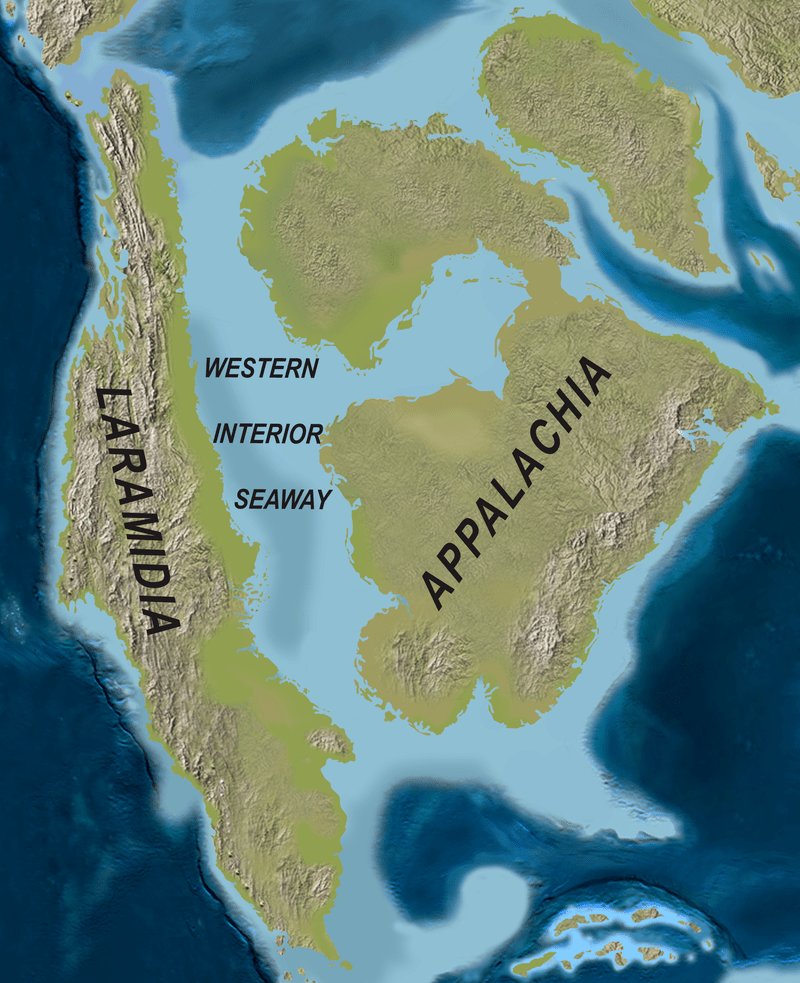
Image Credit: Laramidia and Appalachia, two landmasses that eventually made-up North America.

Home to daspletosaurus during the Late Cretaceous was a vast floodplain of the eastern coast of Laramidia. Laramidia and Appalachia are the two continents that would eventually become North America. During the Jurassic, these drifting continents were split by a vast ocean, the Interior Seaway. Along the Interior Seaway are five distinct and important formations encapsulating Daspletosaurus fossils. The Old Man Formation, Judith River Formation, Bear Paw Formation, and Dinosaur Park Formation. Situated in the Bad Lands of the western United States, these formations are present-day Montana and Lower Alberta, Canada.

Ceratopsians, hadrosaurs, Ornithosaurs, and other tyrannosaurs are entombed in the rocks near Daspletosaurus fossils. This suggests that these dinosaurs were contemporaries of Daspletosaurus and served as food for the dominant theropods at that time.

Why Did Daspletosaurus Go Extinct?

Daspletosaurus is known from 75 million years ago in the Campanian Late Cretaceous. The species suddenly disappeared 74 million years ago. After 5 million years of existence, it is unknown why Daspletosaurus went extinct. Competition with Tyrannosaurus Rex is one possibility climate change from volcanic activity is another. Whatever the reason, fossil evidence shows that Daspletosaurus disappeared, leaving Tyrannosaurus Rex to rule the land.

Daspletosurus was a fascinating theropod and an incredible link in the tyrannosaurus family as the tyrant before T-Rex.

Image Credit: Noelle K. Moser. Me standing next to Daspletosaurus Torsus and Tyrannosaurus Rex skull of specimen MOR555. Cincinnati Museum Center. Cincinnati, Ohio.

I am a multi-disciplinary writer, blogger, and web content creator. If you like this post, please visit some of my other sites or Online Writing Portfolio.

The Kuntry Klucker – A blog About Backyard Chickens

The Introvert Cafe – A Mental Health Blog.

Resources:

My Visit to Cincinnati Museum Center to study Daspletosaurus.

Holtz, Thomas R. Dr. Dinosaurs: The Most Complete, Up-To-Date Encyclopedia for Dinosaurs Lovers of all Ages. Random House. New York, NY. 2007. (pgs. 117, 124, 125, 126).

Pim, Keiron. Dinosaurs: The Grand Tour. Everything Worth Knowing About Dinosaurs from Aardonyx to Zuniceratops. The Experiment. New York, NY. 2019. (pgs. 302, 341).

Image Credit: Noelle K. Moser. Me peering through the fenestrae of Tyrannosaurus Rex specimen MOR555. Cincinnati Museum Center. Cincinnati, Ohio.

Medullary Bone: Tracing the Reproductive Tissue Link between Tyrannosaurus Rex and Egg-Laying Hens

noellemoser@charter.net

Image Credit: Noelle K. Moser. Tyrannosaurus Rex Skull, Perot Natural History Museum. Dallas, TX.

Since the discovery of the holotype Tyrannosaurus Rex in 1902 by Barnum Brown in the Hell Creek Formation of Montana, no other dinosaur has captured the human imagination. Upon its discovery, Barnum Brown wrote this to Henry Fairfield Osborn, friend, and curator of the American Museum of Natural History in New York. “It is as if a child’s conception of a monster had become real and was laid down in stone” (Randall, 2022). 

Image Credit: Noelle K. Moser. Tyrannosaurus Rex MOR 555 and Triceratops locked in a battle of predator and prey. National Museum of Natural History. Washington. D.C.

Though most of the skull and tail were missing, everything about this monster would overwhelm the human imagination. The specimen that Brown found stood 13 feet tall at the hips, its jaws measured over 4 ft in length, and would have weighed 6-8 tons. This was the only known specimen to science and was given the appropriate name Tyrannosaurus Rex by Henry Osborne in the fall of 1902. Tyrannosaurus which means “tyrant lizard” in Greek and “rex” which means “king” in Latin; Tyrannosaurus Rex, the king of the lizards, no other name would capture in two words the sheer power contained within this beast.

We crave to learn all we can about the largest therapod dinosaurs that ever existed. Over the past one hundred years, we have gleaned a wealth of information from the fifty Tyrannosaurus Rex specimens currently housed in museums around the world.

Image Credit: Noelle K. Moser. Tyrannosaurus Rex and an Alamosaurus (a titanosaurian sauropod). Perot Natural History Museum. Dallas, TX.

Tyrannosaurus rex gender is a tribute to the founder of the specimen. Sue (FMNH PR2081), discovered in 1990 by Sue Hendrickson, the largest and most complete Tyrannosaurus-rex, is aptly considered female. Stan (BHI 3033), discovered in 1987 by Stan Sacrison, containing the most complete skull, is considered male.

While these attempts to assign a pronoun to tyrannosaurus specimens offer a sense of personhood, a link to the actual gender of tyrannosaurus rex specimens rests in the most unlikely of places – chickens.

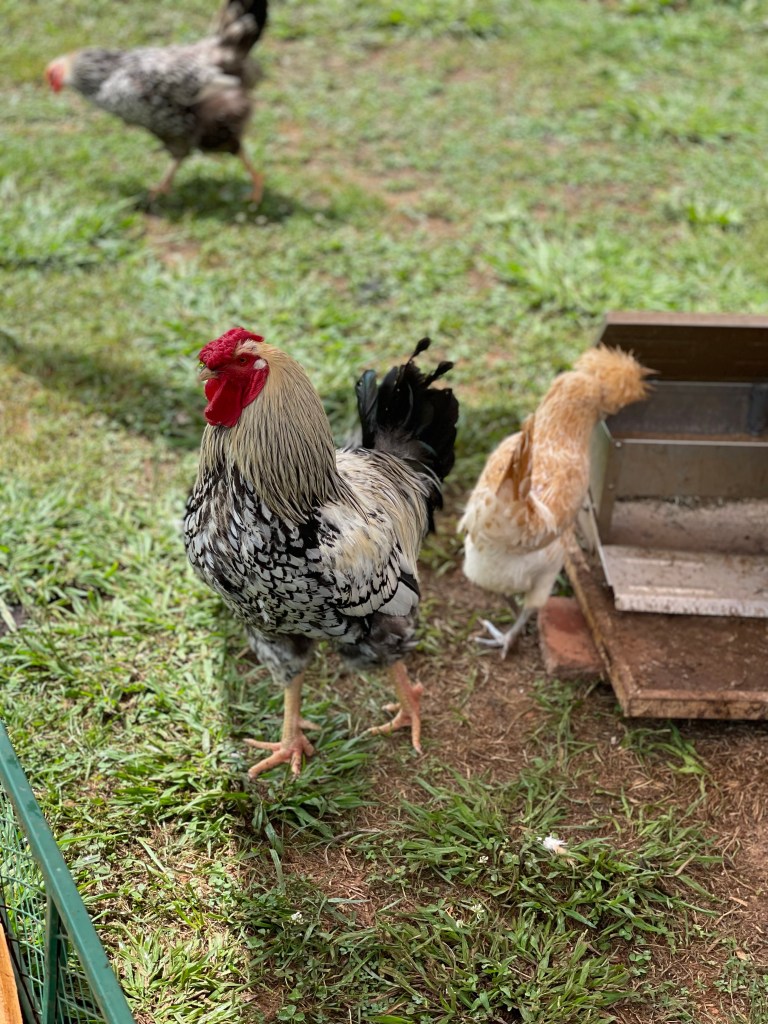
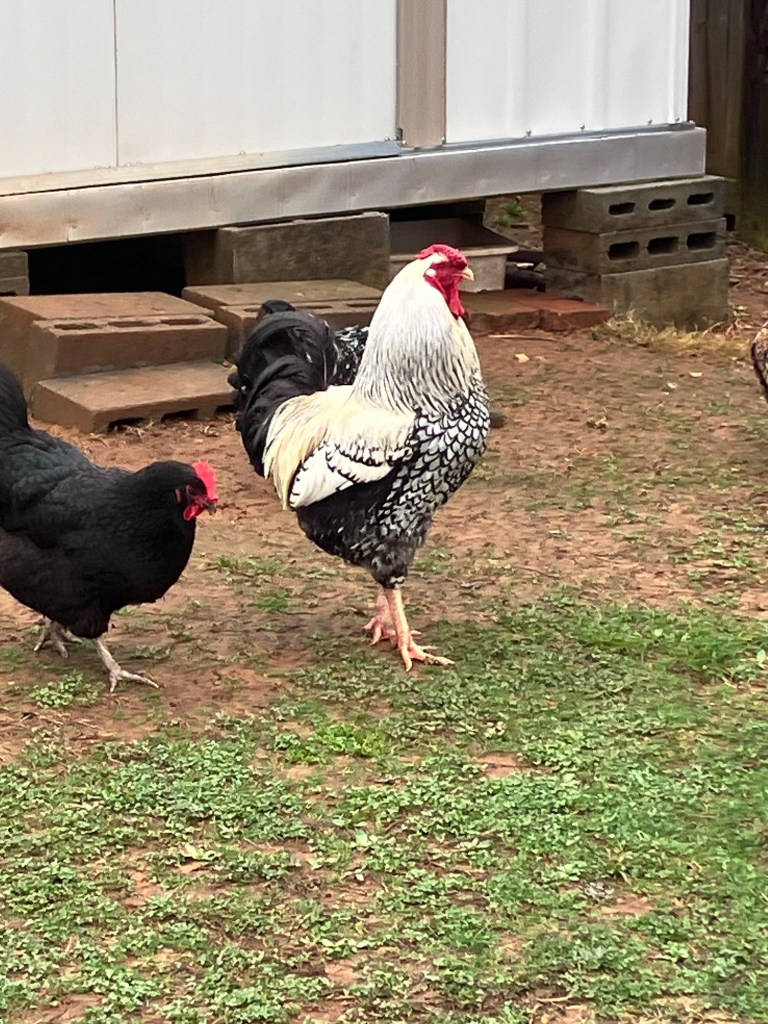
Image Credit: Noelle K. Moser. Smaug: (Silver Lace Wyandotte Rooster). Chickens have much in common with their ancestor, Tyrannosaurus Rex. By understanding chickens, we can much better understand T-rex.

Birds are dinosaurs. Specifically, birds are a type of therapod rooted in the dinosaur family tree that contains the same ferocious meat-eaters as T-rex and Velociraptor (Brusattee, 2018). Birds lie within an advanced group of therapods called paraves – a subgroup of therapods that traded in the brute body plan of their gargantuan ancestors for larger brains, sharpened acute senses, and smaller, lighter bodies that permitted progressive lifestyles above their land-dwelling relatives. Anatomically, chickens and tyrant theropods have many common characteristics that define the body plan of these magnificent creatures.

Air Sacs:

Birds achieve flight by two fundamental anatomical adaptions – feathers and hollow bones. While feathers provide the ability to soar above our heads, the real secret lies in their bones. Saurischians – the line of the dinosaur family tree containing both the giant sauropods and therapods – possessed skeletal pneumaticity – spaces for air in their bones. Skeletal pneumaticity produces hollow bones that lighten the skeleton, allowing for a wide range of motion. For example, without pneumaticity, sauropods would not be able to lift their long necks, and giant therapods would lack agility and ability to run because their skeletons would be far too heavy. In birds, air sacs are an ultra-efficient lung oxygen system. This flow-through inhalation and exhalation provides the high-energy birds need during flight. Evolving one-hundred million years before birds took flight, this is the true secret to their ability to take to the skies.

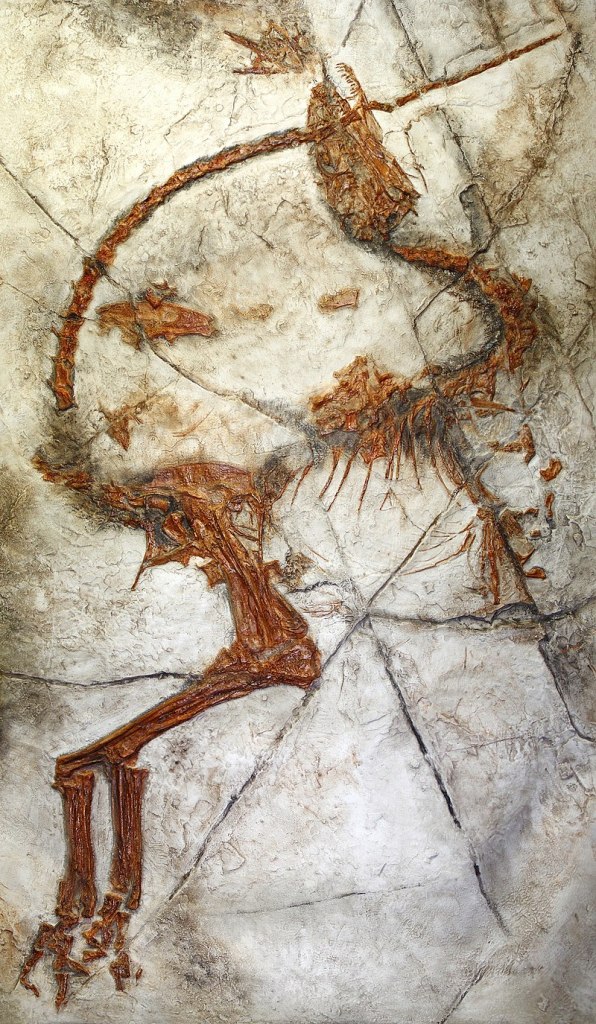
The signature feature of birds – feathers – evolved in their ground-dwelling theropod ancestors first noticed in Sinosauropteryx, the first dinosaur taxon outside parades to be found with evidence of proto-feathers.

Image Credit: Sinosauropterys fossil with evidence of proto-feathers.

The earliest feathers looked much different than the quill feathers of today. Initially, feathers evolved as multipurpose tools for display, insulation, protection for brooding, and sexual dimorphism. These early feathers were more like a fluff – appearing more like fur than feathers – consisting of thousands of hair-like filaments. Silkie chickens possess feathers that lack barbs that form the classic shape we associate with feathers. The first proto-feathers in dinosaurs were much like the texture of feathers on the Silkie. The breed name “Silkie” is derived from this unique feather texture.

Black Silkie hen. Silkie chickens possess hairlike filament feather texture from which their name is derived.

Wings:

While large theropods like Tyrannosaurus Rex noticed diminishing forearms throughout the Mesozoic, other dinosaurs like Zhenyuanlong and Microraptor traded in forearms for wings.

Image Credit: Life restoration of Zhenyuanlong, a small theropod that possessed feathered wings but could not fly.
Image Credit: Microraptor, feathered dinosaurs that possessed wings on both forelimbs and hindlimbs and could glide from treetop to treetop.

Despite possessing wings, these feather-winged dinosaurs could not fly. Their bodies were far too heavy to achieve flight observed in birds today. Aboral dinosaurs glided from tree to tree or used their wings to fly flop on the ground. These first fully feathered dinosaurs also used their plumage as display features to attract mates or frighten enemies, as stabilizers for climbing trees, and protection and warmth for brooding offspring.

As the body plan for feathered dinosaurs continued to fine-tune the use of feathers, flight happened by accident. More advanced paravians had achieved the magical combination to achieve flight – large wings and smaller bodies (Brusatte, 2018). As the body plan of birds continued to refine, they lost their long tails and teeth, reduced to one ovary, and hollowed out their bones more to lighten their weight. By the end of the Cretaceous, birds flew over the heads of Tyrannosaurus Rex and other land-dwelling dinosaurs. Sixty-six million years ago, the birds and T-rex witnessed the Chicxulub impact that brought the Mesozoic to a close. While therapods with large and expensive body plans died out, birds sailed through to the Cenozoic. For this reason, we say that all non-avian dinosaurs are extinct, but dinosaurs are still very much with us – we call them birds.

Dignitary Locomotion in feet:

Theropod means “beast foot”, and for good reason. Adaptions in the metatarsals (foot bones) of theropods allowed them to walk with a digitigrade stance. Unlike humans that walk plantigrade (flat-footed), tyrannosaurus rex walked on their toes. Digitigrade motion has many benefits, as it allows the animal to run fast, increased agility and splayed toes offer better balance on muddy or slippery surfaces. Birds are coelurosaurs and inherited these anatomical characteristics from their theropodian ancestors. Chickens like tyrannosaurus rex walk with digitigrade locomotion, making them swift runners on land and providing excellent balance and stabilizing ability when resting on roosts.

Wish Bone:

Walter (tyrannosaurus rex) posessed a furcula or “wish bone”. The Furcula can be see in the image that attached to the forelimbs.

The Thanksgiving tradition of “the lucky break” of the turkey wishbone is possible thanks to theropods who passed this anatomical trait to birds. In Tyrannosaurus rex, the furcula provided strength and power to the diminished but muscular forearms. In birds, the furcula fused from the two clavicle bones and function to strengthen the skeleton in the rigors of flight.

Image Credit: Coracoid and supracoracoideus muscles in a bird’s wing. The furcula provides support to these muscle systems in flight.

In conjunction with the coracoid and the scapula, it forms a unique structure called the triosseal canal, which houses a strong tendon that connects the supracoracoideus muscles to the humerus. This system is responsible for lifting the wings during the recovery stroke in flight.

S-shaped Skeleton:

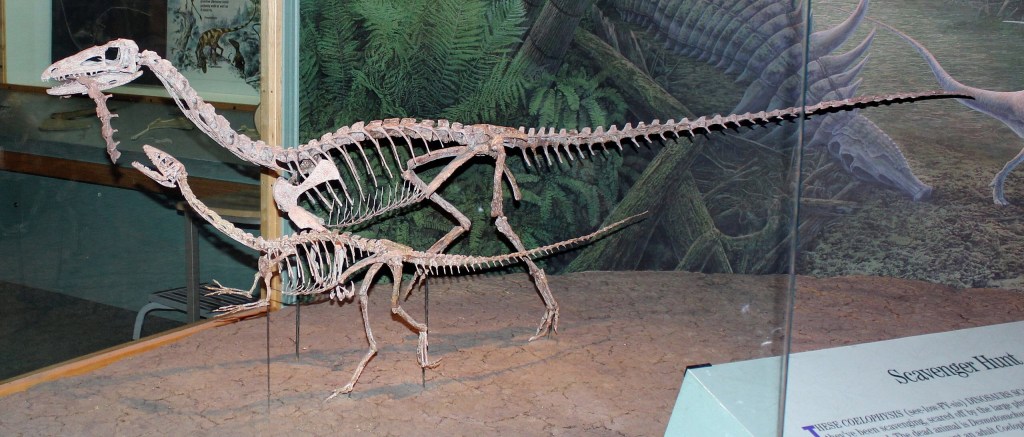
Noelle K. Moser. Perot Natural History Museaum. Dallas TX. Coelophysis, basal coelurosaur with an S-shaped skeleton possessed by both T-rex and modern birds.

Chickens and all birds have a unique body plan visible in the skeleton. Comparing the skeleton of Tyrannosaurus rex with modern birds will yield similar anatomical attributes. T-rex has a skull attached to a spine, ribs, and two legs with splayed toes providing swift bipedal locomotion. Focusing on the appendicular skeleton, we see that T-rex and modern birds have an S-shaped skeleton. The reason is that body plans do not have unlimited parts from which evolution can choose but rather build upon earlier ancestral shapes (Horner, 2009).

While birds lack teeth and long tails, the genes to manipulate these features still exist in the gene sequence of birds. In 2006, researchers at the University of Wisconsin published a report on manipulating the genes responsible for teeth in chicken egg embryos, resulting in buds that would later develop into crocodile-like teeth. The embryos were not allowed to hatch, but this research shows that the genes related to “dinosaur-like” features still exist within the genes of chickens; mother nature has just switched them off.

While it’s easy to say these features are of birds, they are not attributes of birds at all but are of dinosaurs.

Image Credit: Noelle K. Moser. Tyrannosaurus Rex stalking an Alamosaurus. By studying skeletal features, it is clear that T-rex is an overgrown chicken.

By studying the anatomy of chickens and comparing these findings with the tyrannosaurus Rex skeleton, we see many of the same features. As we look closer, it becomes increasingly clear that T-rex is an overgrown chicken. Since the backyard chicken and the mighty T-rex have these characteristics in common, it stands to reason that these similarities are transferable to the study of tyrannosaur fossils, sexual dimorphism, and gender.

Medullary Bone in Egg Laying Hens:

A trio of Polish hens perching on a macramé swing under my grape arbor.

In 2006, while studying bones of a newly discovered tyrannosaurus Rex, B-rex (Bob Rex, a tribute to the finder of this tyrannosaurus skeleton, Bob Harmon), a spongy-like mesh of tiny transparent flexible tubing was visible under a microscope. In attempts to determine the nature of this bone material, researchers turned to the closest living relative of the mighty T-rex – birds, specifically hens.

Buff Orpington chick resting amongst farm fresh eggs from my backyard flock.

This bone medullary bone is a reproductive tissue found only in living female actively reproducing hens. As a hen advances to maturity, marked by egg laying, her body will produce medullary bone and continue to produce this bone throughout her laying duration. In some birds, this is seasonal in hens such as chickens; medullary bone is produced from her first egg at about 20 weeks of age throughout her subsequent laying lifetime. This reproductive bone tissue serves as mobilized calcium storage for the production of eggshells (Larson and Carpenter, 2008).

Buff Orpington eggs from my backyard chicken flock.

The hens in my backyard flock possess the same medullary bone discovered in B-rex. When my hens lay eggs, the shells that protect the egg are medullary bones stored in their bones. As she continues the lay year after year, this reproductive tissue replenishes. Since hens lay several eggs a week vs only seasonal, chicken feed is fortified with additional calcium to extend the egg potential of laying hens. While man’s attempts to lend support by increased calcium allow hens to produce stronger eggshells, the fundamentals are the same. My hens produce medullary bone because it is an attribute that they inherited from their ancestor, tyrannosaurus rex.

Buff Orpington Hens, White Crested Polish hen, and Mottled Cochin Rooster. My hens-related to tyrannosaurus rex-possess the same reproductive medullary bone as that of B-rex.

Unlike other bone types, medullary bone has no other function. It exists solely as a calcium storage for the production of eggshells. The formation of this reproductive tissue osteoclasts in the femur and tibiotarsus bones begins to deposit about 1 or 2 weeks before lay.

It’s a Girl!!!

Image Credit: Femur of MOR 1125 where osteoclasts of medullary bone were found.

The discovery of medullary bone found in the femur of MOR 1125, triggered by the increase of estrogen in her body, signified that this tyrannosaurus rex was not only a female but pregnant.

Image Credit: Skull of B-rex (MOR 1125).

Living near the end of the 140-million-year reign of the dinosaurs, B-rex moved through the lush forests of a delta that fed several winding rivers in the Hell Creek Formation. She hatched 16 years prior, wandering about this tropical landscape, growing to maturity and preparing to mate.

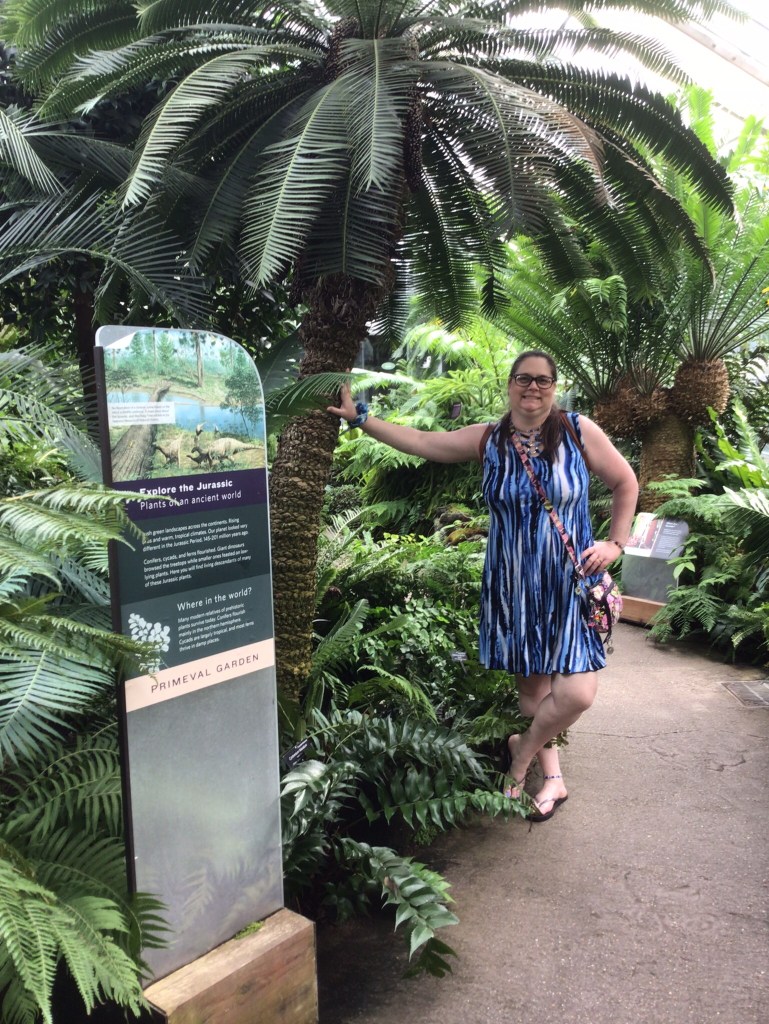
Image Credit: Noelle K. Moser. Mesozoic plants at the National Botanical Gardens in Washington. D.C. Bob-rex would have seen many of these same plants as she wondered the tropical regions of the Hell Creek Formation sixty-eight million years ago.

Whether or not this was her first mating season, we do not know. Perhaps she died without ever producing offspring, or she was preparing to be a mother for the first time. We know that sixty-eight million years ago, she died young of unknown causes, and her burial was quick because her skeleton was well preserved.

The discovery of B-rex is the holy grail for paleontology and dinosaur studies. We can now assign gender and learn more about the intimate lives of tyrannosaurus rex specimens and other medullary bone-bearing dinosaurs through the lessons of B-rex, the pregnant T-rex.

I am a multi-disciplinary writer, blogger, and content creator. If you like my work, please visit my Writing Portfolio

Resources:

Brusatte, Steve. The Rise and Fall of the Dinosaurs: A History of Their Lost World. William Marrow of Harper Collins Publishers. New York, NY. 2018. Pgs. 282, 298, 299.

Harris P Matthrew, Hasso M Sean, Ferguson W.J. Mark, and Fallon F John. The Development of Archosaurian First-Generation Teeth in a Chicken Mutant. Current Biology Vol. 16, 371-377, February 21, 2006. URL

Horner, Jack. How to Build a Dinosaur. Plume, Published by Penguin Group. London, England. 2009. Pgs. 8,9,57, 58, 60.

Larson, Peter and Carpenter, Kenneth. Tyrannosaurus Rex: The Tyrant King. Indiana University Press. Bloomington, Indiana. 2008. Pgs. 40, 93, 95, 98.
Randall K., David. The Monster’s Bones: The Discovery of T. Rex and How it Shook Our World. W. W. Norton & Company, Inc. New York, N.Y. 2022. Pgs. 153.

Me in the primitive garden of the Mesozoic at the National Botanical Gardens. Washington, D.C.

~ Noelle K. Moser ~

Theropod Evolution: Unveiling Meraxes Gigas, the Late Cretaceous Giant

Image Credit: Meraxes Gigas.

We have a new dinosaur! A theropod with short limbs like Tyrannosaurus Rex. Tyrannosaurus is not the only famous giant carnivorous dinosaur; meet Meraxes Gigas.

During the summer of 2022, researchers uncovered a previously unknown dinosaur from the Late Cretaceous, Meraxes Gigas. Meraxes belongs to the genus carcharodontosaurid theropods. The name, “Meraxes”, honors a dragon from the George R. R. Martin novel, A Song of Ice and Fire – Wikipedia The specific name, “Gigas”, derived from the Greek word meaning “giant”, in reference to the theropod’s large size.

Found in the Huincul Formation of Argentine Patagonia was a nearly complete skeleton. Meraxes Gigas is of pivotal importance because this discovery constitute a complete skull, partial forelimbs, complete hindlimbs, fragmentary ribs, and cervical and complete caudal vertebrae. 

The hand of theropods is imperative to determine whether the specimen is primitive or derived. Primitive in dinosaur terminology means an early stage in evolutionary development. Derived means most recent in dinosaurian evolution. To help this make sense, Coelophysis is a primitive ancestor of the derived Tyrannosaurus Rex.

Image Credit: Gignotosaurus skeleton, notice the longer arms and three digits on each hand. Giganotosaurus is more derived than the primitive theropod Coelophysis.

Primitive theropod dinosaurs have longer arms and digital formula I-IV. Derived theropods will have shorter arms and a reduced number of digits.

Image Credit: Coelophysis primitive theropod dinosaur. Notice that Ceolophysis has longer arms and 4 digits on each hand.

Coelophysis, the oldest known theropod, defined as a primitive Late Triassic theropod had longer arms and 4 digits on each hand.

Image Credit: Allosaurus

Allosaurus, more derived lived during the Middle-Late Jurassic and possess shorter arms and only three digits on each hand. Tyrannosaurus the Cretaceous apex predator had very short arms and only 2 digits on each hand.

Image Credit: Noelle K. Moser. Walter, Tyrannosaurus Rex located in Washington, D.C. has very short arms and only 2 digits on each hand.

As observed by these images, the skull, forearms, hands, and digits are gold in theropod discoveries. The hands of theropod dinosaurs tell us so much about the evolution of dinosaurs during the Mesozoic.

In addition to the forearms and digits, complete or near complete skulls found in new dinosaurs’ discoveries help us understand more about the creatures.

At first glance, the skulls of these giant theropods appear similar; massive jaws with numerous long serrated teeth. To the trained eye, the skulls of Giganotosaurus and Tyrannosaurus Rex are remarkably different.

Giganotosaurus has a long narrow skull that comes to a sharp point. The skull of Tyrannosaurus Rex is boxier and comes to a lateral line rather than a point. See the images below.

Another example of primitive and derived evolution is theropods, Allosaurus, Ceratosaurus, and, Tyrannosaurus. See the images below.

While these three theropods appear similar, Allosaurus and contemporary Ceratosaurus predate Tyrannosaurus by 80 million years.

Head Creasts:

Another feature present in theropod dinosaurs, specifically primitive species, is that of head crests. Many Late Triassic and Early Jurassic theropod species possessed head crests. It is thought that these crests were used as display features for mating and sexual dimorphism. In later derived theropod species, these crests disappear.

Image Credit:

The image above depicts Ceratosaurus nasicornis, the apex predator of the early Jurassic, displaying crests on the head can be seen. Ceratosaurus was driven to extinction by the Late Jurassic, succeeded by the more successful Allosaurus.

Image Credit:

Allosaurus, as mentioned above, is the most famous predecessor to Tyrannosaurus Rex. Living through the greater part of the Jurassic, Allosaurus was the apex predator of its time and possessed primitive features – three-digit hands, long forearms, and head crests. It is now known why derived theropods lose the head crests.

Image Credit:

By the time we traverse, the expansive amount of time between Ceratosaurus and Tyrannosaurus Rex (80 million years) head crests disappear from theropod anatomy.

Size:

In addition to reduced digits and head crests, as theropods evolve they get larger. Coelophysis at maturity was about 10 feet long and weighed 100 pounds. Compare that to the Jurassic theropod Ceraosaurus which grew to 20 feet long and weighed about 2,000 pounds. Allosaurus grew to be 12 feet long and 10 feet tall weighing 2.3 metric tons. Tyrannosaurus Rex, the largest land theropod to ever live grew to 43 feet long and weighed 6-8 tons.

Meraxes Gigas:

Now, that you have a better understanding of theropod dinosaurs, let’s take another look at Meraxes gigas. Meraxes is a crucial find in the world of dinosaur studies because the remains included key anatomical features, a complete forelimb, hand, a skull, and various other bones. The most important being that of the hand and skull.

According to the research, Meraxes Gigas had tiny arms like Tyrannosaurus with three digits on each hand like Allosaurus. Tyrannosaurus and Meraxies are not related as they are separated by about 20 million years, but it does suggest that as theropods evolved larger heads, the arms shrunk, no longer useful for hunting. Regarding size, Meraxes Gigas was 36 feet long and weighed 4 tons. To put this into perspective, Meraxies is smaller than Tyrannosaurus Rex but much larger than Allosaurus. Further noted, Meraxies does not appear to have head crests.

In terms of theropod evolution, Meraxies is more derived than Allosaurus but primitive compared to Tyrannosaurus. In terms of theropod evolution, this put Meraxies Gigas living about 90 to 100 million years ago, firmly in the Late Cretaceous. Meraxes Gigas and its close relative, Giganotosaurus died out in the Late Cretaceous, succeeding their position at the top of the food chain to the tyrannosaurids, and its famous member, Tyrannosaurus Rex.

Meraxes Gigas and the newly discovered theropod dinosaur were one of the last groups of giant carnivores to walk the Earth. While we often think of Tyrannosaurus Rex as being the lone giant carnivore stalking the Cretaceous, other large theropods competed with the tyrant dinosaurs. Although Meraxes Gigas never laid witness to the meteor that would ultimately bring the reign of the dinosaurs to an end, Tyrannosaurus Rex did.

I am a multi-disciplinary writer, blogger, and web content creator. If you liked this post, chomp the subscribe button.

If you like this blog, please visit my portfolio. Writer | The Works Of Noelle Moser

As always, thanks for reading Coffee and Coelophysis. Next time, we will take an in-depth look at the most famous theropod, Tyrannosaurus Rex.

~ Noelle ~