Exploring the Houston Museum’s Dinosaur Treasures

Email: noellemoser@charter.net
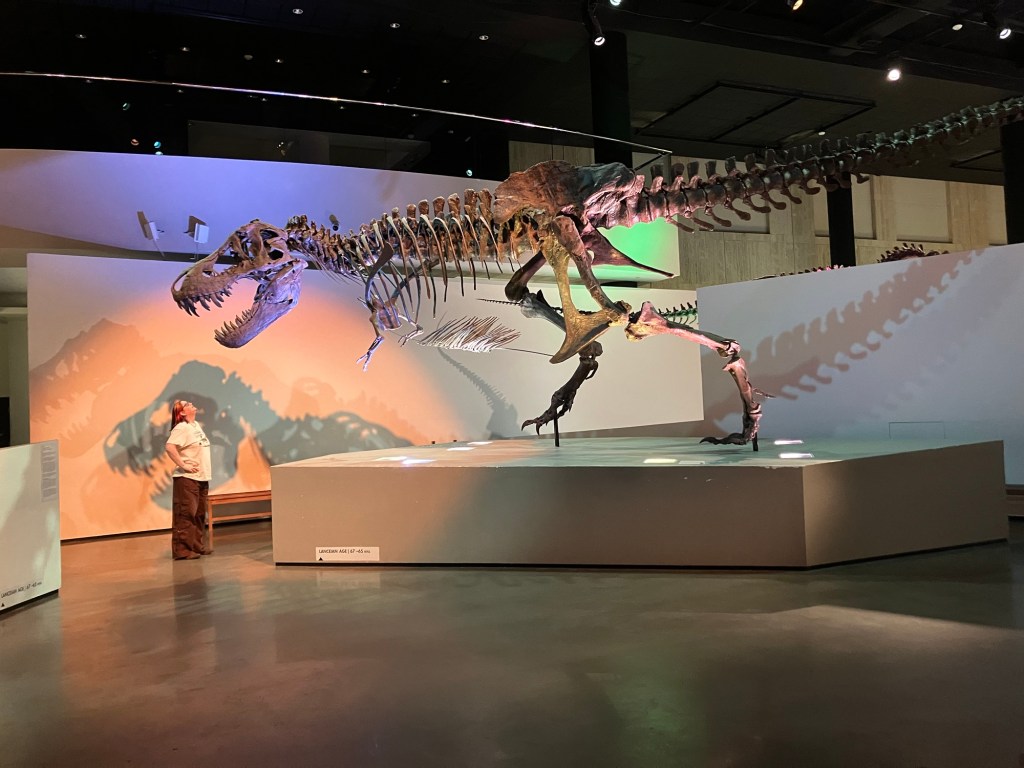
Image Credit: Noelle K. Moser. Stan and I, positioned at the intersection of popular culture and science. Like Stan, Tyrannosaurus Rex is a silent witness to a world we can only experience through bone. Houston Museum of Natural Science.

Disclaimer: This article reflects my independent observations and insights gained during my research at the Houston Museum of Natural Science. I want to clarify that I am not affiliated with the HMNS in any capacity and have not received any compensation for writing this piece. The views and opinions expressed are solely my own. I am a professional writer and researcher specializing in dinosaurs. I travel to museums across the country to gather information and insights for my blog, where I explore the fascinating world of theropods and Mesozoic life.

The study of the Mesozoic era presents intriguing opportunities for exploration, particularly through its remarkable dinosaurs that once roamed the Earth. After thorough planning, which involved securing airline tickets and hotel accommodations, I recently visited the esteemed Houston Museum of Natural Science in Houston, Texas. This destination is celebrated for its exceptional paleontology exhibits, notably featuring three impressive specimens of Tyrannosaurus rex. The museum serves as a valuable resource for anyone interested in the fascinating history of dinosaurs and their environments during the Mesozoic era.

Image Credit: Mary Haggard. Houston Museum of Natural Science.

During my visit, I was truly moved by the incredible fossil collection on display. Multiple specimens of Tyrannosaurus rex, Acrocanthosaurus, Allosaurus, and Gorgosaurus brought a sense of excitement and connection to the past. As I explored the exhibits of herbivores—Diplodocus, Triceratops, Hadrosaurs, Ankylosaurus, and even a rare pair of Quetzalcoatlus—I couldn’t help but feel a deep sense of wonder. It reminded me of the rich history these magnificent creatures represent and the awe they evoke, connecting us to a world we can only experience through bone.

As someone profoundly captivated by Tyrannosaurus Rex, I dedicate my work to exploring its evolution, adaptations, and the mysteries of its lifestyle, making this visit truly meaningful. Houston is home to specimens of Stan, Bucky, and Wyrex—famous T-rex individuals that each tell a unique story about the life and evolution of this apex predator. Studying these fossils up close allowed me to dive deeper into their adaptations, pathologies, and mysteries.

Beginning with The Morian Hall of Paleontology, visitors are offered an engaging exploration of prehistoric life through a diverse collection of fossils and visual displays. This innovative exhibition presents the concept of deep time in a way that accommodates various learning styles, making it an informative experience for a wide range of audiences.

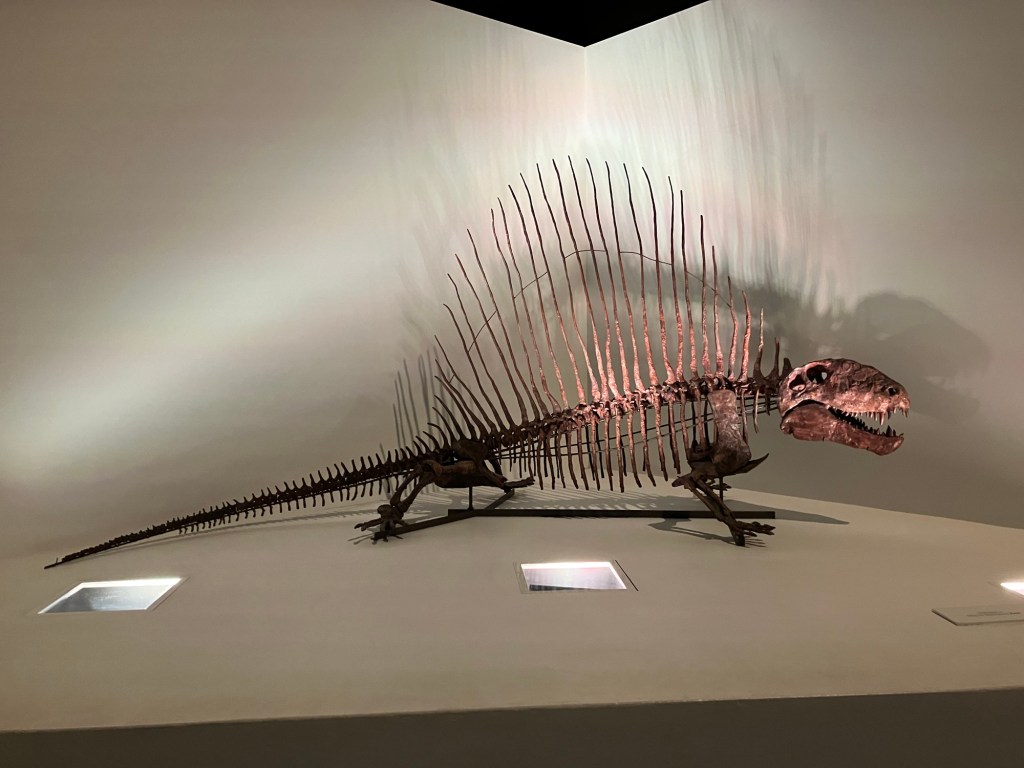
Immersed in a journey through deep time, visitors will encounter a variety of familiar prehistoric creatures. Notable among these are trilobites, which were marine arthropods, and ammonites, known for their coiled shells. The path also features early tetrapods, the four-legged ancestors of amphibians, reptiles, and mammals. Additionally, one might come across impressive Devonian giant fishes such as Dunkleosteus, as well as the Permian period’s Dimetrodon. Another significant creature to observe is the notable Triassic archosaur Postosuchus, an ancient reptilian predator.

Entering the dinosaur hall, visitors are welcomed by the impressive cast of “Big Al,” the renowned Allosaurus that represents the pinnacle of Jurassic predators. Discovered in 1991 at the Howe Quarry in the Morrison Formation of Wyoming, “Big Al” is not only the most complete and well-preserved specimen of its kind but also a symbol of resilience. The pathologies revealed in this remarkable skeleton tell a powerful story of survival, showcasing evidence of injuries, diseases, broken bones, and the remarkable bone growths that came in response to adversity. “Big Al” inspires us to appreciate the strength and tenacity found in nature’s history.

Image Credit: Noelle K. Moser. Cast of “big Al”. Houston Museum of Natural Science

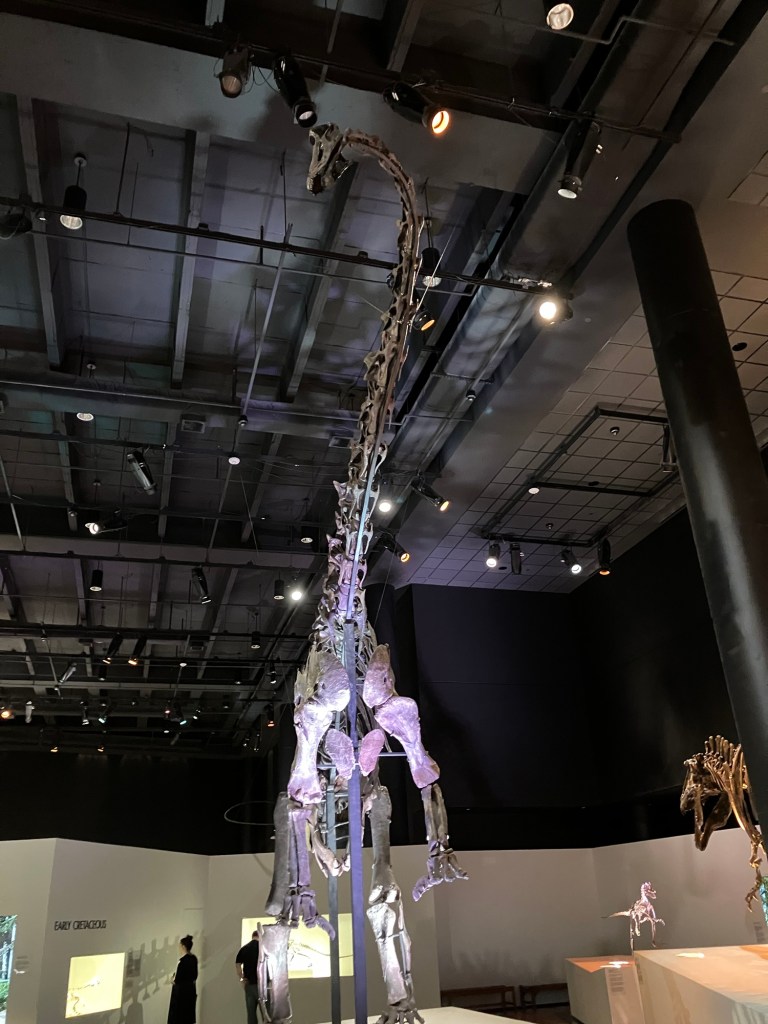
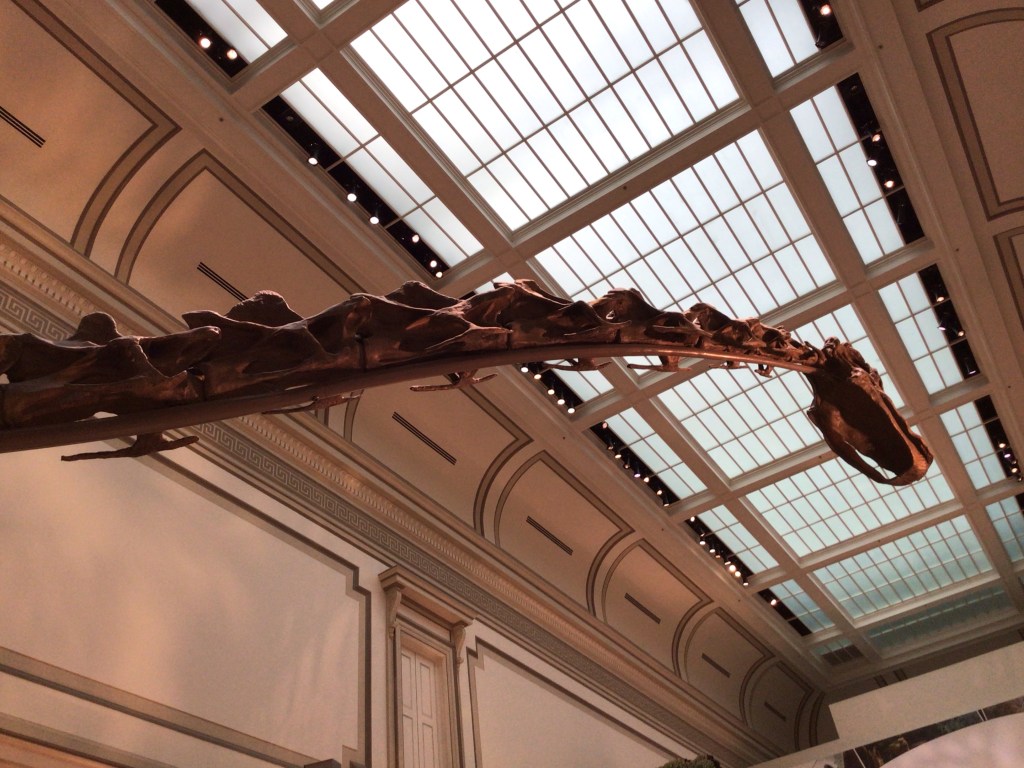
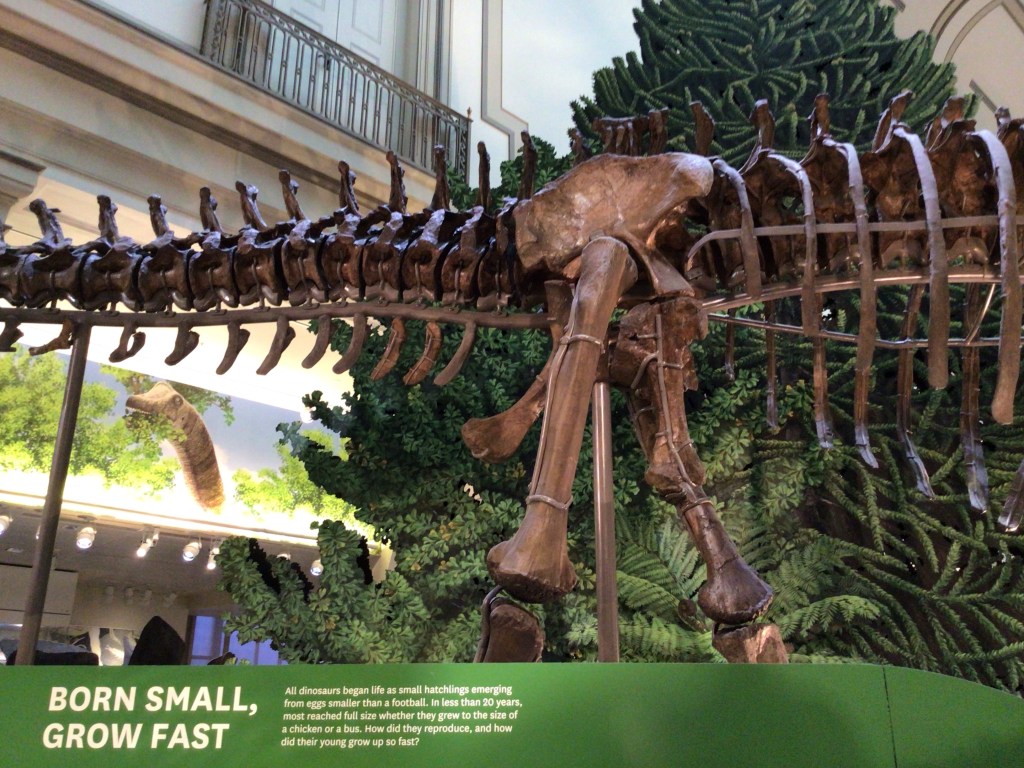
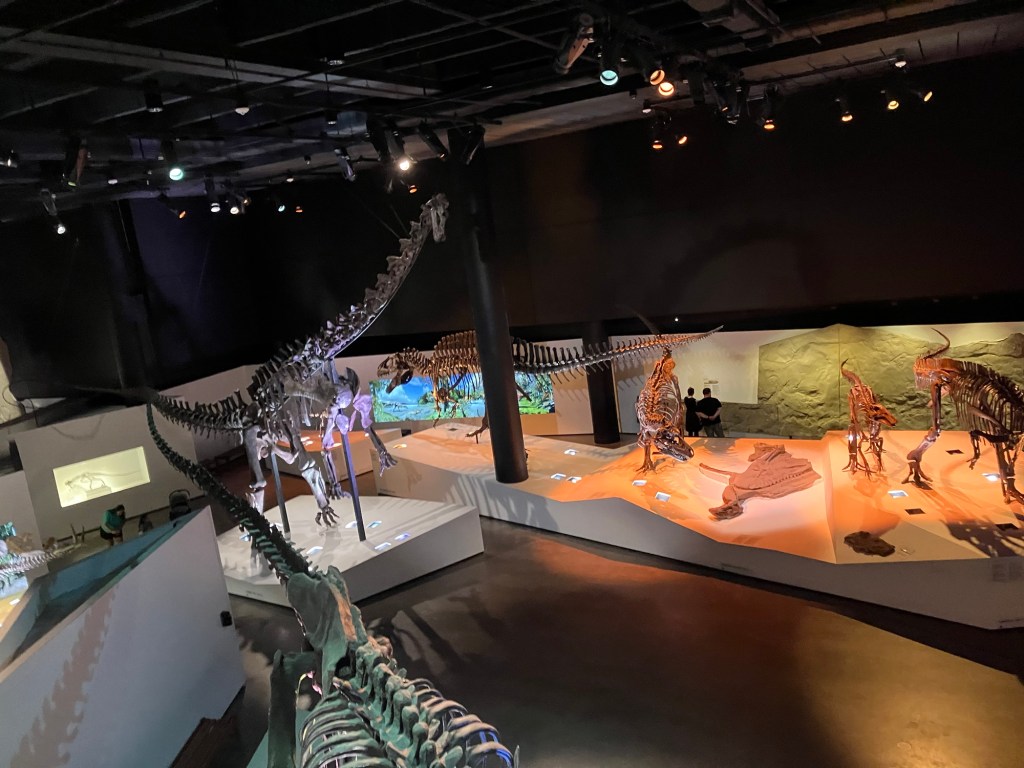
Stepping into the Paula and Rusty Walter Mesozoic Gallery, one is in awe of the vastness of space and the magnificent creatures that once roamed the Earth. Towering at the center is a Diplodocus rearing on its hind legs, long neck, and head stretching to the ceiling.

Image Credit: Noelle K. Moser. Diplodocus reared on its hind legs towering over theropods in various life-like poses. Houston Museum of Natural Science. Houston, Texas.

In various life-like poses stand a variety of large theropods and herbivores, each telling a story of the past. Most notable, and the reason for my venture to the Houston Museum of Natural Science, is BHI 3033, “Stan.”

Stan: The Tyrant Lizard King with Multiple Injuries

Image Credit: Mary Haggard. Stan and I, standing at the intersection of science and popular culture. Tyrannosaurus Rex is a silent witness to a world we can only experience through bone. Houston Museum of Natural Science. Houston, Texas.
Stan, a remarkable specimen found in 1987 in the Hell Creek Formation of Montana, serves as a beacon of discovery for paleontology and the biology of Tyrannosaurus rex. His fossil includes the most complete T. rex skull, a testament to the wonders of the natural world. Beyond the skull, Stan’s remains consist of 190 bones, representing about 63% of the entire skeleton, offering invaluable insights into the anatomy, lifestyle, and pathologies of one of the most intriguing Tyrannosaurus rex specimens in history. (Larson, 2008)
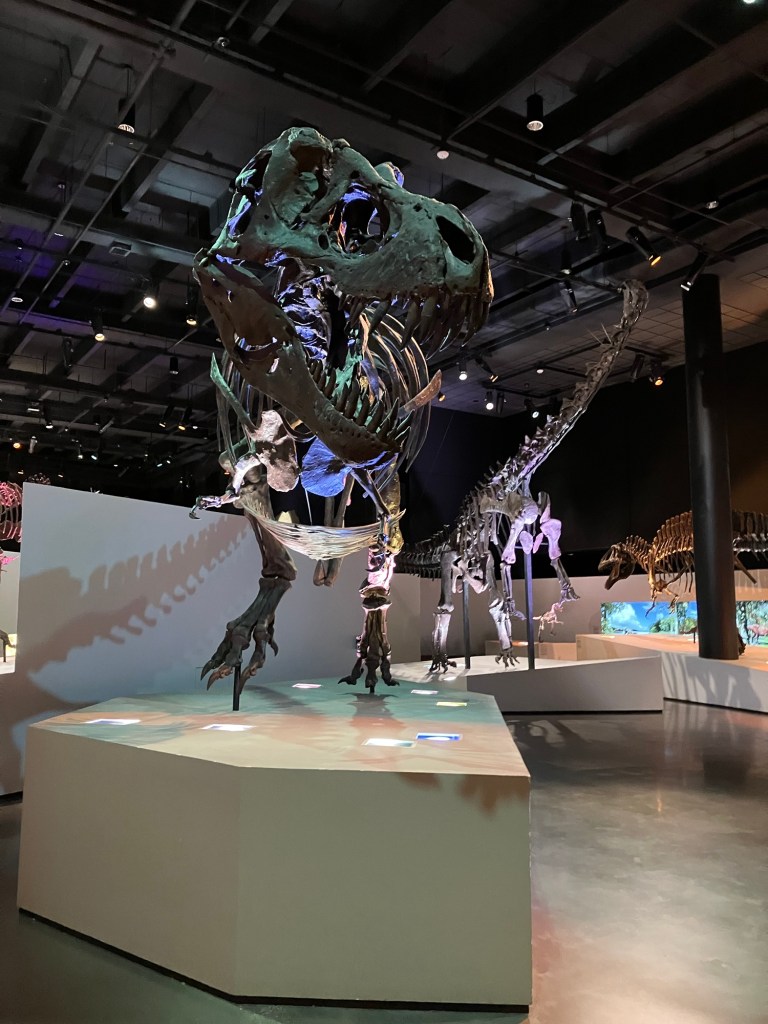
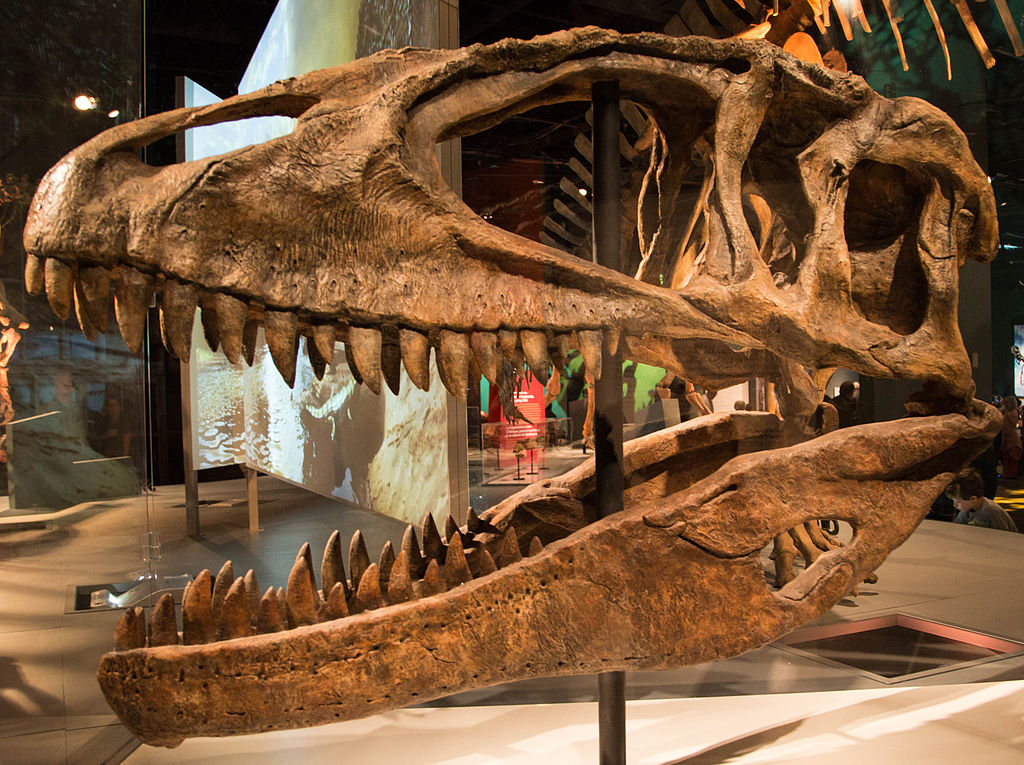
Image Credit: Noelle K. Moser. The impressive dental battery of Stan comprised of 60 conical serrated teeth. Houston Museum of Natural Science. Houston, Texas

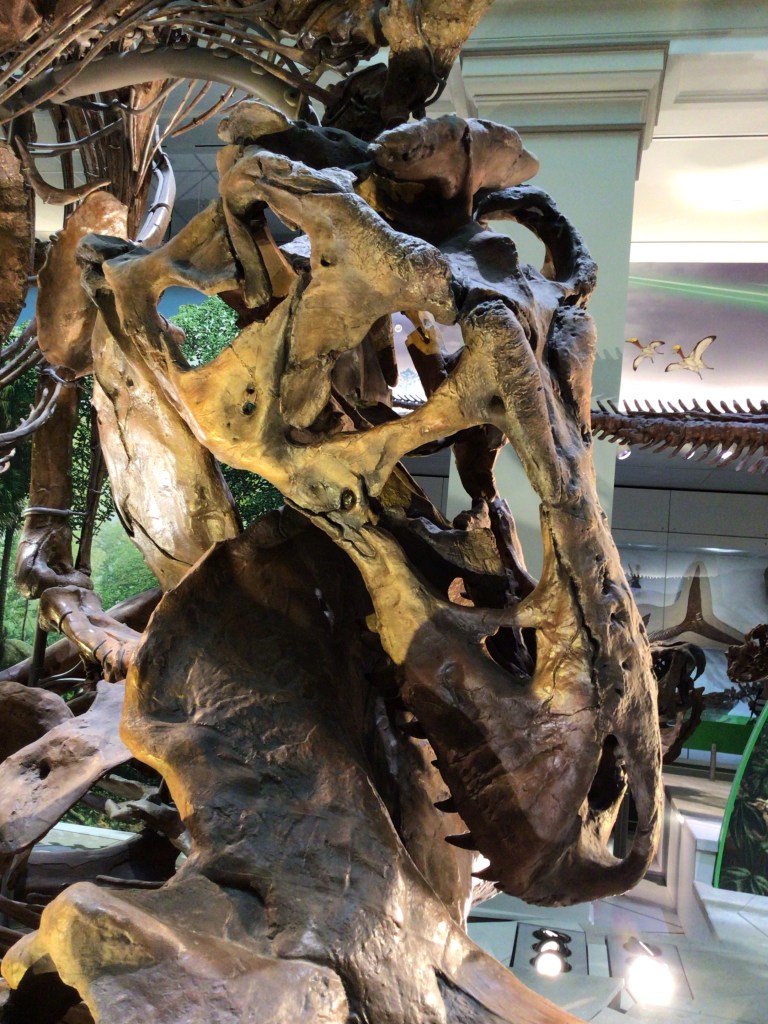
An examination of Stan’s bones reveals multiple pathologies and healed injuries sustained throughout his life. Puncture wounds on the back of his skull and ribs suggest he was at one time bitten by another Tyrannosaurus Rex. Bite marks at the base of his skull indicate a significant neck injury, leading to the fusion of two vertebrae, likely causing him pain for the remainder of his life. Holes on the side of his skull suggest more healed wounds and possible infections from bone-eating parasites. Stan’s pathologies show that life in the Cretaceous was challenging, even for a Tyrannosaurus Rex.
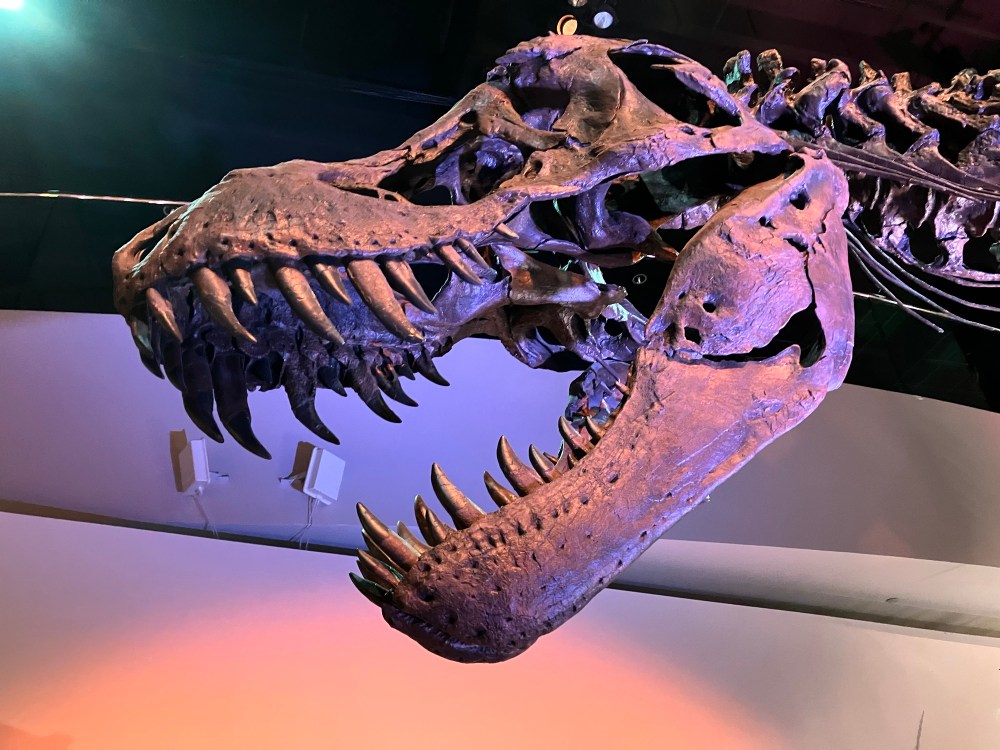
Image Credit: Noelle K. Moser. Holes on the side of Stan’s skull show pathology of healed injuries and possibly bone-eating parasitic infections. Houston Museum of Natural Science. Houston, Texas.

In a poised stalking stance with jaws gracefully agape, Stan proudly displays his formidable set of 60 teeth. Like all Tyrannosaurus rex specimens, he embodies extraordinary evolutionary development in dentation, demonstrating the power to overcome even the most daunting challenges in his quest for survival.
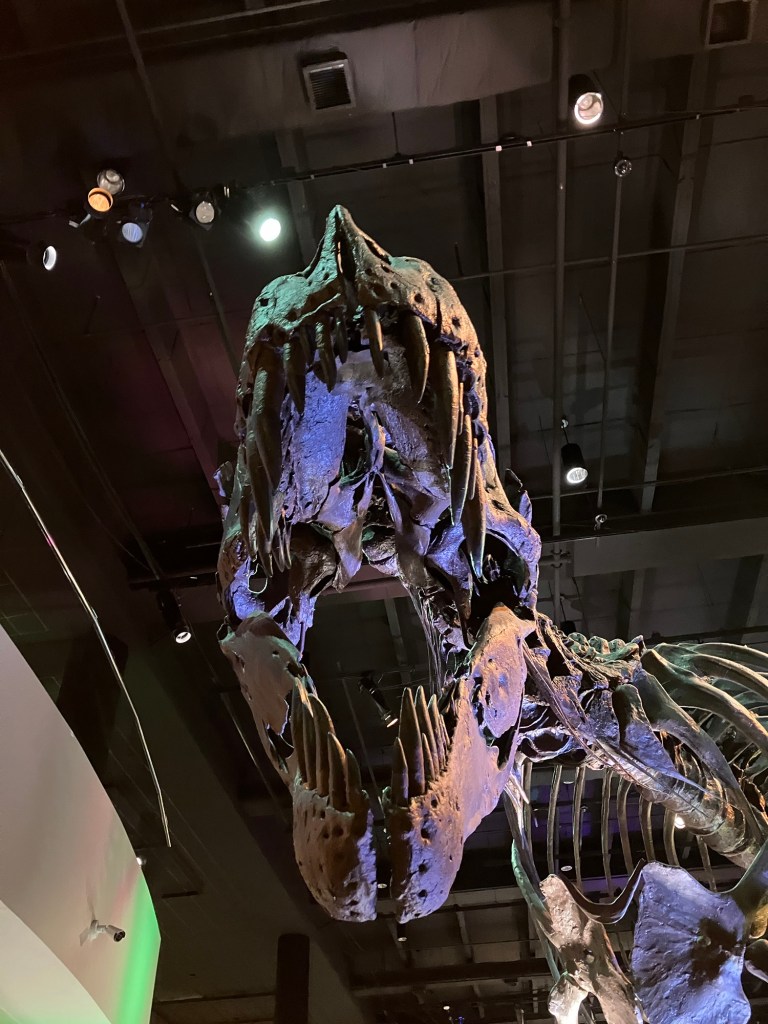
Image Credit: Noelle K. Moser. Stan proudly displays his formidable set of 60 teeth. Houston Museum of Natural Science. Houston, Texas.

Examining Stan in such an accessible manner has given me a deeper insight into his life through his skeletal remains. Despite suffering severe injuries and pain, Stan’s capacity for healing and survival is a testament to the extraordinary resilience and robustness of this theropod. While the bone analysis of Stan shows healing, another T-Rex was not as lucky.

Wyrex: The Bob-tailed T-Rex.

Image Credit: Noelle K. Moser. Wyrex, the bobtail T-rex. Houston Museum of Natural Science.

Discovered in 2002 within the Hell Creek Formation of Montana and transferred to the Houston Museum of Natural Science (HMNS) in 2009, the fossil known as “Wyrex” is an extraordinary Tyrannosaurus rex specimen. This groundbreaking discovery unveils a remarkable partial braincase and two nearly complete legs and feet, providing exhilarating new insights into the foot anatomy of the legendary Tyrannosaurus rex! (Larson, 2008)

Image Credit: Noelle K. Moser. Complete foot preserved with Wyrex providing exhilarating new insights into the foot anatomy of the legendary Tyrannosaurus rex. Houston Museum of Natural Science.

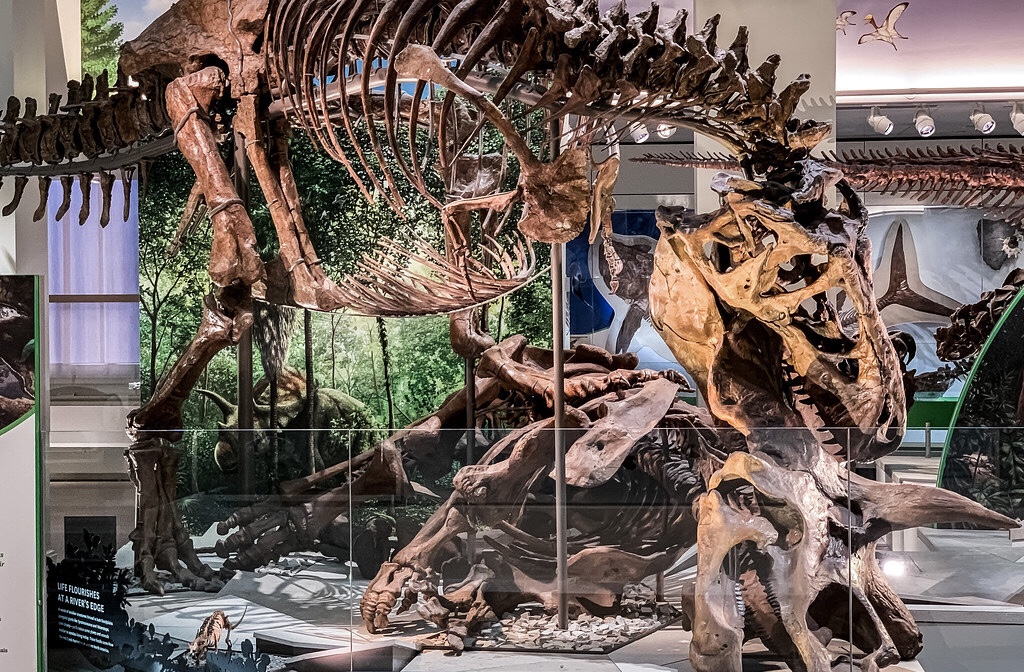
Mounted in an attack stance adjacent to an Ankylosaurus, it is readily apparent that one-third of the tail is absent. As a critical component of Tyrannosaurus rex anatomy, the tail serves as a counterbalance to the skull and accommodates powerful musculature necessary for locomotion.
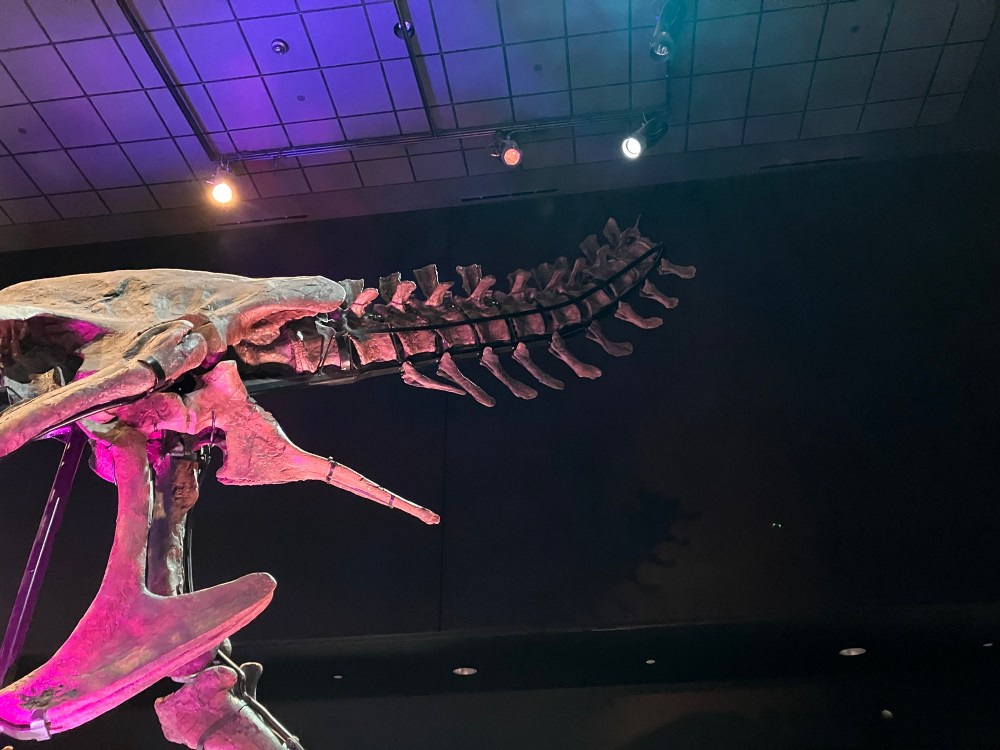
Image Credit: Noelle K. Moser. The tail serves as a counterbalance to the skull and accommodates powerful musculature necessary for locomotion. Houston Museum of Natural Science. Houston, Texas.

Analysis of the bone indicates no evidence of healing, suggesting that the tail may have been severed post-mortem, or that this injury ultimately unalived Wyrex. Had Wyrex survived this injury, the T-rex would have required a significant period of rehabilitation to regain the ability to walk effectively.

Image Credit: Noelle K. Moser. Wyrex, positioned in an imposing attack pose, offers visitors the opportunity to examine the remarkable dentition and distinctive anatomical characteristics of the formidable Tyrannosaurus Rex. Houston Museum of Natural Science.

Presented in an assertive attack stance, Wyrex offers visitors an exceptional opportunity for a detailed examination of its distinctive conical, serrated teeth. This close-up perspective not only showcases the impressive anatomy of this prehistoric predator but also fosters a deeper appreciation for the evolutionary traits that contributed to its role in the prehistoric ecosystem.

In addition to its other remarkable features, Wyrex has yielded another significant discovery: several patches of fossilized skin from the Tyrannosaurus rex. This finding marks the first time that such skin has been uncovered for this iconic dinosaur, providing new insights into its biology and appearance. (Larson, 2008).
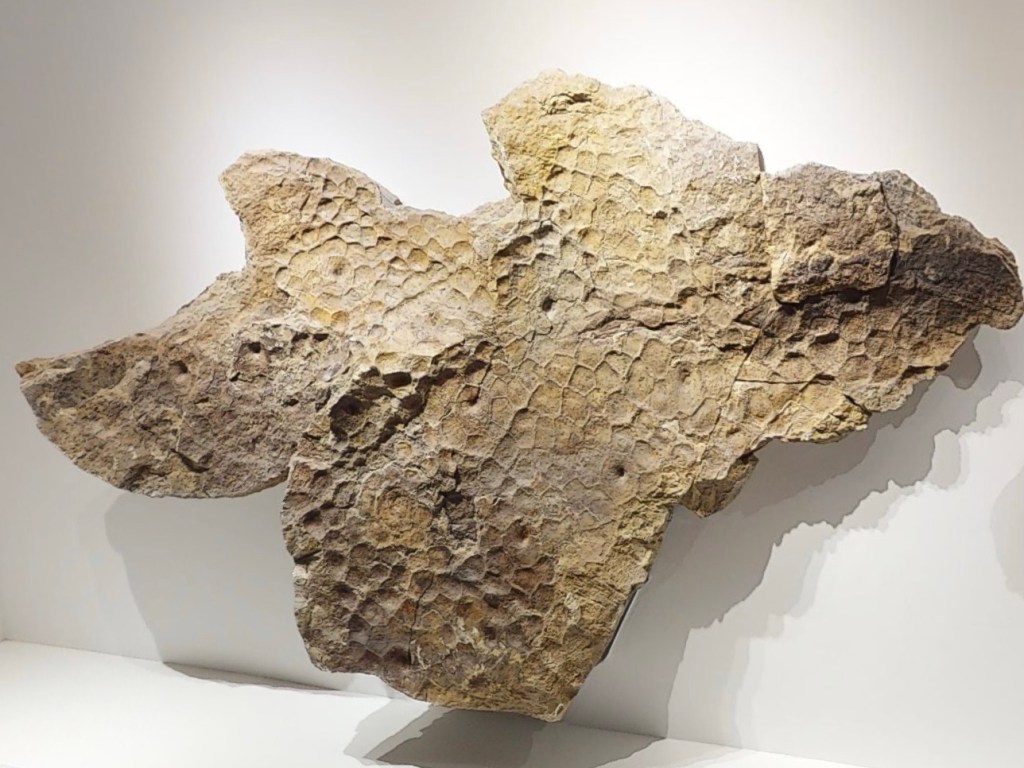
Patch of fossilized skin associated with Wyrex. Houston Museum of Natural Science. Houston, Texas

Bucky: A Female Teenage T-Rex.

Image Credit: Mary Haggard. Bucky plays a significant role in our understanding of Tyrannosaurus rex, as this remarkable fossil includes one of the most complete T-rex tails to date. Houston Museum of Natural Science. Houston, Texas.

The final Tyrannosaurus Rex showcased in the Paula and Rusty Walter Mesozoic Gallery is a sub-adult female TCM 2001.90.1 “Bucky”. Discovered in 2001 in the Hell Creek Formation by a rancher who, while breaking in a young horse, spotted the bones that led to this remarkable find, just 8 miles from where another robust female T-rex, Sue, was unearthed. (Larson, 2008)

Image Credit: Noelle K. Moser. Tyrannosaurus Rex Bucky and Wyrex present complementary highlights, drawing attention to the devastating tail injury that Wyrex sustained. Houston Museum of Natural Science. Houston, Texas.

Bucky plays a significant role in our understanding of Tyrannosaurus rex, as this remarkable fossil includes one of three most complete T-rex tails. It serves as a poignant reminder of the devastating injury that Wyrex endured, allowing us to reflect on the challenges a Tyrannosaurus rex faced in their lifetime.

As a sub-adult, juvenile teenage T. rex, Bucky provides valuable insights into the growth rates and different stages of maturity in the morphology of this iconic theropod. Bucky’s development illustrates the physical changes that occur as T. rexes progress from juveniles to adults, helping us understand their life cycle better.

Acrocanthrosaurus:
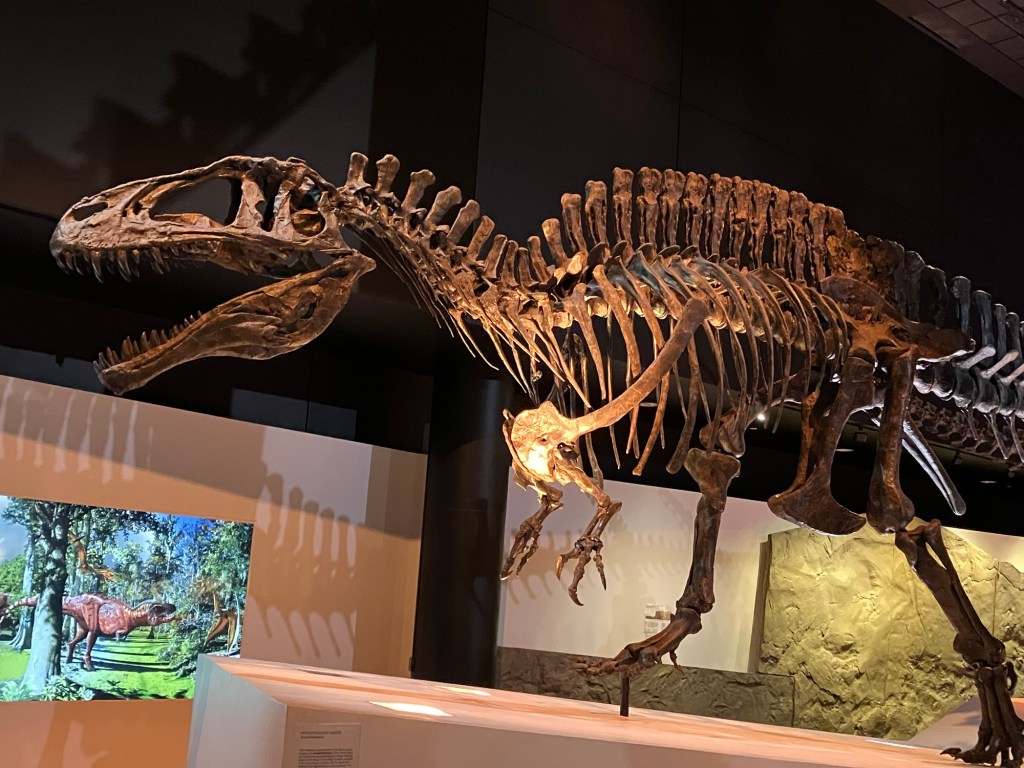
Image Credit: Noelle K. Moser. Acrocanthosaurus, the high-spined lizard of the Early Cretaceous. Houston Museum of Natural Science. Houston, Texas.

My journey to the Houston Museum of Natural Science would be incomplete without highlighting one last impressive theropod: Acrocanthosaurus. Most likely belonging to the Carcharodontosaur clade, a group of formidable predatory dinosaurs that thrived during the Aptian stage of the Early Cretaceous period.
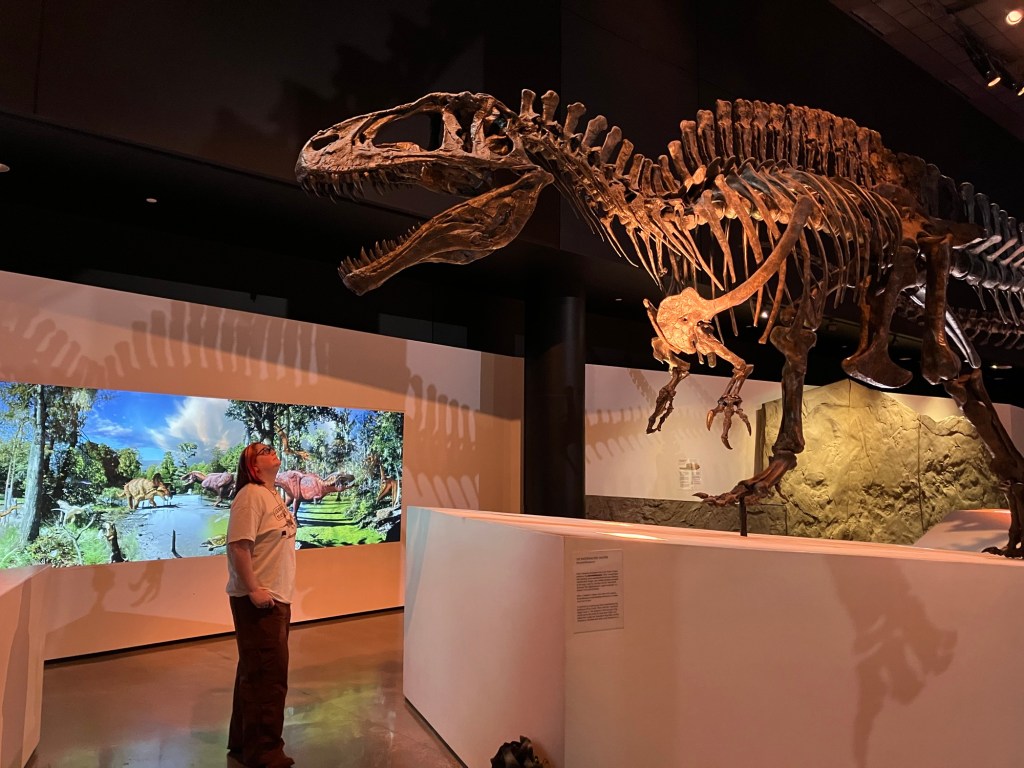
Image Credit: Mary Haggard. Acrocanthosaurus. Houston Museum of Natural Science. Houston, Texas.

Acrocanthosaurus stands out for its remarkably high neural spines, believed to have formed a striking sail along its back during its time on Earth. This formidable theropod once roamed ancient landscapes alongside colossal titanosaurs, majestic giants among the largest creatures ever to grace the Earth. Imagining these giant beasts sharing the same world ignites a sense of wonder and inspiration!

Image Credit: Noelle K. Moser. Stan viewed from the second-floor observation platform showcasing the immense size of this Cretaceous Apex Predator. Houston Museum of Natural Science.

Studying dinosaurs is not just a passion; it’s a profound calling to uncover the mysteries of their world and our planet. My research leads me to natural history museums across the nation, with each destination unveiling new insights into the fascinating realm of dinosaurs and deepening my admiration for these incredible creatures.

This visit highlighted the fascinating aspects of Tyrannosaurus Rex and reinforced the reasons behind their enduring appeal. It’s not merely their impressive size and strength; rather, the complex details of their existence contribute significantly to their allure. The experience provided an exceptional opportunity to observe a diverse array of theropod evolution and variety all in one location. Most importantly, the Houston Museum of Natural Science offers tangible access to the wonders of prehistoric Earth, connecting us to a lost world we can only experience through bone.
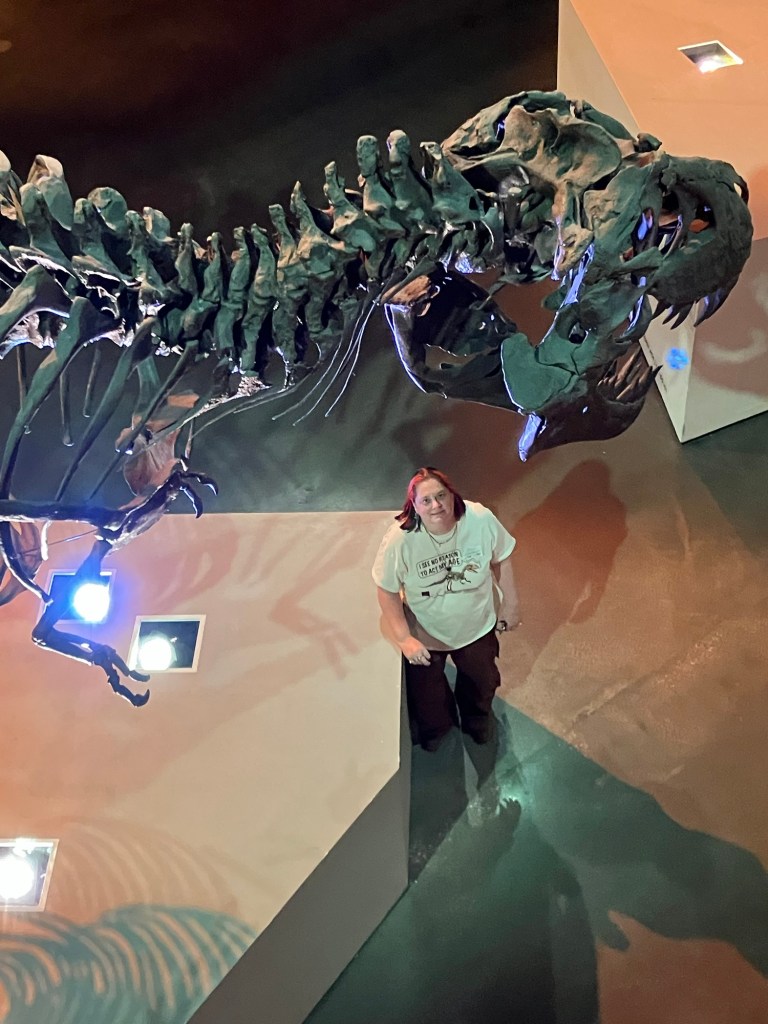
Image Credit: Mary Haggard. Studying dinosaurs connects us to a lost world we can only experience through bone. Houston Museum of Natural Science. Houston, Texas.

To watch a video of my trip to HMNS please visit my YouTube Channel.

I am a multi-disciplinary writer, paleontology blogger, and content creator. If you found this post engaging, be sure to check out my online writing portfolio to explore my extensive body of work.

Resources:

Larson, Peter and Carpenter, Kenneth. Tyrannosaurus Rex: The Tyrant King. Indiana University Press. Bloomington, Indiana. 2008.

Pim, Keiron. Dinosaurs the Grand Tour: Everything Worth Knowing About Dinosaurs from Aardonys to Zuniceratops. The Experiment. New York, NY. 2019.

My Visit to Houston Museum of Natural Science in Houston, Texas.

Unveiling Giganotosaurus: The Prehistoric Rival of Tyrannosaurus Rex

email: noellemoser@charter.net

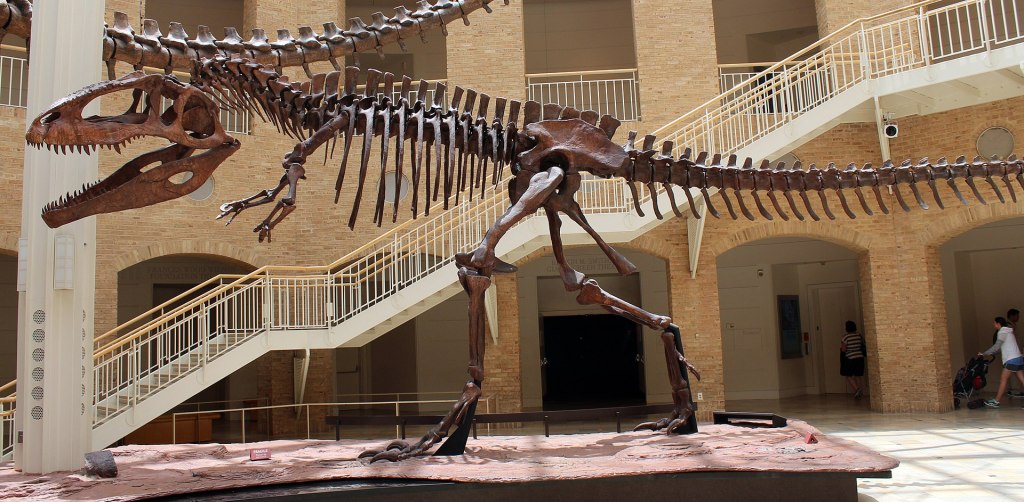
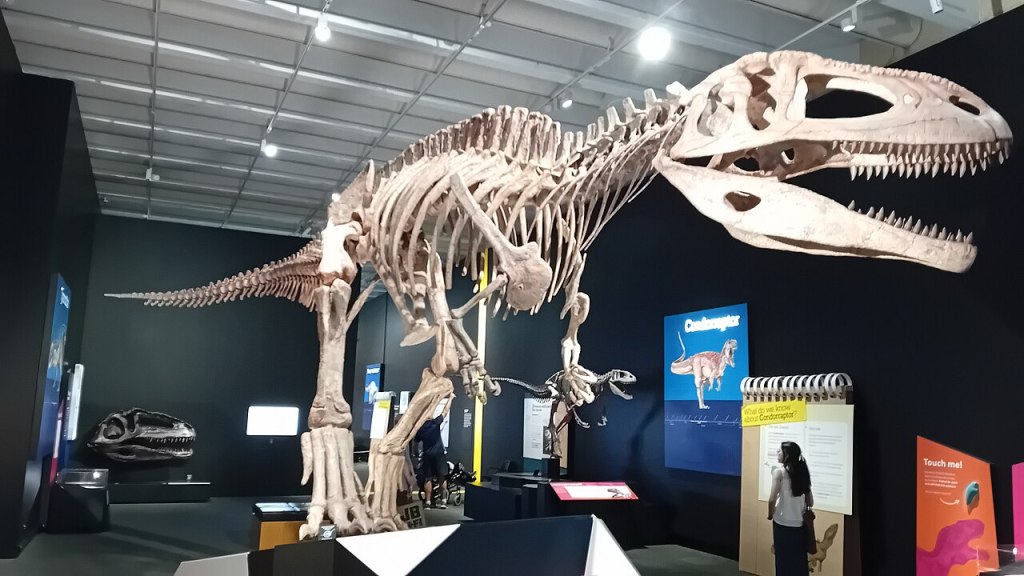
Image Credit: Giganotosaurus skeleton. Fernbank Museum of Natural History in Atlanta, Georgia.

Boasting a skull as long as a man and a body the length of a bus, Giganotosaurus is among the largest predatory theropods ever discovered. Before Tyrannosaurus Rex reigned as the King of the Dinosaurs, a larger theropods dominated the prehistoric landscape. His name Giganotosaurus Carolinii.

Known as the “Giant Southern Lizard”, Giganotosaurus was a formidable predator that dominated the Southern Hemisphere. This massive theropod, a member of the Carcharodontosauridae family, hunted titanosaurs and other herbivores, establishing itself as one of the largest carnivorous dinosaurs, surpassing the mighty T-rex by 2.2 tons.

Image Credit: Comparison of the largest theropods that walked the Earth. Giganotosaurus (Green), Tyrannosaurus Rex (Blue), and Spinosaurus (Red).

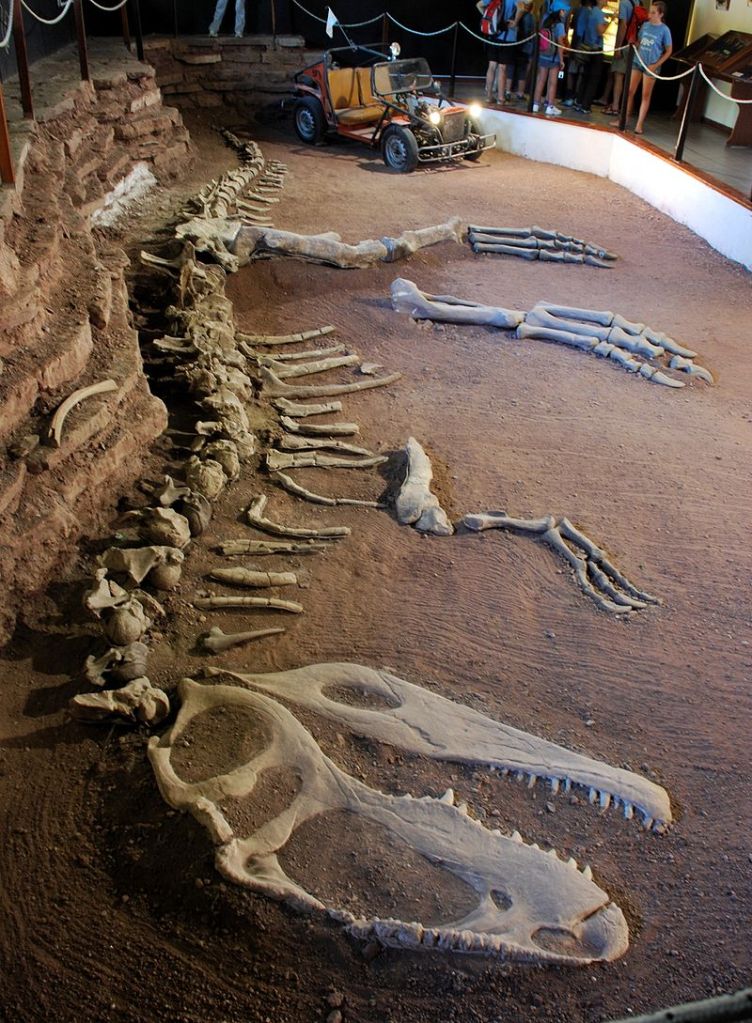
The tale of Giganotosaurus began in 1993 with the discovery of a tibia jutting from the earth in Patagonia. In 1994, paleontologists revealed the unearthing of a massive new theropod. The fossilized remains comprised a partial skull, a large portion of the vertebral column, elements of the pelvis, and fragments of limb bones.

Image Credit: Giganotosaurus holotype (first Giganotosaurus skeleton found) laid in the dirt. Natural Science Museum at El Chocón, in the northwestern Argentine Patagonia.

The discovery of Giganotosaurus is important because it deepened our understanding of the Carcharodontosaurid clade. Producing some of the largest theropods to ever live such as the newly discovered Meraxes Gigas, Acrocanthrosaurus, Carcharodontosaurus, and Giganotosaurus. This clade is of further interest to dinosaur enthusiasts because it allows us to explore the upper limit of theropod size.

Image Credit: Noelle K. Moser. Alamosaurus (Titanosaur) and Tyrannosaurus Rex. Giganotosaurus preyed upon Titanosaurs during the Cretaceous. Perot Natural History Museum. Dallas, Texas.

Nature maintains a delicate balance between predators and prey. Large herbivores require equally formidable carnivores to sustain this balance. Giganotosaurus, a giant theropod, played a crucial role in the ecosystem where it lived. The real question is not whether Giganotosaurus hunted these massive herbivores, but how it did so. This article will explore the origins of the Giganotosaurus, its hunting strategies, and ultimately why it faced extinction.

Origins of Giganotosaurus:

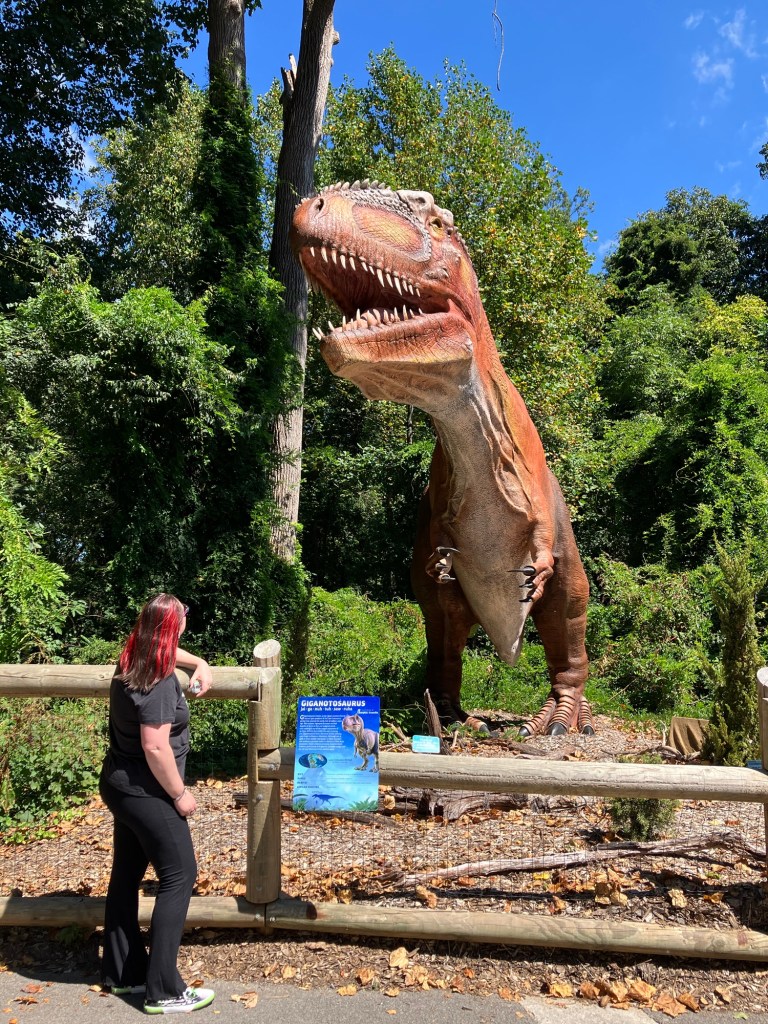
Image Credit: Noelle K. Moser. Giganotosaurus and I. Knoxville Zoo. Knoxville, TN.

During the Mesozoic, an evolutionary arms race between herbivores and carnivores ensued. As herbivores grew larger to gain a competitive advantage, the theropods also increased in size. The Jurassic period, marking the middle era of the age of dinosaurs, witnessed a remarkable diversification in dinosaur body plans. Herbivores grew larger, and thundering across the landscape were the sauropods, the giants of the Mesozoic era, including species such as Diplodocus and titanosaurs.

Giganotosaurus belongs to the Carcharodontosauridae family, a group of theropod dinosaurs known for producing some of the largest carnivores ever to walk the earth. Besides their massive size, a distinctive characteristic of this group is streamlined narrow skulls with shark-like teeth.

Image Credit: Carchardontosaurus skull. The Carcharodontosauridae family possessed shark-like serrated teeth perfect for tearing the flesh off bones.

Teeth reveal much about a creature. By examining dinosaur teeth, we can determine their diet, hunting methods, and how they consumed their prey.

During the Jurassic, the middle period of the Mesozoic Era, there was a significant increase in size among species as a result of an evolutionary arms race between predators and prey. As herbivores grew larger, carnivores also evolved to match their size.

The Jurassic saw some of the largest and most famous herbivores – the sauropods. Species such as Diplodocus, Brachiosaurus, Supersaurus, and Camarasaurus.

Image Credit: Comparison Graphic of some of the longest Sauropods that lived during the Jurassic.

Counterparts to these lumbering giants, were the carnivores of the Jurassic, relatives of Giganotosaurus such as Tyrannotitan, Lusovenator, Siamraptor, and Acrocanthrosaurus.

Image Credit: An overview of the paleofauna that inhabited the Southern Hemisphere during the Mesozoic era includes theropods such as Mapusaurus (red) and Meraxes gigas (dark blue), which are carcharodontosaurs and related to Giganotosaurus.

Inhabiting the Southern Hemisphere, the relatives of Giganotosaurus, known as primitive Carcharodontosaurs, evolved into increasingly larger theropods in response to the growing size of the herbivores they preyed upon. By the end of the Jurassic and into the Early Cretaceous, the Carcharodontosauridae family comprised some of the largest carnivorous dinosaurs to have ever walked the Earth.

Image Credit: Noelle K. Moser. Life-size reconstruction of Giganotosaurus. Knoxville Zoo. Knoxville, Tennessee.

Giganotosaurus represented the culmination of an evolutionary arms race, standing as the pinnacle of the Carcharodontosauria clade.

How Giganotosaurus Hunted and Killed Prey:

Analysis of the leg bones of Giganotosaurus shows that this theropod was not built for speed, but it didn’t need to be. Although it was slower than the swift herbivores, Giganotosaurus preyed on the more ponderous sauropods, known as titanosaurs.

The titanosaurs were the last surviving group of long-necked sauropods, thriving at the time of the Chicxulub Impact at the end of the Cretaceous that ended the age of the dinosaurs. This group includes some of the largest land animals known to have ever existed, such as Argentinosaurus.

Image Credit: Argentinasaurus and Giganotosaurus displayed together. Fernbank Museum of Natural History. Atlanta, Georgia.

Titanosaurs lived by one rule, get big and get big fast. From the moment of hatching, sauropods like Argentinasaurus were eating machines. Dining on leaves and hard fibrous vegetation, a herd of titanosaurs could defoliate an area in a few days.

Large guts and hard-to-digest food allowed for a slow release of energy over time. This superpower aided in the ability of these sauropods to reach full size in less than ten years. Once fully grown, an adult Argentinasaurus was 128 ft long, 65 ft tall, and weighed 65 to 82 tons. This sheer size alone was enough to detour many theropods from making a meal out of these massive herbivores. Traveling in herds combined with size officially removed them from the menu.

Hunting a herd of titanosaurs was perilous. A single misstep can result in one of these colossal herbivores crushing an overzealous theropod, leading to instant death. Considering this risk, the question is not whether Giganotosaurus hunted titanosaurs, but rather how they accomplished such a feat.

Much like the enigmas posed by extinct species, the most effective way to address these questions is by examining the present. Observing lions as they hunt a herd of wildebeests, we see the predators collaborate to disperse the group, targeting the smaller, ill, or weakest members for an easier kill. A lion understands that to attack the largest, strongest, or healthiest would be, at best, a perilous endeavor. This logic can be similarly applied to Giganotosaurus.

Traveling herds exhibit remarkable organization. The young and subadults are positioned centrally, while the robust and healthy adults encircle them, forming a protective barrier. Typically, the elderly or injured members trail behind, comprising the rear guard as the herd moves across the terrain.

Understanding herd dynamics, a hunting Giganotosaurus would likely approach the herd from behind, targeting the weaker Argentinasaurus individuals. Despite not being in their prime, these titanosaurs remained formidable, capable of inflicting fatal injuries. It is probable that for these reasons, Giganotosauruses would hunt in packs, coordinating their efforts to take down one of these colossal creatures.

Evidence from the teeth of Giganotosaurus suggests that, unlike the bone-crushing bite of Tyrannosaurus Rex, Giganotosaurus had teeth better suited for slicing off flesh from its prey. Packs of Giganotosaurus would alternate in biting and slashing their prey, aiming to keep it moving and bleeding. The hunting strategy was to exhaust the prey through blood loss, fatigue, and infections caused by the theropods attacks, leading to the titanosaur’s eventual collapse under its own weight.

Trace fossils provide definitive evidence of theropod hunting strategies located along the Paluxy River near Glen Rose, Texas, USA. Here, a dramatic narrative of a dinosaur hunt is etched into the stone.

Image Credit: Peluxe River in Glenn Rose, Texas. Footprints from a Cretaceous hunt involving Acrocanthrosaurus and Saurposeidon recorded in stone.

120 million years ago, on a muddy Cretaceous floodplain, the dynamics of dinosaur relationships were immortalized in stone. A herd of colossal sauropods lumbered along a waterway, stalked closely by a large carnivore. The pursuing theropod was focused, intent on the hunt.

Following behind the herd, slightly to the left, the theropod’s tracks indicate that the hunter rhythmically trailed the lumbering sauropods. Then the theropod’s footprints show that the hunter suddenly skipped a few steps, meaning only one thing, an attack.

Most of the trackway was removed. It is now preserved and displayed at The American Museum of Natural History in New York. Some of the trackway still remains submerged under the Paluxy River near Glen Rose, Texas.

Image Credit: Trackway from the Peluxy River on display at The American Museum of Natural History in New York.

Giganotosaurus Extinction:

Giganotosaurus lived during the Late Cretaceous period, specifically in the Cenomanian stage, approximately 99.6 to 97 million years ago. The reasons for its extinction are not definitive, but fossil records suggest several plausible scenarios. During the latter part of the Cretaceous, environmental changes due to plate tectonics posed survival challenges for Giganotosaurus and other Carcharodontosaurids.

Additionally, around 30 million years ago, Tyrannosaurs emerged as the dominant carnivores, with Abelisaurs prevailing in the Southern Hemisphere and Tyrannosaurus Rex in the northern. It is conceivable that Giganotosaurus was outcompeted by these more adaptable theropods, leading to a gradual decline and eventual extinction.

After the extinction of the last of the Carcharodontosaurs, Giganotosaurus lost its dominance, allowing the Tyrannosaurus and the formidable Tyrannosaurus Rex to rise as the King of the Dinosaurs until 66 million years ago when the age of the dinosaurs came to an end.

I am a multi-disciplinary writer, published author and web content creator. If you like this post, visit my other sites and online writing portfolio.

The Kuntry Klucker – A Blog about Backyard Chickens.

The Introvert Cafe – A Mental Health Blog.

Image Credit: Noelle K. Moser. Me peering through the fenestra of Tyrannosaurus Rex MOR 555. Cincinnati Natural History Museum. Cincinnati, Ohio.

Resources:

Johnson-Ransom, Evan. Dinosaur World: Over 1,200 Amazing Dinosaurs, Famous Fossils, and the Latest Discoveries from the Prehistoric Era. Applesauce Press. Kennebunkport, Maine. 2023.

Keiron, Pim. Dinosaurs The Grand Tour: Everything Worth Knowing About Dinosaurs from Aardonysx to Zuniceratops. The Experiment. New York, NY. 2019.

My visit to Natural History Museums across the nation.