Stan the T-Rex: History and Mystery of a Fossil Star

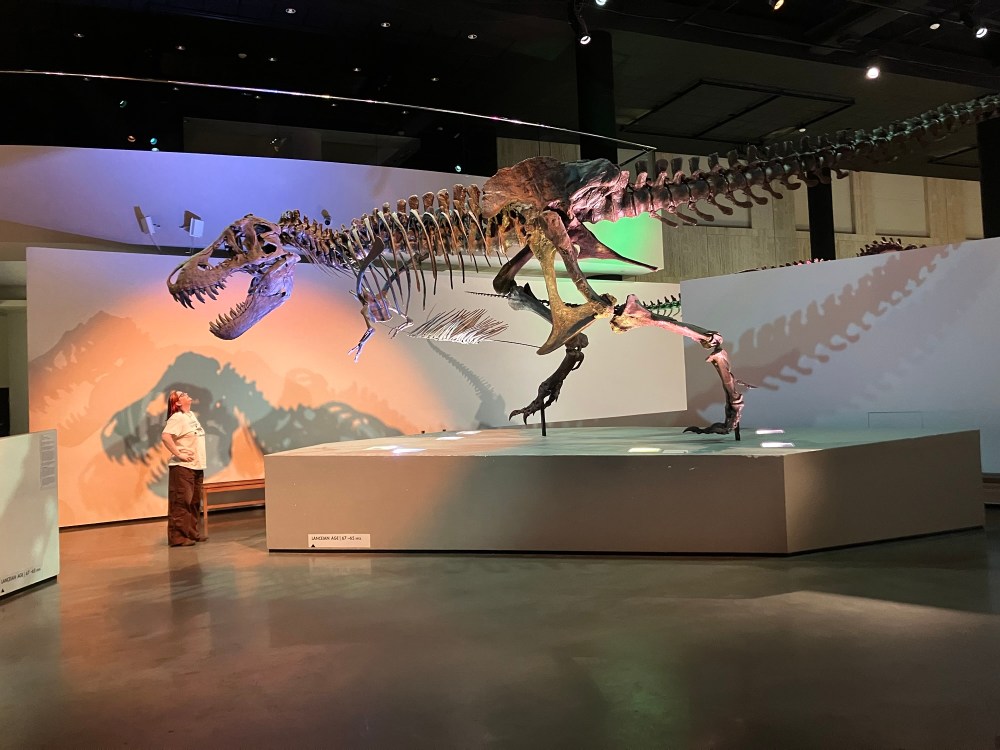
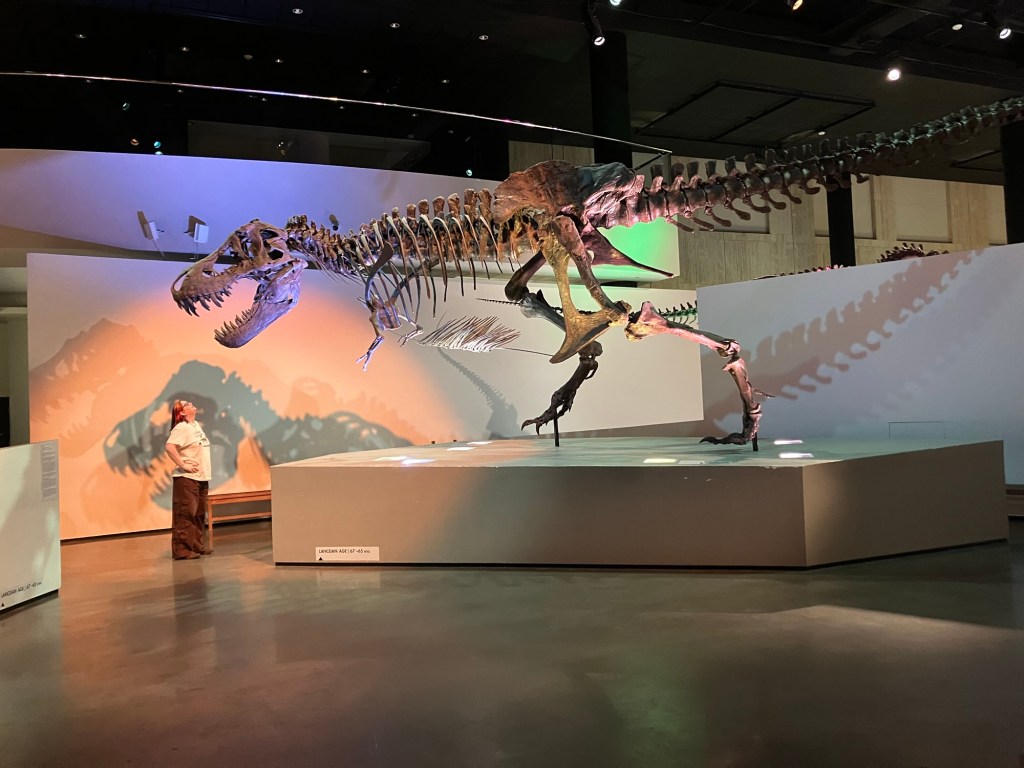
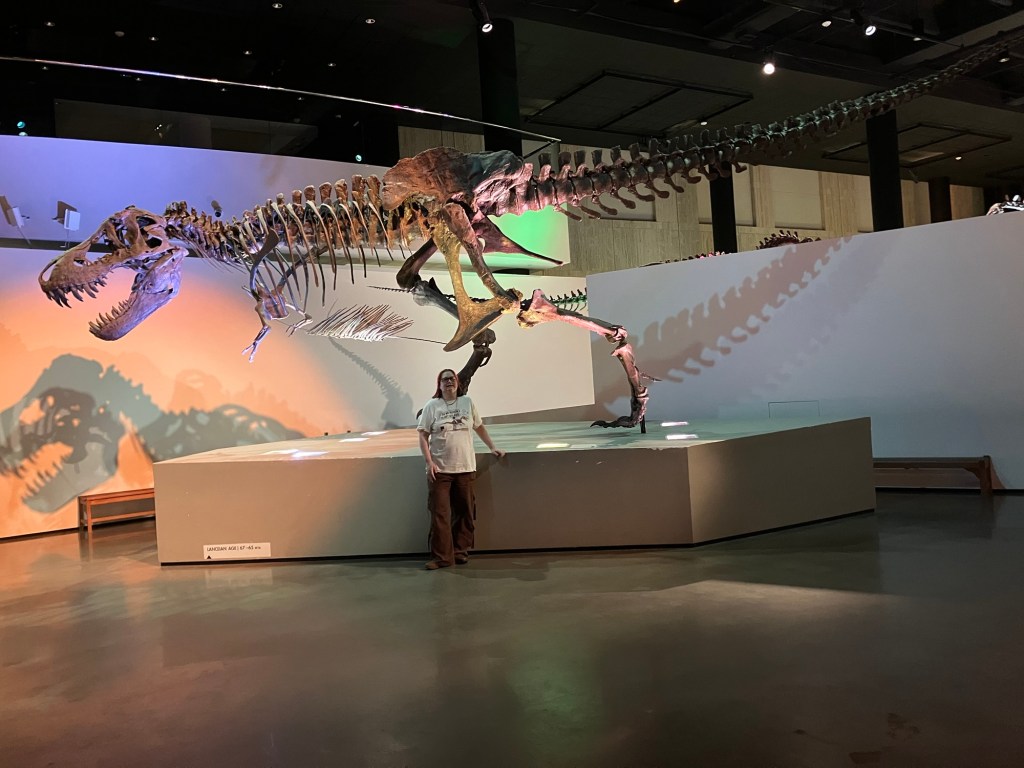
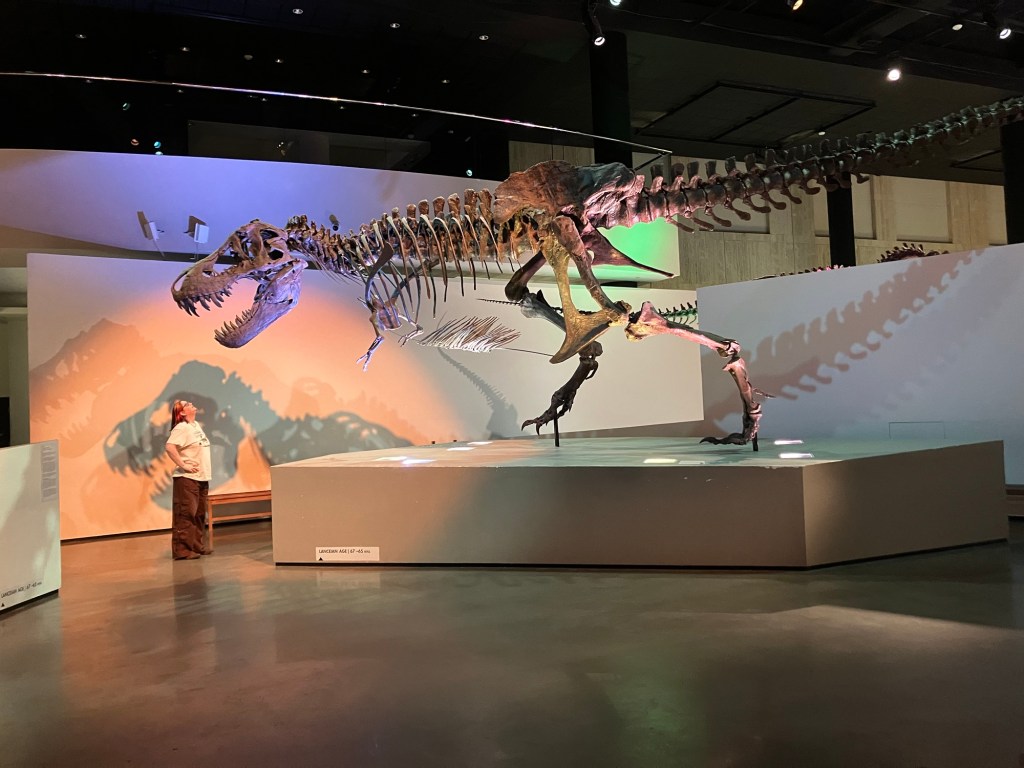
Image credit: Mary Haggard. BHI 3033 “Stan” and I in a quiet reverent exchange separated by millions of years but connected by curiosity. Houston Museum of Natural Science

Since the first Tyrannosaurus Rex specimen was discovered in 1902, this theropod has captured the human imagination worldwide. Despite the popular belief that Tyrannosaurus Rex is a homogenous species, each of the 50 Tyrannosaurus Rex specimens displayed in museums worldwide represents unique individuals.

Image Credit: Noelle K. Moser. Tyrannosaurus Rex MOR 555 (Walter) and Triceratops. National Natural History Museum. Washington, D.C.

Tyrannosaurus Rex is the most popular but least understood dinosaur of the Mesozoic. The war still rages on whether T-rex was an opportunistic scavenger or the cold blooded butcher of the Cretaceous. While no carnivore would pass up a free meal, the teeth suggest that the T-rex could kill and consume meals whole with bone-crunching force. Mischaracterized as a mindless brute solely focus on killing, this intelligent animal was social and possessed the complex capability to live in social groups.

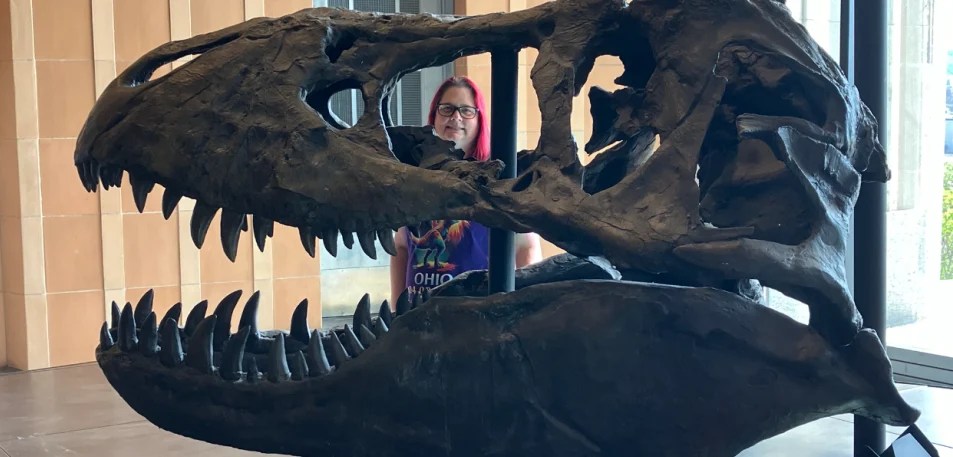
Image Credit: Noelle K. Moser. Me peering through the fenestrae of Tyrannosaurus Rex MOR 555. The serrated conical teeth of Tyrannosaurus Rex were the most extreme anti-tank weapon nature produced. Capable of piercing the armor of any horned or armored dinosaurs during that Cretaceous. Cincinnati Museum Center. Cincinnati, OH.

Furthermore, some studies suggest that Tyrannosaurus rex may have been more than just a fearsome predator—it could have also been a devoted partner. Take Sue, one of the most iconic T. rex specimens: her skeleton is marked with numerous injuries, some quite severe, yet evidence of calcium deposits indicates significant healing. While Sue’s survival likely speaks to her own resilience, comparisons with modern birds—T. rex’s closest living relatives—raise the possibility that she may have been tended to by a loyal companion during recovery.

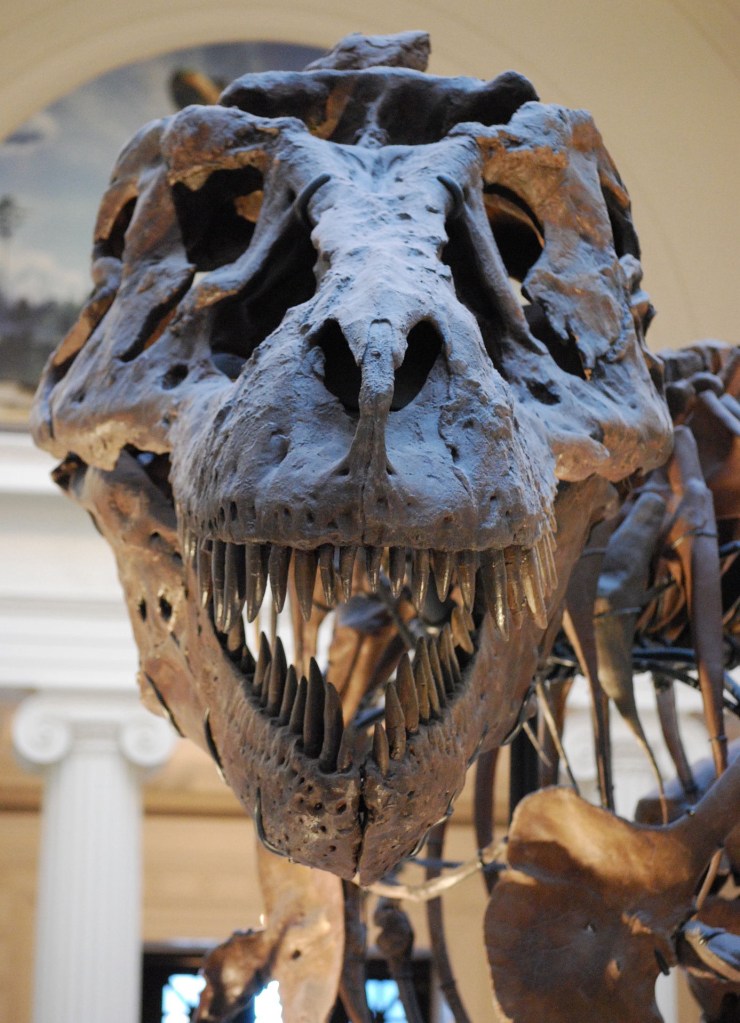
Tyrannosaurus Rex, Sue. Noelle K. Moser. Chicago Field Museum.

Despite all we’ve uncovered about the iconic Tyrannosaurus rex, much about this formidable predator remains shrouded in mystery. With each new discovery, we gain deeper insight into its biology and behavior. Stan, in particular, gave us an unprecedented look at what may be evolution’s most advanced anti-tank weapon—a predator equipped with bone-crushing strength and armor-piercing teeth capable of breaching even the most well-defended dinosaurs.

Image Credit: Noelle K. Moser. A cast of BHI 3033 (Stan) and I. The largest T-rex fossil discovered with a nearly complete skull, offering an unparalleled glimpse into the brain structure of the Tyrannosaurus Rex. Perot Natural History Museum. Dallas, Texas.

Contrary to the long-held image of Tyrannosaurus rex as a solitary predator that only sought out others to mate, recent research paints a far more social picture. Rather than roaming alone through the Late Cretaceous landscape, T. rex may have hunted in coordinated groups. If a single T. rex lurking in the underbrush is terrifying, imagine a pack working together to ambush their prey. The idea of these apex predators operating as a unit is enough to send shivers down the spine of anything unfortunate enough to cross their path.

Studies on Stan and other robust Tyrannosaurus Rex fossils, suggest that the T-rex’s intelligence was among the highest, akin to that of Deinonychus (Velociraptor) in terms of social intelligence, enabling them to cooperate in packs for hunting and nurturing their young.

This massive and intimidating theropod, renowned for its bone-shattering bite, was both highly social and remarkably intelligent. Today, the mighty Tyrannosaurus Rex is recognized as a cunning and formidable predator, rightfully earning its crown as the undisputed King of the Dinosaurs.

Each Tyrannosaurus Rex tells a unique story captured in stone. Their bones whisper tales of thrilling lives, injuries, illness, dramatic and sometimes violent deaths, each different from the next. This article embarks on an exciting journey into the world of the Tyrannosaurus Rex, featuring the fascinating story of one of its most famous fossils, BHI 3033, also known as Stan.

The Story of Stan:

Image Credit: Noelle K. Moser. Stan, standing at the intercetion of science and popular culture. Houston Museum of Natural Science.

In 1987, deep beneath the K–T boundary in the Hell Creek Formation near Buffalo, Harding County, South Dakota, a remarkable discovery waited in silence—16 meters underground, laid Stan, entombed for 66 million years. Excavation of his fossil began on April 14, 1992, led by the Black Hills Institute, and was completed by May 7 of the same year. Cataloged as BHI 3033, the specimen was named “Stan” in honor of its discoverer.

After more than 30,000 hours of detailed preparation, Stan made his public debut in June 1996. His first appearance was on an international tour in Japan, captivating audiences across the globe. Today, Stan remains one of the most complete Tyrannosaurus rex skeletons ever unearthed, providing an extraordinary window into the anatomy and behavior of this iconic predator.

Image Credit: Hell Creek Formation.

Life in Hell Creek During Stan’s Life:

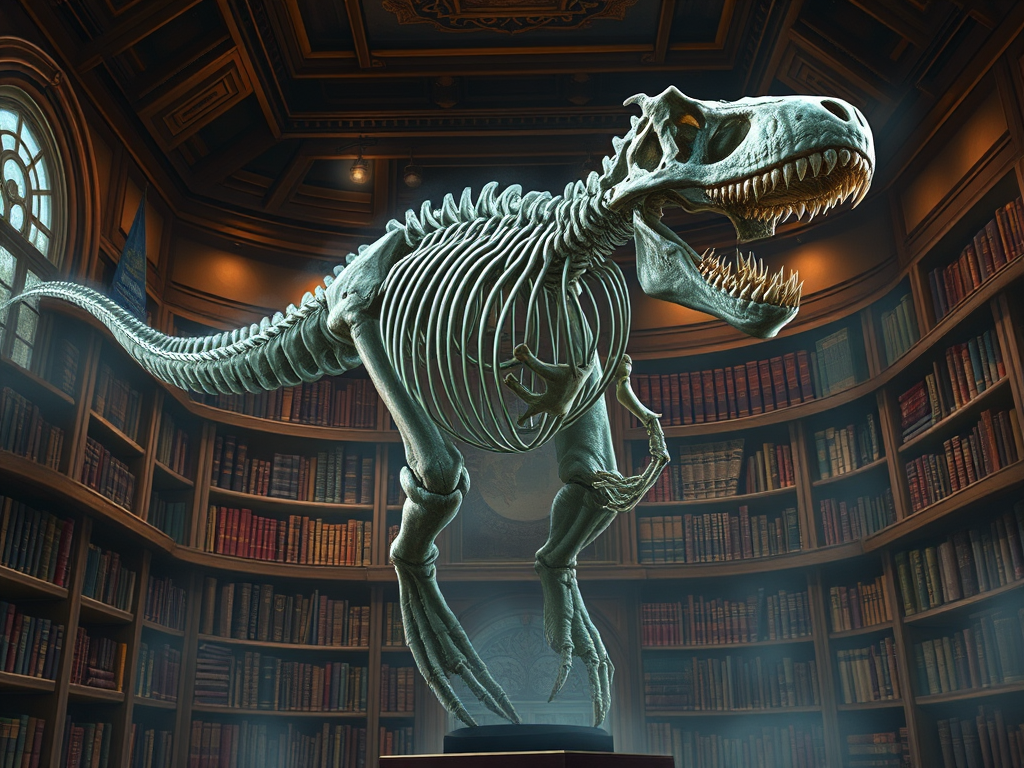
AI image of representing Stan in Late Cretaceous Hell Creek. Powered by Open AI.

Life in the Hell Creek Formation during the Late Cretaceous—around 66 million years ago—was vibrant, dynamic, and full of drama. It was a lush, subtropical environment with a warm, humid climate, lots of rainfall, and diverse ecosystems including coastal plains, swamps, rivers, and forests. Very silmilar to the bayous of Louisiana and the Pacific Northwest today.

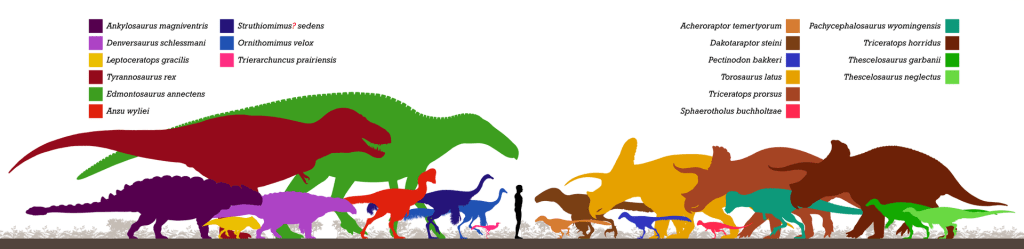
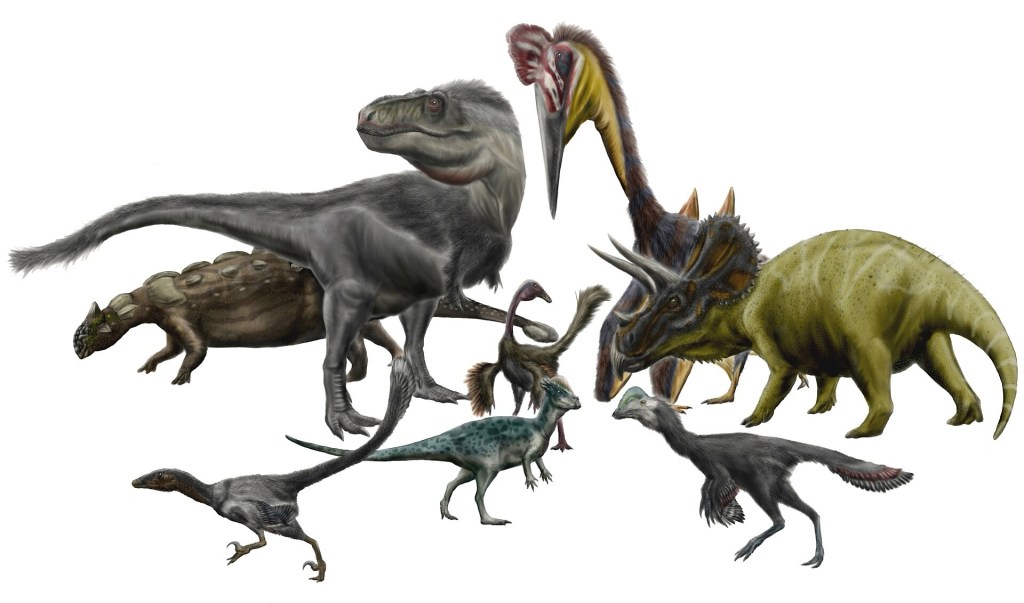
Image Credit: Paleofauna of Hell Creek

Living along side Stan were a variety of paleoflora and paleofauna. Some of the most recognizable dinosaurs shared this ecosystem.

Triceratops – Herd-dwelling horned dinosaurs, likely locking horns over mates or territory.

Edmontosaurus – Large, duck-billed hadrosaurs, probably migrating in herds and grazing like prehistoric cattle.

Ankylosaurs and pachycephalosaurs – Armored tanks and dome-headed headbutters roaming under the cover of trees.

Small theropods like Troodon and Dromaeosaurus – Agile predators or opportunistic omnivores.

Image Credit: Dinosaurs of Hell Creek

Other Life Living In Hell Creek with Stan:

Crocodilians like Borealosuchus – Lurking in the water, ambushing anything that got too close.

Turtles, amphibians, and early mammals – Filling ecological niches on the ground, in trees, and even underground.

Pterosaurs – Soaring above the forests, especially near waterways.

Birds – Already fairly modern in form, flitting through the canopy or diving for fish.

Paleofauna of Hell Creek:

Image Credit: Noelle K. Moser. Paleofauna of the Cretacious were ferns and flowering plants. National Botanical Gardens. Washington, D.C.

The paleoflora of the Hell Creek Formation during the Late Cretaceous was incredibly rich and diverse. It reflected a humid, subtropical to warm temperate climate, with a strong influence from nearby coastlines and river systems. The vegetation was a mix of ancient holdovers and newer, flowering plants, painting a picture of a world in ecological transition.

Recognizable and common plants thriving in Late Cretaceous Hell Creek.

Angiosperms (Flowering Plants)

Platanaceae (sycamore relatives)

Magnoliaceae (magnolia-like plants)

Lauraceae (laurel family)

Fagaceae (beech/oak relatives)

Conifers (relatives of evergreen trees)

Ferns and Tree Ferns

Mosses and Liverworts

The vegetation of Hell Creek supported a complex web. These plants also helped form the distinctive layered stratigraphy of Hell Creek, especially with leaf litter, root systems, and decaying wood contributing to the fossil record.

AI generated Image. Paleoflora of Hell Creek during the Cretaceous. Powered by Open AI.

The audio landscape of Hell Creek was vibrant and diverse. The buzz of large insects, chirps, and dinosaur calls echoing across the floodplains, and maybe the distant rumble of a thunderstorm rolling in from the coast. Life was beautiful and brutal.

Daily Life In Late Cretaceous Hell Creek:

Using our minds eye and evidence from the fossil record, we can construct a plausable scenario from Stan’s perspective in Late Cretaceous Hell Creek.

Let’s drop into a moment in Hell Creek—quiet, moody, and full of tension just under the surface.

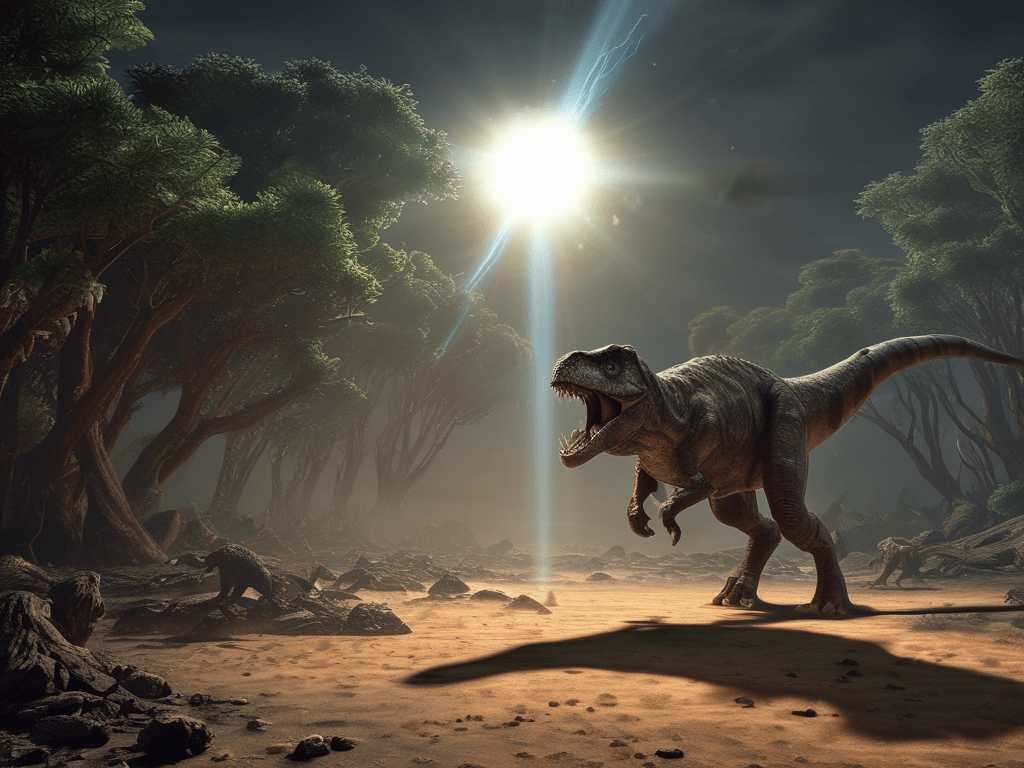
AI image of Stan, Late Cretaceous Hell Creek. Powered by Open AI.

It’s early morning. A pale sun pushes through low clouds, casting a gauzy light across the misty floodplain. The air is heavy with moisture, thick with the scent of wet ferns, rich soil, and the musk of animals you can’t yet see. Somewhere in the distance, a chorus of frogs sings its final notes before the heat rises. A breeze rustles the leaves of broad-leaved magnolias and ginkgoes, sending tiny droplets scattering from the canopy like diamonds.

You’re standing at the edge of a slow-moving river, its banks muddied by last night’s rainfall. A snapping turtle eyes you warily before vanishing beneath the surface with barely a ripple. Dragonflies hover above the reeds like flickering ghosts, their wings catching light that breaks through the trees.

Suddenly, the brush on the other side of the water shifts. A young Edmontosaurus steps out, its nostrils flaring, scenting the air. Its massive, pebbly hide is dappled with dew and the shadow of leaves. It cranes its neck, listening, before lowering its head to drink.

Then—a silence. Not peaceful, but alert. A flock of early birds bursts from the trees with a shriek. The Edmontosaurus jerks upright, trembling. Across the clearing, between two tree trunks as wide as a truck, a shape stirs.

Out steps Stan. Not charging. Just there. Quiet. Intent. His skin is mottled, mud-streaked, speckled with insects and scars from battles with other tyrannosaurs in the area. Each footfall is heavy but controlled, barely making a sound on the damp earth. His eyes are fixed on the hadrosaur—not wild with hunger, but cold and assessing.

The Edmontosaurus bolts.

In a flash of spray and crashing reeds, Stan lunges after it, jaws parted just enough to reveal evolution’s most advanced anti-tank weapon—a predator equipped with bone-crushing strength and armor-piercing teeth capable of breaching even the most well-defended dinosaurs. The trees shudder with the pursuit. A burst of birds takes flight, and somewhere in the distance, an unseen Triceratops bellows like thunder.

Then, silence again. The floodplain breathes.

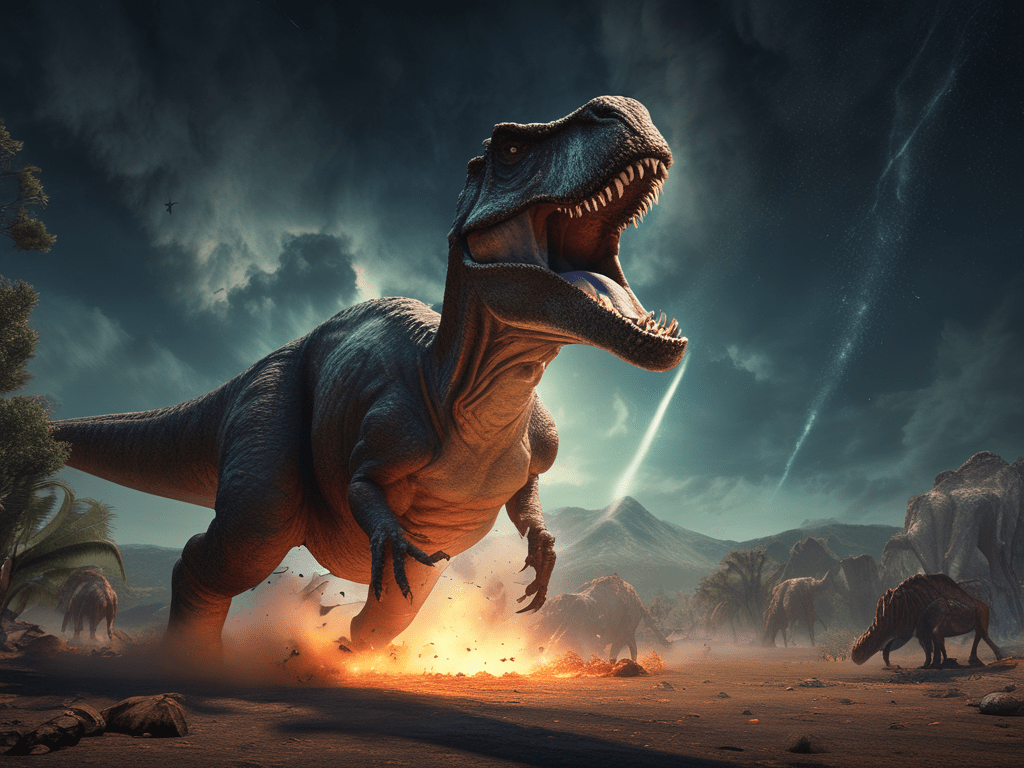
Hell Creek wasn’t just a jungle full of dinosaurs—it was also the scene of an impending catastrophe. The ecosystem was thriving but balanced on a knife’s edge, and just before the asteroid impact, you’d never know extinction was looming.

AI generated image: While the conditions of Stan’s death are unclear, life in Hell Creek came to an abrupt end when with Chicxulub impact. Powered by Open AI.

What Remained of a Fossil Star?

It is unclear how Stan died. Based on the preservation of his skeleton, Stan died near a water source as his body was fossilized relatively quickly with minimal signs of scavenging by ofher animals living in Hell Creek at his death.

“The Hell Creek Formation during the Late Cretaceous represented a fluvially dominated floodplain system. The high water table and frequent sedimentation events within this environment facilitated exceptional fossil preservation, as evidenced by specimens such as Tyrannosaurus rex individuals Stan and Sue.” (Johnson, Nichols, Hartman. 2002).

Image Credit: Mary Haggard. Stan and I. The remains of a fossil star. Houston Museum of Natural Science.

The cometeness of Stan’s skeleton totalled 190 bones, or 63% of the skeleton by bone. (Larson, 2008).

Preserved skeletal elements of Stan include:

A nearly complete skull,

59 vertebrae (9 cervical, 14 dorsal, 5 sacral, 31 caudal);

24 cheverons;

14 cervical ribs;

12 dorsal ribs;

Anearly complete pelvis;

Left femora (femor or thigh bone);

Both tibiae;

Both calcanea;

Astragali;

Left metatarsals; and

11 pes phalanges.

Image Credit: Noelle K. Moser. Cast of Stan. Peroit Natural History Museum. Dallas, TX.

The prehistoric story preserved in Stan’s bones:

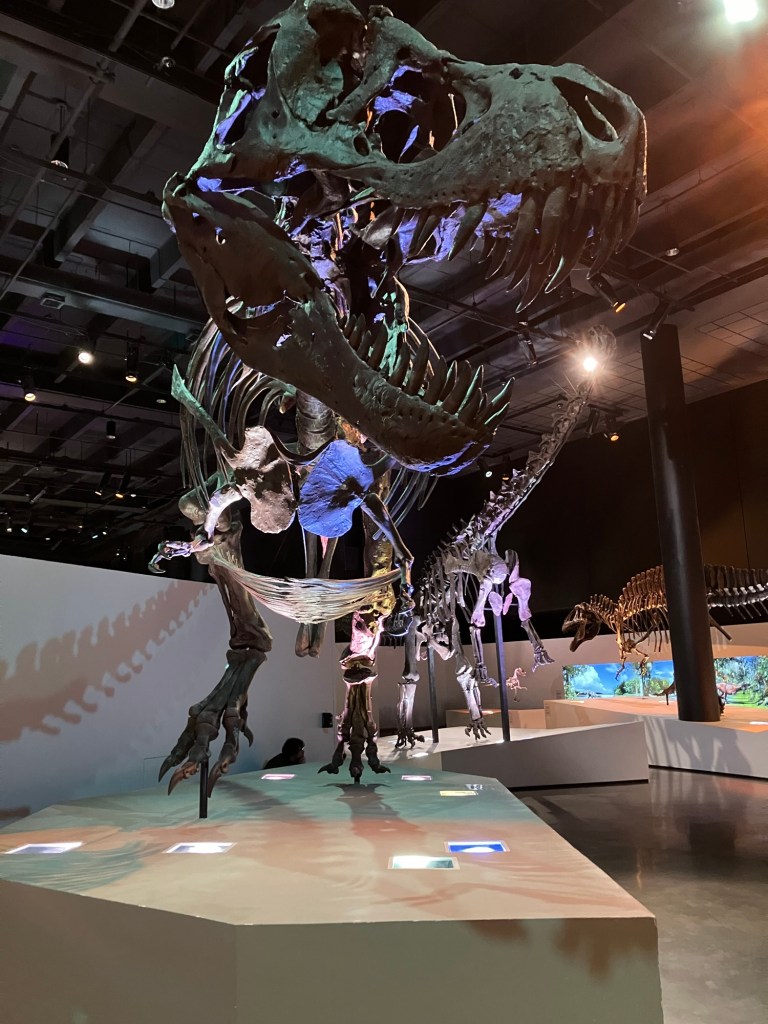
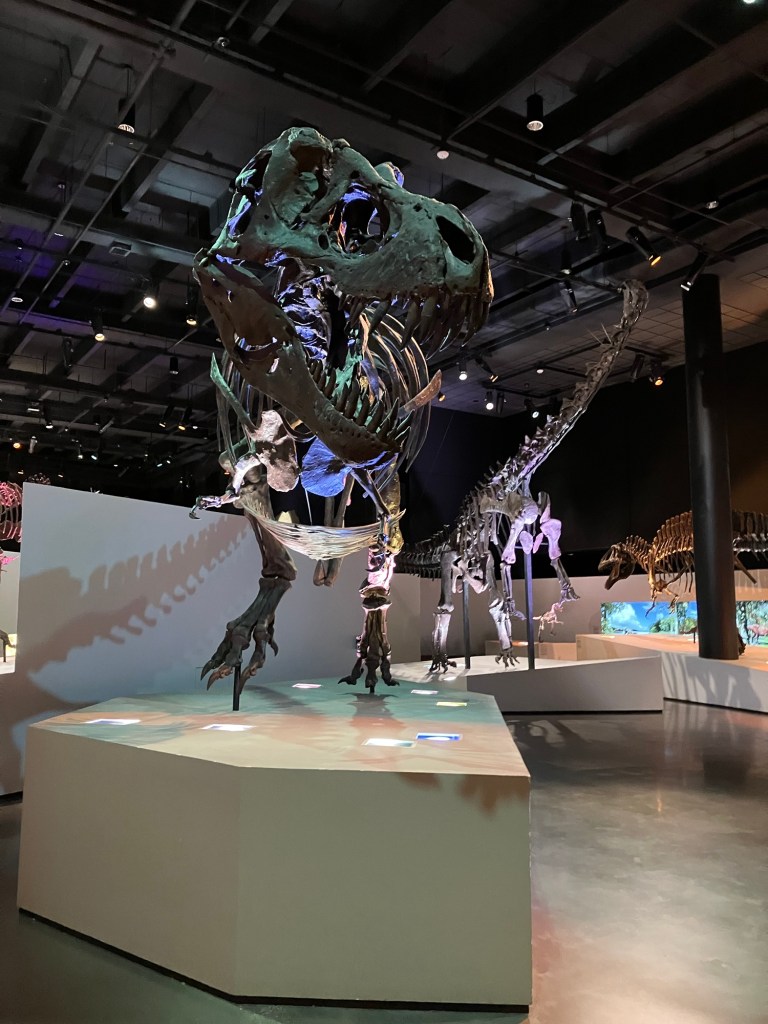
Image Credit: Noelle K. Moser. BHI 3033, Stan, large jaws slightly agape, Stan embodies the powerful presence one of the most iconic creatures that evolution ever produced. Houston Museum of Natural Science.

Stan’s fossil tells a compelling story of adversity, injury, determination, and survival. Among the most striking findings is the presence of fused cervical vertebrae, which clearly indicates that at some point in his life, he was bitten by another T-rex.

The fossil record demonstrates that tyrannosaurs engaged in face biting, a well-documented ritualistic behavior in the fierce competition for mating rights. The calcium deposits found in Stan’s bones confirm that he not only survived this injury but healed from it. However, the fused vertebrae likely caused him discomfort for the rest of his life, underscoring his resilience and tenacity in the face of challenges.

Image Credit: Mary K. Haggard. The fusing of Stans 5-6 Cervical Vertebrae indicates that at one point in his life he was bitten by another Tyrannosaurus Rex. Houston Museum of Natural Science.

The Cretaceous period posed significant challenges for the Tyrannosaurus Rex. As the undisputed King of the Dinosaurs, T-rex had its advantages, but it was not immune to the hidden dangers of Mesozoic life. Just like today, parasites were a prevalent issue for dinosaurs, and Stan was no exception. Bone infections caused by Trichomonas protozoan—common parasites found in both birds and dinosaurs—were evident, marked by distinct round holes on the jaws of several T-rex specimens. These infections led to inflammation and pain, which undoubtedly affected their hunting and feeding efficiency.

Image Credit. Noelle K. Moser. Round holes on the side of Stan’s lower jaw show indications of bone infection caused by bone eating parasites. Houston Museum of Natural Science.

Most Complete Tyrannosaurus Rex Skull

Stan’s fossil has yielded valuable insights into the intricate structure of a Tyrannosaurus rex skull. Exceptionally well-preserved, it has enabled scientists to create a brain cast from the brain case associated with this specimen. Much like in humans, the brain leaves distinct impressions on the interior of the skull, allowing for a detailed examination of its anatomy.

Studies of these brain casts indicate that the T. rex possessed a notably large auditory lobe, particularly attuned to low-frequency sounds below 40 Hz. This finding not only suggests that Tyrannosaurus rex could hear such low sounds but also raises the possibility that it could produce them. While humans are unable to perceive sounds below 20 Hz, one would likely be able to sense the vibrations from a T. rex’s vocalizations if encountered in its natural environment.

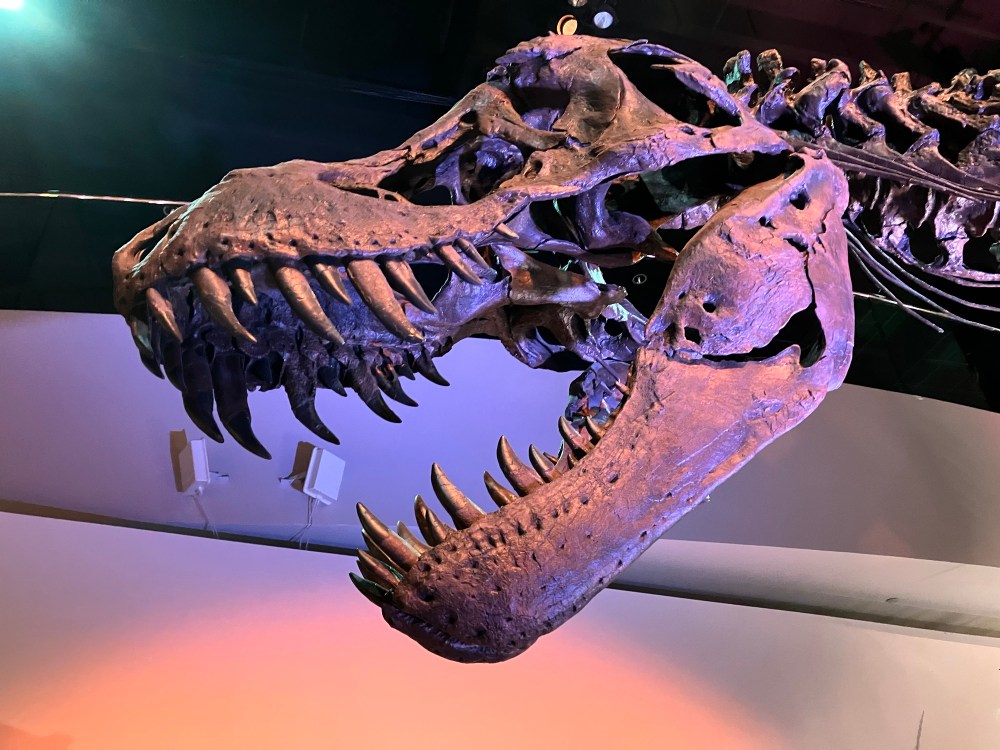
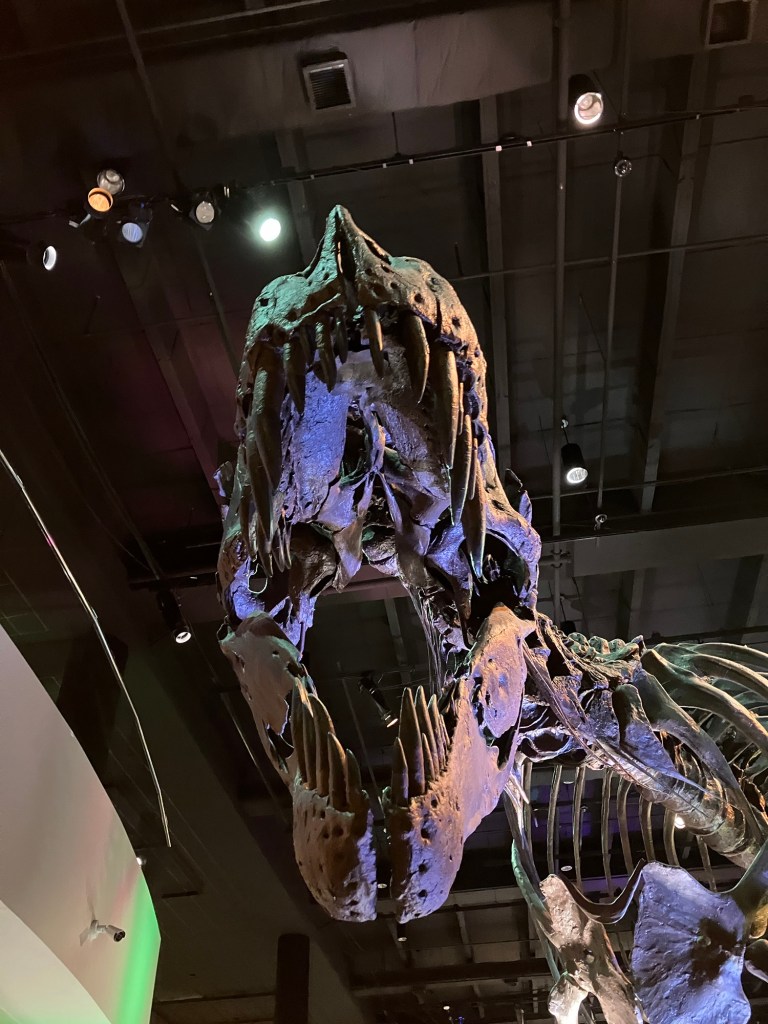
Image Credit. Noelle K. Moser. Stan’s jaws gracefully agape showing his massive conical bone-crushing teeth. Houston Museum of Natural Science.

Stan provides an extraordinary insight into what could be considered one of evolution’s most advanced anti-tank weapons—a formidable predator characterized by its bone-crushing strength and armor-piercing teeth, which were capable of penetrating even the most well-defended dinosaurs. The ongoing debate about whether Tyrannosaurus rex was primarily a hunter or a scavenger continues to capture the interest of dinosaur enthusiasts. Dental adaptations clearly indicate that Stan was well-equipped to crush bones and consume prey whole with remarkable efficiency.

With conical, serrated, and recurved teeth resembling a set of razor-sharp steak knives, Tyrannosaurus rex was perfectly adapted to tear large chunks of flesh from its prey. Lacking molars and grinding teeth, it likely swallowed these meals whole while using its immense bite force to crush bone. The extraordinary fossil evidence from Stan has reshaped our understanding of T. rex, offering compelling insights that challenge the notion of this fearsome predator as merely an oversized scavenger.

I am a multi-disciplinary writer, paleontology blogger, and content creator. If you found this post engaging, be sure to check out my online writing portfolio to explore my extensive body of work.

References:

Kirk R. Johnson, Douglas J. Nichols, Joseph H. Hartman, 2002. “Hell Creek Formation: A 2001 synthesis”, The Hell Creek Formation and the Cretaceous-Tertiary boundary in the northern Great Plains: An Integrated continental record of the end of the Cretaceous, Joseph H. Hartman, Kirk R. Johnson, Douglas J. Nichols.

Larson, Peter and Carpenter, Kenneth. Tyrannosaurus Rex: The Tyrant King. Indiana University Press. Bloomington, Indiana. 2008.

Exploring the Houston Museum’s Dinosaur Treasures

Email: noellemoser@charter.net

Image Credit: Noelle K. Moser. Stan and I, positioned at the intersection of popular culture and science. Like Stan, Tyrannosaurus Rex is a silent witness to a world we can only experience through bone. Houston Museum of Natural Science.

Disclaimer: This article reflects my independent observations and insights gained during my research at the Houston Museum of Natural Science. I want to clarify that I am not affiliated with the HMNS in any capacity and have not received any compensation for writing this piece. The views and opinions expressed are solely my own. I am a professional writer and researcher specializing in dinosaurs. I travel to museums across the country to gather information and insights for my blog, where I explore the fascinating world of theropods and Mesozoic life.

The study of the Mesozoic era presents intriguing opportunities for exploration, particularly through its remarkable dinosaurs that once roamed the Earth. After thorough planning, which involved securing airline tickets and hotel accommodations, I recently visited the esteemed Houston Museum of Natural Science in Houston, Texas. This destination is celebrated for its exceptional paleontology exhibits, notably featuring three impressive specimens of Tyrannosaurus rex. The museum serves as a valuable resource for anyone interested in the fascinating history of dinosaurs and their environments during the Mesozoic era.

Image Credit: Mary Haggard. Houston Museum of Natural Science.

During my visit, I was truly moved by the incredible fossil collection on display. Multiple specimens of Tyrannosaurus rex, Acrocanthosaurus, Allosaurus, and Gorgosaurus brought a sense of excitement and connection to the past. As I explored the exhibits of herbivores—Diplodocus, Triceratops, Hadrosaurs, Ankylosaurus, and even a rare pair of Quetzalcoatlus—I couldn’t help but feel a deep sense of wonder. It reminded me of the rich history these magnificent creatures represent and the awe they evoke, connecting us to a world we can only experience through bone.

As someone profoundly captivated by Tyrannosaurus Rex, I dedicate my work to exploring its evolution, adaptations, and the mysteries of its lifestyle, making this visit truly meaningful. Houston is home to specimens of Stan, Bucky, and Wyrex—famous T-rex individuals that each tell a unique story about the life and evolution of this apex predator. Studying these fossils up close allowed me to dive deeper into their adaptations, pathologies, and mysteries.

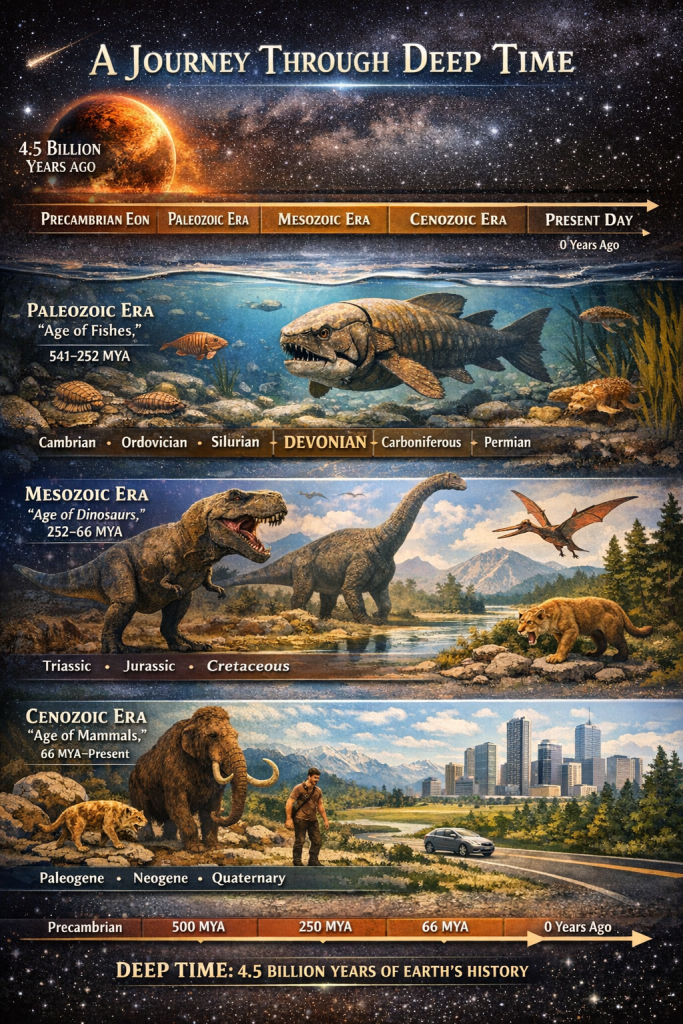
Beginning with The Morian Hall of Paleontology, visitors are offered an engaging exploration of prehistoric life through a diverse collection of fossils and visual displays. This innovative exhibition presents the concept of deep time in a way that accommodates various learning styles, making it an informative experience for a wide range of audiences.

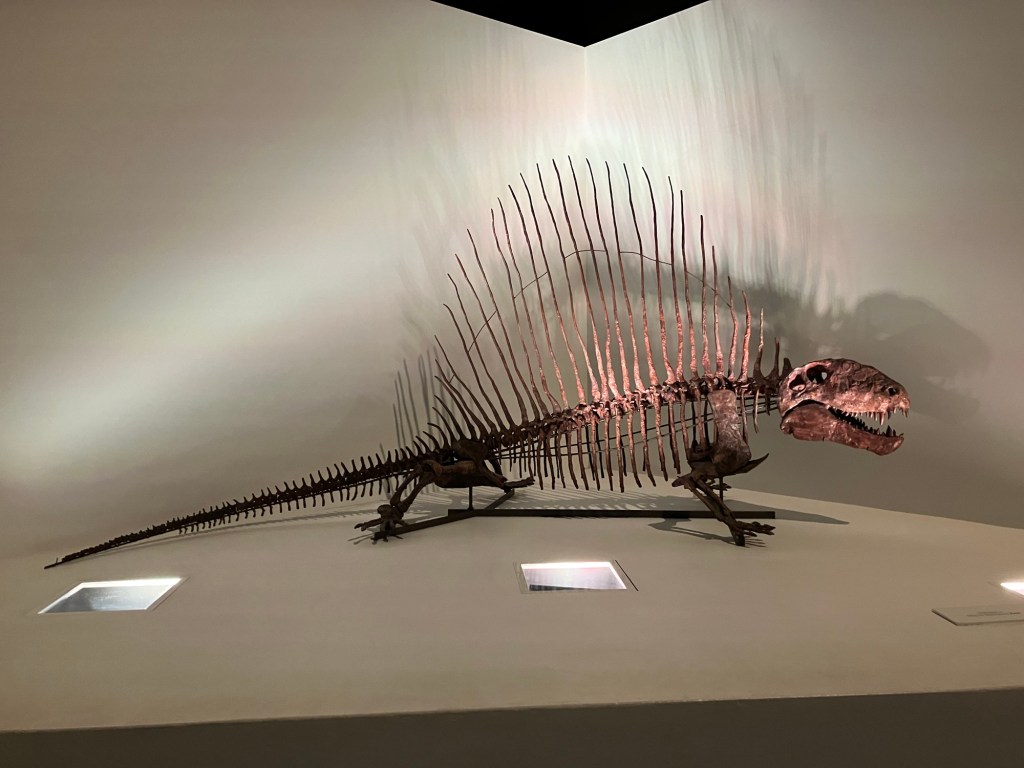
Immersed in a journey through deep time, visitors will encounter a variety of familiar prehistoric creatures. Notable among these are trilobites, which were marine arthropods, and ammonites, known for their coiled shells. The path also features early tetrapods, the four-legged ancestors of amphibians, reptiles, and mammals. Additionally, one might come across impressive Devonian giant fishes such as Dunkleosteus, as well as the Permian period’s Dimetrodon. Another significant creature to observe is the notable Triassic archosaur Postosuchus, an ancient reptilian predator.

Entering the dinosaur hall, visitors are welcomed by the impressive cast of “Big Al,” the renowned Allosaurus that represents the pinnacle of Jurassic predators. Discovered in 1991 at the Howe Quarry in the Morrison Formation of Wyoming, “Big Al” is not only the most complete and well-preserved specimen of its kind but also a symbol of resilience. The pathologies revealed in this remarkable skeleton tell a powerful story of survival, showcasing evidence of injuries, diseases, broken bones, and the remarkable bone growths that came in response to adversity. “Big Al” inspires us to appreciate the strength and tenacity found in nature’s history.

Image Credit: Noelle K. Moser. Cast of “big Al”. Houston Museum of Natural Science

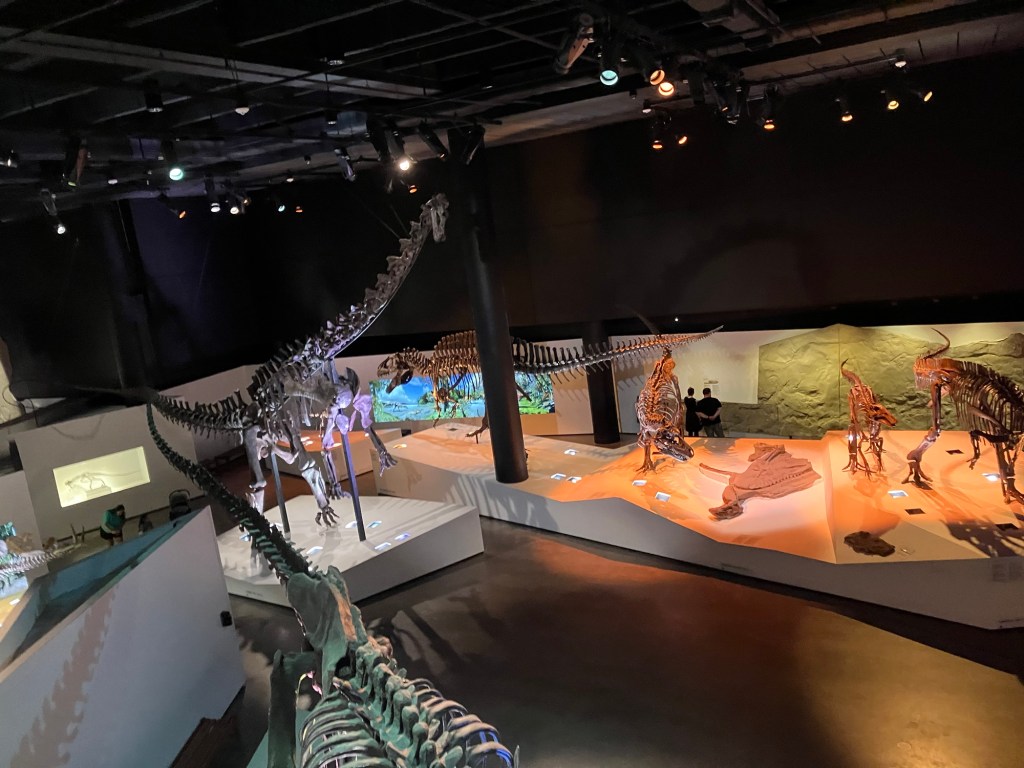
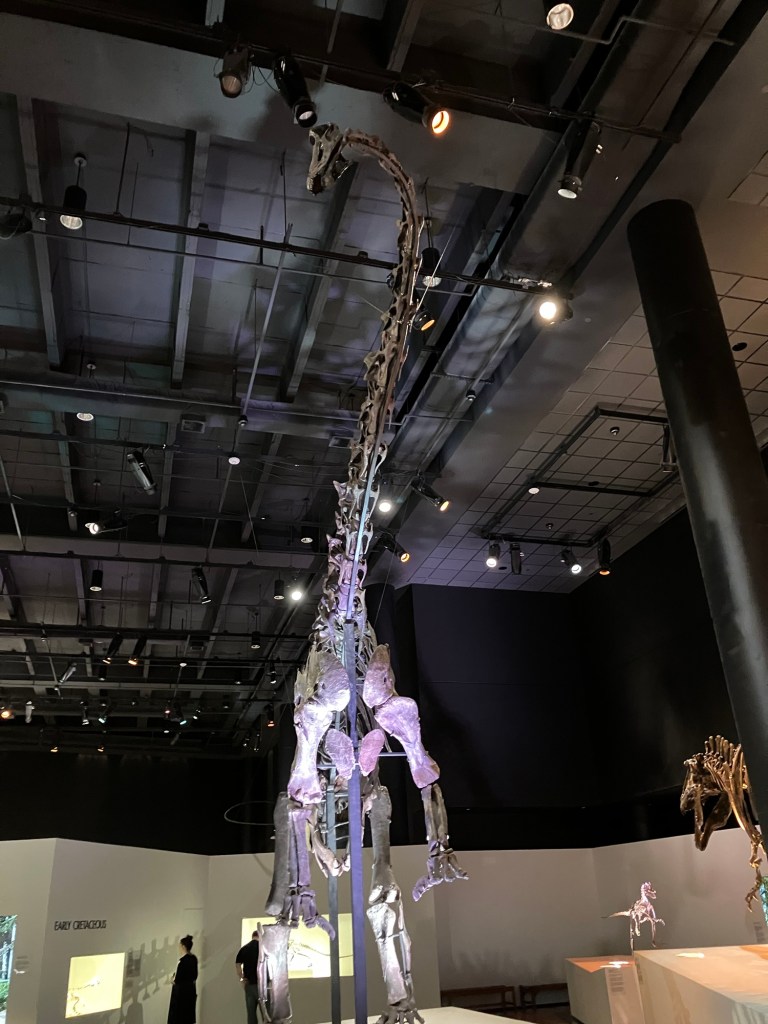
Stepping into the Paula and Rusty Walter Mesozoic Gallery, one is in awe of the vastness of space and the magnificent creatures that once roamed the Earth. Towering at the center is a Diplodocus rearing on its hind legs, long neck, and head stretching to the ceiling.

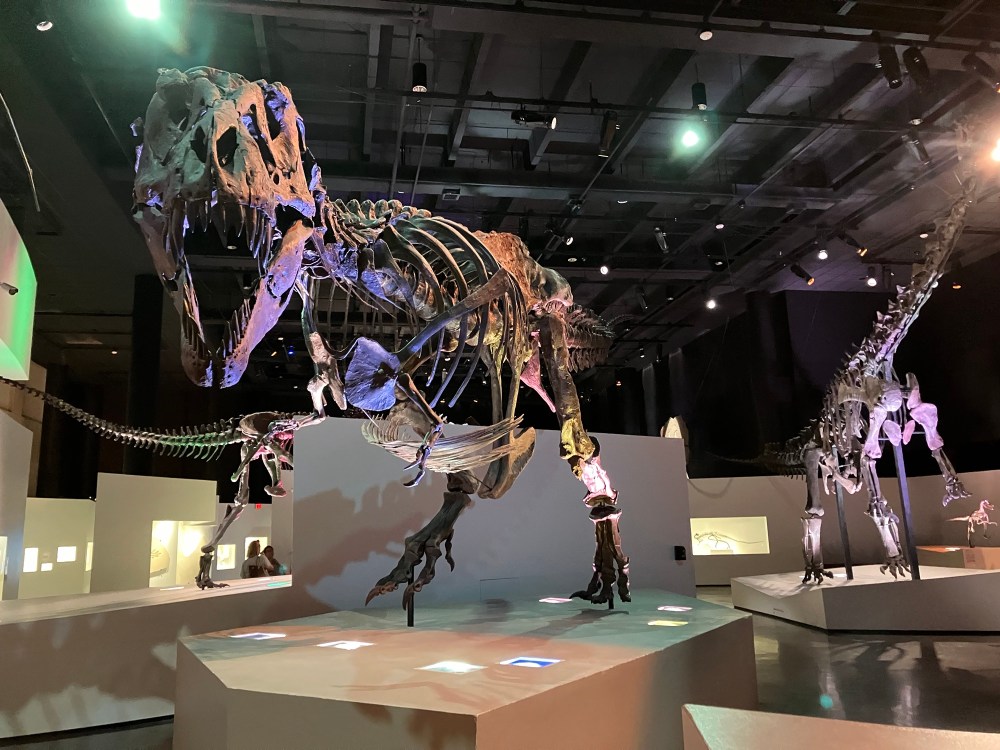
Image Credit: Noelle K. Moser. Diplodocus reared on its hind legs towering over theropods in various life-like poses. Houston Museum of Natural Science. Houston, Texas.

In various life-like poses stand a variety of large theropods and herbivores, each telling a story of the past. Most notable, and the reason for my venture to the Houston Museum of Natural Science, is BHI 3033, “Stan.”

Stan: The Tyrant Lizard King with Multiple Injuries

Image Credit: Mary Haggard. Stan and I, standing at the intersection of science and popular culture. Tyrannosaurus Rex is a silent witness to a world we can only experience through bone. Houston Museum of Natural Science. Houston, Texas.

Stan, a remarkable specimen found in 1987 in the Hell Creek Formation of Montana, serves as a beacon of discovery for paleontology and the biology of Tyrannosaurus rex. His fossil includes the most complete T. rex skull, a testament to the wonders of the natural world. Beyond the skull, Stan’s remains consist of 190 bones, representing about 63% of the entire skeleton, offering invaluable insights into the anatomy, lifestyle, and pathologies of one of the most intriguing Tyrannosaurus rex specimens in history. (Larson, 2008)

Image Credit: Noelle K. Moser. The impressive dental battery of Stan comprised of 60 conical serrated teeth. Houston Museum of Natural Science. Houston, Texas

An examination of Stan’s bones reveals multiple pathologies and healed injuries sustained throughout his life. Puncture wounds on the back of his skull and ribs suggest he was at one time bitten by another Tyrannosaurus Rex. Bite marks at the base of his skull indicate a significant neck injury, leading to the fusion of two vertebrae, likely causing him pain for the remainder of his life. Holes on the side of his skull suggest more healed wounds and possible infections from bone-eating parasites. Stan’s pathologies show that life in the Cretaceous was challenging, even for a Tyrannosaurus Rex.

Image Credit: Noelle K. Moser. Holes on the side of Stan’s skull show pathology of healed injuries and possibly bone-eating parasitic infections. Houston Museum of Natural Science. Houston, Texas.

In a poised stalking stance with jaws gracefully agape, Stan proudly displays his formidable set of 60 teeth. Like all Tyrannosaurus rex specimens, he embodies extraordinary evolutionary development in dentation, demonstrating the power to overcome even the most daunting challenges in his quest for survival.

Image Credit: Noelle K. Moser. Stan proudly displays his formidable set of 60 teeth. Houston Museum of Natural Science. Houston, Texas.

Examining Stan in such an accessible manner has given me a deeper insight into his life through his skeletal remains. Despite suffering severe injuries and pain, Stan’s capacity for healing and survival is a testament to the extraordinary resilience and robustness of this theropod. While the bone analysis of Stan shows healing, another T-Rex was not as lucky.

Wyrex: The Bob-tailed T-Rex.

Image Credit: Noelle K. Moser. Wyrex, the bobtail T-rex. Houston Museum of Natural Science.

Discovered in 2002 within the Hell Creek Formation of Montana and transferred to the Houston Museum of Natural Science (HMNS) in 2009, the fossil known as “Wyrex” is an extraordinary Tyrannosaurus rex specimen. This groundbreaking discovery unveils a remarkable partial braincase and two nearly complete legs and feet, providing exhilarating new insights into the foot anatomy of the legendary Tyrannosaurus rex! (Larson, 2008)

Image Credit: Noelle K. Moser. Complete foot preserved with Wyrex providing exhilarating new insights into the foot anatomy of the legendary Tyrannosaurus rex. Houston Museum of Natural Science.

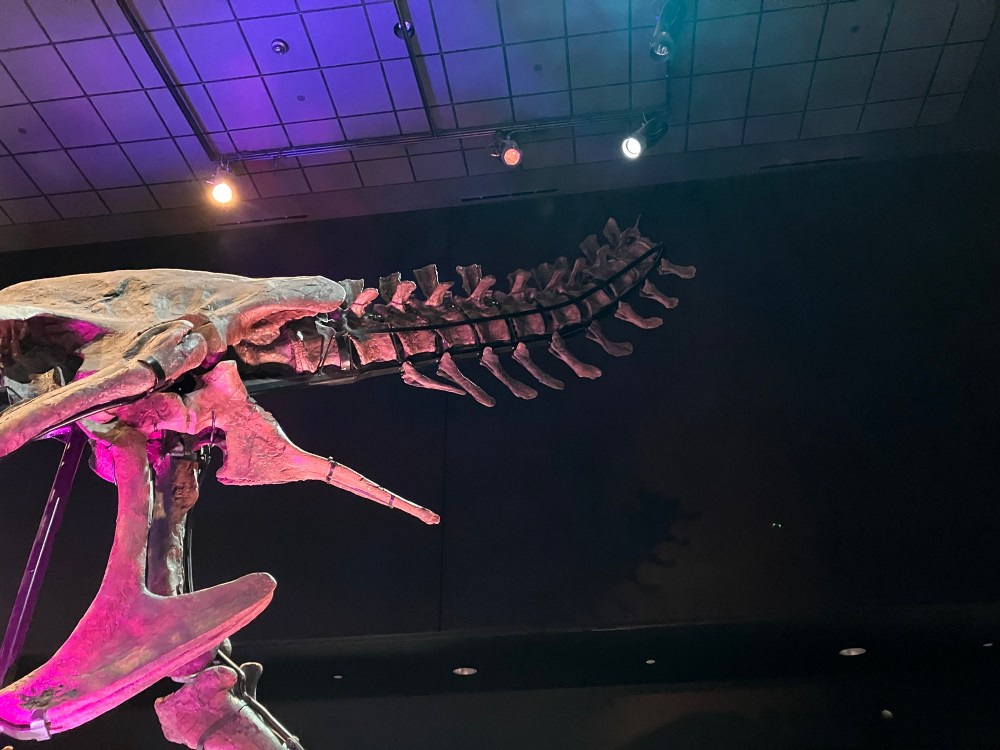
Mounted in an attack stance adjacent to an Ankylosaurus, it is readily apparent that one-third of the tail is absent. As a critical component of Tyrannosaurus rex anatomy, the tail serves as a counterbalance to the skull and accommodates powerful musculature necessary for locomotion.

Image Credit: Noelle K. Moser. The tail serves as a counterbalance to the skull and accommodates powerful musculature necessary for locomotion. Houston Museum of Natural Science. Houston, Texas.

Analysis of the bone indicates no evidence of healing, suggesting that the tail may have been severed post-mortem, or that this injury ultimately unalived Wyrex. Had Wyrex survived this injury, the T-rex would have required a significant period of rehabilitation to regain the ability to walk effectively.

Image Credit: Noelle K. Moser. Wyrex, positioned in an imposing attack pose, offers visitors the opportunity to examine the remarkable dentition and distinctive anatomical characteristics of the formidable Tyrannosaurus Rex. Houston Museum of Natural Science.

Presented in an assertive attack stance, Wyrex offers visitors an exceptional opportunity for a detailed examination of its distinctive conical, serrated teeth. This close-up perspective not only showcases the impressive anatomy of this prehistoric predator but also fosters a deeper appreciation for the evolutionary traits that contributed to its role in the prehistoric ecosystem.

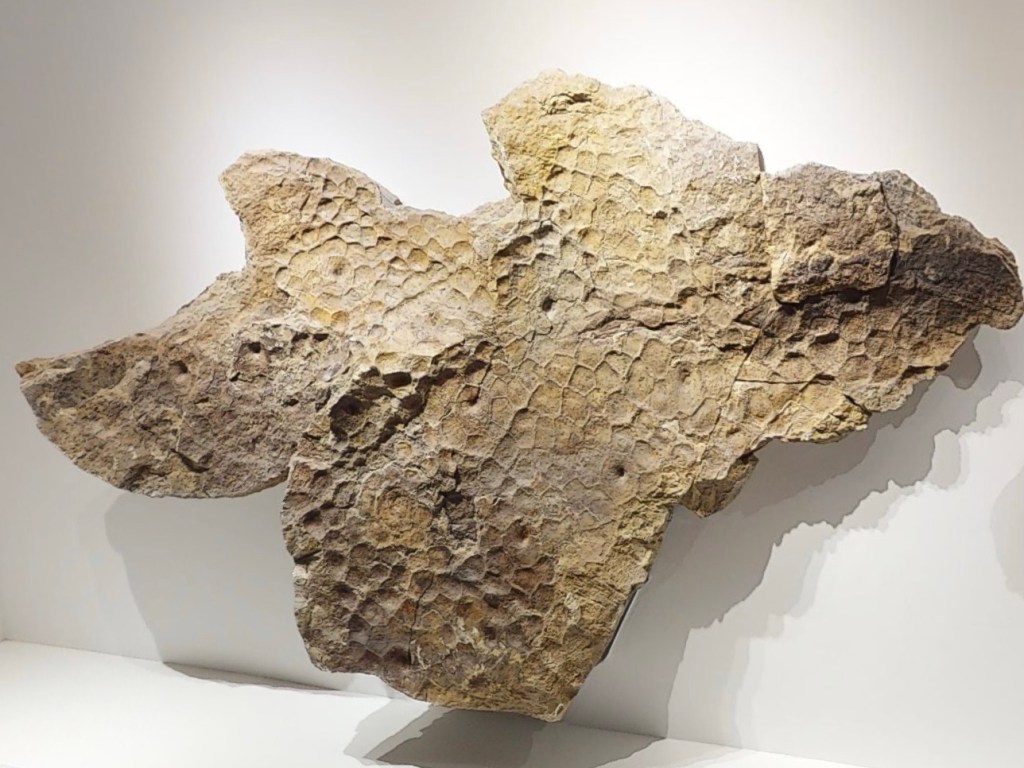
In addition to its other remarkable features, Wyrex has yielded another significant discovery: several patches of fossilized skin from the Tyrannosaurus rex. This finding marks the first time that such skin has been uncovered for this iconic dinosaur, providing new insights into its biology and appearance. (Larson, 2008).

Patch of fossilized skin associated with Wyrex. Houston Museum of Natural Science. Houston, Texas

Bucky: A Female Teenage T-Rex.

Image Credit: Mary Haggard. Bucky plays a significant role in our understanding of Tyrannosaurus rex, as this remarkable fossil includes one of the most complete T-rex tails to date. Houston Museum of Natural Science. Houston, Texas.

The final Tyrannosaurus Rex showcased in the Paula and Rusty Walter Mesozoic Gallery is a sub-adult female TCM 2001.90.1 “Bucky”. Discovered in 2001 in the Hell Creek Formation by a rancher who, while breaking in a young horse, spotted the bones that led to this remarkable find, just 8 miles from where another robust female T-rex, Sue, was unearthed. (Larson, 2008)

Image Credit: Noelle K. Moser. Tyrannosaurus Rex Bucky and Wyrex present complementary highlights, drawing attention to the devastating tail injury that Wyrex sustained. Houston Museum of Natural Science. Houston, Texas.

Bucky plays a significant role in our understanding of Tyrannosaurus rex, as this remarkable fossil includes one of three most complete T-rex tails. It serves as a poignant reminder of the devastating injury that Wyrex endured, allowing us to reflect on the challenges a Tyrannosaurus rex faced in their lifetime.

As a sub-adult, juvenile teenage T. rex, Bucky provides valuable insights into the growth rates and different stages of maturity in the morphology of this iconic theropod. Bucky’s development illustrates the physical changes that occur as T. rexes progress from juveniles to adults, helping us understand their life cycle better.

Acrocanthrosaurus:

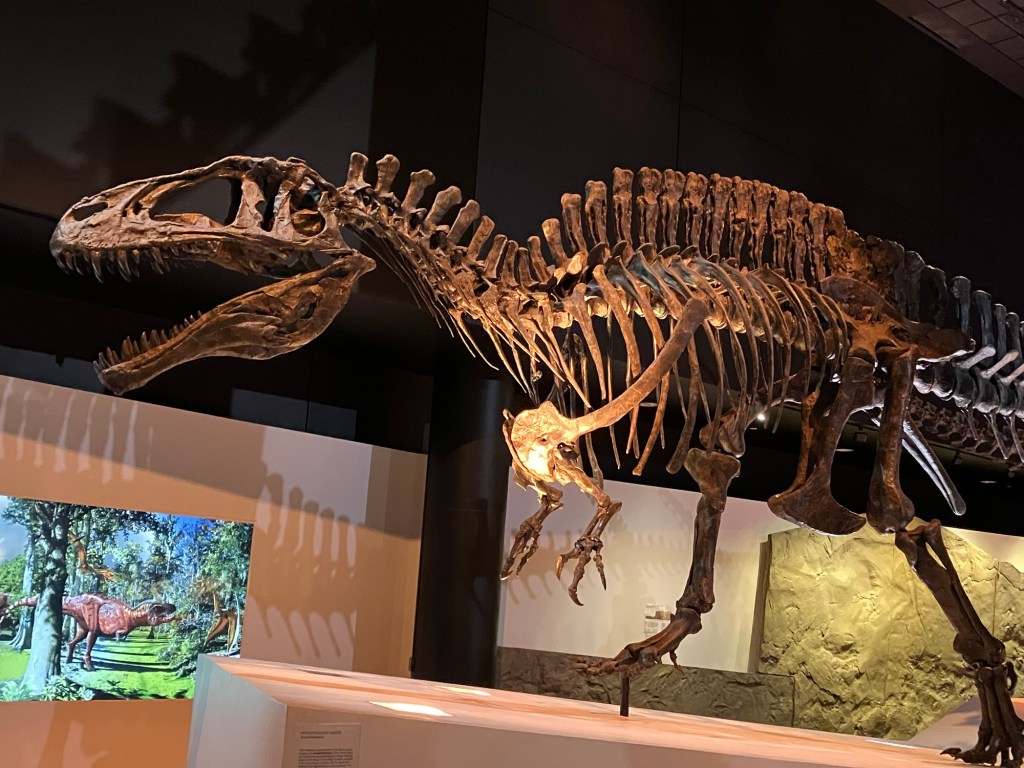
Image Credit: Noelle K. Moser. Acrocanthosaurus, the high-spined lizard of the Early Cretaceous. Houston Museum of Natural Science. Houston, Texas.

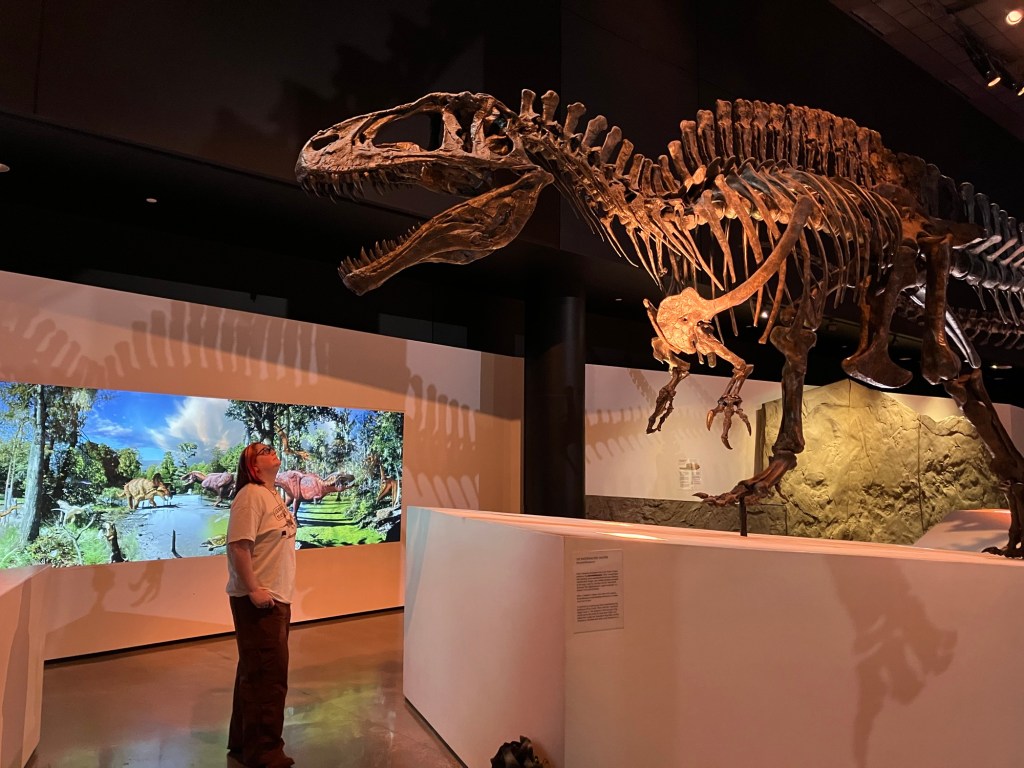
My journey to the Houston Museum of Natural Science would be incomplete without highlighting one last impressive theropod: Acrocanthosaurus. Most likely belonging to the Carcharodontosaur clade, a group of formidable predatory dinosaurs that thrived during the Aptian stage of the Early Cretaceous period.

Image Credit: Mary Haggard. Acrocanthosaurus. Houston Museum of Natural Science. Houston, Texas.

Acrocanthosaurus stands out for its remarkably high neural spines, believed to have formed a striking sail along its back during its time on Earth. This formidable theropod once roamed ancient landscapes alongside colossal titanosaurs, majestic giants among the largest creatures ever to grace the Earth. Imagining these giant beasts sharing the same world ignites a sense of wonder and inspiration!

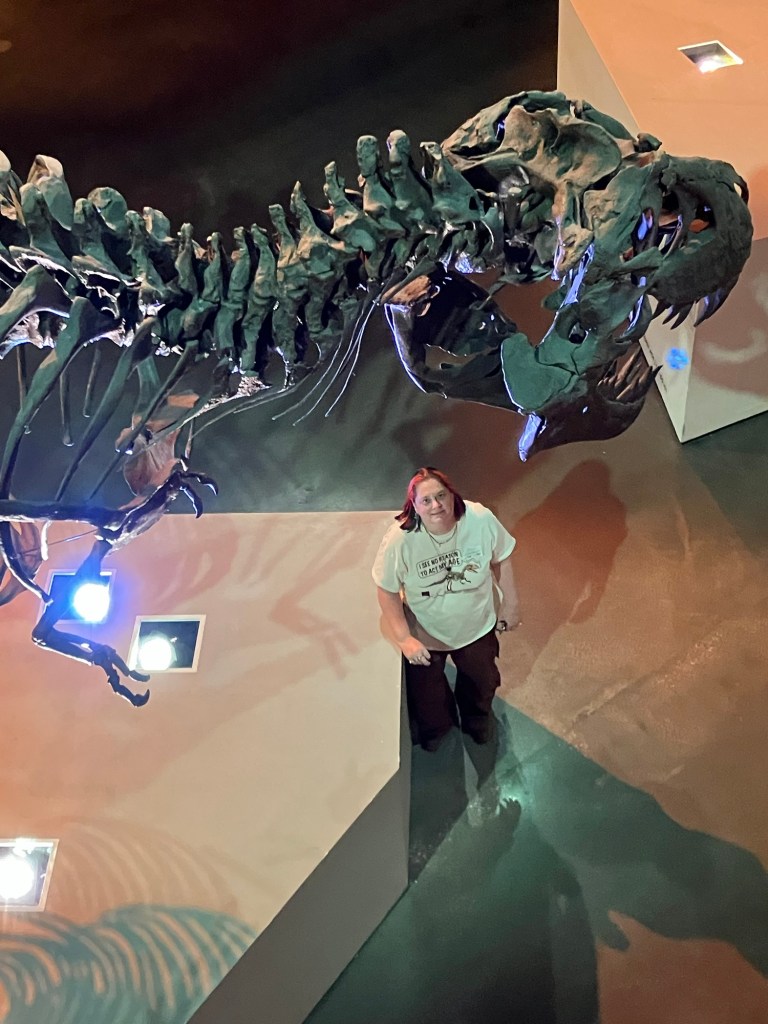
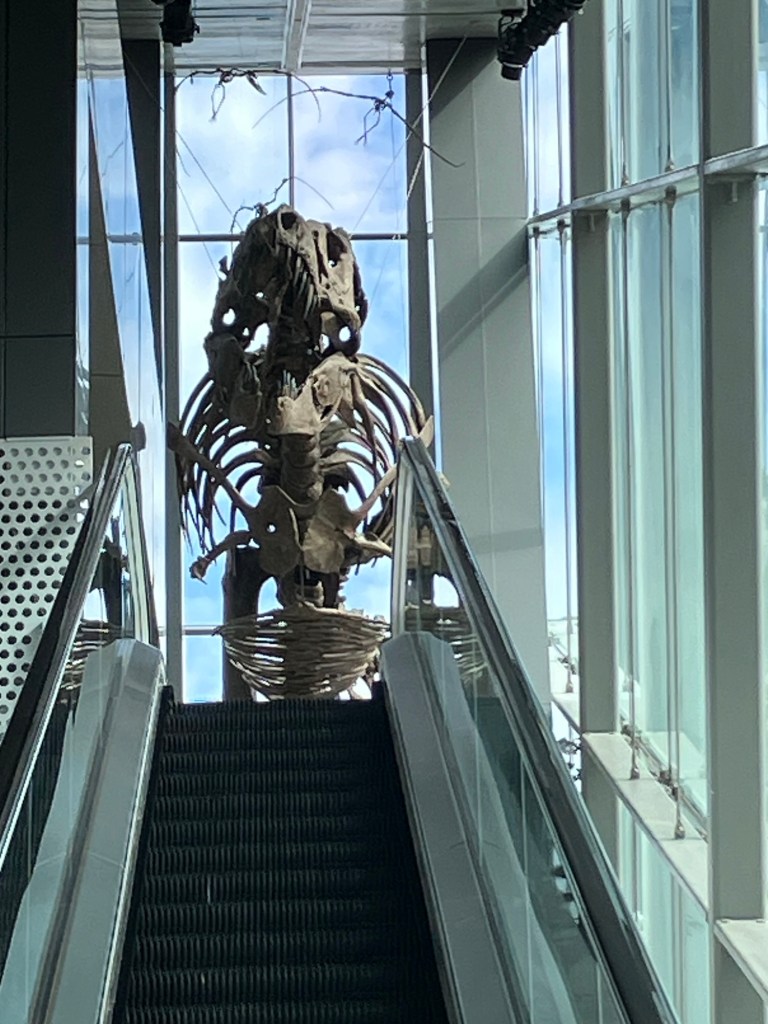
Image Credit: Noelle K. Moser. Stan viewed from the second-floor observation platform showcasing the immense size of this Cretaceous Apex Predator. Houston Museum of Natural Science.

Studying dinosaurs is not just a passion; it’s a profound calling to uncover the mysteries of their world and our planet. My research leads me to natural history museums across the nation, with each destination unveiling new insights into the fascinating realm of dinosaurs and deepening my admiration for these incredible creatures.

This visit highlighted the fascinating aspects of Tyrannosaurus Rex and reinforced the reasons behind their enduring appeal. It’s not merely their impressive size and strength; rather, the complex details of their existence contribute significantly to their allure. The experience provided an exceptional opportunity to observe a diverse array of theropod evolution and variety all in one location. Most importantly, the Houston Museum of Natural Science offers tangible access to the wonders of prehistoric Earth, connecting us to a lost world we can only experience through bone.

Image Credit: Mary Haggard. Studying dinosaurs connects us to a lost world we can only experience through bone. Houston Museum of Natural Science. Houston, Texas.

To watch a video of my trip to HMNS please visit my YouTube Channel.

I am a multi-disciplinary writer, paleontology blogger, and content creator. If you found this post engaging, be sure to check out my online writing portfolio to explore my extensive body of work.

Resources:

Larson, Peter and Carpenter, Kenneth. Tyrannosaurus Rex: The Tyrant King. Indiana University Press. Bloomington, Indiana. 2008.

Pim, Keiron. Dinosaurs the Grand Tour: Everything Worth Knowing About Dinosaurs from Aardonys to Zuniceratops. The Experiment. New York, NY. 2019.
My Visit to Houston Museum of Natural Science in Houston, Texas.