Medullary Bone: Tracing the Reproductive Tissue Link between Tyrannosaurus Rex and Egg-Laying Hens

noellemoser@charter.net
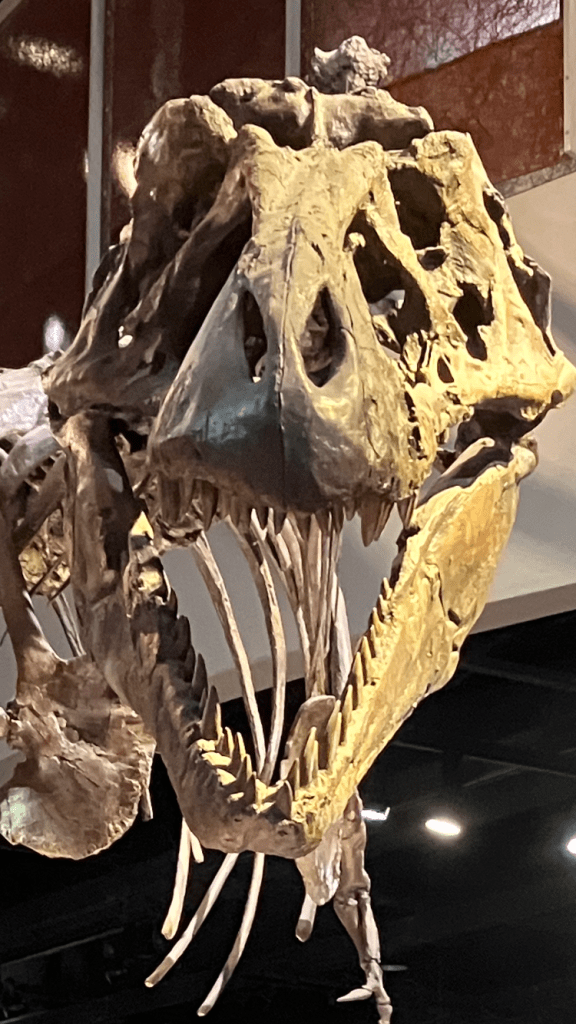
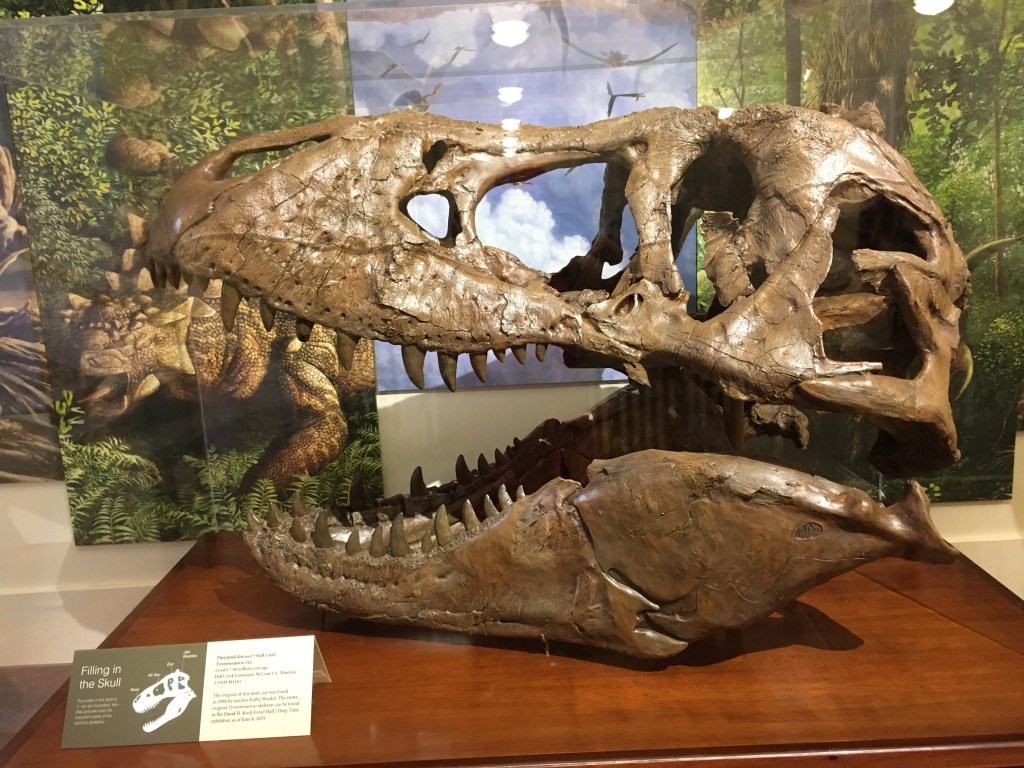
Image Credit: Noelle K. Moser. Tyrannosaurus Rex Skull, Perot Natural History Museum. Dallas, TX.

Since the discovery of the holotype Tyrannosaurus Rex in 1902 by Barnum Brown in the Hell Creek Formation of Montana, no other dinosaur has captured the human imagination. Upon its discovery, Barnum Brown wrote this to Henry Fairfield Osborn, friend, and curator of the American Museum of Natural History in New York. “It is as if a child’s conception of a monster had become real and was laid down in stone” (Randall, 2022). 
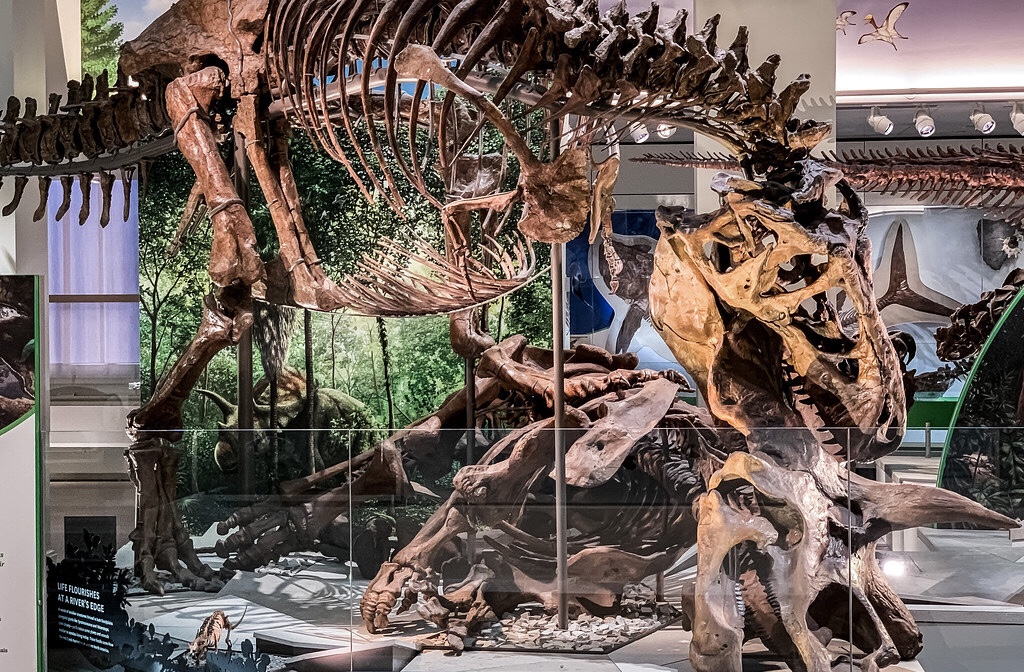
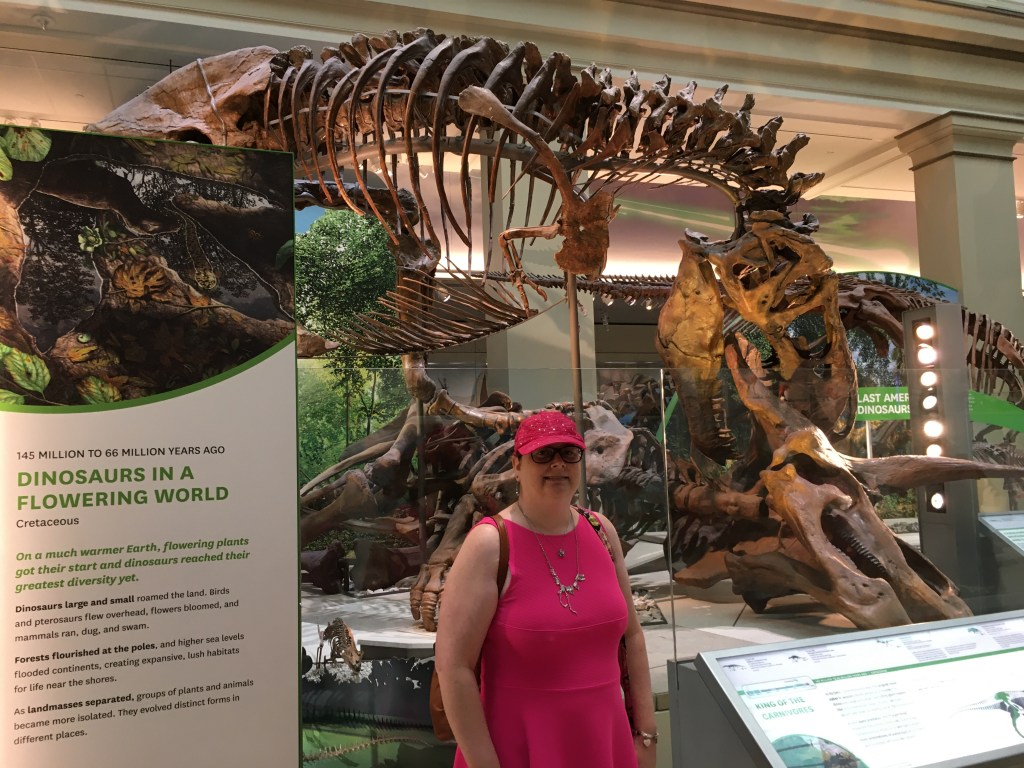
Image Credit: Noelle K. Moser. Tyrannosaurus Rex MOR 555 and Triceratops locked in a battle of predator and prey. National Museum of Natural History. Washington. D.C.

Though most of the skull and tail were missing, everything about this monster would overwhelm the human imagination. The specimen that Brown found stood 13 feet tall at the hips, its jaws measured over 4 ft in length, and would have weighed 6-8 tons. This was the only known specimen to science and was given the appropriate name Tyrannosaurus Rex by Henry Osborne in the fall of 1902. Tyrannosaurus which means “tyrant lizard” in Greek and “rex” which means “king” in Latin; Tyrannosaurus Rex, the king of the lizards, no other name would capture in two words the sheer power contained within this beast.

We crave to learn all we can about the largest therapod dinosaurs that ever existed. Over the past one hundred years, we have gleaned a wealth of information from the fifty Tyrannosaurus Rex specimens currently housed in museums around the world.

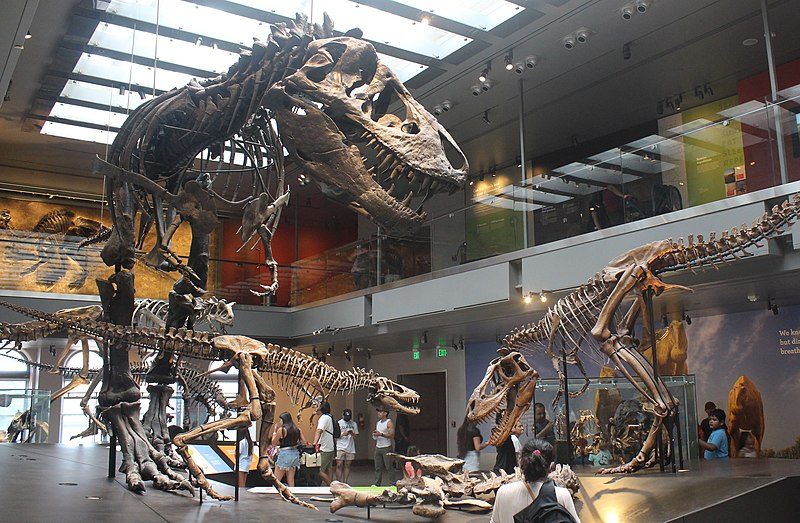
Image Credit: Noelle K. Moser. Tyrannosaurus Rex and an Alamosaurus (a titanosaurian sauropod). Perot Natural History Museum. Dallas, TX.

Tyrannosaurus rex gender is a tribute to the founder of the specimen. Sue (FMNH PR2081), discovered in 1990 by Sue Hendrickson, the largest and most complete Tyrannosaurus-rex, is aptly considered female. Stan (BHI 3033), discovered in 1987 by Stan Sacrison, containing the most complete skull, is considered male.
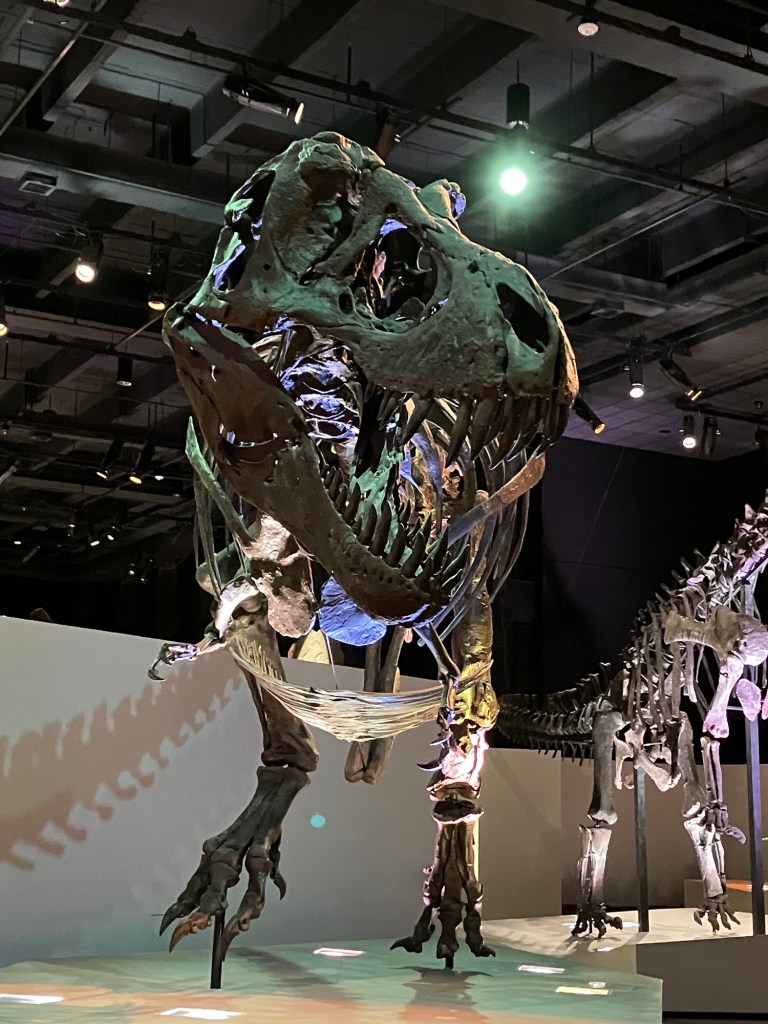
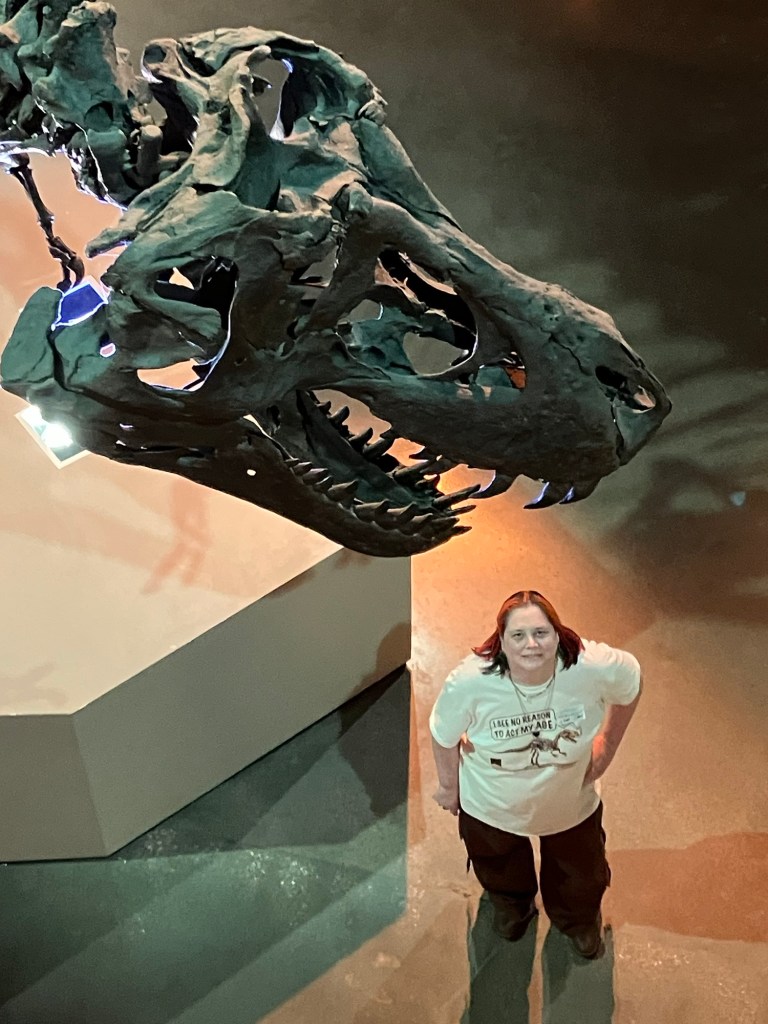
While these attempts to assign a pronoun to tyrannosaurus specimens offer a sense of personhood, a link to the actual gender of tyrannosaurus rex specimens rests in the most unlikely of places – chickens.
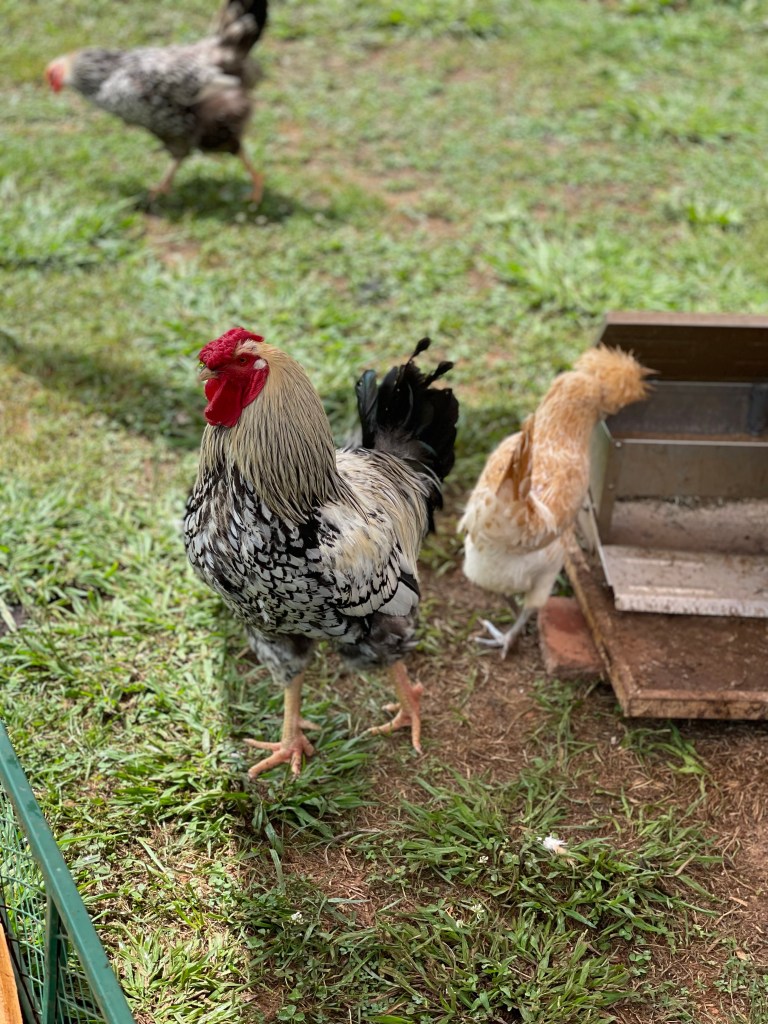
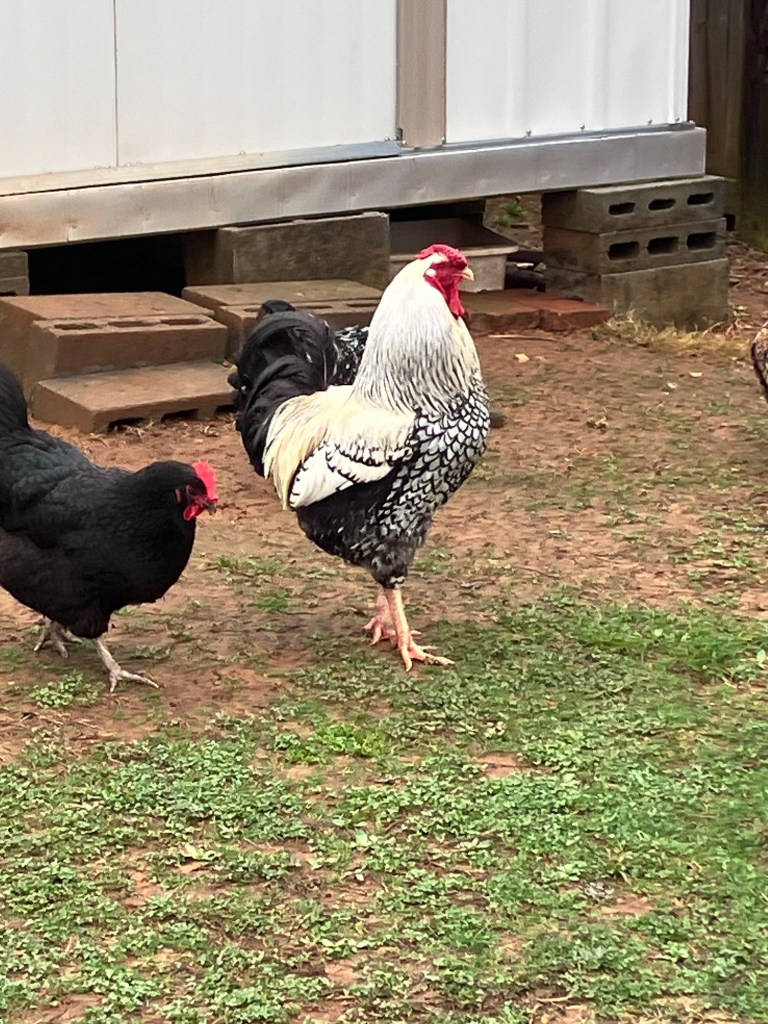
Image Credit: Noelle K. Moser. Smaug: (Silver Lace Wyandotte Rooster). Chickens have much in common with their ancestor, Tyrannosaurus Rex. By understanding chickens, we can much better understand T-rex.

Birds are dinosaurs. Specifically, birds are a type of therapod rooted in the dinosaur family tree that contains the same ferocious meat-eaters as T-rex and Velociraptor (Brusattee, 2018). Birds lie within an advanced group of therapods called paraves – a subgroup of therapods that traded in the brute body plan of their gargantuan ancestors for larger brains, sharpened acute senses, and smaller, lighter bodies that permitted progressive lifestyles above their land-dwelling relatives. Anatomically, chickens and tyrant theropods have many common characteristics that define the body plan of these magnificent creatures.

Air Sacs:

Birds achieve flight by two fundamental anatomical adaptions – feathers and hollow bones. While feathers provide the ability to soar above our heads, the real secret lies in their bones. Saurischians – the line of the dinosaur family tree containing both the giant sauropods and therapods – possessed skeletal pneumaticity – spaces for air in their bones. Skeletal pneumaticity produces hollow bones that lighten the skeleton, allowing for a wide range of motion. For example, without pneumaticity, sauropods would not be able to lift their long necks, and giant therapods would lack agility and ability to run because their skeletons would be far too heavy. In birds, air sacs are an ultra-efficient lung oxygen system. This flow-through inhalation and exhalation provides the high-energy birds need during flight. Evolving one-hundred million years before birds took flight, this is the true secret to their ability to take to the skies.

The signature feature of birds – feathers – evolved in their ground-dwelling theropod ancestors first noticed in Sinosauropteryx, the first dinosaur taxon outside parades to be found with evidence of proto-feathers.
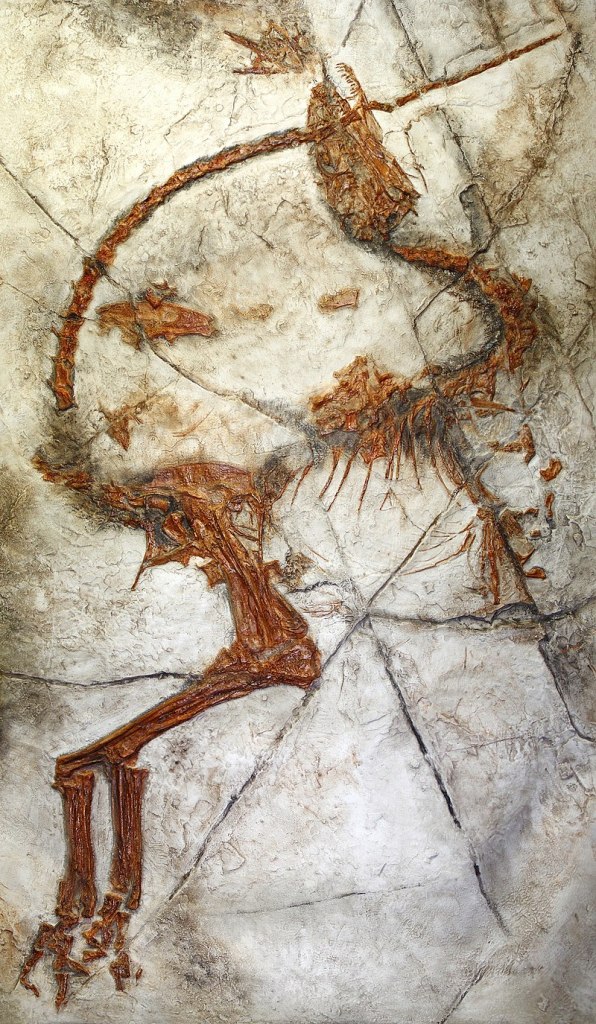
Image Credit: Sinosauropterys fossil with evidence of proto-feathers.

The earliest feathers looked much different than the quill feathers of today. Initially, feathers evolved as multipurpose tools for display, insulation, protection for brooding, and sexual dimorphism. These early feathers were more like a fluff – appearing more like fur than feathers – consisting of thousands of hair-like filaments. Silkie chickens possess feathers that lack barbs that form the classic shape we associate with feathers. The first proto-feathers in dinosaurs were much like the texture of feathers on the Silkie. The breed name “Silkie” is derived from this unique feather texture.

Black Silkie hen. Silkie chickens possess hairlike filament feather texture from which their name is derived.

Wings:

While large theropods like Tyrannosaurus Rex noticed diminishing forearms throughout the Mesozoic, other dinosaurs like Zhenyuanlong and Microraptor traded in forearms for wings.

Image Credit: Life restoration of Zhenyuanlong, a small theropod that possessed feathered wings but could not fly.
Image Credit: Microraptor, feathered dinosaurs that possessed wings on both forelimbs and hindlimbs and could glide from treetop to treetop.

Despite possessing wings, these feather-winged dinosaurs could not fly. Their bodies were far too heavy to achieve flight observed in birds today. Aboral dinosaurs glided from tree to tree or used their wings to fly flop on the ground. These first fully feathered dinosaurs also used their plumage as display features to attract mates or frighten enemies, as stabilizers for climbing trees, and protection and warmth for brooding offspring.

As the body plan for feathered dinosaurs continued to fine-tune the use of feathers, flight happened by accident. More advanced paravians had achieved the magical combination to achieve flight – large wings and smaller bodies (Brusatte, 2018). As the body plan of birds continued to refine, they lost their long tails and teeth, reduced to one ovary, and hollowed out their bones more to lighten their weight. By the end of the Cretaceous, birds flew over the heads of Tyrannosaurus Rex and other land-dwelling dinosaurs. Sixty-six million years ago, the birds and T-rex witnessed the Chicxulub impact that brought the Mesozoic to a close. While therapods with large and expensive body plans died out, birds sailed through to the Cenozoic. For this reason, we say that all non-avian dinosaurs are extinct, but dinosaurs are still very much with us – we call them birds.

Dignitary Locomotion in feet:

Theropod means “beast foot”, and for good reason. Adaptions in the metatarsals (foot bones) of theropods allowed them to walk with a digitigrade stance. Unlike humans that walk plantigrade (flat-footed), tyrannosaurus rex walked on their toes. Digitigrade motion has many benefits, as it allows the animal to run fast, increased agility and splayed toes offer better balance on muddy or slippery surfaces. Birds are coelurosaurs and inherited these anatomical characteristics from their theropodian ancestors. Chickens like tyrannosaurus rex walk with digitigrade locomotion, making them swift runners on land and providing excellent balance and stabilizing ability when resting on roosts.

Wish Bone:

Walter (tyrannosaurus rex) posessed a furcula or “wish bone”. The Furcula can be see in the image that attached to the forelimbs.

The Thanksgiving tradition of “the lucky break” of the turkey wishbone is possible thanks to theropods who passed this anatomical trait to birds. In Tyrannosaurus rex, the furcula provided strength and power to the diminished but muscular forearms. In birds, the furcula fused from the two clavicle bones and function to strengthen the skeleton in the rigors of flight.

Image Credit: Coracoid and supracoracoideus muscles in a bird’s wing. The furcula provides support to these muscle systems in flight.

In conjunction with the coracoid and the scapula, it forms a unique structure called the triosseal canal, which houses a strong tendon that connects the supracoracoideus muscles to the humerus. This system is responsible for lifting the wings during the recovery stroke in flight.

S-shaped Skeleton:

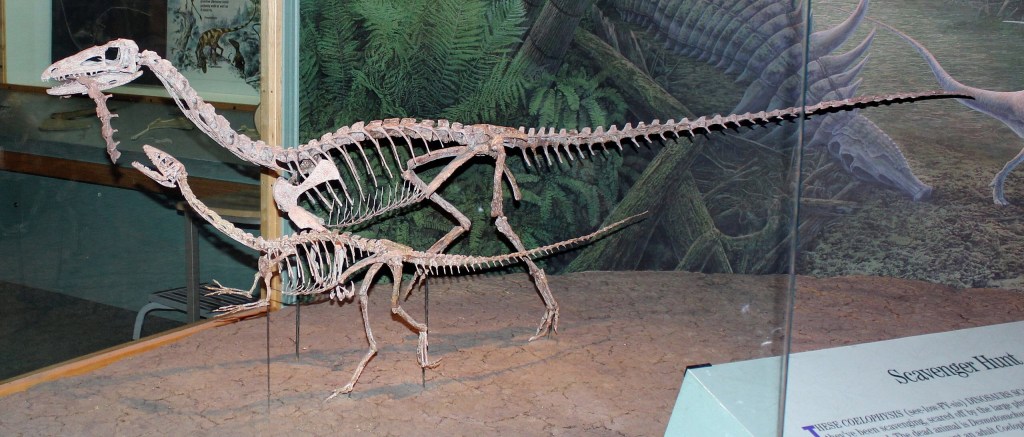
Noelle K. Moser. Perot Natural History Museaum. Dallas TX. Coelophysis, basal coelurosaur with an S-shaped skeleton possessed by both T-rex and modern birds.

Chickens and all birds have a unique body plan visible in the skeleton. Comparing the skeleton of Tyrannosaurus rex with modern birds will yield similar anatomical attributes. T-rex has a skull attached to a spine, ribs, and two legs with splayed toes providing swift bipedal locomotion. Focusing on the appendicular skeleton, we see that T-rex and modern birds have an S-shaped skeleton. The reason is that body plans do not have unlimited parts from which evolution can choose but rather build upon earlier ancestral shapes (Horner, 2009).

While birds lack teeth and long tails, the genes to manipulate these features still exist in the gene sequence of birds. In 2006, researchers at the University of Wisconsin published a report on manipulating the genes responsible for teeth in chicken egg embryos, resulting in buds that would later develop into crocodile-like teeth. The embryos were not allowed to hatch, but this research shows that the genes related to “dinosaur-like” features still exist within the genes of chickens; mother nature has just switched them off.

While it’s easy to say these features are of birds, they are not attributes of birds at all but are of dinosaurs.

Image Credit: Noelle K. Moser. Tyrannosaurus Rex stalking an Alamosaurus. By studying skeletal features, it is clear that T-rex is an overgrown chicken.

By studying the anatomy of chickens and comparing these findings with the tyrannosaurus Rex skeleton, we see many of the same features. As we look closer, it becomes increasingly clear that T-rex is an overgrown chicken. Since the backyard chicken and the mighty T-rex have these characteristics in common, it stands to reason that these similarities are transferable to the study of tyrannosaur fossils, sexual dimorphism, and gender.

Medullary Bone in Egg Laying Hens:

A trio of Polish hens perching on a macramé swing under my grape arbor.

In 2006, while studying bones of a newly discovered tyrannosaurus Rex, B-rex (Bob Rex, a tribute to the finder of this tyrannosaurus skeleton, Bob Harmon), a spongy-like mesh of tiny transparent flexible tubing was visible under a microscope. In attempts to determine the nature of this bone material, researchers turned to the closest living relative of the mighty T-rex – birds, specifically hens.

Buff Orpington chick resting amongst farm fresh eggs from my backyard flock.

This bone medullary bone is a reproductive tissue found only in living female actively reproducing hens. As a hen advances to maturity, marked by egg laying, her body will produce medullary bone and continue to produce this bone throughout her laying duration. In some birds, this is seasonal in hens such as chickens; medullary bone is produced from her first egg at about 20 weeks of age throughout her subsequent laying lifetime. This reproductive bone tissue serves as mobilized calcium storage for the production of eggshells (Larson and Carpenter, 2008).

Buff Orpington eggs from my backyard chicken flock.

The hens in my backyard flock possess the same medullary bone discovered in B-rex. When my hens lay eggs, the shells that protect the egg are medullary bones stored in their bones. As she continues the lay year after year, this reproductive tissue replenishes. Since hens lay several eggs a week vs only seasonal, chicken feed is fortified with additional calcium to extend the egg potential of laying hens. While man’s attempts to lend support by increased calcium allow hens to produce stronger eggshells, the fundamentals are the same. My hens produce medullary bone because it is an attribute that they inherited from their ancestor, tyrannosaurus rex.

Buff Orpington Hens, White Crested Polish hen, and Mottled Cochin Rooster. My hens-related to tyrannosaurus rex-possess the same reproductive medullary bone as that of B-rex.

Unlike other bone types, medullary bone has no other function. It exists solely as a calcium storage for the production of eggshells. The formation of this reproductive tissue osteoclasts in the femur and tibiotarsus bones begins to deposit about 1 or 2 weeks before lay.

It’s a Girl!!!

Image Credit: Femur of MOR 1125 where osteoclasts of medullary bone were found.

The discovery of medullary bone found in the femur of MOR 1125, triggered by the increase of estrogen in her body, signified that this tyrannosaurus rex was not only a female but pregnant.
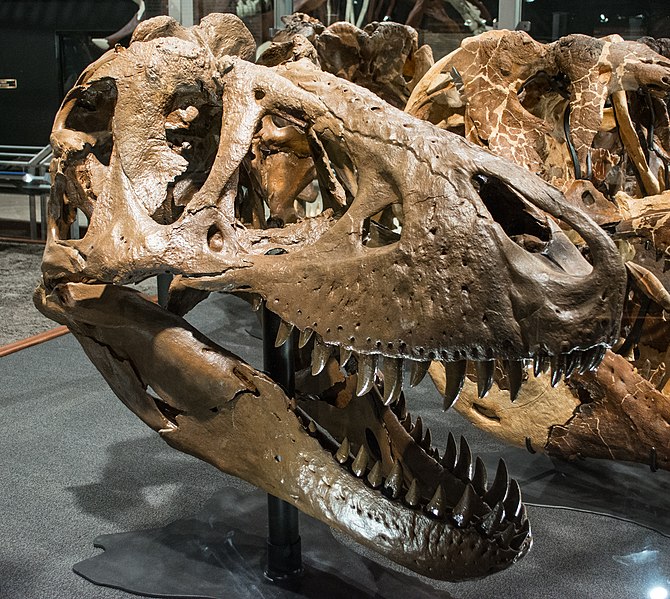
Image Credit: Skull of B-rex (MOR 1125).

Living near the end of the 140-million-year reign of the dinosaurs, B-rex moved through the lush forests of a delta that fed several winding rivers in the Hell Creek Formation. She hatched 16 years prior, wandering about this tropical landscape, growing to maturity and preparing to mate.

Image Credit: Noelle K. Moser. Mesozoic plants at the National Botanical Gardens in Washington. D.C. Bob-rex would have seen many of these same plants as she wondered the tropical regions of the Hell Creek Formation sixty-eight million years ago.

Whether or not this was her first mating season, we do not know. Perhaps she died without ever producing offspring, or she was preparing to be a mother for the first time. We know that sixty-eight million years ago, she died young of unknown causes, and her burial was quick because her skeleton was well preserved.

The discovery of B-rex is the holy grail for paleontology and dinosaur studies. We can now assign gender and learn more about the intimate lives of tyrannosaurus rex specimens and other medullary bone-bearing dinosaurs through the lessons of B-rex, the pregnant T-rex.

I am a multi-disciplinary writer, blogger, and content creator. If you like my work, please visit my Writing Portfolio

Resources:

Brusatte, Steve. The Rise and Fall of the Dinosaurs: A History of Their Lost World. William Marrow of Harper Collins Publishers. New York, NY. 2018. Pgs. 282, 298, 299.

Harris P Matthrew, Hasso M Sean, Ferguson W.J. Mark, and Fallon F John. The Development of Archosaurian First-Generation Teeth in a Chicken Mutant. Current Biology Vol. 16, 371-377, February 21, 2006. URL

Horner, Jack. How to Build a Dinosaur. Plume, Published by Penguin Group. London, England. 2009. Pgs. 8,9,57, 58, 60.

Larson, Peter and Carpenter, Kenneth. Tyrannosaurus Rex: The Tyrant King. Indiana University Press. Bloomington, Indiana. 2008. Pgs. 40, 93, 95, 98.

Randall K., David. The Monster’s Bones: The Discovery of T. Rex and How it Shook Our World. W. W. Norton & Company, Inc. New York, N.Y. 2022. Pgs. 153.
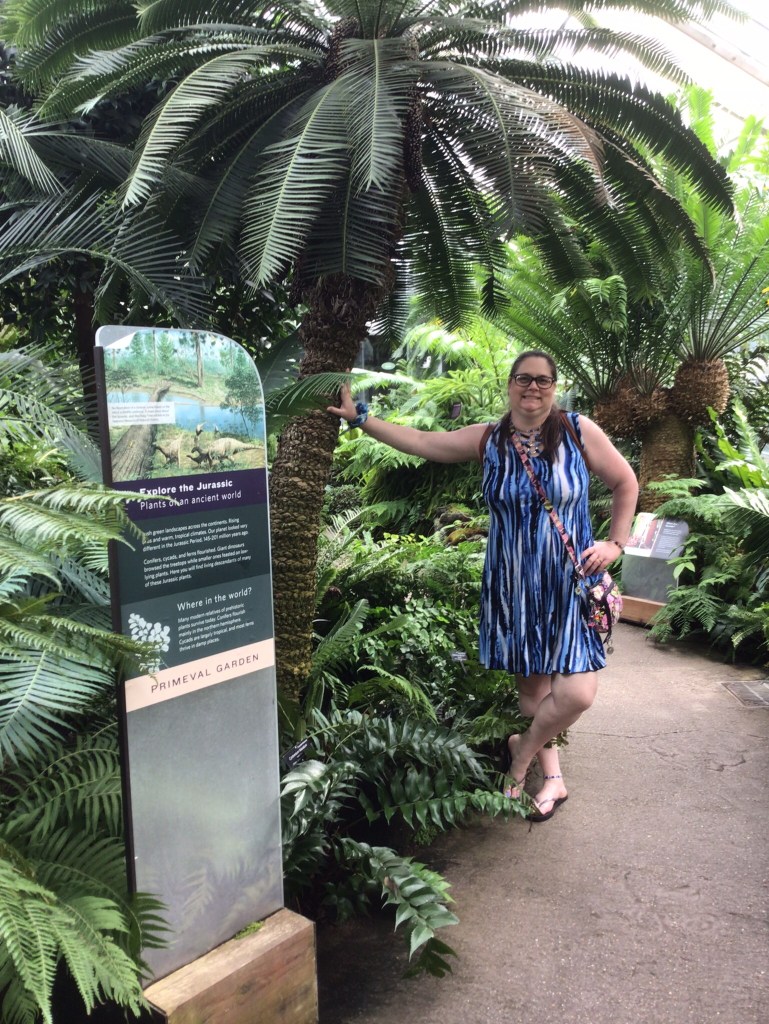
Me in the primitive garden of the Mesozoic at the National Botanical Gardens. Washington, D.C.

~ Noelle K. Moser ~
Theropod Evolution: Unveiling Meraxes Gigas, the Late Cretaceous Giant

Image Credit: Meraxes Gigas.

We have a new dinosaur! A theropod with short limbs like Tyrannosaurus Rex. Tyrannosaurus is not the only famous giant carnivorous dinosaur; meet Meraxes Gigas.

During the summer of 2022, researchers uncovered a previously unknown dinosaur from the Late Cretaceous, Meraxes Gigas. Meraxes belongs to the genus carcharodontosaurid theropods. The name, “Meraxes”, honors a dragon from the George R. R. Martin novel, A Song of Ice and Fire – Wikipedia The specific name, “Gigas”, derived from the Greek word meaning “giant”, in reference to the theropod’s large size.

Found in the Huincul Formation of Argentine Patagonia was a nearly complete skeleton. Meraxes Gigas is of pivotal importance because this discovery constitute a complete skull, partial forelimbs, complete hindlimbs, fragmentary ribs, and cervical and complete caudal vertebrae. 

The hand of theropods is imperative to determine whether the specimen is primitive or derived. Primitive in dinosaur terminology means an early stage in evolutionary development. Derived means most recent in dinosaurian evolution. To help this make sense, Coelophysis is a primitive ancestor of the derived Tyrannosaurus Rex.

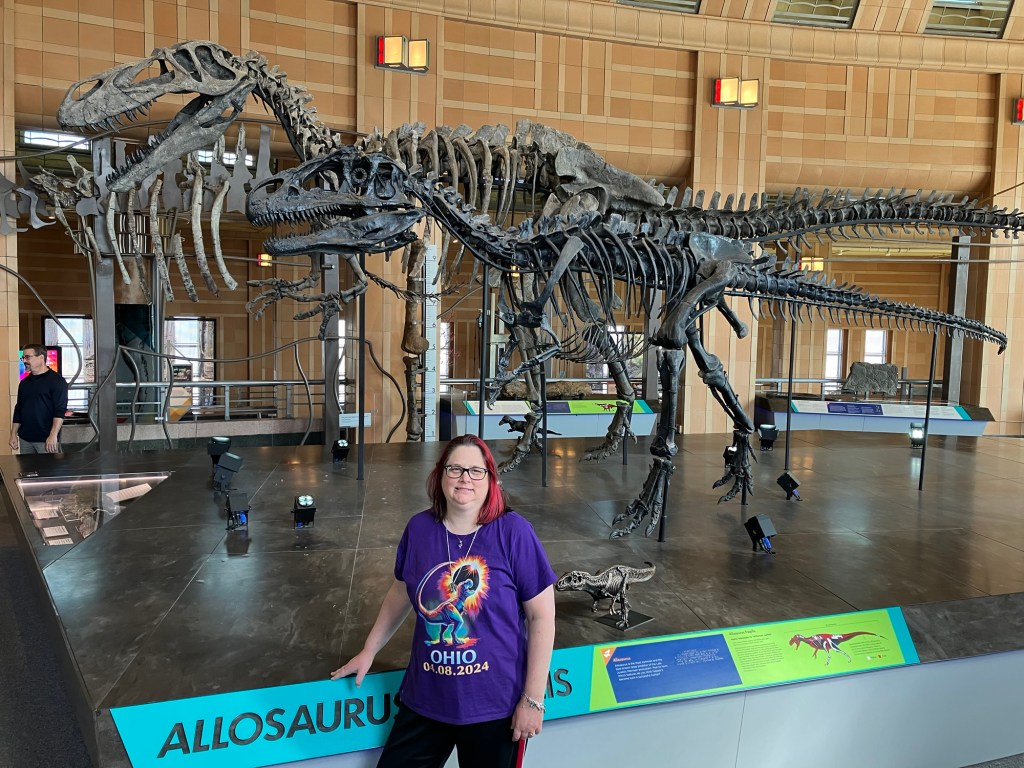
Image Credit: Gignotosaurus skeleton, notice the longer arms and three digits on each hand. Giganotosaurus is more derived than the primitive theropod Coelophysis.

Primitive theropod dinosaurs have longer arms and digital formula I-IV. Derived theropods will have shorter arms and a reduced number of digits.

Image Credit: Coelophysis primitive theropod dinosaur. Notice that Ceolophysis has longer arms and 4 digits on each hand.

Coelophysis, the oldest known theropod, defined as a primitive Late Triassic theropod had longer arms and 4 digits on each hand.

Image Credit: Allosaurus

Allosaurus, more derived lived during the Middle-Late Jurassic and possess shorter arms and only three digits on each hand. Tyrannosaurus the Cretaceous apex predator had very short arms and only 2 digits on each hand.

Image Credit: Noelle K. Moser. Walter, Tyrannosaurus Rex located in Washington, D.C. has very short arms and only 2 digits on each hand.

As observed by these images, the skull, forearms, hands, and digits are gold in theropod discoveries. The hands of theropod dinosaurs tell us so much about the evolution of dinosaurs during the Mesozoic.

In addition to the forearms and digits, complete or near complete skulls found in new dinosaurs’ discoveries help us understand more about the creatures.

At first glance, the skulls of these giant theropods appear similar; massive jaws with numerous long serrated teeth. To the trained eye, the skulls of Giganotosaurus and Tyrannosaurus Rex are remarkably different.

Giganotosaurus has a long narrow skull that comes to a sharp point. The skull of Tyrannosaurus Rex is boxier and comes to a lateral line rather than a point. See the images below.

Another example of primitive and derived evolution is theropods, Allosaurus, Ceratosaurus, and, Tyrannosaurus. See the images below.

While these three theropods appear similar, Allosaurus and contemporary Ceratosaurus predate Tyrannosaurus by 80 million years.

Head Creasts:

Another feature present in theropod dinosaurs, specifically primitive species, is that of head crests. Many Late Triassic and Early Jurassic theropod species possessed head crests. It is thought that these crests were used as display features for mating and sexual dimorphism. In later derived theropod species, these crests disappear.

Image Credit:

The image above depicts Ceratosaurus nasicornis, the apex predator of the early Jurassic, displaying crests on the head can be seen. Ceratosaurus was driven to extinction by the Late Jurassic, succeeded by the more successful Allosaurus.

Image Credit:

Allosaurus, as mentioned above, is the most famous predecessor to Tyrannosaurus Rex. Living through the greater part of the Jurassic, Allosaurus was the apex predator of its time and possessed primitive features – three-digit hands, long forearms, and head crests. It is now known why derived theropods lose the head crests.

Image Credit:

By the time we traverse, the expansive amount of time between Ceratosaurus and Tyrannosaurus Rex (80 million years) head crests disappear from theropod anatomy.

Size:

In addition to reduced digits and head crests, as theropods evolve they get larger. Coelophysis at maturity was about 10 feet long and weighed 100 pounds. Compare that to the Jurassic theropod Ceraosaurus which grew to 20 feet long and weighed about 2,000 pounds. Allosaurus grew to be 12 feet long and 10 feet tall weighing 2.3 metric tons. Tyrannosaurus Rex, the largest land theropod to ever live grew to 43 feet long and weighed 6-8 tons.

Meraxes Gigas:

Now, that you have a better understanding of theropod dinosaurs, let’s take another look at Meraxes gigas. Meraxes is a crucial find in the world of dinosaur studies because the remains included key anatomical features, a complete forelimb, hand, a skull, and various other bones. The most important being that of the hand and skull.

According to the research, Meraxes Gigas had tiny arms like Tyrannosaurus with three digits on each hand like Allosaurus. Tyrannosaurus and Meraxies are not related as they are separated by about 20 million years, but it does suggest that as theropods evolved larger heads, the arms shrunk, no longer useful for hunting. Regarding size, Meraxes Gigas was 36 feet long and weighed 4 tons. To put this into perspective, Meraxies is smaller than Tyrannosaurus Rex but much larger than Allosaurus. Further noted, Meraxies does not appear to have head crests.

In terms of theropod evolution, Meraxies is more derived than Allosaurus but primitive compared to Tyrannosaurus. In terms of theropod evolution, this put Meraxies Gigas living about 90 to 100 million years ago, firmly in the Late Cretaceous. Meraxes Gigas and its close relative, Giganotosaurus died out in the Late Cretaceous, succeeding their position at the top of the food chain to the tyrannosaurids, and its famous member, Tyrannosaurus Rex.

Meraxes Gigas and the newly discovered theropod dinosaur were one of the last groups of giant carnivores to walk the Earth. While we often think of Tyrannosaurus Rex as being the lone giant carnivore stalking the Cretaceous, other large theropods competed with the tyrant dinosaurs. Although Meraxes Gigas never laid witness to the meteor that would ultimately bring the reign of the dinosaurs to an end, Tyrannosaurus Rex did.

I am a multi-disciplinary writer, blogger, and web content creator. If you liked this post, chomp the subscribe button.

If you like this blog, please visit my portfolio. Writer | The Works Of Noelle Moser

As always, thanks for reading Coffee and Coelophysis. Next time, we will take an in-depth look at the most famous theropod, Tyrannosaurus Rex.

~ Noelle ~

The Evolution of Dinosaurs: Origins and Anatomical Adaptations

Image Credit:

Before delving deeper into our discussion about dinosaurs, it’s crucial to define what a dinosaur is. Dinosaurs are distinct creatures that emerged after the Permian Extinction. To thoroughly address this topic, we need to explore their origins. Contrary to the common perception of dinosaurs as colossal beings, they actually evolved from ancestors smaller than a house cat (Thomas R. Holtz, 2007). Initially, dinosaurs were diminutive, bipedal, and lizard-like. Coelophysis represents one of the earliest and most primitive theropod dinosaurs. However, preceding Coelophysis, the earth was home to another group known as archosaurs.

Image Credit: Archosaurs Postosuchus and Desmatosuchus.

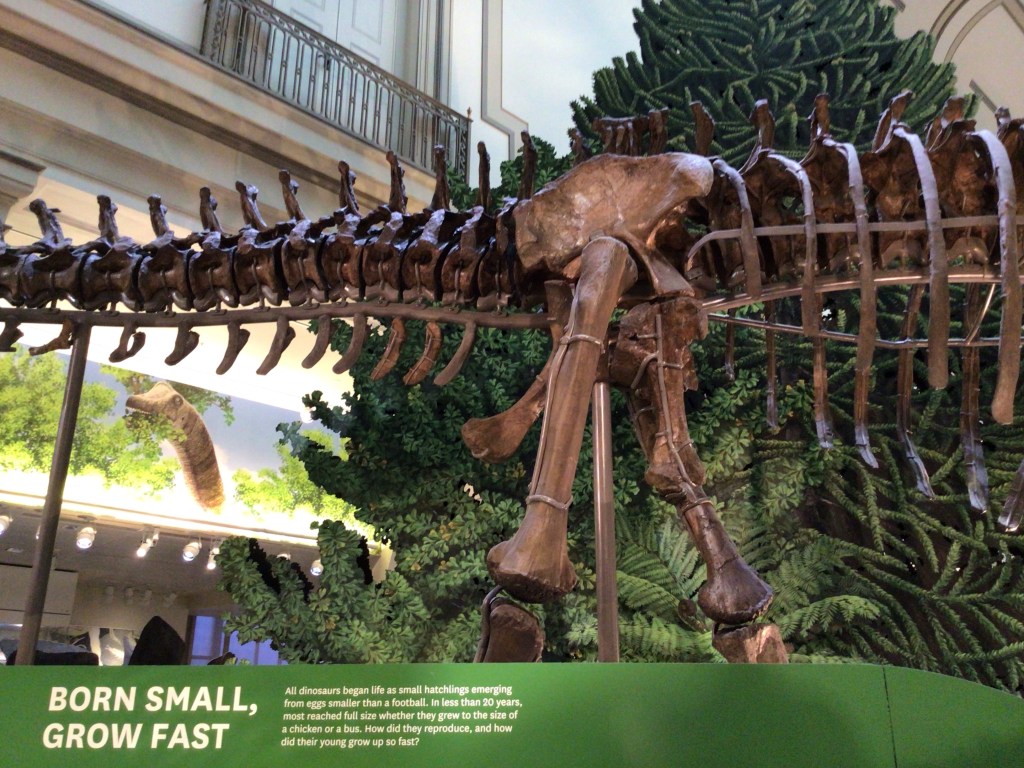
Archosaurs, the predators to dinosaurs, were small creatures with a crucial adaptation: open hip sockets and hind limbs that were positioned directly beneath their bodies. This adaptation became essential during the Jurassic period, when Titanosaurs roamed the Earth. Without this primitive yet fundamental anatomical feature, dinosaurs would not have been able to grow to the colossal sizes that fascinate us today. The open hip joints and vertically aligned legs enabled dinosaurs, including the massive Sauropods and the towering Tyrant dinosaurs, to maintain an upright stance.

An open hip joint, hind legs positioned directly beneath the body, and three or more sacral vertebrae fused to the pelvis are the primary criteria for classifying an animal as a dinosaur.

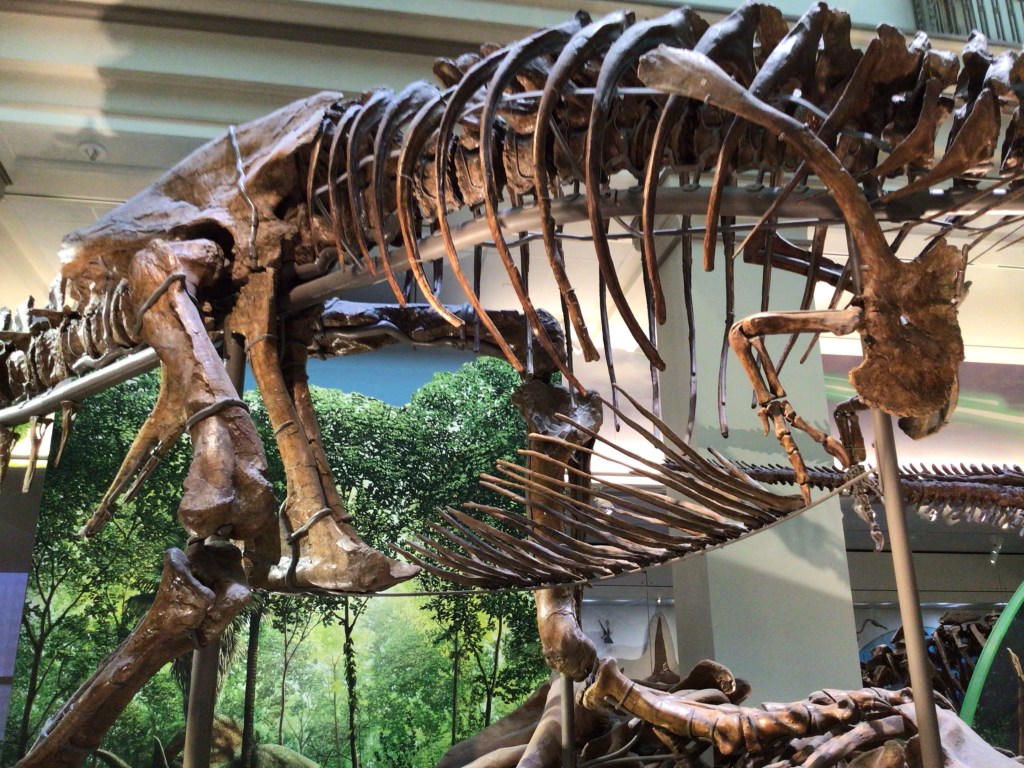
Displayed above are images of MOR 555, the Tyrannosaurus Rex housed at the National Museum of Natural History in Washington, D.C. Observing his skeleton, one can notice the open hip joint of this sizable theropod. Lacking a specialized hip joint to position the hind legs directly beneath his body, MOR 555 would be unable to support his immense 6 ton weight.

Furthermore, the presence of open hip joints was another crucial adaptation that facilitated dinosaurs’ smooth locomotion and running. As organisms that also utilize bipedal locomotion, we can appreciate this efficient form of movement. Without the open hip joints that connect our legs to our pelvis, we would be incapable of performing many activities that are fundamental to humans. We would be unable to engage in sports that involve running, jumping, or aerial maneuvers without this critical anatomical feature.

Image Credit: Noelle K. Moser. Allosaurus and Torvosaurus were apex predators of the Jurassic period. Their bipedal locomotion allowed their hands to be free, aiding these theropods in grasping objects or prey. Cincinnati Natural History Museum. Cincinnati, Ohio.

Dinosaurs exhibit various anatomical adaptations, one of which is evident in the Theropod group, such as the Allosaurus, known for “Big Al’s” hands. These anatomical features played a significant role in dinosaurian success. The presence of digits on the manus (hand) and pes (foot) enabled dinosaurs to grasp and manipulate objects. Bipedalism allowed the forelimbs to evolve for other survival-enhancing functions. The disproportionately small arms of the Tyrannosaurus Rex, often mocked in popular culture, were actually functional; despite their size relative to its massive body, it is theorized that T-Rex could lift approximately 100 pounds with its forelimbs. Significantly, having forelimbs not required for walking was a considerable advantage for dinosaurian success.

As creatures habituated to bipedal locomotion, we value the freedom to use our hands for tasks other than moving from one location to another. Similar to dinosaurs, the adaptation to walking on two legs has been crucial to our evolution and success as Homo sapiens.

The second requirement to classify an animal as a Dinosaur is hands complete with digits, both manus (hand) and pes (feet).

The drawing I did humorously demonstrate the possibilities available to T- Rex should he decide to take up berry picking. With adaptions of bipedal locomotion, T-rex and other dinosaurs had their hands free to carry and manipulate objects.

Contrary to common belief, dinosaurs are not entirely extinct. They soar above us daily as avialians, commonly known as birds. Birds are not merely related to dinosaurs; they are modern-day dinosaurs, specifically Coelurosaurs from the theropod dinosaur lineage. I’ll expand on this in a future post. For now, it’s important to recognize that birds are considered dinosaurs because they share a crucial anatomical adaptation common to all dinosaurs.

An animal’s skull consists of numerous bones, often mistakenly thought of as a single entity, the cranium. In reality, the skull is an assembly of several smaller bones that join together to form the cranium. Dinosaurs are characterized by the absence of one particular skull bone, the postfrontal bone. In the diagram below, the bones of a dinosaur’s skull are labeled. You can observe that the frontal bone (colored pink) is there, but the postfrontal bone is not.

Image Credit:

Anapsids, the reptilian lineage, and synapsids, the mammalian lineage including humans, have postfrontal cranial bones. Diapsids, the lineage that encompasses dinosaurs, do not possess these bones. However, dinosaur ancestors, such as the Archosaurs, retained the postfrontal bone. The absence of this cranial bone in all dinosaurs, which is present in their ancestors, aids in defining them (Martin 2006).

All birds, descendants of dinosaurs, lack postfrontal cranial bones. These bones merge with the frontal bone in the later stages of embryonic development.

 The third requirement needed to classify an animal as a dinosaur; is the absence of a postfrontal cranial bone.

Image Credit: Noelle K. Moser. The splayed toes and digitigrade stance of MOR 555 provide agility and stability on slippery surfaces. While this type of foot is often associated with modern birds, it is actually a characteristic that originated with dinosaurs. National Museum of Natural History. Washington, D.C.

The limb bones of dinosaurs, particularly those associated with the appendicular skeleton (bones connected to the axial skeleton), are crucial as they offer insights into the dinosaur’s locomotion. In the rear part of a dinosaur, the hind limbs are connected to the body through the pelvic girdle (hip socket) situated beneath the sacral vertebrae (vertebrae fused to link the open hip joint with the spine).

The evolutionary adaptation of an open hip socket allowed dinosaurs to support their weight directly above the hip joint. This posture necessitated adaptations for such a mode of locomotion. The femur, or thigh bone, connects to the hip joint via the acetabulum and extends to the cnemial crest and the tibia. The cnemial crest can be seen in the image above on MOR 555 skeleton.

The tibia is crucial for two additional dinosaur traits: the cnemial crest and the ascending process into the astragalus, or anklebone (Martin 2006). The astragalus, along with other small bones, forms a dinosaur’s tarsals, which include the feet and toes. Dinosaurs walked with their metatarsals touching the ground, essentially walking on their toes. This type of movement, known as digitigrade locomotion, is evident in the image above. Tyrannosaurus Rex MOR 555, for instance, walks on his toes, with his heels never touching the ground. This digitigrade locomotion is also observed in other animals such as dogs.

Contrast this with human locomotion. Humans walk with a relaxing stance in which most of the body weight in on the heels in a plantigrade stance. Human can only achieve a digitigrade when wearing high-heeles shoes or tiptoe. 

These adaptations relate directly to the evolution of dinosaurs from reptiles and archosaurs. Unlike reptiles which move with legs sprawled out to the side of the body like large lizards, dinosaurs walk upright with their legs directly underneath their bodies with digitigrade motion.

In addition to open hip joints and fused sacral vertebra, dinosuar locomotion requires the adaption of the cnemial crest, tibia, and astragalus to facilitate this upright smooth motion.

Finally, we come to the last requirement to classify an animal as a dinosaur; the femur that terminates into the cnemial crest, a tibia that ascends to the astragalus, and the astragalus which forms the metatarsals for digitigrade locomotion. Without these evolutionary adaptions, dinosaurs would not be able to support weight in an upward stance; dinosaurs would crawl in a sprawling posture like the reptiles that preceded them.

If you like this post, please chomp the subscribe button.

I am a multi-disciplinary writer, published author, and web content creator. If you like this blog, please visit my writing portfolio. The Works of Noelle Moser.

Image Credit: Noelle K. Moser. Me peering through the fenestrae of Tyrannosaurus Rex MOR 555. Cincinnati Natural History Museum. Cincinnati, Ohio.

Resources:

Brusatte, Steve. The Rise and Fall of the Dinosaurs: A History of Their Lost World. William Marrow of Harper Collins Publishers. New York, NY. 2018. Pgs. 282, 298, 299.

Horner, Jack. How to Build a Dinosaur. Plume, Published by Penguin Group. London, England. 2009. Pgs. 8,9,57, 58, 60.

Martin, J. Anthony. Introduction to the Study of Dinosaurs. Blackwell Publishing. Malden, MA. 2006. Pgs. 163, 164, 165, 166).