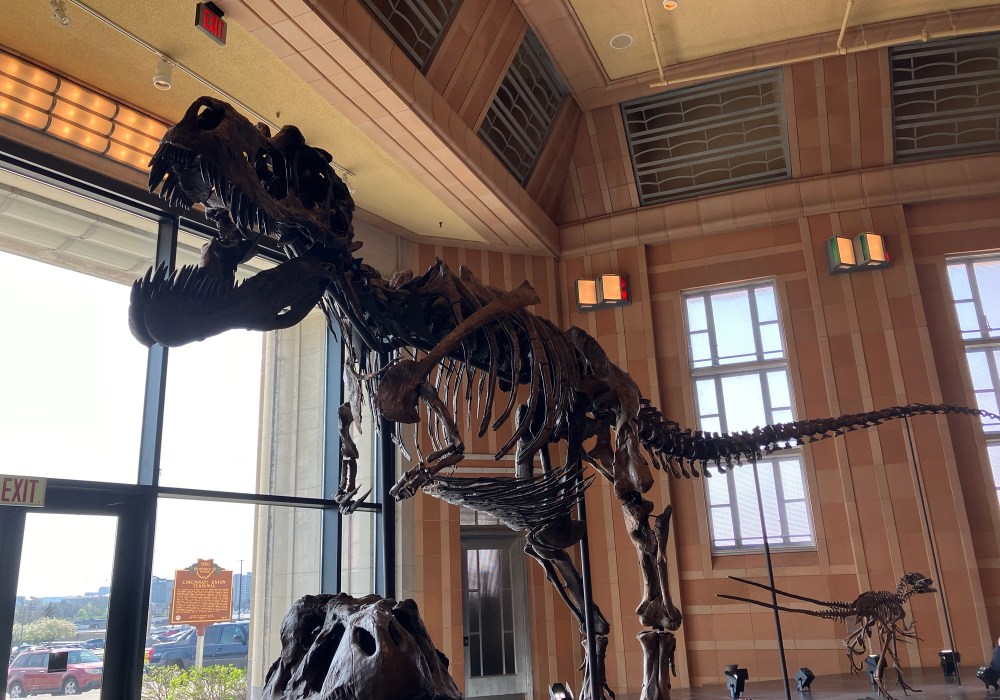
Daspletosaurus: The Proto-Tyrant of Late Cretaceous
email: noellemoser@charter.net

During the Cretaceous Tyrannosaurs were the dominant force, the largest among them the mighty T-rex. Tyrannosaurus Rex was the largest, and heaviest terrestrial carnivore ever walking the earth. Millions of years before Tyrannosaurus Rex reigned as the king of the dinosaurs, another monster tyrant ruled the world. His name was Daspletosaurus (das-PLEE-toh-SORE-us). Dwarfed by Tyrannosaurus Rex, Daspletosaurus was the dominant predator of its time. What was this proto-t-rex, how did it become the tyrant of the late Cretaceous, and why did it become extinct? In the article, we will look at Daspletosaurus, the fierce lizard from the Cretaceous.

Daspletosaurs’s story begins in 1921 when paleontologist Charles M. Sternberg discovered the fossil of what was thought to be Gorgosaurus, another theropod on the tyrannosaur family tree. However, in 1970, it was determined this dinosaur was different and assigned to its genus. Daspletosaurus Torsus, “strong frightful reptile”, was assigned to this new tyrannosaur.

The disarticulated skeleton consisted of a complete skull, a forearm, two femurs, and a pelvis. It also included all of the neck, back, and tail vertebrae. Since its original discovery, only one other Daspletosaurus is known.
Daspletosaurus Torsus and its relative Daspletosaurus Horneri are similar in size. 30 feet from head to tail, 82 feet tall, and weighed about 3 tonnes. Compared to humans, Daspletosaurus is large but dwarfed by its predecessor, Tyrannosaurus Rex. T-rex was about 42 feet long, 12 feet tall at the hip, and tipped the scales at 8 tonnes.

A genus of tyrannosaurid dinosaurs Daspletosaurus is closely related to Tyrannosaurus rex, from which the clade name originates. This group includes small to massive coelurosaurian dinosaurs that evolved into Tyrannosaurus Rex.
Daspletosaurus Habitat:
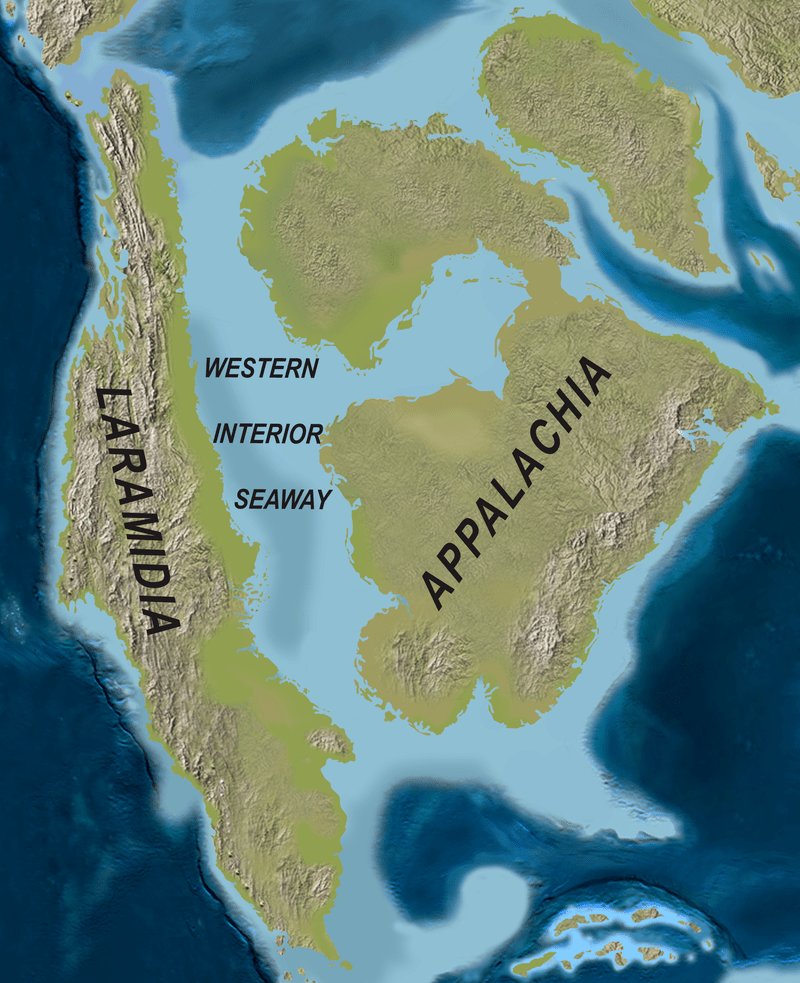
Home to daspletosaurus during the Late Cretaceous was a vast floodplain of the eastern coast of Laramidia. Laramidia and Appalachia are the two continents that would eventually become North America. During the Jurassic, these drifting continents were split by a vast ocean, the Interior Seaway. Along the Interior Seaway are five distinct and important formations encapsulating Daspletosaurus fossils. The Old Man Formation, Judith River Formation, Bear Paw Formation, and Dinosaur Park Formation. Situated in the Bad Lands of the western United States, these formations are present-day Montana and Lower Alberta, Canada.
Ceratopsians, hadrosaurs, Ornithosaurs, and other tyrannosaurs are entombed in the rocks near Daspletosaurus fossils. This suggests that these dinosaurs were contemporaries of Daspletosaurus and served as food for the dominant theropods at that time.
Why Did Daspletosaurus Go Extinct?
Daspletosaurus is known from 75 million years ago in the Campanian Late Cretaceous. The species suddenly disappeared 74 million years ago. After 5 million years of existence, it is unknown why Daspletosaurus went extinct. Competition with Tyrannosaurus Rex is one possibility climate change from volcanic activity is another. Whatever the reason, fossil evidence shows that Daspletosaurus disappeared, leaving Tyrannosaurus Rex to rule the land.
Daspletosurus was a fascinating theropod and an incredible link in the tyrannosaurus family as the tyrant before T-Rex.

I am a multi-disciplinary writer, blogger, and web content creator. If you like this post, please visit some of my other sites or Online Writing Portfolio.
The Kuntry Klucker – A blog About Backyard Chickens
The Introvert Cafe – A Mental Health Blog.
Resources:
My Visit to Cincinnati Museum Center to study Daspletosaurus.
Holtz, Thomas R. Dr. Dinosaurs: The Most Complete, Up-To-Date Encyclopedia for Dinosaurs Lovers of all Ages. Random House. New York, NY. 2007. (pgs. 117, 124, 125, 126).
Pim, Keiron. Dinosaurs: The Grand Tour. Everything Worth Knowing About Dinosaurs from Aardonyx to Zuniceratops. The Experiment. New York, NY. 2019. (pgs. 302, 341).
 Coffee And Coelophysis

.png)