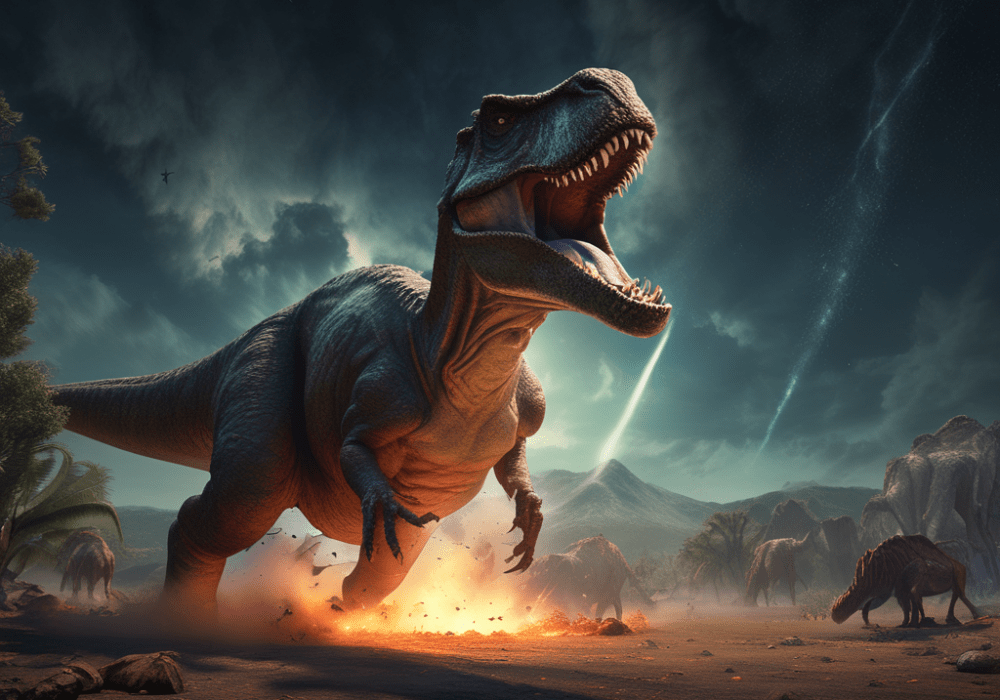
Chicxulub Impact: Catastrophic Collision That Ended the Age of Dinosaurs
email: noellemoser@charter.net

When we think about the time of the dinosaurs, two things stand out—Tyrannosaurus Rex and the extraterrestrial object that smashed into the planet – instantly ending the age of the dinosaurs. Earth has suffered several mass extinction events over the past 4 billion years. The Permian extinction is the deadliest, the end Cretaceous most famous.
An extraterrestrial object collided with Earth 66 million years ago. Only the impact with the proto-planet Theia, creating the moon more disastrous. What object collided with our planet, where did it come from, and what were the conditions after the impact? This article will answer these questions. It will also look closer at the event that ended the Age of the Dinosaurs. Catastrophe is never convenient. The last day of the dinosaurs began with a familiarity that had endured for 150 million years.
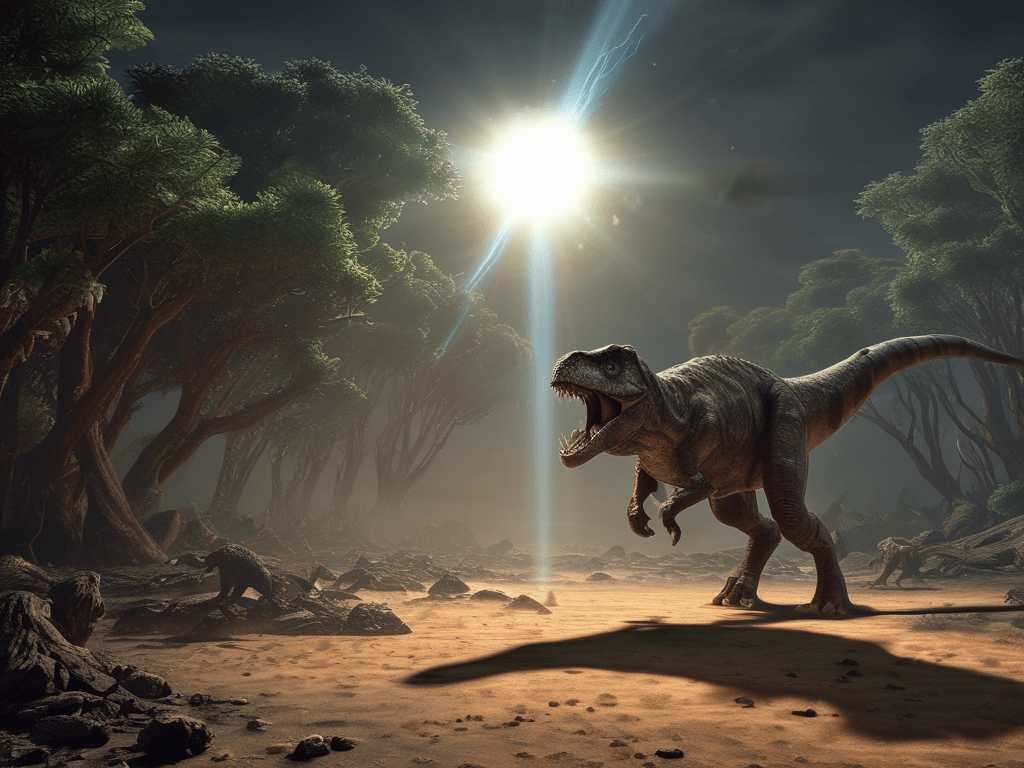
What was the object that collided with earth?
The Chicxulub impact, 66 million years ago, is arguably the most famous asteroid collision in history. The impact released as much energy as 100 million nuclear bombs. It gouged a 120-mile wide, 12-mile-deep scar in the crust. It unleashed monstrous earthquakes, tsunamis, and firestorms. This colossal impact had profound effects on the planet. It led to the mass extinction of approximately 75% of species, including the dinosaurs.
The impact rang the Earth like a bell causing drastic climate changes. The collision triggered a nuclear winter, leading to a significant drop in global temperatures. This environmental catastrophe made it impossible for many species to survive, altering life forever.
Where Do Asteroids Originate?

A lot of debris in our solar system is a result of its formation. Comets are dusty and icy remnants, whereas asteroids are mainly composed of rock. These collections of mostly harmless extraterrestrial bodies reside in several asteroid belts.
The main asteroid belt between Mars and Jupiter, The Kuiper Belt beyond the orbits of Uranus and Neptune, and the largest, the Oort Cloud, orbiting at 2,000 and 200,000 AU or 0.03 to 3.2 light-years away.

Disturbed by collisions and attracted by the sun’s gravity, some outer objects fall toward the inner solar system. These frozen bodies grace the night sky as bright comet nuclei with long, stunning, flowing tails. They pass by on calculated orbits held in place by the sun’s gravity.
While the orbit of most comet passes are cosmic spectacles, this has not always been the case. During the Late Heavy Bombardment (LHB) between 4.1 and 3.8 million years ago during the Neohadean and Eoarchean Eras, bodies from these asteroid regions collided with the moon.
The Formation of the Moon: Earth’s Early Cataclysm
The formation of the moon predates the Chicxulub impact by billions of years. According to the giant-impact hypothesis, the moon formed about 4.5 billion years ago when a Mars-sized body, referred to as Theia, collided with our molten planet. This titanic collision is so powerful that it ejected a significant amount of debris into orbit, eventually condensing by gravity to form the moon.
Similar orientation of the moon’s orbit and identical stable isotope ratios found in lunar and terrestrial rocks suggest a common origin. The moon’s relatively small iron core further supports this theory, indicating that the moon has lighter crust and mantle fragments from the impact
Where Did the Dinosaur Killing Asteroid Come From?

Cosmic Fingerprint:
Not all asteroids contain the same material. There are three main composition classes of asteroids: C-types (carbonaceous), S-types (stony), and M-types (metallic). The asteroid believed to have killed off the dinosaurs 66 million years ago between the Cretaceous and Paleogene eras, known as the K/T boundary, can be determined by studying the Isotopic signatures.

S-type asteroids are siliceous with a stony composition. These asteroids consist mainly of iron magnesium silicates. They are dominant in the inner part of the asteroid belt between the orbits of Mars and Jupiter between 2.2 – 3 AU (astronomical units about 93 million miles) but become rare farther out.
M-type asteroids are composed of metallic cores, predominantly Iron and Nickel, created by remnants of asteroids broken up by collisions over billions of years. M-asteroids orbit near the middle of the main asteroid belt between the orbits of Mars and Jupiter.
C-type asteroids are rich in carbon, clay, silicate rock, and ice, containing large quantities of carbon molecules. C-type asteroids orbit at the outer edge of the asteroid belt near Jupiter or beyond at 3.5 AU (330 million miles).

Asteroids possess distinctive identifiers, akin to a cosmic fingerprint, that were found at the site of the mass extinction of the dinosaurs. In 1970, the perpetrator’s identity was discovered in the K/T layer, which marked the end of the Mesozoic era and subsequently the demise of the dinosaurs.
Within the K/T layer, high concentrations of iridium, a heavy metal, are found. Iridium is rare in the Earth’s crust but common in asteroids and meteorites. Analysis of the K/T boundary layer revealed the presence of shocked quartz, which dates back to 66 million years ago, in addition to heavy metal.
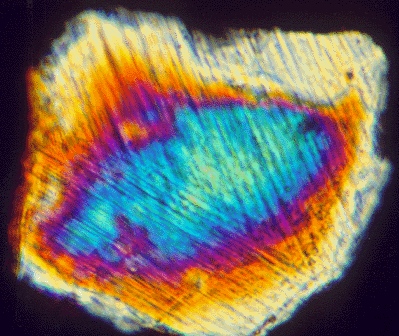
While quartz is abundant in the Earth’s crust, shocked quartz is not. The only natural process capable of creating shocked quartz is an extraterrestrial impact. The chemical analysis of the impact debris indicated that the asteroid responsible was a C-type, clay-rich mudball containing materials from the dawn of the solar system, located just beyond Jupiter. The question remains. Where is the impact crater?

An asteroid capable of leaving a cosmic fingerprint on our planet would have been enormous beyond our comprehension. Despite its massive size, the crater left behind 66 million years ago was not easily found.
In the 1980s, Permex, a Mexican oil company, employed aerial topography software to explore the seafloor around the Gulf of Mexico. A decade later, scientists established that the large circular formation they had mapped was of a size matching that of the asteroid responsible for the extinction of the dinosaurs.
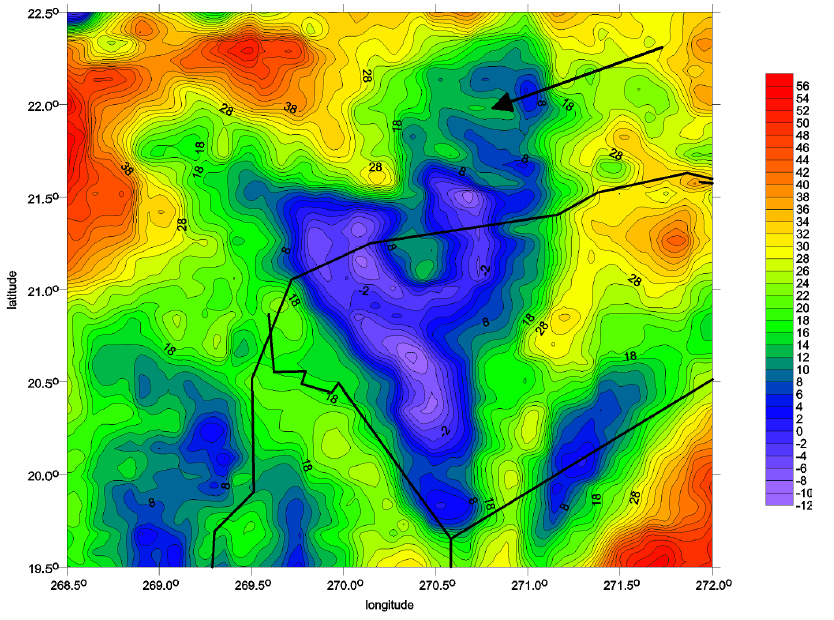
Submerged beneath the water off the Yucatan Peninsula lay the Chicxulub crater, a lasting scar, and testament to the catastrophic impact of an asteroid, its name derived from the town located at its center. Analysis of cores from the sea floor confirms the cosmic fingerprint and origin of the K/T boundary layer, solidifying the crater’s status as a tangible reminder of the asteroid’s devastating trajectory.
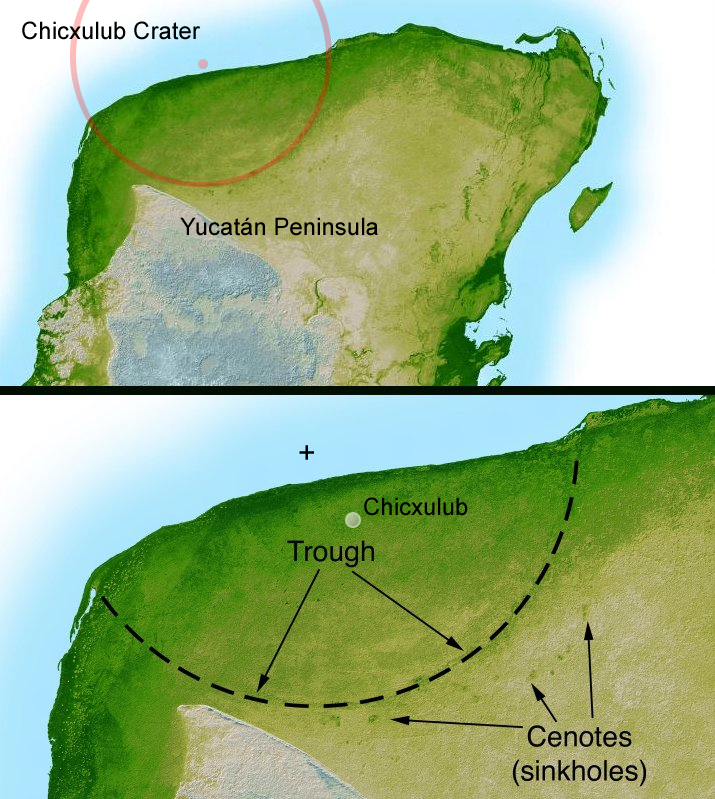
One of Earth’s largest and best-preserved impact craters, the Chicxulub crater, measures 120 miles in diameter and 12 miles deep. The immense asteroid that created this crater is difficult to comprehend. The fossil record and K/T layer offer a glimpse into the final day of the dinosaurs, forever preserved in stone.
Impact and How the Dinosaurs Died:

Catastrophe is never convenient. Neither the dinosaurs nor the other organisms expected it. Life proceeded on that fateful day just as it had the day before and the day before that, stretching back through the millions of years. The last day of the dinosaurs began with a familiarity that had endured for 150 million years. (Black, 2022)
The Cretaceous period’s final day was set in motion years prior by a chance collision beyond Jupiter’s orbit, ultimately leading to the demise of Earth’s creatures, the iconic Tyrannosaurus Rex, Triceratops, and flying reptiles, who were in the wrong place at the wrong time.
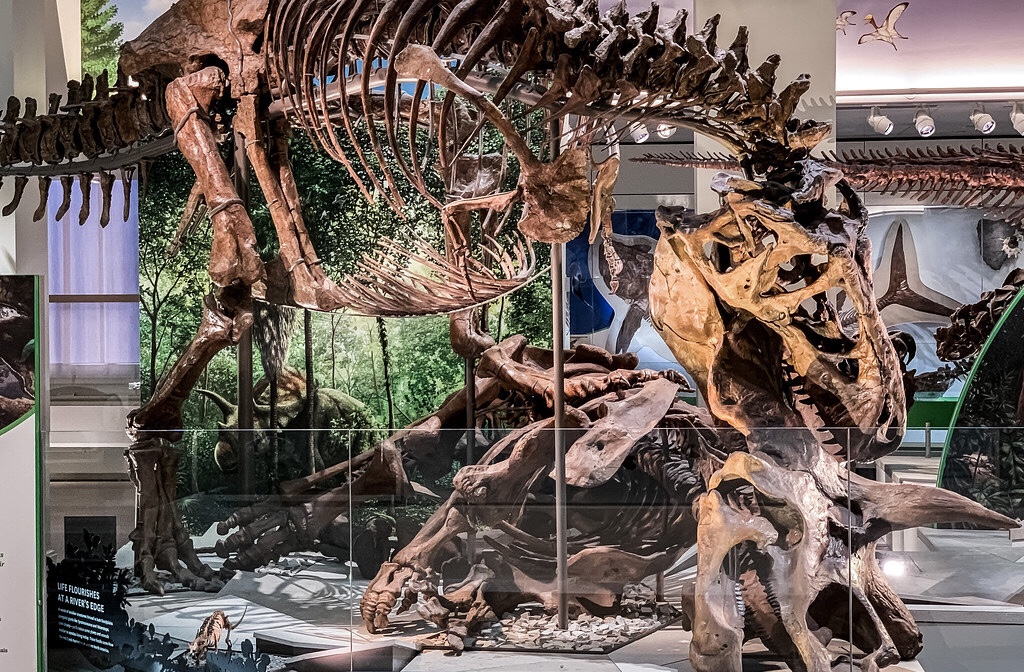
Approximately 66 million years ago, a colossal C-type clay-rich mudball measuring six miles wide and weighing a trillion tons hurtled through our solar system at a staggering velocity of 45,000 miles per hour. This enormous object triggered a catastrophic chain of events that led to the most massive extinction in the history of our planet, ultimately causing the demise of the dinosaurs after slamming into the shallow seas near the Yucatan Peninsula at an incredible speed of 60 times the sound barrier.
As the asteroid screamed through the atmosphere, it unleashed an energy equivalent of 6 million times the magnitude of Mt. St. Helen’s 1980 eruption. Its trailing edge remained at an altitude of 35,000 feet, the same height as airliners in flight, at the instant of impact.
The plume of debris and initial impact would have created a hellish environment on Earth, with nothing surviving within a 1000-mile radius. The intense heat generated by the collision would have been equivalent to the sun’s intensity, resulting in the complete vaporization of all organic matter in the impact zone.
The asteroid’s impact on the shallow seas displaced around 500 billion tons of debris, with some fragments accelerating to 25,000 miles per hour and possibly attaining escape velocity, suggesting that some ejecta from the Yucatan Peninsula may have reached lunar orbit.
The immediate impact had far-reaching and devastating consequences. The temperature at the impact zone peaked at 16,000 degrees Fahrenheit, melting rock, and the expulsion of molten projectiles at supersonic speeds. A violent shockwave echoed through the land as superheated winds of 2,000 miles per hour radiated from the impact site, leaving a trail of destruction in their wake. Hell had come to Earth, and its creatures had no place to run.
It is challenging to constrain our imagination when contemplating something of this magnitude. The initial impact was overwhelming, but the aftermath was only beginning.
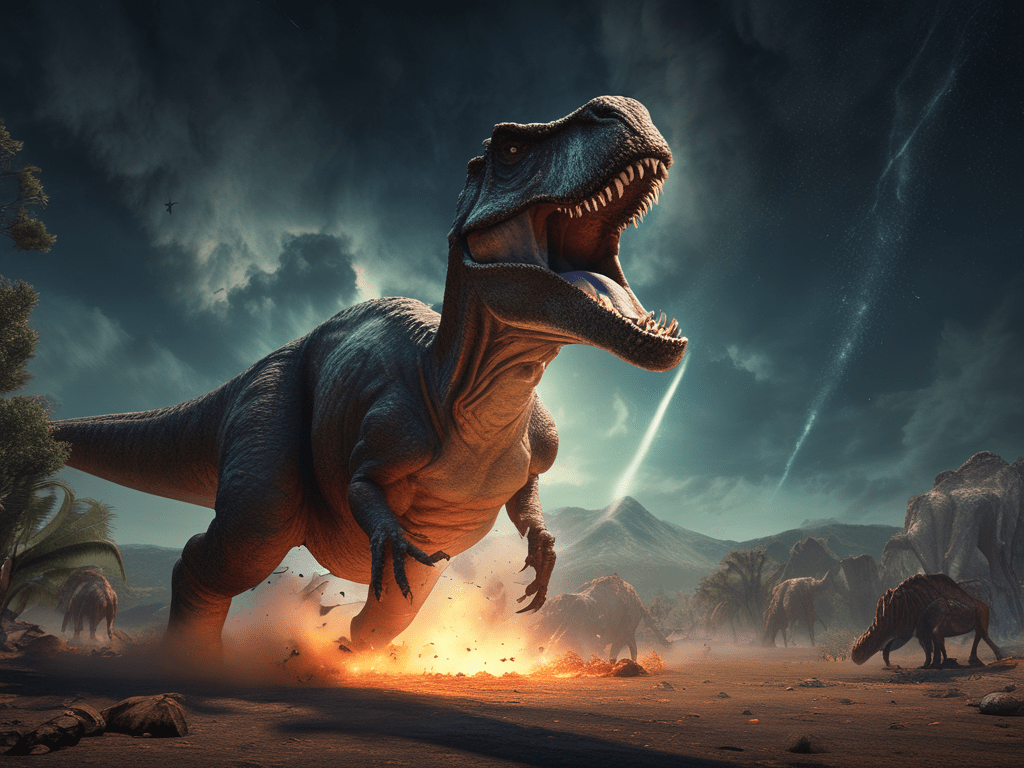
The impact of the massive asteroid in the ocean triggered a colossal tsunami, one of the largest ever witnessed on Earth. Generating a monumental splash from the shockwave, a 300-foot wall of water at hundreds of miles per hour crashed along the shores of Georgia, Mississippi, and Texas. On the other side of the world, dinosaurs died after the impact. The K/T layer holds the clue to the death of those dinosaurs.
Besides iridium and shocked quartz, the K/T layer comprises particles of soot distributed worldwide, amounting to several billion tons, comparable to the Earth’s total vegetation combusting instantaneously, meaning only one thing – a global inferno.
How does an entire planet catch fire? The impact’s intensity was so extreme that it hurled billions of tons of debris into the atmosphere, which orbited the globe before re-entering and causing a global atmospheric heating event that sparked forest fires on the opposite side of the world.
It was a disastrous day for the dinosaurs, as their enormous size made any location on the planet lethal. The dinosaurs were roasted alive, unable to hide in underground burrows like our ancestors. In cruel irony, the asteroid’s impact occurred at the worst possible location on the planet.
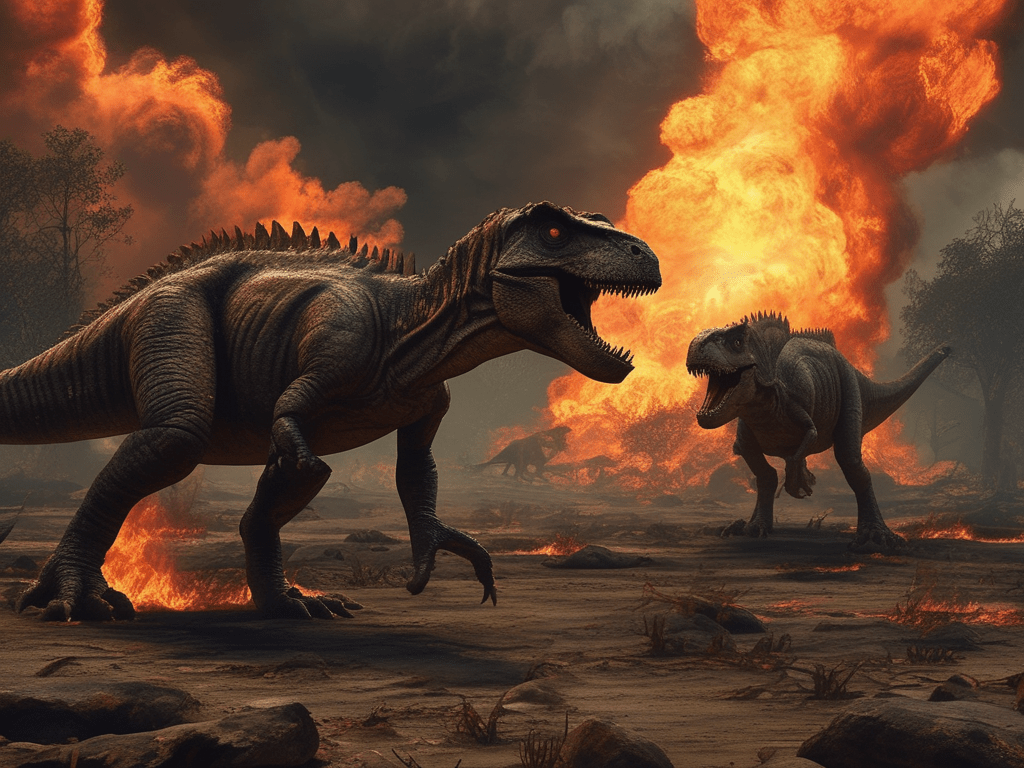
The few surviving dinosaurs confronted an even greater menace – abrupt climate change. The dust and debris from the impact enveloped the planet, plunging it into a prolonged nocturnal period lasting six months. The once vibrant blue planet, teeming with life, was transformed into a dismal gray shroud.

The presence of sulfur-bearing minerals in the Yucatan led to decreased global temperatures. Sulfur emissions poisoned the air, and subsequent sulfur dioxide reactions with atmospheric water formed sulfuric acid, resulting in increased solar energy reflections and planetary cooling.
As temperatures gradually returned to normal, plant life began to recover, but the lingering effects of sulfur dioxide caused acid rain, which damaged emerging leaves. Consequently, surviving dinosaurs faced starvation, leading to the total collapse of the food chain and the eventual demise of both herbivores and their carnivorous predators. For the dinosaurs, there was no coming back. After 150 million years of supremacy, the reign of the dinosaurs came to an end. The dinosaurs ruled the earth, but they could not defend themselves against the asteroid and its devasting effects.
The asteroid continued to have effects after the dinosaurs’ extinction. Global cooling eventually gave way to global warming due to the carbon dioxide from the rocks struck by the asteroid, equivalent to 3000 years of modern fossil fuel emissions. This carbon dioxide release was the final consequence of the impact, persisting for centuries and warming the planet, with temperatures rising by 20 degrees Fahrenheit, representing rapid global warming.
The asteroid’s impact did not entirely extinguish life. With the dinosaurs absent, early mammalian ancestors emerged from the burrows, paving the way for the rise of the mammals. One species would eventually transition from arboreal to bipedal locomotion and dominate the planet, much like the dinosaurs had for 150 million years. Although non-avian dinosaurs are extinct, their legacy endures through the birds, which carry the bloodline of the mighty T-rex.

The Chicxulub impact and the collision that created the moon are both pivotal events in Earth’s geological and biological history. They serve as stark reminders of the dynamic and sometimes violent nature of our solar system. These events have not only shaped the physical landscape of our planet but also the evolutionary path of life on Earth.

I write at the confluence of deep time and modern thought – a paleontology blogger and essayist devoted to translating ancient worlds for contemporary readers.
Through Coffee and Coelophysis, I explore the lives, mysteries, and afterlives of prehistoric dinosaurs, blending scientific curiosity with reflective story telling. I bring ancient fossils to life; across my other writing spaces, I explore literature, creative reflection, homesteading, backyard chicken keeping, and the lessons of observations.
In Shelf-Life: Lessons from Retail, the everyday world of retail becomes a stage where dinosaurs, books, and human stories collide – revealing how curiosity and wonder shape both past and present.
The Kuntry Klucker – A blog about backyard chickens.
Introvert Cafe – A mental health blog
~ Noelle K. Moser ~
References:
BBC – Dinosaur asteroid’s trajectory was ‘perfect storm’
Black, Riley. The Last Days of the Dinosaurs: An Asteroid, Extinction, and the Beginning of Our World. St. Martin’s Publishing Company. New York, NY. 2022.
Harvard Gazette – New theory behind Chicxulub impactor that killed the dinosaurs
HHMI BioInteractive Video: The Day the Mesozoic Died: The Asteroid That Killed the Dinosaurs.
Kate Golembiewski,. “Dinosaur-Killing Asteroid Was Likely A giant Mudball, Study Says”. CNN. August 16, 2024.
Mario Fischer-Godde and Others. “Ruthenium Isotopes Show The Chicxulub Impactor Was A Carbonaceous-Type Asteroid. Science Vol. 385, No.6710. August 15, 2024.
My Visit to Natural History Museums across the nation.
 Coffee And Coelophysis


_mathilde.jpg)


