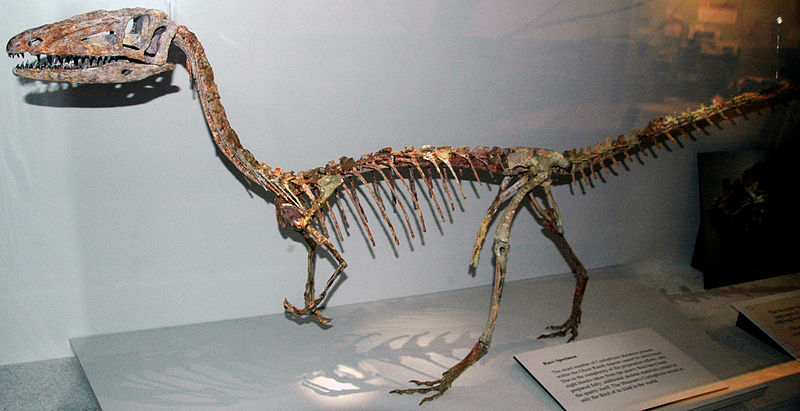

They say that the best place to start is the beginning, with dinosaurs that is Coelophysis.
Dinosaurs represent a distinct biological group and were among the most successful animals in evolutionary history, dominating the planet for millions of years. In contrast, humans have existed for only 6 million years. Dinosaurs did not appear spontaneously; they inherited the Earth following the Permian Extinction, also known as the Great Dying.
Approximately 251 million years ago, Earth suffered the most severe extinction. It is theroized that the Great Dying was the cause of increased volcanic activity that released large amounts of carbon dioxide into the atmosphere leading to increased ocean temperatures.
The increased ocean temperatures disrupted the ocean conveyor belt responsible for breathing life into the oceans. As the seas became stagnant, hydrogen sulfide began to accumulate. Hydrogen sulfide is poisonous thus, all life in the oceans perished.
As the gas escaped into the surrounding atmosphere, life on land began to die. The oceans experienced increased anoxia (depletion of oxygen) and acidification (reduction of Ph). As a result, many plants and animals that inhabited the oceans and surrounding land were wiped out. But life is resilient; over millions of years, life on Earth recovered. Only this time, out of the ashes of the Permian Extinction, new and more exciting life forms emerged.
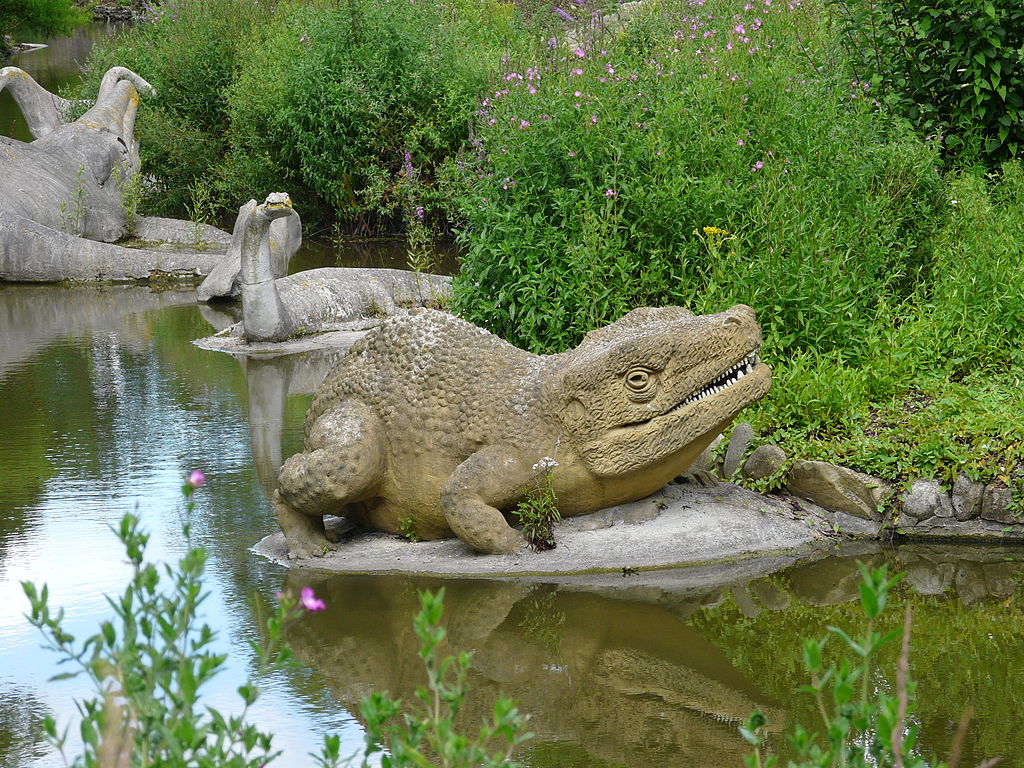
Stegocephalians were a group of life forms that developed distinctive adaptations in bones, jaws, and lungs. Crucially, they evolved specialized fins equipped with wrists and ankles, which aided in navigating through dense vegetation in swampy waters. These fins also enabled them to move over land when necessary to travel between water sources. Stegocephalians hold significant importance in discussions about dinosaurs, as they represent a crucial evolutionary step towards the development of dinosaurs.
In terms of cladistics (classifying animals based on ancestral descent) throughout the course of evolution, three clades of animals are of importance: Anapsida, Synapsida and Diapsida
The classification into three clades is recognized by the diversification in the arrangement of skull bones, particularly the presence and positioning of temporal fenestrae—holes in the skull where the bones fuse. In humans, our temporal fenestrae are palpable on each side of the skull, just behind the eye sockets. The presence and number of temporal fenestrae in most vertebrates are key factors in classifying organisms into clades according to their evolutionary lineage.
For example, below is a graphic of a Massospondylus Skull, labeled the temporal fenestra and another fenestra present in this animal’s skull.

Anapsids, synapsids, and diapsids represent three distinct clades of animals, each leading to diverse lineages. Anapsids are characterized by the absence of temporal fenestrae. Both fossil and modern turtles are considered the prime representatives of this group.
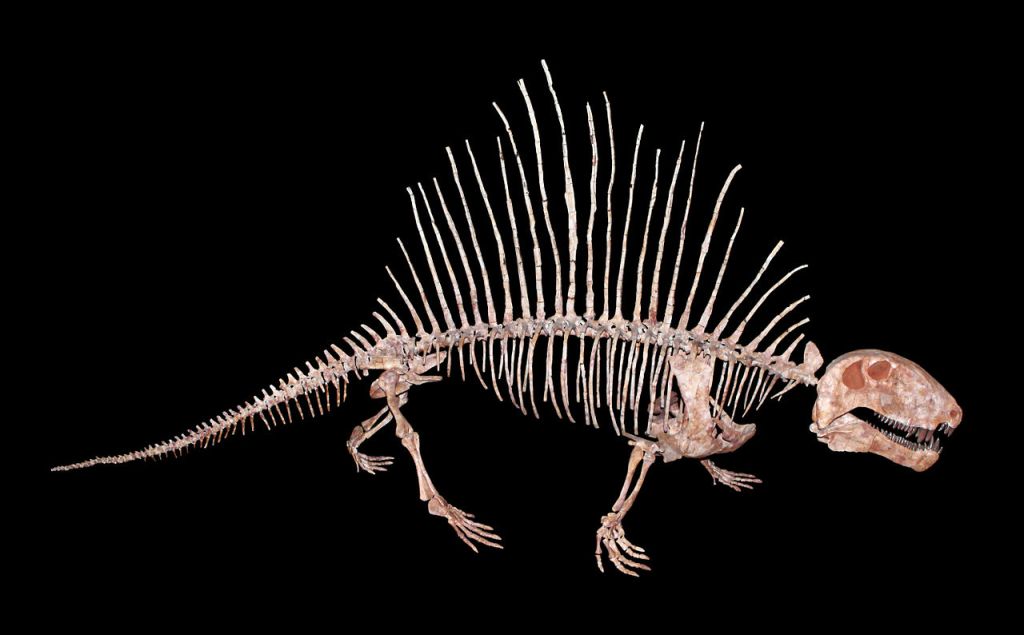
Synapsids and diapsids evolved from a common ancestor of anapsids during the later part of the Carboniferous period (Martin, pg.165). Synapsids during the Permian represented by herbivorous and carnivorous reptiles called Pelycosaurs. Dimetrodon is a perfect example of a Pelycosaur. Although not a dinosaur, Dimetrodon had a formidable appearance which causes many to assume it is a dinosaur.
Synapsids encompass lineages that evolved into therapsids with mammalian characteristics and, subsequently, into mammals. Dimetrodon is a distant ancestor within our evolutionary lineage. Humans, along with most mammals, are Synapsids, sharing this evolutionary trait.
This leaves us with Diapsids, of which dinosaurs are a part. Diapsids diverged into two main groups: Lepidosauria and Archosauria. Lepidosauria includes modern lizards like geckos, iguanas, and Komodo dragons. Archosauria, on the other hand, developed unique adaptations such as special openings in their skulls for air sacs, a key anatomical feature also found in birds.
Air sacs enhance flight by optimizing oxygen use. Birds, being descendants of theropod dinosaurs, indicate that dinosaurs originated from Archosaurs. While all non-avian dinosaurs have perished, Archosaurs remain. Today, we recognize Archosaurs as alligators and crocodiles.
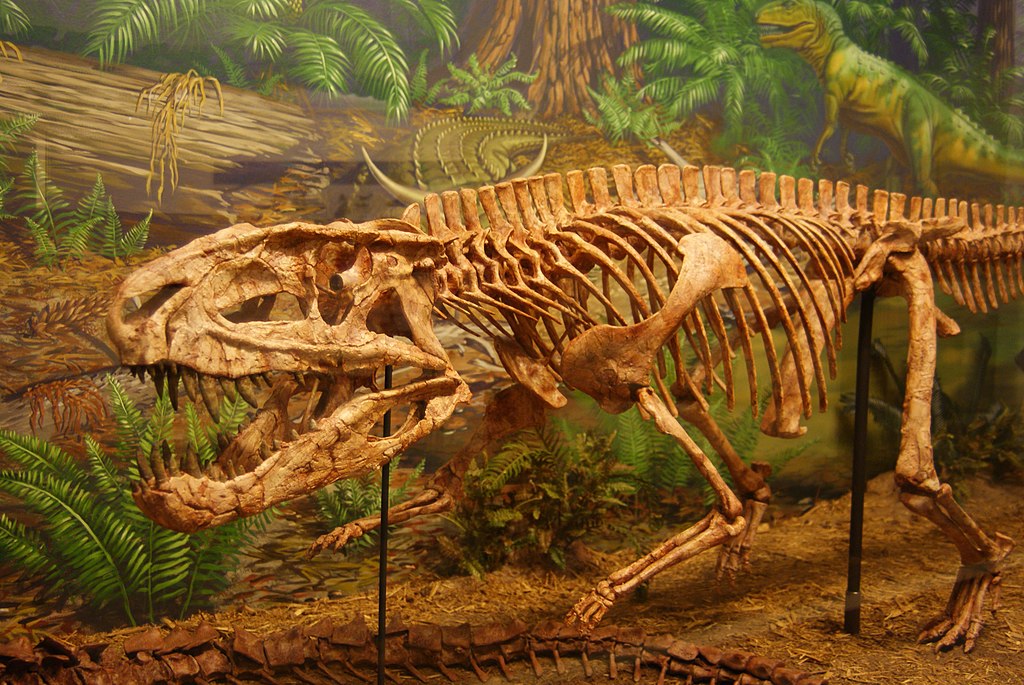
Postosuchus is often considered a quintessential example of Archosaurs. Although it exhibits traits that would later be seen in the Tyrannosaurus Rex, Postosuchus is a reptile, not a dinosaur. It belongs to the clade Pseudosuchia, which is part of the Archosaur group that encompasses modern crocodilians and the descendants of dinosaurs known as birds. Contrary to the common belief that dinosaurs are extinct, they are not; they soar above us daily as Avialians, or birds.
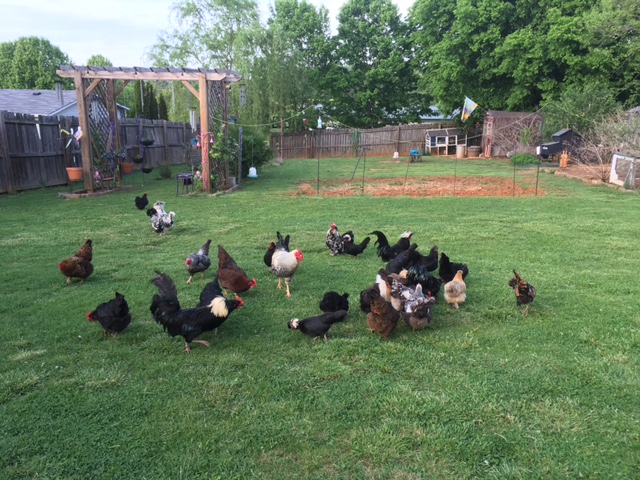
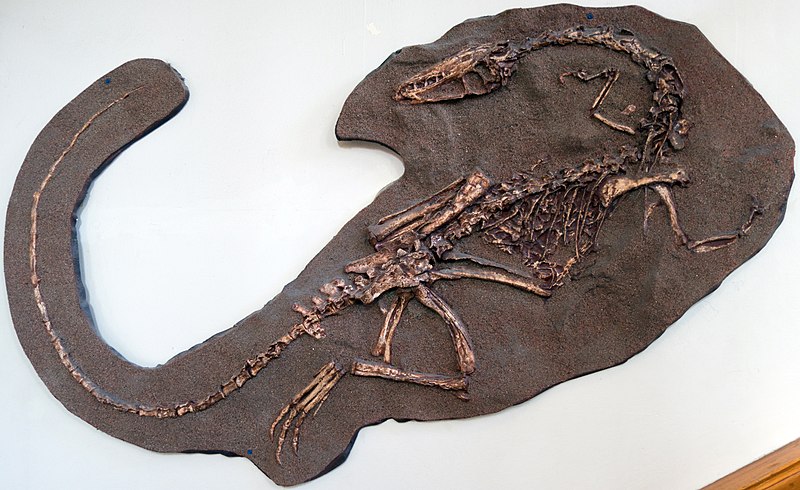
The connection to Coelophysis lies in its status as a primitive theropod dinosaur from the Late Triassic Period, representing the basal stock from which more derived theropod dinosaurs evolved.
You may be wondering how all of this relates to Coelophysis, the name of this dinosaur blog. Coelophysis is the first or oldest known dinosaur. Coelophysis lived approximately 228 to 201.3 million years ago during the latter part of the Triassic Period. Coelophysis is not an Archosaur.
Coelophysis, a Diapsid, shares an evolutionary lineage with Postosuchus but is warm-blooded. Archosaurs, a group of reptiles, are ectothermic, meaning they are cold-blooded and depend on environmental heat to regulate their body temperature. Conversely, dinosaurs are endothermic, or warm-blooded, capable of maintaining a stable body temperature regardless of environmental conditions.
Dinosaurs are frequently linked with reptiles, a connection reinforced by the term “dinosaur,” which Richard Owen coined to mean “Terrible Lizard.” However, the clade Dinosauria, which encompasses all dinosaurs, is distinct to them. Although dinosaurs share an evolutionary relationship with Archosaurs, a group of reptiles, they belong to their own separate class. They are distinct creatures with their own unique physiology. Coelophysis represents the dawn of the dinosaur era, marking the start of their age.
Since childhood, dinosaurs have held my fascination. I remain awestruck and enchanted by these creatures, retaining a child-like wonder for them. My fascination has not waned with age; rather, it has grown beyond the sheer enormity of their stature. I am driven to comprehend these remarkable animals from an evolutionary standpoint. To fulfill this quest, I visit Natural History Museums, stand beneath these titans, gaze upward, and strive to uncover the secrets of their existence and extinction.
If you, like me, have never outgrown your childhood fascination with dinosaurs, grab a cup of coffee and let’s delve into the world of these ancient creatures. Coffee and Coelophysis is an exploration of the Mesozoic era, the magnificent age of dinosaurs.
As a published author, multi-disciplinary writer, and blog contributor, I invite you to explore my writing portfolio if you enjoy this blog.
If you enjoyed this post, hit the subscribe button. Thank you for reading, and welcome to Coffee and Coelophysis..

Resources:


 Coffee And Coelophysis


